Gyro Stabilizer Care: Owner Checks for Seakeeper and Other Boat Gyros
A gyro stabilizer needs little from you, but what it needs matters. Learn how to start and shut it down correctly, keep its seawater cooling and zinc in shape, rinse it, read its hours and alarms, winterize it, and know which jobs belong to a certified dealer.
Time
45 min
Shop would charge
$500-2500
Applies to
All engines
Safety first: A gyro's flywheel spins at very high speed (Seakeeper quotes 9,750 rpm for its smallest model) and can keep spinning for hours after you switch it off. Never remove covers, loosen hydraulic fittings or touch the brake, cylinders or the moving enclosure; leave those to a certified dealer. Keep hands, tools and loose items away from the unit whenever it is on or spinning down. Close the cooling seacock before opening the strainer or touching the anode, and if water keeps coming in after you open anything, put it back together and get help. If you see smoke or smell burning, shut it down and turn off its power; for a fire or flooding call 911 or the Coast Guard on VHF 16.
Owners often ask
- Do I have to keep shore power on until my Seakeeper flywheel stops spinning?
- How often should I change the zinc on my gyro stabilizer?
- Should I turn off my gyro stabilizer for sharp turns at high speed?
This guide walks you through it. Still stuck? Ask the AI Mechanic about your engine.
Tools
- Flashlight or headlamp
- Screwdrivers or nut drivers for the seawater strainer and anode
- Bucket, rags and fresh water with a soft cloth or low-pressure sprayer
- Notebook or the BoatMend log for run hours and sea hours
- Nitrile gloves and safety glasses
Parts & supplies
- Replacement zinc anode from your gyro maker for your model
- Strainer basket gasket or O-ring, if worn
- Non-toxic propylene glycol marine antifreeze (for winterizing, if the boat sits in freezing weather)
Before you start
How it works: a heavy flywheel spins inside a sealed sphere (Seakeeper's runs in a near-vacuum). When the boat rolls, the spinning flywheel tilts fore and aft (precesses) and pushes back against the roll. Hydraulic brakes control that motion and lock the sphere when the gyro is off. Because the motor and flywheel make heat, the unit has a cooling loop: on Seakeeper models, a glycol circuit inside and a seawater circuit with its own pump, strainer and through-hull outside.
What the owner does: start it, stop it, watch the display, keep the cooling water flowing, change the zinc on schedule, rinse off salt, keep the compartment dry, and log the hours. Seakeeper says its units need little maintenance because the critical parts run in a sealed enclosure, with the hydraulic and cooling circuits outside it needing periodic inspection.
What the dealer does: hydraulic checks, brake work, glycol flushes, heat exchanger replacement and other tasks marked "dealer only" in the maker's schedule. Doing these yourself can hurt you and can cost you warranty coverage.
Other brands: this guide uses Seakeeper's published owner information because it's the most common brand in the US. Other gyro makers have their own start-up steps, intervals and dealer-only lists, so use your own manual's numbers.
Steps
Open the display's information screen. Seakeeper says it shows the model, serial number, run hours and sea hours. Write them in your log. Find the operation manual for your exact model in the maker's technical library and the nearest certified dealer. Register the unit if the previous owner didn't: Seakeeper says registration is required for warranty service and that warranties transfer with proof of ownership and a registration form.
Small gyros run from the boat's DC system; larger ones need AC power from the generator or shore power. In Seakeeper's line, the 1 through 4 run only on DC and the 4.5 and larger on AC. Check which yours is, and plan generator use around it (the generator load guide helps).
DC models and batteries: Seakeeper says spool-up is when the unit draws the most power (up to about an hour on its largest DC model), so it recommends spooling up on shore power and switching to batteries as you leave. It publishes a minimum battery capacity for each DC model and does not recommend flooded lead-acid batteries for this job. As battery voltage sags, the unit first slows itself down to save power, then shuts off with a low-voltage alarm before the bank is flat, leaving power for navigation gear. If that happens, run the engines or plug in to recharge. If a gyro shuts down because its power dropped, find out why before you restart it (the battery bank sizing guide helps with the math).
Seakeeper's sequence: turn on power to the unit, wait for the display's home screen, then press the power button (it turns blue). A progress bar shows the flywheel spooling up. When it reaches its minimum operating speed, a Stabilize button appears; when the progress bar disappears, full stabilization is available. Spool-up takes time, so many owners start it before leaving the slip. Open the cooling seacock first if you closed it.
Press Stabilize when you want roll control, at sea or at anchor. Glance at the display now and then. Take any alarm seriously: note the message, follow the manual's instructions for it, and stop stabilizing if it says to. A cooling or seawater flow alarm usually sends you to step 6.
When to lock it: a gyro damps the boat's normal side-to-side roll; it doesn't make an unstable hull stable. Seakeeper recommends turning stabilization off (locking the sphere upright) before deliberate aggressive high-speed maneuvers such as hard, fast turns, because the tilting sphere can add a small bow-up or bow-down push. Its display's service page shows the gyro angle so you can confirm it locked near upright. In a real emergency, steer to stay safe first; don't delay a maneuver to lock the gyro.
Seakeeper's guidance: press the power button when you no longer need stabilization (it turns gray). Once the boat is secured in the slip, you can switch off the gyro's DC power and walk away; the flywheel keeps spooling down on its own, which can take 2 to 8 hours, and Seakeeper says no cooling is needed during that time because the motor is off and the brakes have locked the sphere. The service screen shows zero rpm when it has stopped. Check your own model's manual, since AC units have their own wording.
With the gyro off and the seacock closed, open the gyro's seawater strainer, clean the basket and the housing, and check the lid gasket. Reassemble, open the seacock and look for leaks. Do this as often as your local water demands; weedy or muddy water clogs strainers fast. The raw-water strainer guide covers the technique. Seakeeper's annual dealer inspection also confirms proper seawater flow and checks the cooling hoses.
When the gyro is running, its cooling water leaves through a through-hull. Learn where it is and what normal flow looks like. A weak or missing stream with the gyro on means a closed seacock, clogged strainer, failing pump or blockage. Stop and fix it before running hard.
Seakeeper's schedule calls for replacing the zinc anode every 200 run hours or 3 months, whichever comes first, on many models (it lists the 5, 6, 9, 16, 18, 26, 35 and 40). Not all models have one. Use the maker's anode for your model. Close the seacock before removing it, and if you're not comfortable working on a fitting below the waterline, have the dealer do it. Note how much the old one wore away; fast wear can point to a stray current problem worth investigating (see the sacrificial anodes and bonding guides).
Seakeeper says the units can handle occasional spray, but long exposure to seawater causes corrosion and premature wear. If salt water has reached the unit (a leaking hatch, a hose leak, a wet bilge), remove salt deposits with a gentle fresh-water rinse as soon as you can, then let the compartment dry with good ventilation. Never pressure-wash it. Find and fix whatever got it wet.
With the gyro off and stopped:
- Look for drips, wet spots or oil around hoses, fittings and the cylinders (look only; don't touch the brake hardware).
- Check hose clamps on the seawater hoses for rust (see the hose clamp guide).
- Look for corrosion on electrical connections and cables.
- Check that the mounting area and nearby bilge are dry and clean.
- Listen to it during spool-up for new noises compared with your normal.
Report anything odd to your dealer instead of adjusting it.
Seakeeper's schedule lists inspections every 1,000 hours or once a year (whichever comes first): hydraulic parts and fittings, brake bushings, heat exchanger, cooling hoses and glycol level, electrical connections, mounting bolts, plus cleaning and descaling the heat exchanger and confirming seawater flow. Several tasks, including checking hydraulic pressure, inspecting the electric seawater valve on some models, flushing the glycol circuit (every 2,000 hours or 5 years) and replacing the brake bushings and heat exchanger, must be done by a certified dealer. Seakeeper adds that heavy use in rough seas may call for more frequent service. Log run hours and sea hours so you know when each item is due.
If any part of the gyro or its cooling will see freezing temperatures, winterize the seawater circuit. Seakeeper's owner article: close the cooling seacock, clean and drain the strainer, then fill the circuit with marine antifreeze (through the strainer if it allows, or by moving the intake hose into a bucket) while the display's seawater pump override draws it through, until clean antifreeze comes out the discharge. Seakeeper recommends propylene glycol antifreeze because ethylene glycol is poisonous to wildlife. Reconnect everything, leave the seacock closed for the winter and open it in spring. If the override steps on your display aren't clear, have the dealer do it.
Common mistakes
- Forgetting the cooling seacock after winter or a haul-out, then getting a flow alarm.
- Hanging around waiting for the flywheel to stop, or believing you must keep power on while it spins down (Seakeeper says you don't).
- Skipping the zinc because the gyro "seems fine."
- Pressure-washing the unit or leaving it wet after a bilge flood.
- Using automotive (ethylene glycol) antifreeze in the seawater circuit.
- Loosening hydraulic fittings or touching the brakes instead of calling the dealer.
- Spooling up a DC gyro on batteries alone at the dock, then running short of power later in the day.
- Ignoring a repeated alarm and restarting again and again.
When to call a pro
- Any alarm that comes back after you've cleared the strainer and checked the seacock
- Oil or hydraulic fluid leaks, or new noises or vibration during spool-up or stabilization
- Any task marked dealer-only in your maker's schedule, and the annual inspection
- Water damage to the unit or its electronics, or salt water sitting around it
- Software updates and display or network problems
- Warranty work (Seakeeper's dealers file warranty claims)
Tips
- Start the gyro before you cast off; it's ready by the time you clear the harbor.
- Run hours count whenever the unit is on; sea hours count only while it's stabilizing. Seakeeper uses sea hours for warranty.
- Put a laminated card by the display with start, stop and seacock steps for guests and crew.
- Combine the gyro's zinc change with your other zinc checks so it never gets forgotten.
Official references
We read these to write this guide. Your engine's own manual always wins.
- Seakeeper – Maintenance Schedule
- Seakeeper – Caring For Your Seakeeper
- Seakeeper – Start Up
- Seakeeper – Stabilization
- Seakeeper – Shut Down
- Seakeeper – How do I shut this thing off?
- Seakeeper – How do I winterize my Seakeeper?
- Seakeeper – How Much Power Does a Seakeeper Use?
- Seakeeper – When Not to Use Your Seakeeper
- Seakeeper – The 5 W's Of Your Standard Warranty
Safety: BoatMend is for information only and does not replace a certified marine technician. You are responsible for your safety and your boat. Read the full disclaimer.
Last updated 2026-10-26
Related guides
How to Inspect and Clean a Raw-Water (Sea) Strainer
The sea strainer is the cheap screen that keeps weeds, shells and plastic out of your engine, generator and A/C pumps. Learn how to clean it safely with the seacock closed, reseal the lid so it can't suck air, spot a cracked bowl before it floods the boat, and winterize it.
How to Maintain Your Boat's Air Conditioning Seawater System
Keep seawater flowing through your marine A/C by cleaning the strainer, checking the pump and overboard discharge, descaling the condenser coil when flow drops, cleaning the air filter, and winterizing the seawater circuit before a freeze. Most "A/C not cooling" calls are a water-flow problem.
How to Inspect and Exercise Seacocks, Through-Hulls and Hose Clamps
Check every hole in your hull below the waterline, work each seacock open and closed, and inspect the hoses and clamps attached to them. A single failed fitting or hose is one of the most common reasons boats sink at the dock.
How to Inspect and Replace Sacrificial Anodes (Zincs)
Check the anodes on your outboard, sterndrive or inboard running gear, replace them when they are half gone, and choose the right metal for the water you boat in. Fresh anodes are cheap insurance against expensive corrosion damage to your lower unit, drive and prop.
Running a Boat Generator at the Right Load: Switching Sequence, Balancing and Avoiding Wet Stacking
Get more life out of your marine generator by starting and stopping it with the AC loads off, switching sources in the right order, keeping it loaded enough to avoid wet stacking and carbon buildup, and moving small loads to the inverter. Includes a simple monthly exercise routine.

How to Size a House Battery Bank: Load List, Usable Capacity and Charging
Work out how many amp-hours your boat really uses in a day, how much of a battery's rated capacity you can actually use with lead-acid, AGM or lithium, how much reserve to add, and how your charging sources change the answer, so you buy the right house bank the first time.
Winter Layup Master Checklist (Step-by-Step, With Links to Each Job)
One ordered checklist for putting any boat away for winter, from booking storage and treating the fuel to winterizing the engine, water systems, head and batteries, then blocking, covering and securing the boat. Each step links to the detailed BoatMend guide for that job.
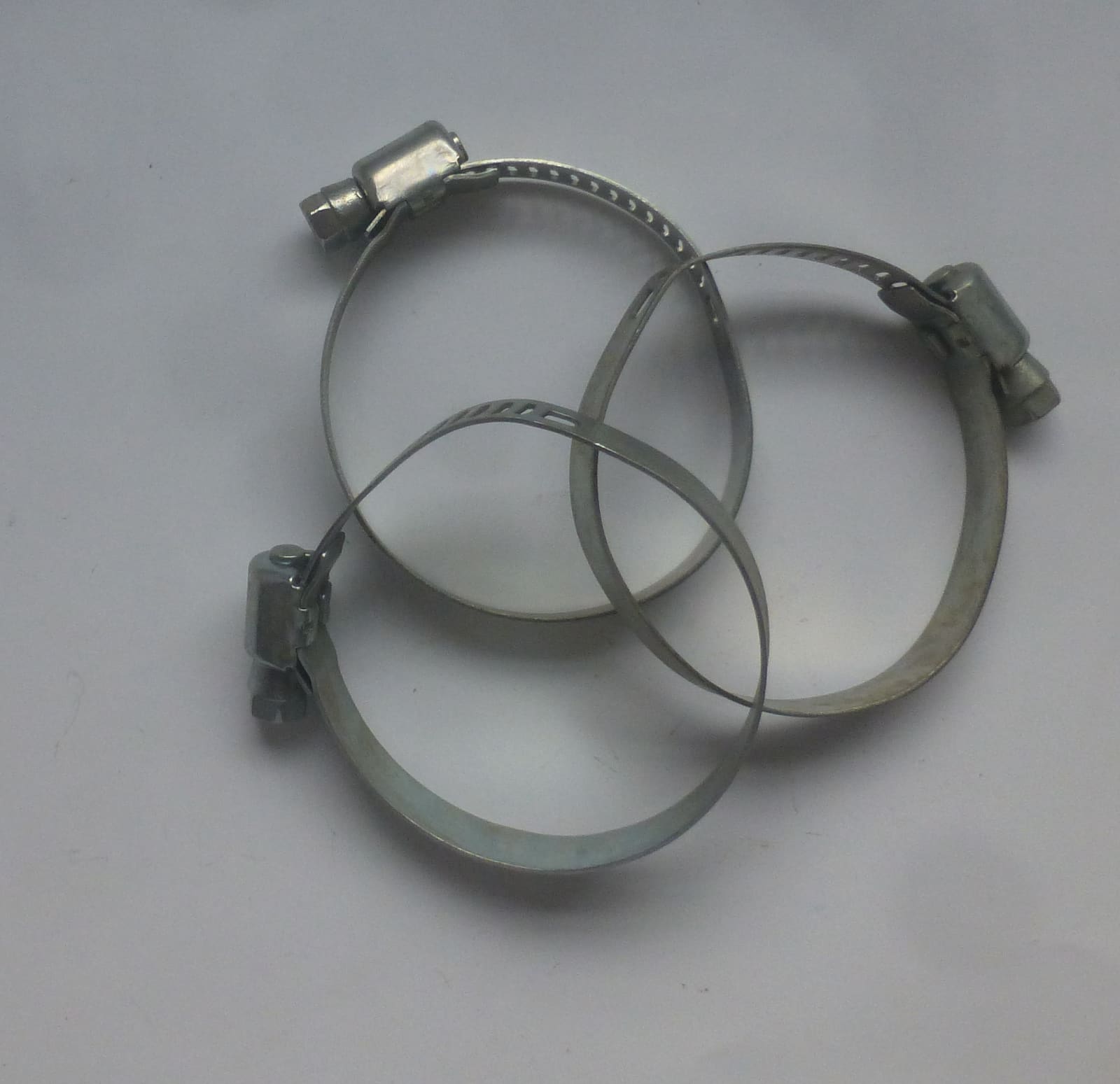
Hose Clamps on Boats: Choosing, Installing and Inspecting Them
A rusted or wrong hose clamp can sink a boat at the dock, leak fuel or let exhaust into the cabin. Learn which clamps belong on a boat (all-316 stainless, embossed band, T-bolt where needed), when to double them, how tight is tight enough, and how to find the ones that are about to fail.