How to Size a House Battery Bank: Load List, Usable Capacity and Charging
Work out how many amp-hours your boat really uses in a day, how much of a battery's rated capacity you can actually use with lead-acid, AGM or lithium, how much reserve to add, and how your charging sources change the answer, so you buy the right house bank the first time.

Time
2 h
Applies to
All engines
Safety first: This guide is planning on paper and reading meters, which is safe. Buying and installing a bigger bank is not a small change: more amp-hours means bigger cables, bigger fuses and more stored energy that can start a fire if something shorts. Have a new or larger house bank, and any lithium installation, done or checked by an ABYC-certified marine electrician. If a battery is hot, swollen, leaking or smells of rotten eggs or burning, switch it off, ventilate and call a pro; if there's smoke or fire, get everyone off and call 911 or the Coast Guard on VHF 16.
Owners often ask
- How many amp-hours of house battery do I need for a weekend at anchor?
- How much of a 100 Ah battery can I actually use, lead-acid versus lithium?
- Does discharging my lithium house battery deeper every day shorten its life?
This guide walks you through it. Still stuck? Ask the AI Mechanic about your engine.
Tools
- Notebook, spreadsheet or the BoatMend notes for a load list
- Owner's manuals or spec labels for each electrical device
- Clamp meter that reads DC amps, or the boat's battery monitor (optional but very helpful)
- Calculator
Parts & supplies
- None for the planning; batteries, cables and charging gear only after the numbers are done
Before you start
The short version: add up how many amp-hours (Ah) you use between charges, divide by the fraction of the battery you can actually use, add some reserve, then check that your charging sources can put it all back.
Amp-hours in one sentence: a device that draws 5 amps for 4 hours uses 20 Ah. Soundings compares it to kilowatt-hours on a home electric bill: what matters is both how much current something draws and for how long.
Why boats come up short: builders often fit a bank and alternator for weekend use. Bob Williams, writing in Blue Water Sailing, notes that most builders don't size the electrical system for cruising, so owners who add a fridge, an inverter, bigger electronics or overnight stays find the bank too small. The same problem hits fishing boats with livewells and big displays, and pontoons with stereos.
Starting battery is separate: this guide sizes the house bank. Keep a separate starting battery sized for your engine (see marine battery care); Practical Sailor notes that ABYC's lithium standard leans toward lead-acid for engine starting.
Steps
Walk the boat and the breaker panel and write down everything that uses 12-volt power: lights, electronics, VHF, fridge or cooler, pumps, fans, stereo, USB outlets, windlass, trim, livewell, autopilot, and anything that runs through an inverter. Battle Born suggests the same starting point: list every load on the boat, then work out how much each one uses in a day.
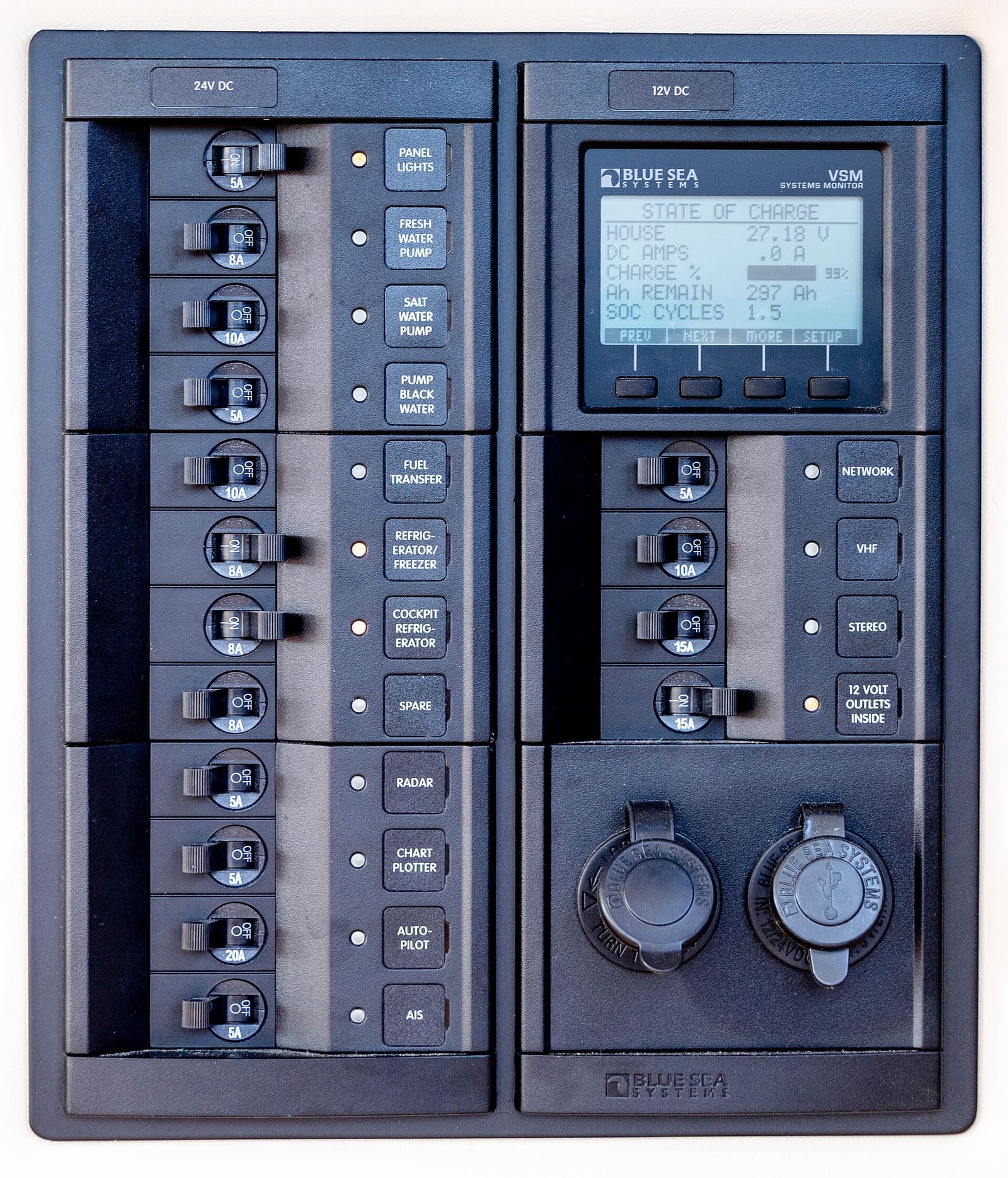
Your breaker panel is a ready-made load list, and a battery monitor like the one on the right shows what the bank really has left. Photo: Craig Stanfill / Wikimedia Commons · CC BY-SA 2.0 Get the amps for each device from its manual or label (if only watts are given, divide by about 12 for a 12-volt device). Better still, measure: with a DC clamp meter around the device's positive wire, or by watching your battery monitor's amps reading while you switch one thing on at a time. Battle Born describes this method: switch everything off, note the baseline ("vampire") draw, then turn each item on in turn and note how much it adds.
Don't forget the small always-on loads: stereo memory, monitors, radio standby, CO and bilge alarms. They are small but run 24 hours a day.
For each load, estimate how many hours it runs in a typical day of the way you actually use the boat. Use average use: a fridge compressor cycles on and off, an anchor light runs all night, the windlass runs a few minutes. Blue Water Sailing advises being conservative. If you anchor out and also cruise, Battle Born suggests working out an "at anchor" day and an "underway" day separately and using the bigger of the two.
Multiply amps by hours for each load and add them up. A simple example (illustrative only; use your own numbers):
Load Amps Hours/day Ah/day LED cabin lights 2 4 8 Anchor light (LED) 0.2 10 2 Fridge (average while cycling) 2.5 24 60 Chartplotter and instruments 3 5 15 Water pump, fans, phone charging — — 10 Total 95 AC appliances running through an inverter draw far more from the batteries than people expect. Blue Water Sailing's rule for a 12-volt system: divide the appliance's watts by about 12.5 volts, then add about 10 percent for inverter losses, then multiply by hours of use. A coffee maker that runs briefly can be manageable; a space heater or air conditioner on an inverter usually is not. See inverter safety.
If you have a battery monitor with a shunt, do a real test: with the charger off, use the boat normally for a day and read the amp-hours consumed. Battle Born describes this as the second, easier audit method. Compare it with your paper total; real life is usually higher.
A battery's rated amp-hours are not all usable:
- Flooded, AGM and gel lead-acid: Soundings' rule is to never discharge the house bank below about 50 percent, so the bank must be at least twice the amp-hours you use between charges. Blue Water Sailing gives the same rule of thumb for long battery life.
- Lithium (LiFePO4): BoatUS notes lithium batteries can be discharged much deeper without damage, so more of the rating is usable. Many owners plan on using most, but not all, of the rated capacity (around 80 percent is a common planning figure); your battery maker's datasheet and warranty give the real limit and the BMS cut-off.
How deep you cycle also decides how long the bank lasts. Victron, for example, publishes its LiFePO4 "Smart" batteries' design life at three depths: about 2,500 cycles when discharged 80 percent each time, 3,000 at 70 percent and 5,000 at 50 percent. Other makers rate theirs differently, so compare datasheets at the same depth of discharge, not just the headline cycle count. A slightly bigger bank that you only half-empty can outlive a smaller one you run down every day.
So in the example, 95 Ah a day needs roughly 190 Ah of lead-acid, or roughly 120 Ah of lithium on that planning figure, before any reserve.
Then add margin:
- Charging gaps: Soundings suggests three times the expected load for extended cruising, because recharging is harder and batteries often don't get back to full.
- Partial charging: lead-acid batteries charged by an alternator on short runs often don't reach full charge, so the "top" of the bank isn't always there.
- Aging and cold: capacity drops as batteries age and in cold weather.
- Growth: Battle Born suggests sizing up about 30 percent to leave room for loads you will add later.
A bank is only as good as its charging. List your sources and what each can realistically return per day:
- Engine alternator: depends on alternator size, rpm and how long you run. Small outboards return little; see battery isolator types. Mercury points out that the rated output on a spec sheet is a maximum; what actually reaches the batteries is less, after the engine's own loads, and output climbs with rpm, so hours at idle or trolling speed return much less than the rating suggests.
- DC-to-DC charger for a lithium bank: limited to its rating while the engine runs; see the DC-to-DC charger guide.
- Shore charger: at the dock, sized to the bank. Boating Magazine notes a lithium bank usually needs a lithium-specific shore charger to reach full between trips.
- Solar and wind: Soundings says they can be deducted from the consumption total; see solar panel care for keeping panels producing.
- Generator: for big boats; see generator load management.
If your charging can't replace a day's use in a reasonable time, a bigger bank only delays the problem. Sometimes the right answer is more solar or a bigger charger, not more batteries.
The cheapest amp-hour is the one you don't use. Soundings points to LED lighting and newer, more efficient refrigeration compressors as the biggest wins. Turn off unused electronics at the panel, and run big AC appliances only on shore power or the generator.
With your target capacity:
- Don't mix old and new batteries, or different types, in one bank. Blue Water Sailing calls adding new batteries to old "bad science," because the old ones pull the new ones down.
- Fit the physical space, weight limits and ventilation you have. Lead-acid weighs much more per usable amp-hour than lithium.
- Size every cable, fuse and switch for the new bank, and set every charger to the new battery type. A bank upgrade is a system change, not a battery swap.
Log your load list, daily amp-hours, chosen bank size and charging sources in BoatMend. After the first season, compare with what the battery monitor shows and adjust. Re-run the numbers whenever you add something big, like a fridge, inverter or stereo amplifier (see stereo amplifier battery bank).
Common mistakes
- Counting a 100 Ah lead-acid battery as 100 usable amp-hours.
- Forgetting always-on loads, the fridge's night-time running and the anchor light.
- Ignoring inverter losses, or planning to run a heater or air conditioner from the batteries.
- Buying a big bank that the alternator and charger can never refill.
- Adding one new battery to an old bank.
- Using a voltmeter to judge state of charge on a lithium bank, where voltage barely changes until it's nearly empty; use a monitor.
- Sizing for the dock and then spending a week at anchor.
When to call a pro
- Any bank upgrade that changes cable sizes, fuses, the battery switch or the charging system
- Moving to lithium, or mixing lithium with existing lead-acid gear
- Adding an inverter, a big alternator or an external regulator
- 24-volt or 48-volt systems, or separate trolling-motor banks on the same boat
- Batteries that never seem to reach full charge even with the numbers right (see charging system test)
Tips
- Write the daily total on a card by the battery switch: it helps everyone aboard understand why the fridge setting matters.
- A battery monitor pays for itself the first season by showing what really uses power.
- Plan the bank around your longest typical stretch without charging, not your average day trip.
- Keep the starting battery out of the house calculation; it's your backup for getting home.
Official references
We read these to write this guide. Your engine's own manual always wins.
- Soundings – Sizing Batteries
- Battle Born Batteries – Performing an Energy Audit to Size Your Lithium Power System on a Sailboat
- Blue Water Sailing – Offshore Power Management
- BoatUS – The Latest On Lithium Batteries
- Practical Sailor – A LiFePO4 Buyer's Guide
- Boating Magazine – The Basics of DC-to-DC Marine Battery Chargers
- Victron Energy – Lithium Battery Smart 12.8V (product specifications)
- Mercury Marine Dockline – The Mercury Alternator Advantage
Safety: BoatMend is for information only and does not replace a certified marine technician. You are responsible for your safety and your boat. Read the full disclaimer.
Last updated 2026-10-26
Related guides
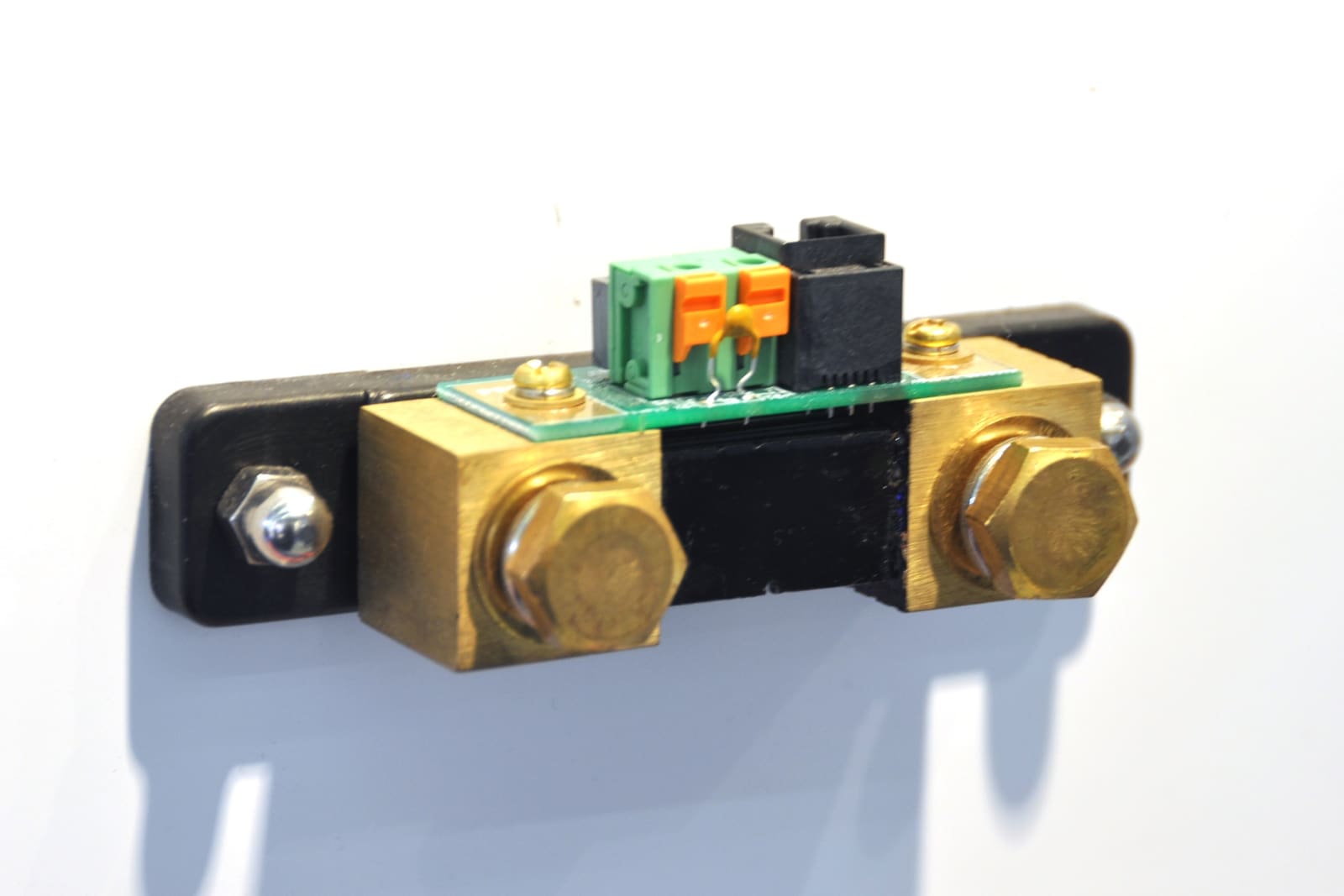
Battery Monitors with a Shunt: Installing, Setting Up and Reading State of Charge
A voltmeter can't tell you how full your house battery really is. Learn how a shunt-based battery monitor counts every amp going in and out, where the shunt goes on the negative side, which settings to change for lead-acid or lithium, and how to read the percentage without being fooled.
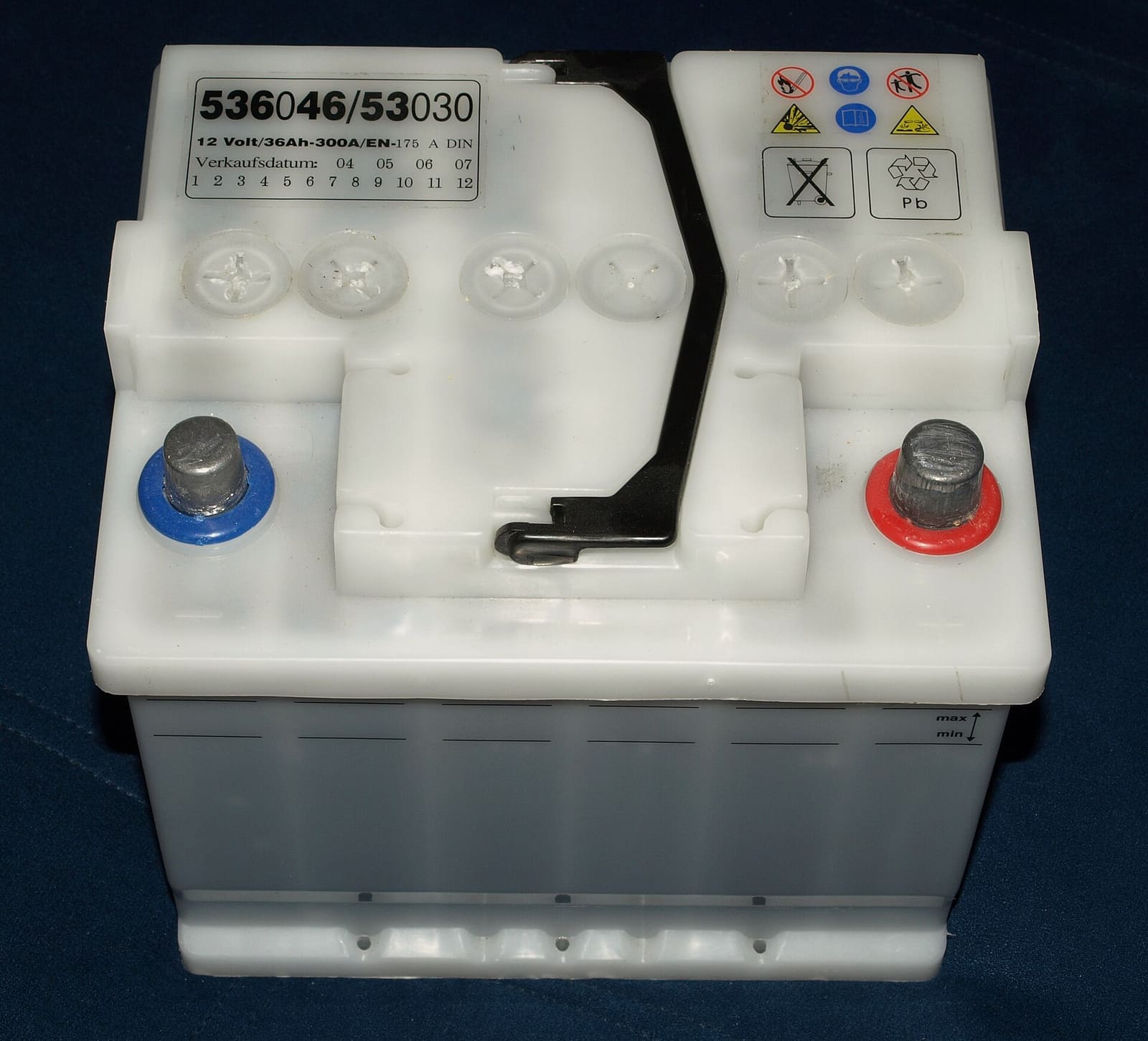
Marine Battery Care: Test, Charge and Store for Winter
Check your boat battery's health, charge it the right way for its type (flooded, AGM or lithium), and store it so it is ready in spring. Most "boat won't start" calls start with a neglected battery.
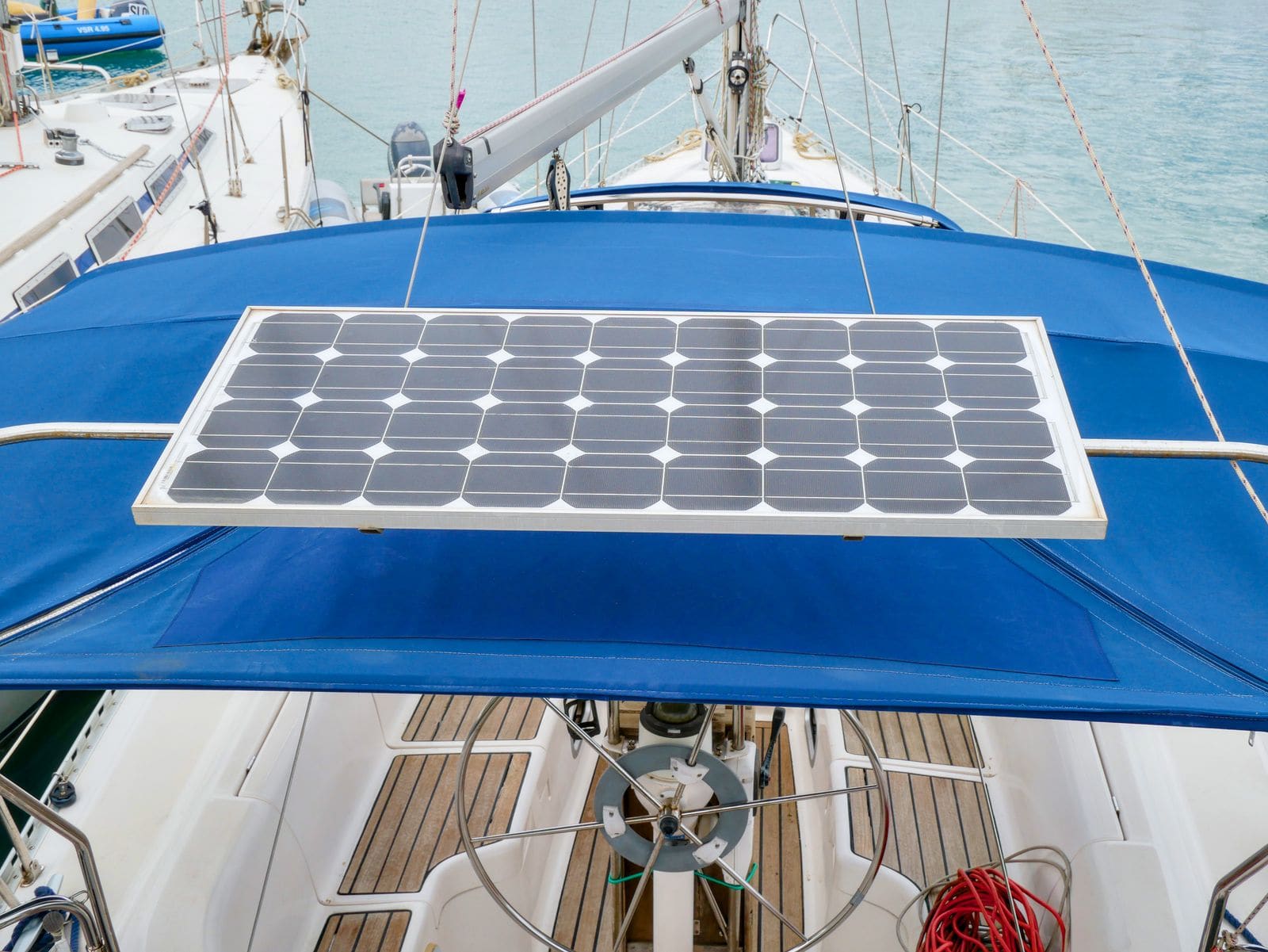
How to Care for Boat Solar Panels, Connectors and the Charge Controller
A boat solar setup is quiet and almost maintenance-free, but salt, shade, loose connectors and a wrong battery setting quietly cut its output or hurt the batteries. Learn the cleaning, inspection and controller checks to do each season, and how to leave the system for winter.
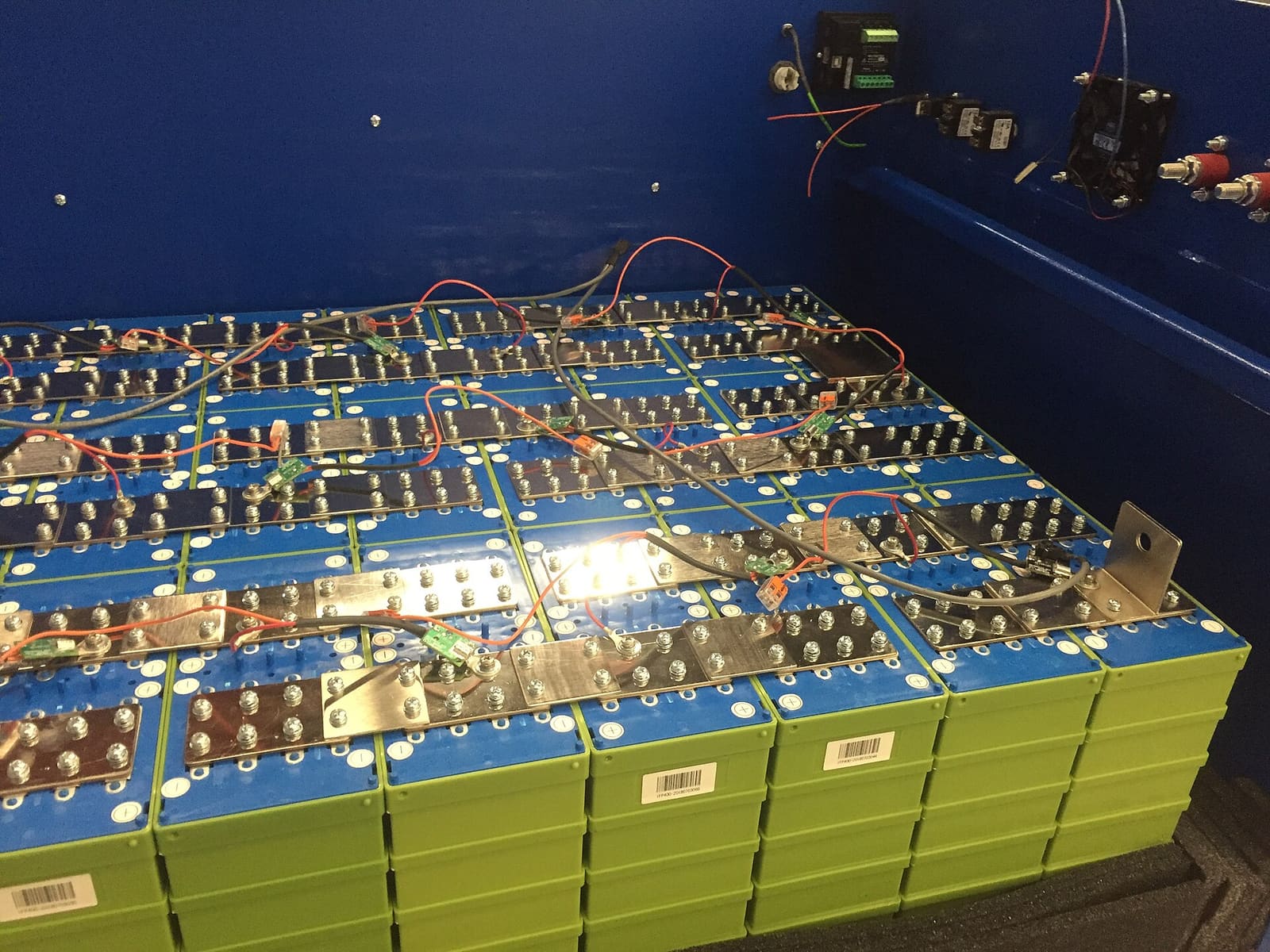
Switching to Lithium (LiFePO4) Boat Batteries: What Changes and When It's Worth It
What really changes when you swap lead-acid for lithium iron phosphate (LiFePO4) batteries on a boat: the battery management system, charger settings, protecting the alternator with a DC-DC charger, not mixing chemistries, cold-weather charging, and which jobs (trolling, house, starting) suit lithium. House-bank conversions should be designed and installed by a qualified marine electrician.

Installing a DC-to-DC Charger: Charging a Lithium or Second Battery Bank from Your Engine
A DC-to-DC charger lets the engine's alternator refill a lithium (or separate) house bank with the right charge profile while protecting the starting battery and the alternator. Learn why you need one, where it can and can't be mounted, how the fusing and cable sizing work, and which settings matter, so you can plan the job or check a technician's work.
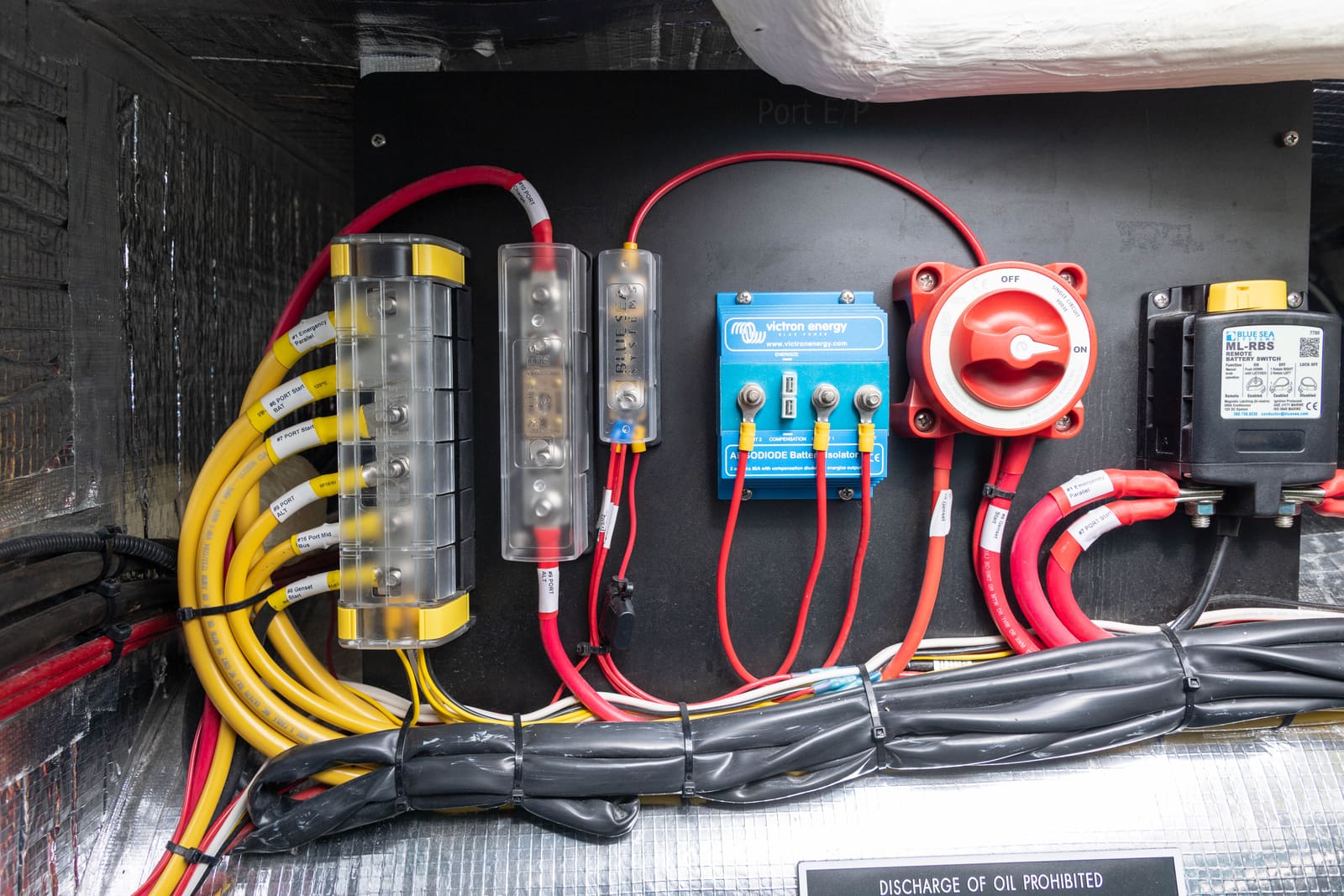
Battery Isolators Compared: Diode, ACR, Combiner and DC-DC Charger
Learn what the box between your engine and your batteries actually does, why an old diode isolator can leave batteries never quite full, and which charging setup suits an outboard, an inboard or a lithium house bank, plus a simple meter check of the one you have.
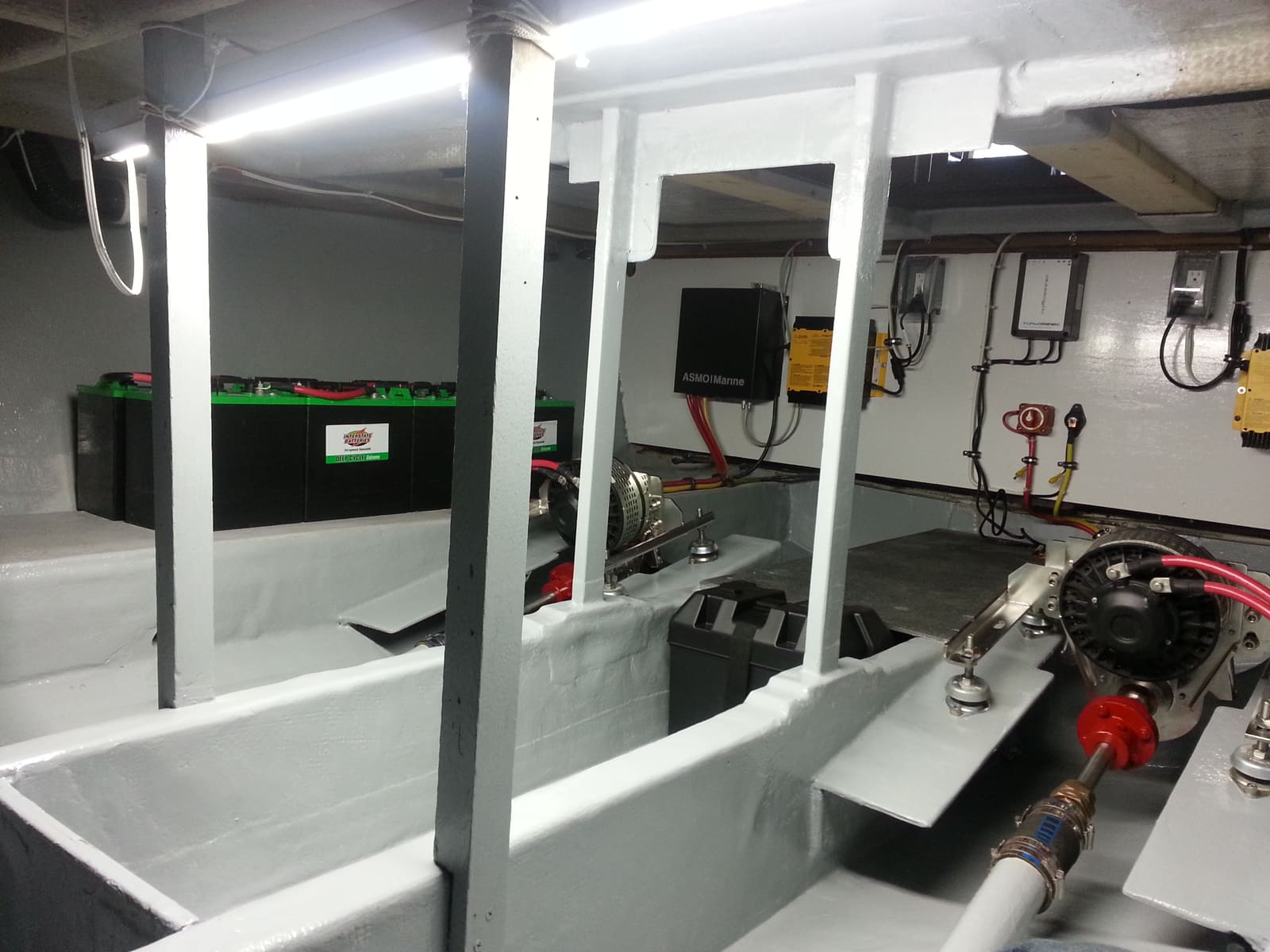
How to Choose, Install and Maintain an Onboard Battery Charger
Pick the right marine charger for your batteries (how many banks, how many amps, flooded, AGM or lithium), mount and fuse it safely, set the charge profile, and use it to keep batteries healthy all season and through the winter. The AC (shore power) side is a job for a marine electrician.
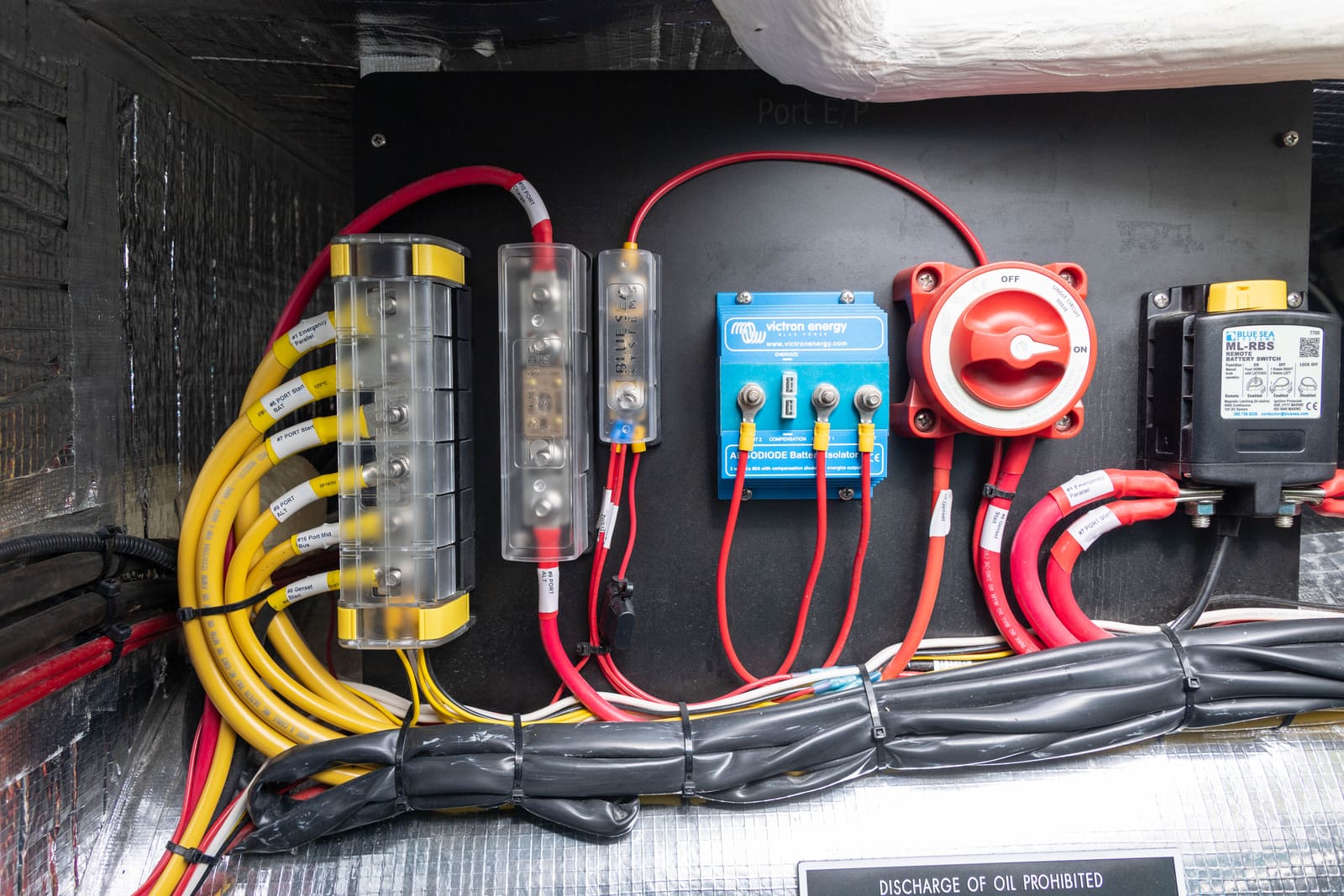
Boat Inverters and Inverter/Chargers: Sizing, Safe Use and What a Pro Must Install
An inverter turns battery power into 120-volt household current, which makes it as dangerous as shore power and a serious fire risk if it is fused or wired wrong. Learn how to size one realistically, what a safe installation looks like, the owner checks to do, and the mistakes (like backfeeding) that hurt people.
Powering a Big Boat Sound System: Amplifier Draw, an Audio Battery and Charging
Work out how much current your amplifiers really pull, size a dedicated audio battery, keep it charged with an automatic charging relay or isolator, and fuse and wire it so a long day of music never leaves you unable to start the engine.
Running a Boat Generator at the Right Load: Switching Sequence, Balancing and Avoiding Wet Stacking
Get more life out of your marine generator by starting and stopping it with the AC loads off, switching sources in the right order, keeping it loaded enough to avoid wet stacking and carbon buildup, and moving small loads to the inverter. Includes a simple monthly exercise routine.