Fuel Demand Valves: Troubleshooting the Valve That Holds Back a Sealed Tank
Modern EPA-compliant fuel tanks stay sealed and build pressure in the sun, and a fuel demand valve keeps that pressure from pushing gasoline into the engine when it's off. Learn how it differs from an old-style ball anti-siphon valve, the symptoms of one that sticks closed or leaks through, how to rule out cheaper causes first, and why the replacement must be the same type, never a ball valve.
Time
1 h 30 min
Shop would charge
$100-400
Applies to
Outboard, Sterndrive (I/O), Gas inboard
Safety first: Work on fuel parts only outdoors or with the engine compartment open and well ventilated, engine off and cool, batteries switched off, and no smoking, flames or power tools nearby. Catch every drop in an approved container and keep an extinguisher within reach. If you smell gasoline in a closed engine compartment or see fuel in the bilge, don't start the engine or touch switches; get everyone off the boat and call 911, or the Coast Guard on VHF channel 16 if you're on the water, and have a qualified technician fix it.
Fuel smell, water coming in, CO alarm or smoke? Stop, get everyone in life jackets and call USCG on VHF 16 or 911. For a tow: Sea Tow or TowBoatUS.
Owners often ask
- My new EPA portable tank swells in the sun and floods my outboard with gas. Do I need a fuel demand valve?
- Boat dies at speed and restarts after a few minutes. Could the fuel demand valve on top of the tank be sticking?
This guide walks you through it. Still stuck? Ask the AI Mechanic about your engine.
Tools
- Flashlight or headlamp
- Screwdriver or nut driver for hose clamps
- Sharp hose cutter or utility knife (for in-line valves)
- Clean glass jar or approved gasoline container for draining the line
- Oil-only absorbent pads and clean rags
- Nitrile gloves and safety glasses
- Fire extinguisher within reach
- Known-good portable tank and fuel line (outboards, for a substitution test)
- Fuel vacuum/pressure gauge (optional; advanced test)
Parts & supplies
- Replacement fuel demand valve of the same type and maker your engine, tank or boat builder specifies
- USCG-rated marine fuel hose (if the old hose is hard, cracked or its liner has separated)
- All-316 stainless hose clamps
- Pre-rigged fuel line with the valve built in (an easy option for portable tanks)
Before you start
Older boat fuel tanks breathed freely through an open vent. Today's emissions rules changed that. Under the EPA rule (40 CFR 1060.105), a portable marine fuel tank must seal itself when it's unhooked, must not vent to the air while it's connected, and must hold pressure up to 3.5 psi before any outlet opens (it may let air in when there's a vacuum). Many built-in tanks on newer boats are also sealed or vented through carbon canisters, and Practical Sailor notes that unlike older freely vented boats, these systems can build some pressure.
BoatUS describes the side effect: on a hot day, a sealed tank bulges, and that pressure pushes gasoline through the hose into the engine. Many outboards have nothing to hold it back, so fuel ends up in the engine, in the cowl, in the water or on the driveway.
A fuel demand valve (FDV) solves that. It sits between the tank and the engine (on portable setups, between the tank and the primer bulb) and only lets fuel through when the engine "demands" it by pulling a vacuum. Perko describes its valve as diaphragm-operated, opening at a low vacuum regardless of tank pressure.
Where you'll find one:
- Portable tanks: an in-line valve in the fuel line near the tank, or built into the tank's fitting. Many current tanks and pre-rigged fuel lines include one.
- Built-in tanks: a valve threaded or bolted onto the top of the tank at the fuel pickup, often doing double duty as the anti-siphon device.
This guide helps you decide whether the valve is the problem. Our anti-siphon valve guide covers older ball-type valves on vented tanks.
Steps
A traditional anti-siphon valve uses a spring-loaded ball. It stays closed against the weight of fuel trying to siphon out of a broken line, and the fuel pump's suction pulls it open. That works on a tank vented to the air.
On a sealed tank, the pressure pushes in the same direction as the fuel flow, so it can help push a ball valve open. A demand valve's diaphragm is pulled open only by the engine's suction, not by tank pressure. Perko's version, for example, is made to stay sealed against tank pressure above 5 psi, open at a slight vacuum (under 1 psi), and still provide anti-siphon protection for a limited drop in the fuel line below the tank top (12 inches on its standard model).
That's the key point of this guide: the two valves are not interchangeable.
A demand valve fails in one of two ways:
- Stuck closed or opening too hard (stiff or swollen diaphragm, debris, wrong valve): the engine starves for fuel. It may idle fine but stumble or die at higher speed or under load, then restart after sitting a few minutes. On outboards, the primer bulb may collapse while the engine runs.
- Leaking through (torn diaphragm, debris holding it open, or no valve at all): pressure pushes fuel to the engine while it's off. Look for hard hot starts, a strong fuel smell, fuel dripping from the cowl or carburetor, or a rising oil level on a four-stroke (gasoline in the oil).
Owners often discover the second one after buying a new EPA tank and using their old fuel line with no demand valve. A new tank that swells in the sun and an engine that floods suggest exactly that.
Neither symptom proves the valve is bad. Work through the cheaper checks first.
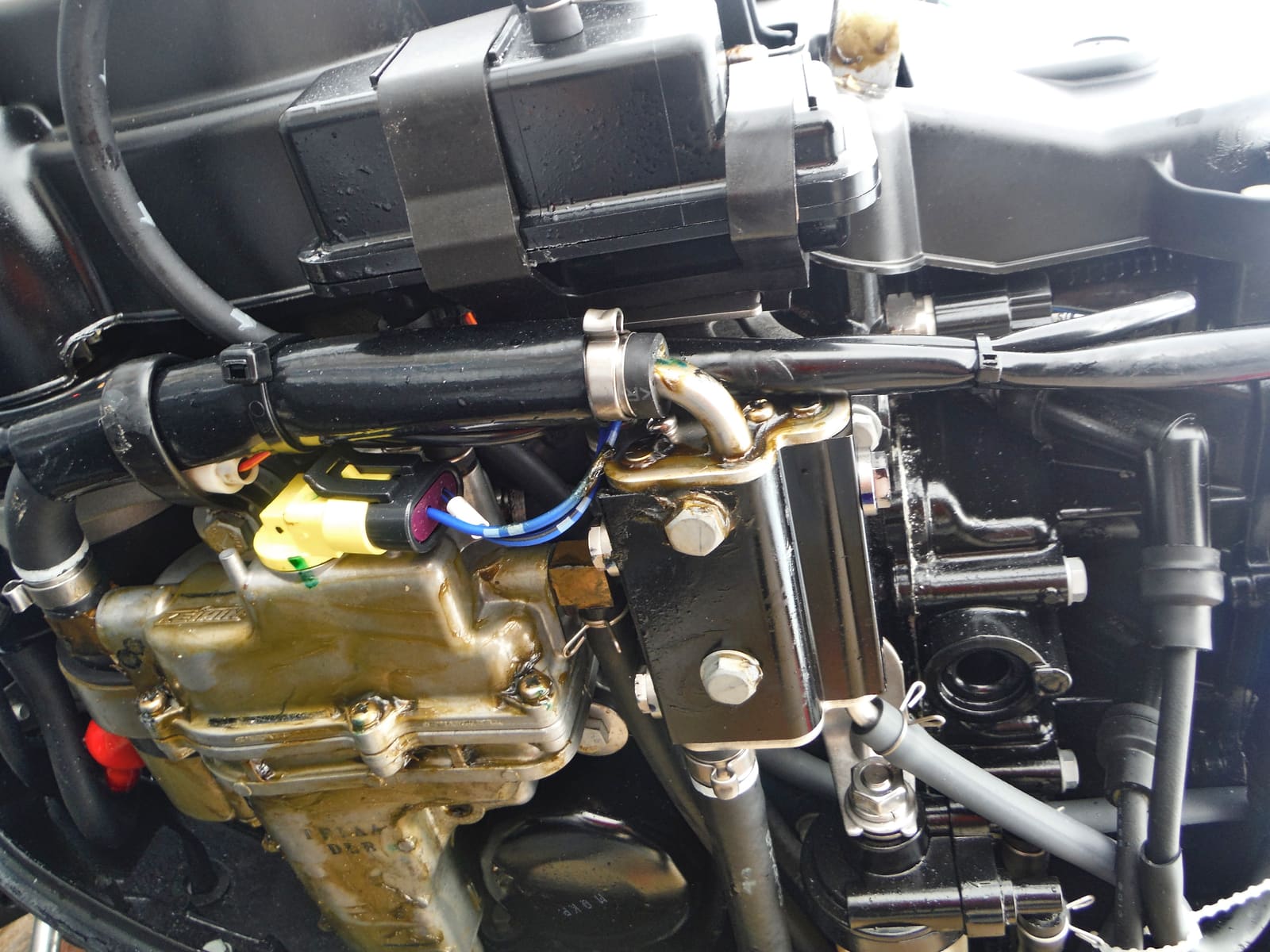
Fuel parts under the cowl of a small fuel-injected outboard. They're meant to receive fuel the engine's own pump draws in, not fuel pushed in by a sealed tank under pressure. Photo: PtiBzh / Wikimedia Commons · CC0 - Portable tank: most EPA tanks have a manual vent on the cap. Open it before connecting and while running if the tank maker says to. A tank that's sucked in (dented inward) while running points to a vent problem; one that's bulging points to pressure the valve should be holding back.
- Built-in tank: remove the fill cap and listen. Practical Sailor notes that a puff of air on a freely vented pre-2012 boat signals a vent restriction; on newer sealed or canister systems, some pressure can be normal. Check the vent fitting on the hull for mud-dauber nests, paint or a crushed hose.
Squeeze the bulb with the engine off. It should firm up and stay firm. A bulb that never firms up, or a quick-connect fitting that leaks or sucks air, can mimic a valve problem. Check that the bulb's arrow points toward the engine; BoatUS warns that a reversed bulb keeps the engine from starting. Our primer bulb guide covers replacement.
A clogged filter starves the engine exactly like a stuck valve. Replace the fuel-water separator element (and inspect the bowl for water) before suspecting anything more expensive. See our fuel-water separator guide.
BoatUS ran into a sneaky one while installing a demand valve: the inner plastic liner of a newer ethanol-resistant fuel hose had separated, and pushing the hose onto the valve's barbs shoved the liner back and blocked the flow. Look for hoses that are hard, cracked, swollen, kinked or soft and collapsing under suction. If in doubt, replace the hose, or use a pre-rigged fuel line with the valve already installed.
If you have a portable tank and line that you know work, with a working demand valve, run the engine from it in the water or on external flush muffs (never dry). If the problem disappears, the fault is between the original tank and the engine: vent, valve, line or bulb. If it stays, look at the engine's own fuel system instead.
A technician can put a vacuum gauge in the line between the valve and the engine's fuel pump and run the engine under load. High vacuum with a clean filter and good hoses points to a restriction at the tank, which on a built-in tank is often the demand valve or a clogged pickup screen below it. Compare readings with the engine maker's service limits. This is the clearest way to prove the valve is at fault before replacing a tank-mounted one.
- In-line valve: look for a small housing in the line near the tank with an arrow showing flow direction. The arrow must point toward the engine.
- Tank-mounted valve: on top of a built-in tank where the fuel line leaves it, often under a deck hatch. Perko and other makers build them flanged (bolted like a fuel gauge sender) or threaded into the tank.
Photograph the brand and part number. That tells you exactly what to replace it with.
BoatUS describes this as a simple job:
- Disconnect the line from the tank and engine, and drain it into a glass jar (disconnecting the primer bulb helps, since its check valve stops backward flow).
- Cut the line between the tank and the primer bulb, at least 8 inches from the tank, if you're adding a valve, or remove the old valve.
- Fit the valve with the arrow toward the engine, push the hose fully onto each barb and secure it with a stainless clamp.
- Reinstall the primer bulb the right way around.
Many owners find a factory pre-rigged fuel line with the valve built in is easier and avoids hose liner trouble. If the old gas looks clean, BoatUS says it can go back in the tank.
On some portable tanks the valve isn't in the line at all: it's part of the threaded outlet fitting that screws into the tank. Mercury's Quicksilver catalog, for example, sells a tank connection with a built-in demand valve that is listed for specific Quicksilver/Mercury tank sizes and described as meeting the EPA requirements for pressurized portable tanks. If yours is that type, buy the fitting listed for your tank's brand and size rather than adding a second valve in the line.
A valve on a built-in tank is part of the boat's certified fuel system. Replace it only with the same type and part (or the replacement the tank maker or boat builder specifies), fitted with the correct thread sealant or gasket. Hold the tank fitting so it can't turn while you loosen the valve, and work with the tank well below full. If the valve is hard to reach, corroded, or the tank fitting looks damaged, this is a job for a marine technician.
It's tempting to swap a balky demand valve for a cheap ball-type anti-siphon valve, or to pull the valve out altogether. Don't:
- A ball valve can't reliably hold back sealed-tank pressure, so you're back to fuel pushing into the engine and, on an inboard or sterndrive, possibly into the bilge.
- The Coast Guard's rule (33 CFR 183.568) still requires anti-siphon protection, an electric fuel stop valve, or approved manual shut-offs on built-in tanks where the line runs below the tank top. On many boats, the demand valve is that protection.
Reconnect, squeeze the primer bulb (outboards) or turn the key to let an electric pump prime (follow your engine manual), and inspect every new connection with a dry white rag before starting. On an inboard or sterndrive, run the blower for at least four minutes and sniff the bilge before starting, as BoatUS recommends. Any drip or smell: shut off, fix it, and check again.
Run at idle, then cruise, then wide open for a few minutes. The engine should hold speed without surging or dying, and an outboard's primer bulb should stay full. Afterward, let the boat sit in the sun with the engine off and check for fuel smell or drips at the engine. That confirms the valve is holding back the tank pressure.
Common mistakes
- Using an old fuel line without a demand valve on a new EPA tank, then flooding the engine or spilling fuel.
- Installing the valve or the primer bulb backward.
- Replacing a demand valve with a ball-type anti-siphon valve "because it's the same thing."
- Removing the valve to cure a starvation problem instead of finding the cause.
- Blaming the valve before checking the tank vent, filter, primer bulb and hoses.
- Pushing a newer lined hose onto valve barbs without checking that the liner didn't fold back.
- Leaving the tank's manual vent closed on a model that asks you to open it.
- Letting fuel drip into the bilge while working on a tank-mounted valve.
When to call a pro
- Any fuel smell in a closed engine compartment, or fuel in the bilge
- Replacing a valve mounted on a built-in tank, or a corroded or damaged tank fitting
- Repeated fuel starvation after the filter, hoses, vent and valve check out
- Gasoline in the engine oil, or an engine that floods even with a new valve
- Unsure whether your boat's fuel system is sealed, canister-vented or freely vented
- Any work on a gasoline inboard or sterndrive fuel system you're not comfortable doing
Tips
- When you buy a new portable tank, buy the matching fuel line with the demand valve built in at the same time.
- Keep a spare in-line valve (the same model) and two stainless clamps in your onboard spares kit.
- Park the boat or tank in the shade when you can; less heat means less pressure for the valve to hold back.
- Write the valve's maker and part number in your boat profile so the next replacement is the right one.
Official references
We read these to write this guide. Your engine's own manual always wins.
- BoatUS – How To Install A Fuel Demand Valve
- Perko – Fuel Demand Valve, Complete Assembly
- eCFR – 40 CFR 1060.105, Diurnal requirements (sealed portable marine fuel tanks)
- eCFR – 33 CFR 183.568, Anti-siphon protection
- Practical Sailor – Installation Best Practices for Fuel Systems (carbon canisters and tank pressure)
- BoatUS – Preventing Explosions Aboard
- Mercury Marine – Quicksilver Fuel Tank Connection with Fuel Demand Valve (product page)
Safety: BoatMend is for information only and does not replace a certified marine technician. You are responsible for your safety and your boat. Read the full disclaimer.
Last updated 2026-10-25
Related guides
Fuel Anti-Siphon Valve: Diagnosing a Sticking Valve and Replacing It Safely
The anti-siphon valve at your built-in fuel tank stops gasoline from draining into the bilge if a fuel line breaks, but a cheap or sticky one can starve the engine at speed. Learn how to tell a restricted valve from a blocked vent or filter, how to clean or replace it with a quality valve of the right type, and why you should never pull the check ball out.
How to Diagnose and Replace an Outboard Primer Bulb
A primer bulb that won't firm up, collapses while you run, stays rock hard or weeps fuel is telling you something. Learn what each symptom means, how to rule out the tank vent and connectors first, then fit a low-permeation bulb with the arrow toward the engine, clamp it right and test it.
How to Replace an Outboard Fuel Line and Primer Bulb
A cracked hose or a stiff primer bulb can leak gasoline, starve your engine or shed rubber into the fuel. Learn how to choose Coast Guard-rated fuel hose, the right connectors for your engine brand and good stainless clamps, install the bulb pointing the right way, leak-test the job and get rid of the old parts safely.
Portable Gas Cans and Fuel Storage: Filling, Storing at Home and Aboard, and Getting Rid of Old Gas
Gas cans and portable boat tanks are handy and dangerous in equal measure. Learn what makes a modern can compliant, why you always fill it on the ground, how to store gasoline at home and on the boat, how long ethanol fuel really lasts, and how to dispose of old gas legally.
How to Inspect Your Boat's Fuel Tank, Fill, Vent and Hoses
A leaking gas tank is one of the most dangerous problems a boat can have, and it usually starts out of sight. Learn how to inspect portable and built-in tanks, spot aluminum tanks corroding from below, know the ethanol risk for old fiberglass tanks, and check the fill, vent, hoses, clamps and sender, plus why tank replacement is a job for a pro.
How to Inspect and Replace Boat Fuel Fill and Vent Hoses
Old fill and vent hoses crack, go soft and leak gasoline into the bilge, often where you can't see them. Learn the signs of aging, which USCG hose types (A1, A2, B1, B2) belong on fill and vent lines, why fill hoses need two clamps at each end, how to check the vent fitting, flame arrester and anti-spill devices, and how a careful replacement is done.
Fuel Smell on Board: What to Do and How to Find the Source
A gasoline smell on a boat is a fire and explosion warning. Learn what to do in the first minutes, the most common sources (fill and vent hoses, tank fittings, fuel lines, carburetors and injectors, overfilling), how to look safely, and when to stop and call a pro.
Loss of Power, Hesitation or Misfire - Troubleshooting Guide
Figure out why your engine bogs down, stumbles, will not reach full rpm or runs rough. Work from simple checks like trim, prop and fuel filter to ignition and engine protection modes before paying for diagnostics.
Engine Starts Then Dies - Troubleshooting Guide
Track down why your boat engine fires up and then stalls, whether at idle, when you shift into gear, or after a few minutes of running. Most causes are in the fuel supply and can be checked with no special tools.
How to Replace a Fuel/Water Separating Filter (and Check for Water in Your Fuel)
Swap the spin-on fuel/water separator on your gas boat and learn to spot water and ethanol phase separation before it stalls the engine. It is one of the cheapest jobs on the boat and one of the best protections for a fuel-injected engine.
Fuel Pump Checks - Is It the Pump or Something Starving It?
Bogging at speed, surging or dying after a few minutes is often blamed on the fuel pump, but vents, filters, primer bulbs and anti-siphon valves cause the same symptoms. Learn how mechanical, pulse and electric pumps work, the safe checks you can do, what the primer bulb is telling you, and why a real pressure test needs the right gauge and the factory spec.
Ethanol (E10) Fuel Care: Stabilizer, Phase Separation, Fuel Lines and Tank Vents
Keep E10 gasoline from damaging your boat engine. Learn how to use stabilizer, test for water and phase separation, and inspect the fuel lines, primer bulb, anti-siphon valve and tank vent. Most fuel-related breakdowns start with one of these.