EFI Outboard Cranks but Won't Start, No Key-On Beep or Fuel Pump Hum
When a fuel-injected outboard turns over but stays silent at key-on (no warning-horn chirp, no fuel pump priming), the engine computer usually isn't waking up. Work through the lanyard, battery voltage while cranking, main fuses, relays, harness plugs and grounds before anyone blames the computer.
Time
1 h
Shop would charge
$150-400
Applies to
Outboard
Safety first: If you smell gasoline at any point, stop. Don't crank the engine or make or break electrical connections until the fumes are gone and the leak is found; a spark can ignite them. Batteries can give off explosive gas: work with the battery area ventilated, keep sparks away and remove rings and watches. Never short across battery terminals or jump wires straight to the engine computer. If you're stuck on the water, anchor if you're drifting toward danger and call TowBoatUS or Sea Tow; use VHF channel 16 or 911 in an emergency.
Owners often ask
- My EFI outboard cranks but won't start, and there's no beep or fuel pump hum when I turn the key. Where do I start?
- Can a weak battery stop a fuel-injected outboard from starting even though it still cranks?
This guide walks you through it. Still stuck? Ask the AI Mechanic about your engine.
Tools
- Your engine owner's manual (fuse and relay locations)
- Digital multimeter
- A helper (to turn the key while you listen and measure)
- Flashlight
- Screwdrivers and small wrenches or sockets for battery terminals
- Wire brush or emery cloth for terminals
- Electrical contact cleaner
- Phone camera (to photograph plugs and wires before unplugging)
Parts & supplies
- Spare fuses of the exact ratings your engine uses
- Replacement relay with the same part number (only if testing points to it)
- Dielectric grease or a corrosion-protection spray for connectors
Before you start
What the beep and hum mean. On most fuel-injected (EFI) outboards, turning the key to ON (not START) wakes up the engine computer (ECM or ECU). On many engines you then hear a short chirp from the warning horn as a self-test, and the electric fuel pump runs for a few seconds to pressurize the system. Mercury, for example, describes its FourStroke outboards of 75 hp and up giving a beep at key-on, followed by the sound of the fuel pump priming the system.
What "cranks but no beep, no hum" tells you. The starter turning means the battery, the key switch and the starting circuit are at least partly working. But the computer, the horn and the fuel pump all need their own power path, usually through a main fuse, a main power relay, the kill-switch (lanyard) circuit and the harness plug between the boat and the engine. If the computer never wakes up, the engine gets no fuel and often no spark, so it cranks forever without catching.
Know your engine first. Not every model beeps at key-on, and some newer engines with digital gauges show a message instead of a chirp. Check the owner's manual for what yours normally does, and listen to it on a good day so you know what "normal" sounds like.
This is a diagnosis guide, not a computer repair guide. You can check power, fuses, relays, plugs and grounds safely. Anything inside the ECM, sensor diagnostics or reading fault codes needs a dealer's scan tool.
Steps
Make sure the shift lever is in neutral. Turn the key to ON (not START), then stop and wait three to five seconds, listening at the engine with the cowl off if you can. Many owners crank right away and never notice whether the pump primed.
- Beep and pump hum now present: the computer is waking up. Your no-start is a fuel or spark problem: see the fuel pump and no-spark guides.
- Beep but no pump hum: the computer is awake; look at the fuel pump fuse, the fuel pump relay and the pump circuit (step 7 and the fuel pump guide).
- Nothing at all: keep going.
On many engines the computer won't wake up, or won't allow the engine to run, unless the kill-switch circuit is closed. The Coast Guard describes the cut-off link as either a coiled lanyard or an electronic fob; once the link is reinstalled, the engine can be restarted.
- Make sure the clip is fully seated. Try your spare lanyard clip if you have one.
- Wiggle the switch while a helper turns the key on. A switch that's corroded inside can stay "open" even with the clip in place, and owners in forums often find this after hours of chasing other parts.
- With a wireless system, check the fob battery and that the fob is paired and within range.
Depending on the setup, BoatUS notes the engine may not even crank with the kill switch out; on others it cranks normally but never starts, which is exactly this symptom.
Put the multimeter on the battery posts (not the cable clamps).
- At rest: BoatUS suggests a minimum of 12 volts for starting. Lower than that, charge the battery and try again.
- While cranking: have a helper crank for a few seconds while you watch the meter. A battery can have enough left to spin the starter but sag so low during cranking that the computer drops out or resets, and the engine never fires. Your service manual or dealer can tell you the minimum cranking voltage for your engine.
If voltage drops hard, have the battery load-tested; Yamaha notes any auto parts store can do this. Then recheck the connections in step 4. A deep-cycle battery that's run flat by the stereo or fish finder is a common culprit.
Turn the battery switch off before you touch the cables. Yamaha recommends removing each terminal connection and cleaning both sides down to bare, shiny metal, then reinstalling it tight with hex nuts and lock washers, not wing nuts. A connection can look clean on the outside and still be corroded where the metal touches. Mercury's battery inspection quick tip adds two habits: use a correctly sized wrench rather than an adjustable one so it can't slip, and take the negative cable off before putting a wrench on the positive terminal, then refit the positive's rubber boot before reconnecting the negative. That keeps a slipping wrench from shorting the battery.
Check both cable ends: at the battery, at the battery switch, and where the cables bolt to the engine (the starter solenoid or a terminal block on the engine, and the engine ground).
Most outboards have a main fuse or fuses in a holder on the engine harness, often near where the battery cables come into the engine, plus several smaller fuses for the computer, fuel pump and accessories. BoatUS describes the typical main fuse as being in a red holder on the harness. Your manual shows yours.
- Pull each fuse and look at it in good light. A blown blade fuse has a broken or melted metal strip.
- Replace a blown fuse only with one of the same rating.
- Mercury's advice after an electrical fault is the right rule for all brands: replace the fuse and test, and if it blows again, get the dealer involved. A fuse that blows again means a short somewhere, and a bigger fuse only moves the damage to the wiring.
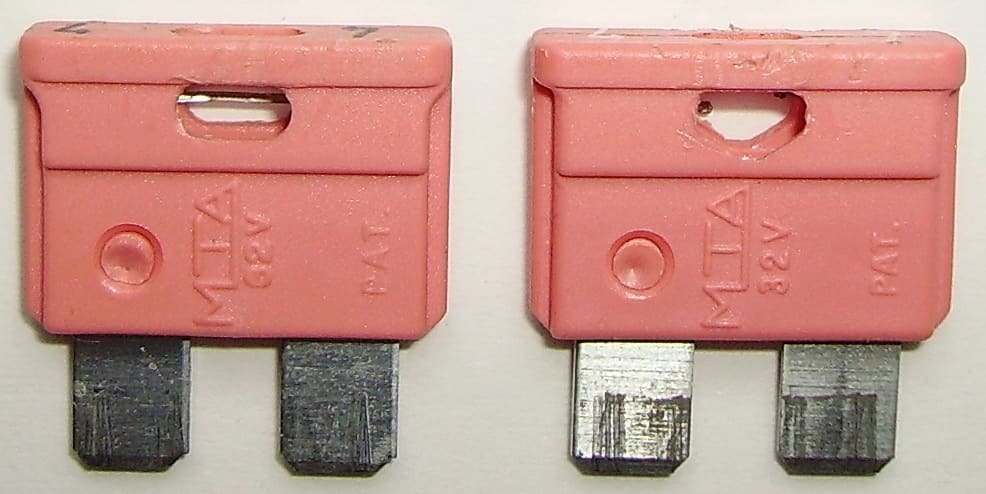
Blade fuses: the one on the left is good, the one on the right has blown. Look closely; the gap can be small. Photo: Cjp24 / Wikimedia Commons · CC BY-SA 3.0 Many EFI outboards power the computer, injectors and fuel pump through a main relay (sometimes called the main power relay or ECM relay), and the computer then switches the fuel pump relay. Have a helper turn the key to ON while you hold a finger on the relay or listen closely.
- A click: the relay is getting its signal. That doesn't prove its contacts are good, but it points away from the key switch and kill circuit.
- No click: the relay isn't being told to close (look upstream: lanyard circuit, key switch, a fuse, the harness plug), or the relay itself has failed.
If your engine uses two or more relays with the same part number (your manual or the printing on the relay shows it), you can swap a suspect relay with one that you know works and try again. If the problem moves, you've found it.
Look into the relay socket while it's out: green or white crust, a burned or melted spot, or a loose pin are common. Clean with contact cleaner, let it dry and reseat firmly. Never swap in a relay that merely "looks the same"; the internal wiring can differ.
BoatUS lists the main power plug between the engine wiring and the boat as a standard no-start check. On outboards it's usually a large round or rectangular plug under the cowl or near the rigging tube.
- With the battery switch off, unplug it, photograph it and look for corrosion, water, pins pushed back into the plug, or a broken latch.
- Clean, apply a light film of dielectric grease if your manual allows, and reconnect until it locks.
- Follow the harness to the helm. Behind the dash, look for loose or corroded connections on the back of the key switch and the kill switch, and for any accessory someone tapped into the engine harness.
A bad ground can kill the computer's power just as well as a bad positive wire. Find the main ground (negative) cable from the battery to the engine and any ground strap or wire bolted to the powerhead. Remove, clean to bare metal, reinstall tight and spray with a corrosion protectant. Yamaha also suggests wiggling wires and connectors to find loose ones, and checking under the dash and in the bilge where wires meet.
A no-beep, no-start that appears right after something else happened usually has a simple link:
- The battery was replaced or reinstalled backwards. Mercury says to check the fuse or fuseable link first, and then have a dealer inspect the boat, because a reversed battery can damage the voltage regulator, rectifier, gauges, the computer and wiring.
- New electronics or a new battery switch wired into the engine harness or key switch.
- Winter storage: rodents chewing harness wires (see the rodent prevention guide).
- You just refueled. On a boat with a built-in tank, BoatUS warns that a leaking fill hose can flood the bilge with so much gasoline vapor that the engine won't run, and that the danger comes when fresh air thins those fumes and a spark ignites them. If it refuses to start right after fueling, stop cranking, don't open hatches or flip switches, get everyone off and check for a spill (call 911 if you find one).
- A dunking or heavy spray into the cowl, or the engine was submerged (see the submerged engine guide and get it to a dealer quickly).
When the beep and pump hum come back, try to start it normally. If it still won't start, the computer is awake and the problem has moved to fuel or spark: water in the fuel filter, an empty or stale tank, a clogged vapor separator, a fuel pump that runs but doesn't build pressure, or an ignition fault. The fuel pump, EFI vapor separator and no-spark guides take it from there.
If you have good battery voltage while cranking, good fuses and grounds, a closed lanyard circuit and still no beep or prime, it's time for a dealer with the factory diagnostic tool. They can read stored fault codes and check the computer, key switch circuit and harness properly.
Tell them exactly what you found: voltage at rest and while cranking, which fuses and relays you checked, whether the relay clicks, and what changed recently. It saves diagnostic time, and diagnostic time is what you pay for.
Common mistakes
- Cranking straight away and never listening for the beep and pump.
- Forgetting the lanyard, or trusting a lanyard switch that's corroded inside.
- Measuring battery voltage only at rest; the drop while cranking is what matters here.
- Replacing a blown fuse with a bigger one.
- Buying a new computer or fuel pump before checking fuses, relays, plugs and grounds.
- Swapping in a relay that looks similar but has a different part number.
- Probing the back of computer plugs with meter leads, which can spread the terminals and create a new intermittent fault.
- Cranking for a long time with a weak battery, which overheats the starter and drains the battery further.
When to call a pro
- A fuse that blows again after you replace it
- The battery was installed backwards
- Good voltage, fuses, relays, plugs and grounds, and still no beep or prime
- Any water intrusion into the cowl, harness or computer, or a submerged engine
- Fault codes or a warning light you can't explain
- A fuel smell: stop cranking and find the leak first, or have it towed
- Stuck on the water: call TowBoatUS or Sea Tow; VHF 16 or 911 in an emergency
Tips
- Photograph the fuse and relay layout (and the labels) when everything works, so you have a reference on your phone.
- Keep a spare lanyard clip on board. Some no-start mysteries end with "the clip was half out."
- Carry spare fuses of each rating your engine uses in a small labeled bag.
- If your boat has a starting battery and a house battery, check that the battery switch selects the starting battery for the engine.
Official references
We read these to write this guide. Your engine's own manual always wins.
- Mercury Marine – Quick Tip, Priming Your Fuel System (key-on beep and electric fuel pump)
- Mercury Marine – Owner FAQs (reversed battery cables, fuse or fuseable link)
- BoatUS – What to Do if Your Outboard Won't Start
- BoatUS Magazine – Three Alarms That Can Save Your Boat (no-start right after fueling)
- Mercury Marine – Quick Tip, How to Perform a Battery Inspection
- Yamaha Outboards – Maintenance Matters, Electrical System
- US Coast Guard Boating Safety – Engine Cut-Off Switch FAQ
Safety: BoatMend is for information only and does not replace a certified marine technician. You are responsible for your safety and your boat. Read the full disclaimer.
Last updated 2026-10-24
Related guides
Engine Won't Start or Won't Crank - Troubleshooting Guide
Find out why your boat engine will not turn over or will not fire, starting with the simple things owners miss most, like the kill switch lanyard and battery switch. Many no-starts are fixed at the ramp in minutes without a tow.
Engine Cut-Off Switch (Kill Switch) and Lanyard: The Law, Testing and Daily Use
How the engine cut-off switch (ECOS) and its lanyard or wireless fob work, when federal law requires you to wear it (boats under 26 feet, 3 hp or more, on plane), how to test it before every trip, and why a spare clip aboard matters.
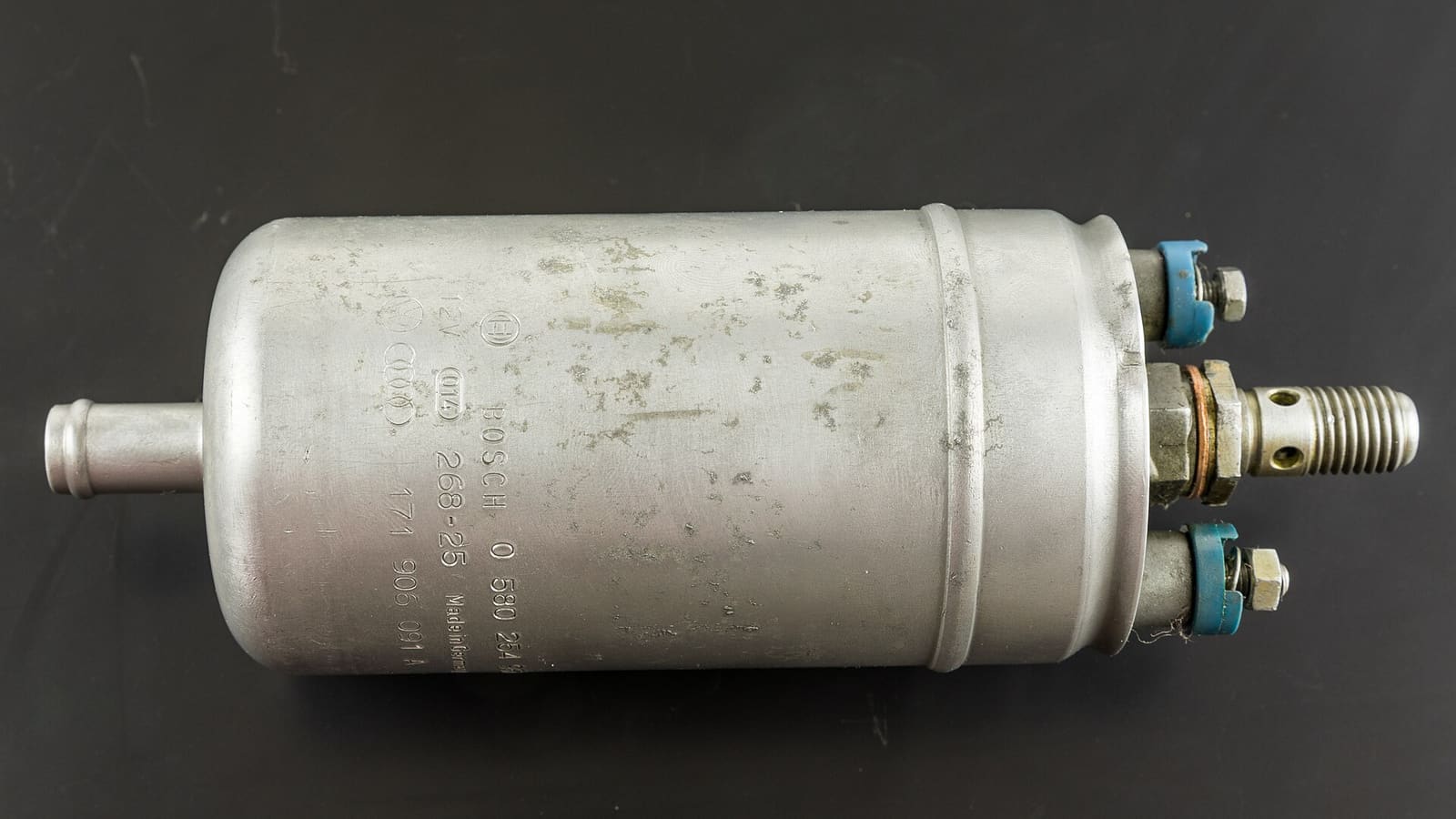
Fuel Pump Checks - Is It the Pump or Something Starving It?
Bogging at speed, surging or dying after a few minutes is often blamed on the fuel pump, but vents, filters, primer bulbs and anti-siphon valves cause the same symptoms. Learn how mechanical, pulse and electric pumps work, the safe checks you can do, what the primer bulb is telling you, and why a real pressure test needs the right gauge and the factory spec.
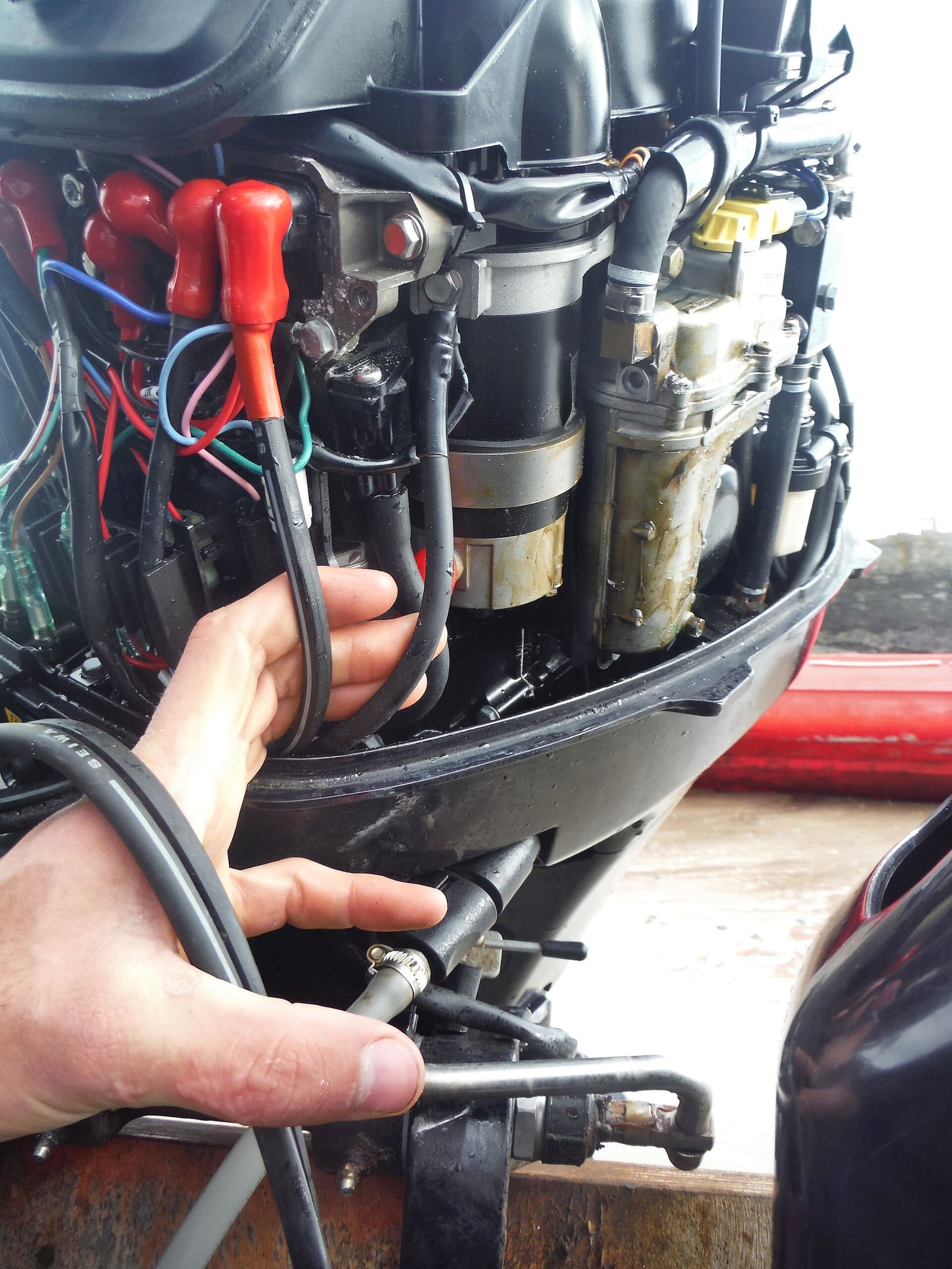
Engine Clicks but Won't Crank - Testing the Battery, Cables, Neutral Switch, Solenoid and Starter
A click (or nothing) when you turn the key is usually a power delivery problem, not a dead engine. Work from the battery and cables through the neutral switch, start relay and solenoid to the starter motor using simple voltage-drop tests, and learn how to jump-start safely when gasoline vapor may be around.
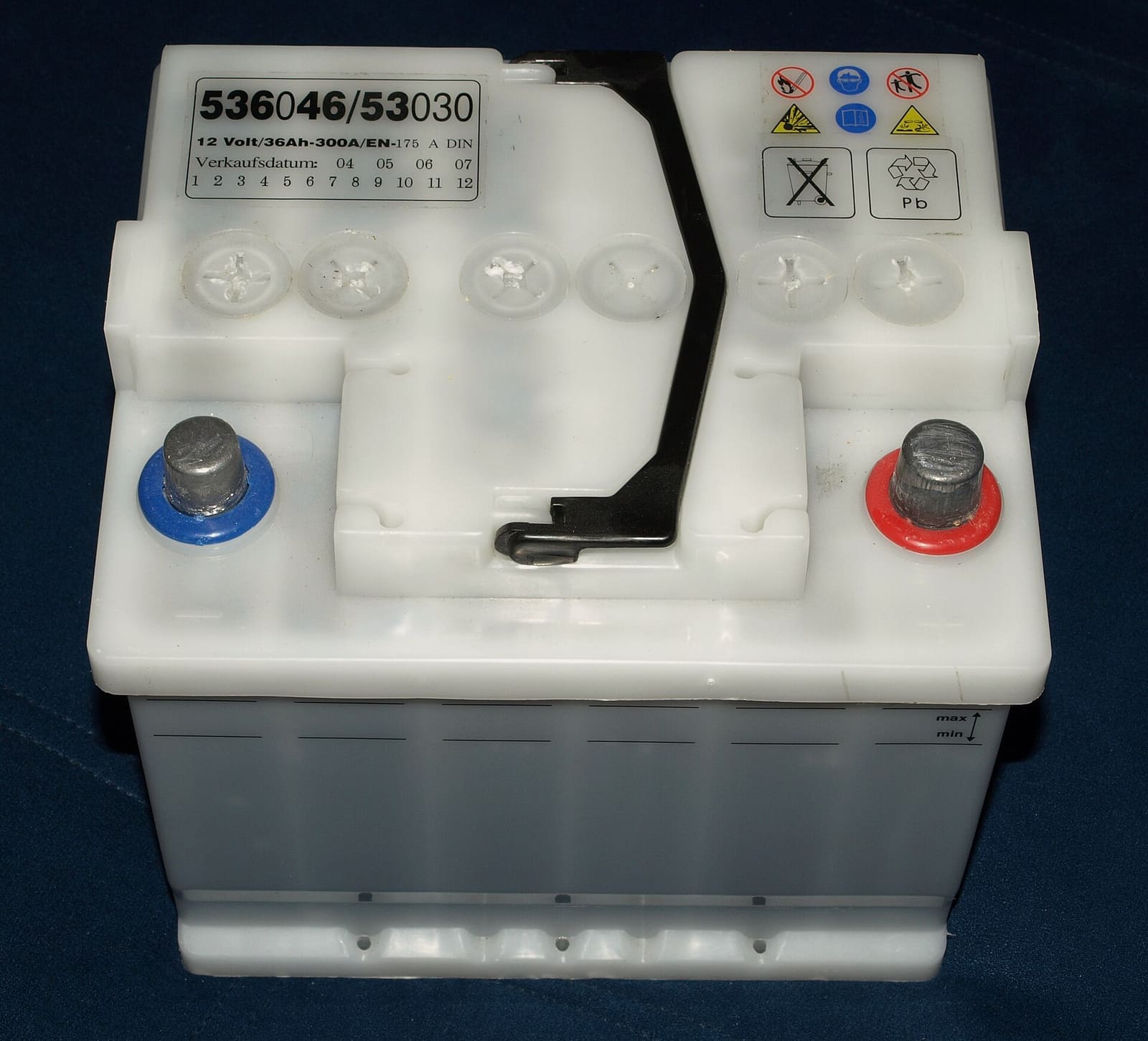
Marine Battery Care: Test, Charge and Store for Winter
Check your boat battery's health, charge it the right way for its type (flooded, AGM or lithium), and store it so it is ready in spring. Most "boat won't start" calls start with a neglected battery.
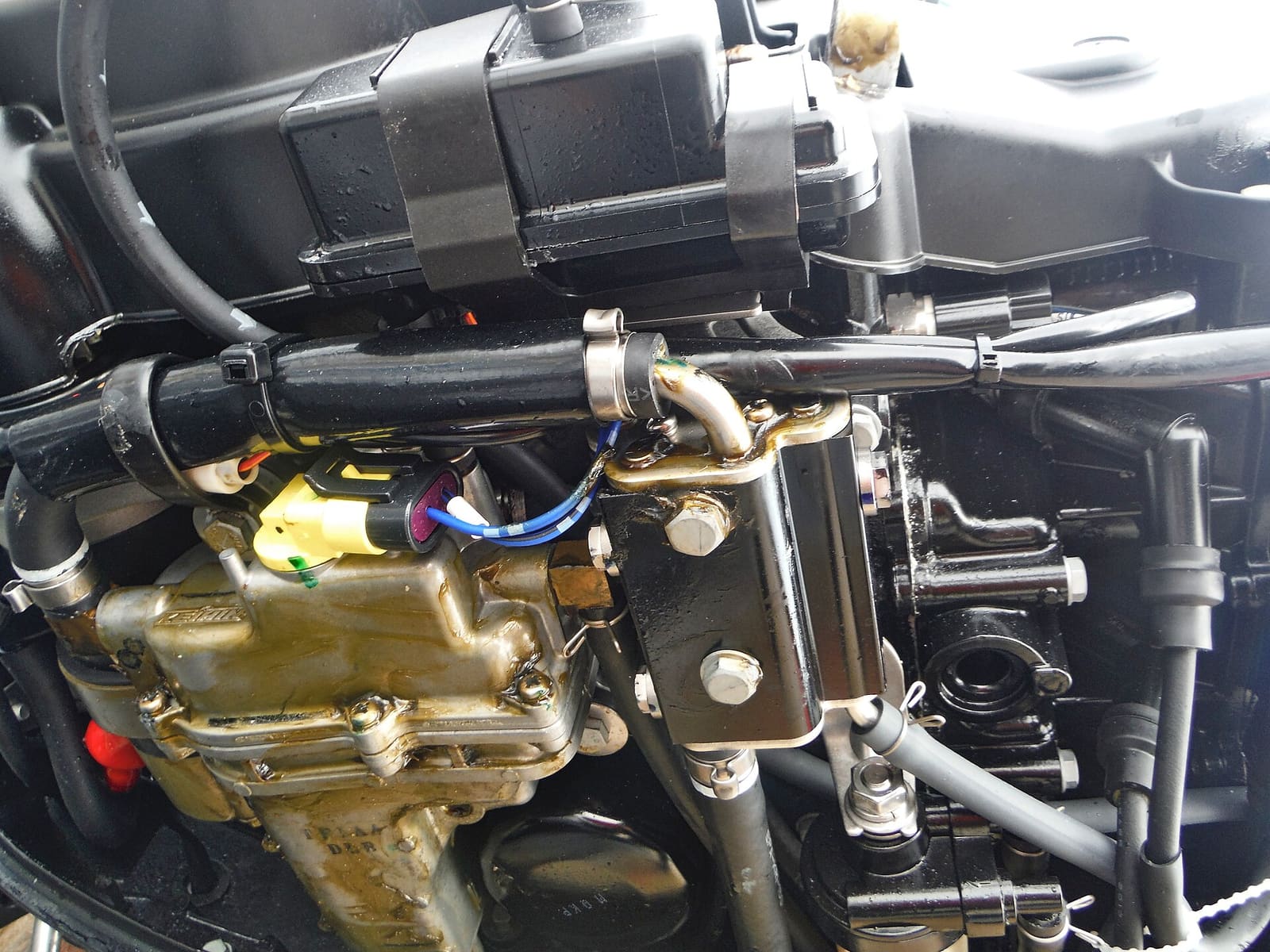
EFI Outboard Vapor Separator Tank (VST) and Injectors - Symptoms, Filters and When It's a Dealer Job
On a fuel-injected outboard, the vapor separator tank holds fuel right at the engine and feeds the high-pressure pump and injectors. Learn why ethanol varnish and debris clog its filter, how a starving VST feels (stalls at speed, won't hold RPM), what you can safely maintain yourself, and when it's time for the dealer.
No Spark - Safe Ignition Checks for Outboards, Sterndrives, Inboards and PWCs
Engine cranks but never fires, and you suspect the ignition? Work from the cheap, common causes (kill switch lanyard, key switch, plug wires and caps, plugs, battery) to a proper spark test, and learn what the stator, CDI and coils do and when it is time for a dealer.
How to Find and Fix Corroded Electrical Connections on a Boat
Track down the green crust and loose terminals behind flickering lights, dead gauges and slow cranking with a simple voltage-drop test, then remake the connection the marine way: tinned wire, a proper crimp, adhesive-lined heat shrink and a protective coating.

How to Keep Mice and Rodents Off Your Stored Boat
Mice love a stored boat: dry, quiet and full of soft nesting material and tasty wire insulation. Learn how to remove what attracts them, close their way in, choose deterrents and traps that actually work, avoid the risks of poison, and check the wiring safely in spring.
Battery Goes Dead While the Boat Sits - How to Find a Parasitic Drain
If your boat battery is flat every time you come back, something may be quietly drawing power while you are away. Learn how to tell a bad battery from a drain, find the circuit with a multimeter and the fuse panel, and fix the usual culprits without disabling your bilge pump.