How to Clean and Care for Clear Vinyl (Isinglass) and Polycarbonate Enclosure Panels
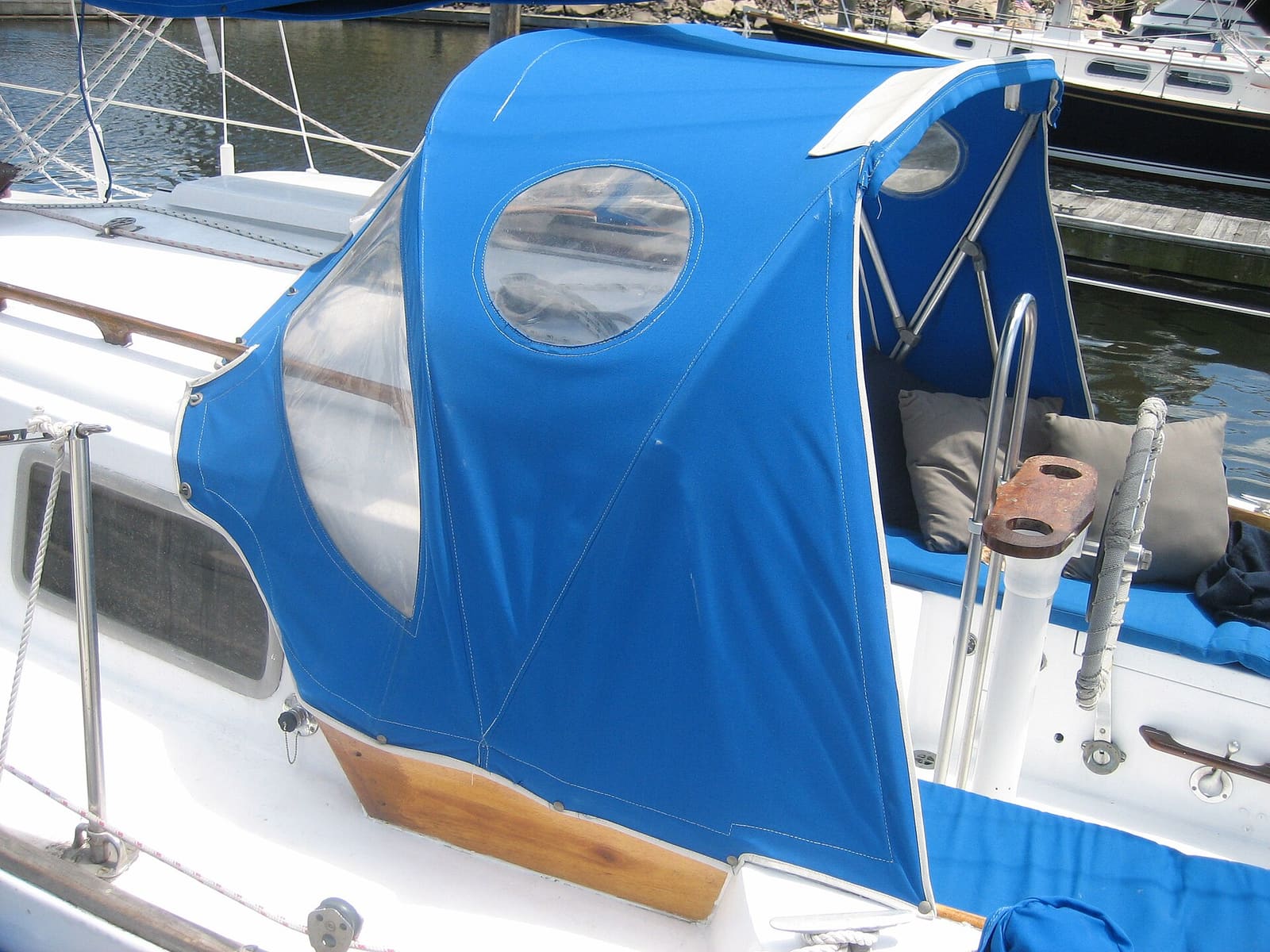
Keep the clear windows in your dodger, bimini curtains or full enclosure clear for years by cleaning them the right way, storing them without scratches and avoiding the cold-weather and chemical mistakes that ruin them. Covers soft clear vinyl, coated vinyl like Strataglass, rigid panels and zippers.
Time
1 h
Shop would charge
$100-400
Applies to
All engines
Safety first: Clear panels are part of your view from the helm. Never run the boat with scratched, fogged or salt-caked windows blocking your lookout; open or remove a panel, or slow down. Do not stand on cockpit seats or the gunwale to reach high panels while underway, and keep a hand for the boat. Keep insect spray and sunscreen away from the windows (see step 2).
Owners often ask
- Can I leave the clear isinglass panels on my enclosure up all summer?
- What can I clean my clear vinyl windows with without scratching them?
This guide walks you through it. Still stuck? Ask the AI Mechanic about your engine.
Tools
- Garden hose with a gentle shower nozzle
- Bucket used only for the clear panels
- Soft wash mitt (cotton or foam) used only for the clear panels
- Clean cotton or microfiber cloths
- Chamois or soft rubber squeegee made for clear vinyl
- Old cotton sheet or soft fabric for rolling or storing panels
Parts & supplies
- Mild soap (or the soap your vinyl maker specifies)
- Cleaner and protective polish approved by your window material's maker
- Zipper lubricant made for marine zippers
Before you start
Know your material. Most enclosure "isinglass" is one of these:
- Uncoated clear vinyl (for example Regalite): soft and flexible, rolls up easily, scratches easily.
- Coated clear vinyl (for example Strataglass or O'Sea): vinyl with a hard protective coating. Strataglass says to use only IMAR-brand products on it; other products void its warranty.
- Rigid polycarbonate panels: do not roll; tough but with a soft surface that scratches easily. If it has turned yellow, BoatUS notes it is polycarbonate, not acrylic.
- Rigid acrylic panels: do not roll; common on larger flybridges.
Your canvas shop's invoice or a stamp near the edge of the panel usually says what you have. Follow that maker's care instructions; they override the general tips below.
Why the fuss? Clear vinyl has plasticizers that keep it flexible and a surface finish that keeps it clear. Harsh cleaners, solvents and abrasion strip these, and the damage cannot be fully undone. Practical Sailor's testing found that restoring scratched vinyl can wear away its protective coating. Prevention is much cheaper than new panels.
Steps
Flood the panels with plenty of fresh water from top to bottom using a soft shower spray. Do not blast them with a sharp jet or a pressure washer; Passagemaker warns that a hard stream drives salt and grit across the surface and scratches it. Never wipe a dry, dusty or salty panel.
- Sunscreen: handprints can be impossible to remove. Wash or wipe hands before touching the panels.
- Insect repellent with DEET: Practical Sailor reports it can melt vinyl. Spray well away from the enclosure.
- Household cleaners: no ammonia glass cleaner, no Windex, no alcohol-based cleaners, no Rain-X. Strataglass's current care page also rules out Pledge, Plexus, Simple Green and Orpine, any car wax or "wash and wax" product, and scratch removers or polishes made for commercial-grade vinyl or plastic; using them voids its warranty.
- Spills: if sunscreen, bug spray or another chemical lands on the panel, clean it off right away with the cleaner your vinyl maker approves. Keep a bottle aboard for exactly this.
- Canvas waterproofing sprays: BoatUS warns that fabric treatments like 303 Fabric Guard can damage clear vinyl. Cover the windows when treating canvas and wipe off any overspray at once.
Use a separate bucket and mitt that are only for the clear panels so no grit from the deck gets on them. Wash with a mild soap (Sailrite suggests a little dish soap for press-polished vinyl; Strataglass owners should use IMAR Yacht Soap). Work top to bottom with light pressure and rinse well.
Blot dry with a clean chamois, soft microfiber, or a soft squeegee made for clear vinyl, or let it air dry. Never use paper towels: Practical Sailor notes that grit left in paper towels from the papermaking process is harder than vinyl and leaves fine scratches. Change to a fresh cloth often, and turn it frequently.
After washing, apply the cleaner/protectant or polish your vinyl maker approves, with a soft cotton cloth in small circles, then buff. These products put back the protective film that sun and washing wear away. Practical Sailor found that thicker cream polishes tend to last longer than sprays. How often depends on sun and salt; many makers suggest every month or two (follow your product label).
White spots that stay after washing are often hard-water or calcium deposits. Practical Sailor suggests a 10 percent white vinegar and water solution, rinsed off well, followed by protectant. Check your vinyl maker's instructions before trying anything stronger. For polycarbonate, BoatUS advises plain soap and water and no alkaline cleaners.
- Soft clear vinyl: fine haze can sometimes be improved with the maker's protective polish applied firmly on a flat, towel-covered surface. Practical Sailor warns that vinyl "restoration" kits may compromise the protective coating. Deep scratches, yellowing or cloudiness that will not polish out mean the panel is due for replacement by a canvas shop.
- Rigid acrylic panels: light scratches can be polished with a fine plastic scratch remover, then waxed with a plastic-safe wax (Passagemaker uses Novus 2 for fine scratches and Novus 3 for heavier ones).
- Coated polycarbonate: do not polish it unless it is already dull or yellow; BoatUS says polishing can remove the factory coating that protects it.
Only roll vinyl panels when they and your hands are clean and dry; salt rolled up inside acts like sandpaper. Roll them loosely with a soft cloth between the layers so the vinyl does not touch itself, and never fold or crease them. Do not leave panels rolled up for days at a time in summer: Passagemaker notes moisture trapped in the roll can cloud the vinyl and grow mildew. Rigid panels never roll; store them flat.
New panels are extra soft. Strataglass says brand-new clear vinyl marks easily, so keep new panels installed and fastened to the boat as much as possible while they stabilize. If you must take them off and stack them, put a soft sheet between each panel so they do not leave impressions on each other. When the boat is not in use, it recommends closing and fastening the panels rather than leaving them rolled.

Roll or remove panels only when clean and dry, and never in the cold. Photo: Rübenkopf / Wikimedia Commons · CC BY-SA 4.0 Cold vinyl gets stiff and brittle. Practical Sailor cracked a test panel cleaning it at about 45°F and advises not cleaning, folding or rolling clear vinyl below about 55°F (another of its articles uses 60°F as the rule of thumb, "when hats and gloves come off"). Wait for the sun to warm the panels and burn off frost or dew before you open them. Thick and older panels are the most fragile.
- Flush zippers on both sides with fresh water when you rinse the enclosure, so salt does not build up in the teeth.
- Open and close each zipper every few weeks, even the ones you never use, so salt and dirt do not set hard.
- Use a lubricant made for marine zippers, and keep it off the clear panels (some lubricants contain silicone or solvents that vinyl makers warn against).
- Never force a stuck zipper; soak it with fresh water first.
- Check snaps and twist fasteners; a light coat of the same lubricant keeps them working.
BoatUS points out that the discolored stripe where vinyl touches a metal frame is often a heat scorch from the hot metal. Keep vinyl off bare frames where you can. If you cover the enclosure, use a cover that does not flap against the windows; Practical Sailor has seen abrasion from covers rubbing in the wind. Keeping panels out of direct sun when the boat is not in use adds years to their life.
For off-season storage, wash, dry and treat the panels first. Store vinyl flat or loosely rolled with soft cloth between layers, in a dry place out of the sun, where it will not be crushed or bent. An old cotton sheet wrapped around the panels keeps them from rubbing on each other. Store rigid panels flat with a soft layer between them.
Common mistakes
- Wiping off salt or dust with a dry cloth or paper towel. This is the fastest way to scratch clear vinyl.
- Using household glass cleaner, Rain-X or furniture polish. Many of these haze or dull vinyl and can void a Strataglass warranty.
- Rolling panels in cool weather. Cold vinyl cracks, sometimes right across the panel.
- Rolling panels wet or salty and leaving them for days. Expect scratches, fog and mildew.
- Spraying canvas waterproofer with the windows uncovered. Overspray can cloud vinyl.
- Pressure-washing the enclosure. It forces grit into the surface and can tear stitching.
- Polishing coated polycarbonate or Strataglass with a generic plastic polish. It can remove the protective coating you paid for.
When to call a pro
- Panels are cracked, torn, deeply scratched, yellowed or cloudy and block your view (replacement is a canvas shop job)
- Stitching is breaking down or seams are separating
- Zipper teeth are missing or the slider will not stay closed (a canvas shop can replace zippers and sliders)
- Frames are bent, or the enclosure no longer fits tight and flaps in the wind
- You want to switch materials (for example to coated vinyl or rigid panels) or add opening windows
Tips
- Rinse the enclosure every time you rinse the boat, especially after a saltwater run.
- Keep a dedicated spray bottle of approved cleaner and a clean cloth aboard for fingerprints and bird droppings.
- Bird droppings and tree sap are easier to remove the same day; soak with fresh water first.
- Ask your canvas shop which care products they recommend for your exact panels and write them in BoatMend.
- If you roll panels often, ask your canvas shop about thinner or more flexible vinyl the next time you replace them.
Official references
We read these to write this guide. Your engine's own manual always wins.
- Practical Sailor – Best Practices for Maintaining Clear Vinyl
- Practical Sailor – Treating Vinyl for Long Life
- BoatUS – Boat Enclosure Maintenance
- Sailrite – Cleaning Tips, Keep Press-Polished Clear Vinyl Looking Like New
- Passagemaker – Boat Vinyl Enclosure Cleaning and Care, Pro Tips
- Strataglass – Care and Maintenance
Safety: BoatMend is for information only and does not replace a certified marine technician. You are responsible for your safety and your boat. Read the full disclaimer.
Last updated 2026-10-24
Related guides
How to Clean and Protect Boat Canvas, Bimini Tops and Vinyl Seats
Wash your bimini, covers and enclosure the right way, beat mildew without wrecking the stitching, keep vinyl seats soft and stain-free, look after zippers and snaps, and store everything so it comes out clean next spring.
How to Prevent and Remove Mold and Mildew on Your Boat
Stop the musty smell and black spots before they start. Find and fix the water source, keep air moving, control humidity safely, and clean mold off gelcoat, vinyl and cabin surfaces with products that won't damage them.
How to Clean, Remove Oxidation and Wax Your Boat's Gelcoat (Plus Pontoon Tubes)
Wash your hull the right way, bring back chalky, faded gelcoat with compound, and seal it with wax so it stays glossy and protected from the sun. Includes how to clean and protect the aluminum tubes on a pontoon boat.

Winter Boat Cover vs Shrink Wrap: Support, Ventilation, Safety and Spring Removal
Choose between a reusable winter cover and shrink wrap, build a support frame that sheds snow, vent it so the boat doesn't mildew, and know the fire risks before you try DIY shrink wrap. Includes spring removal and recycling.
How to Fix Leaking Hatches and Portlights
Find out whether a leaking deck hatch or portlight is failing at the gasket, the lens or the frame, then fix it with the right seal or sealant. Learn when crazed or cracked acrylic needs a new lens and what never to put on plastic windows.