Sterndrive Hard or Clunky Shifting: Cables, Shift Interrupt Switch and Cone Clutches
A sterndrive that bangs into gear, is hard to pull out of gear, stalls when you shift or hesitates and then slams in is telling you something about its shift system. Learn the checks you can do (idle speed, technique, cables, linkage and drive oil), what the MerCruiser shift interrupt switch and Volvo Penta cone clutches do, and when it's a shop job.
Time
1 h
Shop would charge
$300-2500
Applies to
Sterndrive (I/O) · Bowrider / runabout, Cabin cruiser, Fishing boat
Safety first: Do all checks with the engine off, the key out and the kill-switch clip removed, especially when you're moving linkage or turning the propeller by hand. Never run a sterndrive out of the water without the water supply your manual specifies, and never shift into gear on the trailer. If the engine starts in gear, won't come out of gear, or you lose shifting on the water, stop using the boat: shut down, anchor if you're drifting toward danger and call TowBoatUS or Sea Tow; use VHF channel 16 or 911 in an emergency.
Owners often ask
- My Volvo sterndrive hesitates when I shift and then slams into gear. Is that the cone clutch?
- My MerCruiser stalls or is really hard to pull out of gear. Is it the shift interrupt switch or the cable?
This guide walks you through it. Still stuck? Ask the AI Mechanic about your engine.
Tools
- Your engine and drive owner's manual
- Flashlight
- Open-end wrenches, sockets and screwdrivers
- Needle-nose pliers
- Phone camera and masking tape (to mark cable positions)
- Clean drain pan and a clean rag (to look at drive oil)
- Marine grease of the type your manual specifies
- A helper
Parts & supplies
- New cotter pins and clips for cable ends
- Gear lube of the exact type your drive manual specifies (and new drain/vent screw washers)
- Replacement shift cable(s), only if inspection shows they're worn
Before you start
How a sterndrive shifts. On most mechanical-control sterndrives, the helm control pushes and pulls a shift cable that runs to the engine. From there, a second (lower or intermediate) shift cable runs through the transom, inside its own rubber bellows, to the drive. The drive's internal clutch then picks forward, neutral or reverse. On electronic (digital) controls, there's no cable to adjust; see your dealer.
Two kinds of clutch, two kinds of trouble:
- Dog clutch (MerCruiser Alpha drives, for example): a toothed clutch slides into the forward or reverse gear. It needs to engage quickly and firmly. Under load it can be hard to pull out of gear, which is why MerCruiser engines use a shift interrupt switch on the engine's shift plate. It briefly interrupts the ignition as you shift, unloading the gears so they can disengage. If the lower cable binds, the switch can stay active too long and the engine stumbles or dies when you shift.
- Cone clutch (Volvo Penta SX and DP drives, MerCruiser Bravo drives and others): a cone-shaped clutch grips the inside of the gear by friction, a bit like a car's clutch, running in gear oil. It shifts smoothly when it's adjusted right. Out of adjustment, worn, or with the wrong oil, it slips, hesitates and then grabs with a bang.
Common symptoms owners describe:
- A loud clunk every time it goes into gear.
- A delay after shifting, then a slam into gear when more throttle is added (classic Volvo SX/DP complaint).
- Hard to pull back to neutral, sometimes with a stall (classic MerCruiser Alpha complaint).
- Grinding or ratcheting as it tries to engage.
- Slipping under load: RPM rises but the boat doesn't accelerate to match.
Many of these start with simple things you can check. Some need a technician with the service manual and special tools, and the guide tells you where that line is.
Steps
Note whether the problem is in forward, reverse or both; going into gear or coming out; cold or warm; and whether it started after a service (drive removed, bellows or cables replaced, oil change, winterizing). A shifting problem that appears right after work on the drive usually comes back to that work, and the shop that did it should look first.
A high idle makes every shift harder and louder, on any drive. With the engine warm and in neutral, compare the idle RPM to the spec in your owner's manual. If it's high, check that the throttle cable lets the throttle arm return fully to its idle stop (see the shift cable guide). Fuel-injected engines set their own idle, so a high idle there is a dealer diagnosis.
BoatUS's guidance: shift without exceeding idle RPM, shift decisively, and pause in neutral for about a second ("one-one-thousand") when going from forward to reverse or back. Shifting too slowly can make gears grind; shifting too quickly or at higher RPM can stall the engine or damage the transmission.
Move the lever in one firm motion. Easing it slowly into gear lets a dog clutch chatter and wear its teeth, and lets a cone clutch slip before it grabs.
With the engine off, disconnect the helm shift cable where it attaches to the engine's shift plate or bracket (photograph and mark it first). Work the helm lever:
- Stiff or notchy with the cable disconnected: the helm cable or the control box is the problem. The shift cable adjustment guide covers inspection and replacement.
- Smooth: the stiffness is on the engine side: the shift plate, the lower cable or the drive itself.
Now move the shift lever on the engine by hand, slowly, while a helper turns the propeller by hand. It should click firmly into forward and reverse. A lever that is stiff, binds or springs back points to the lower cable or the drive.
Look at the shift plate and its pivots, the cable ends and any return springs. Corrosion, dried grease and dirt here make shifting heavy. Clean and grease the pivots with the marine grease your manual specifies. Replace missing cotter pins and clips.
Check what kind of cable you have before you oil it. BoatUS notes that some control cables have a Teflon lining and should not be lubricated; doing so can gum them up. Older unlined cables may call for periodic lubrication.
On MerCruiser engines with a shift interrupt switch, find it on the shift plate and inspect it: loose mounting, damaged plunger or roller, or corroded or chafed wires. Don't disconnect or bypass it to "fix" hard shifting; without it, a dog-clutch drive gets much harder to pull out of gear, and the clutch and gears wear faster.
Its position relative to the shift plate, and the lower cable adjustment that goes with it, are set using the service manual and often a special tool. If the engine stalls or stumbles when you shift, or the switch seems to do nothing, this is the point to call a sterndrive technician.
The lower cable lives a hard life inside the transom, flexing every time you steer and tilt. A cable that's getting stiff is one of the most common reasons sterndrives start shifting hard, and a stiff cable is also what makes a shift interrupt switch hold the ignition off too long.
- Mercury states plainly that its lower shift cable can't be repaired, only replaced.
- BoatUS notes that the bellows around the shift cable (and drive shaft) can only be replaced with the drive removed, and on many drives the same is true of the lower cable.
So replacing a lower cable usually means pulling the drive, which is also the right moment to replace all the transom bellows and inspect the gimbal bearing. Most owners leave this to a shop. Boating Magazine's walk-through of removing a MerCruiser Bravo drive shows why: the drive has to be in a specific gear, the trim rams come off, the shift cable can only be unclipped once the drive is already pulled partly free, a Bravo drive weighs about 180 pounds, and reinstallation needs a new gasket kit and the service manual for your exact drive.
Look at your drive's oil the way your manual describes (some drives have a dipstick or a reservoir in the engine compartment; others need the boat level and a check plug). Then look at a small sample:
- Milky or creamy: BoatUS and Mercury both treat this as a sign of water in the drive. Mercury notes that fresh oil from a recently run drive can look yellowish from agitation, and oil mixed with assembly grease can look creamy without water, but milky oil should always be checked out.
- Glittery metal or many fine flakes on the drain magnet: clutch or gear wear. Some fine paste is normal; obvious chunks or a lot of glitter are not.
- Level: both low and overfilled oil can cause trouble. Owners of Volvo DP drives describe late, harsh engagement after a drive was overfilled during winterizing, which went away once the level was corrected.
Use only the exact gear oil type your drive manual specifies. Cone clutches depend on the oil's friction properties, and the right oil can differ between drive models and years. When you refill, BoatUS recommends pumping lube in from the bottom hole until it flows from the vent or level hole, so no air is trapped (see the lower unit oil change guide).
If the drive seems to go into gear, does nothing until you add throttle, and then slams in, the most common causes are a shift linkage at the drive that is out of adjustment, the wrong or low oil, and worn cone clutches. A new helm cable rarely fixes it.
Stop using it hard. Every hard engagement wears the cone clutch further, and a worn cone means opening up the drive's upper gear housing. Have a technician check the linkage adjustment at the drive and the oil. Caught early, it's often an adjustment; ignored, it becomes a rebuild.
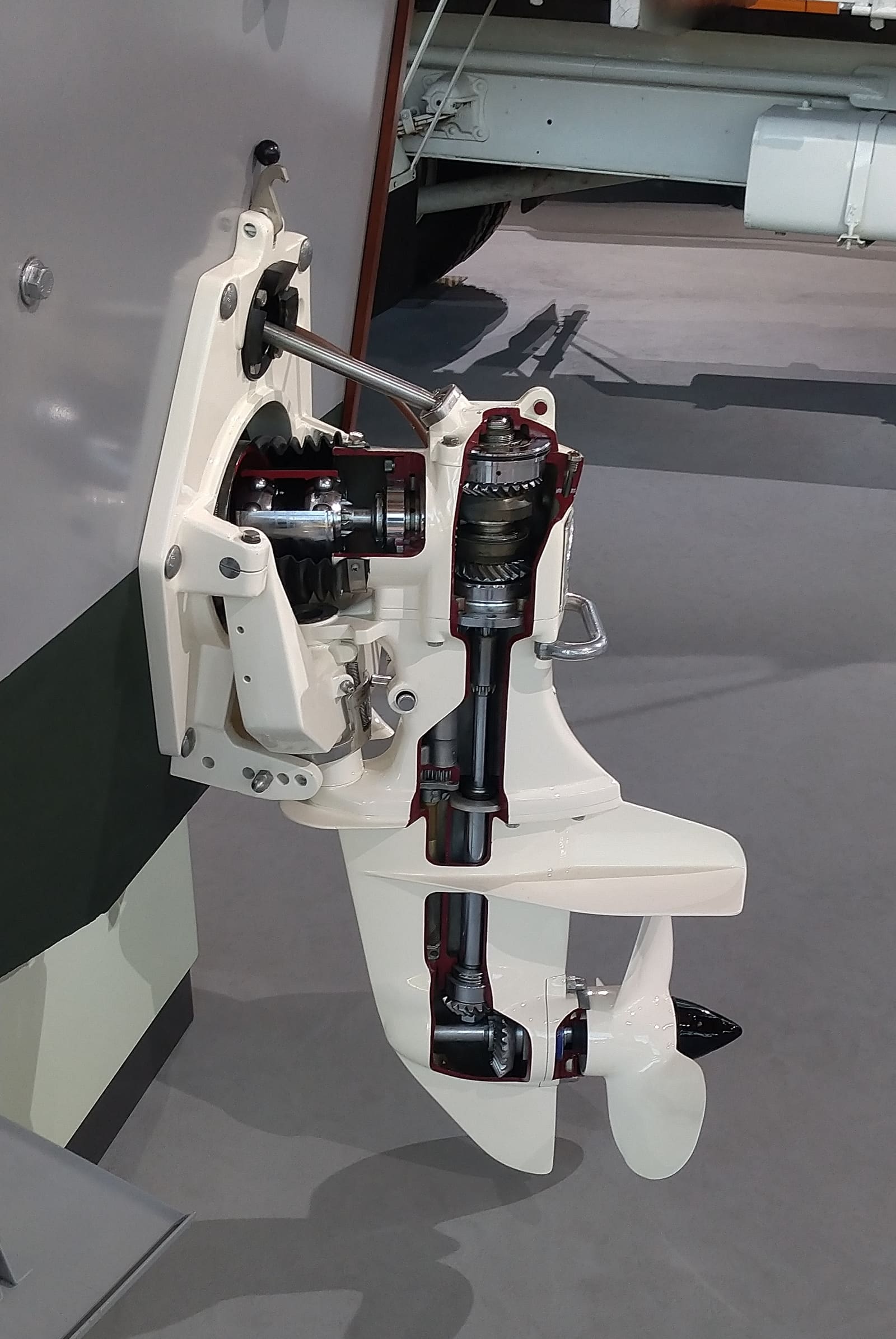
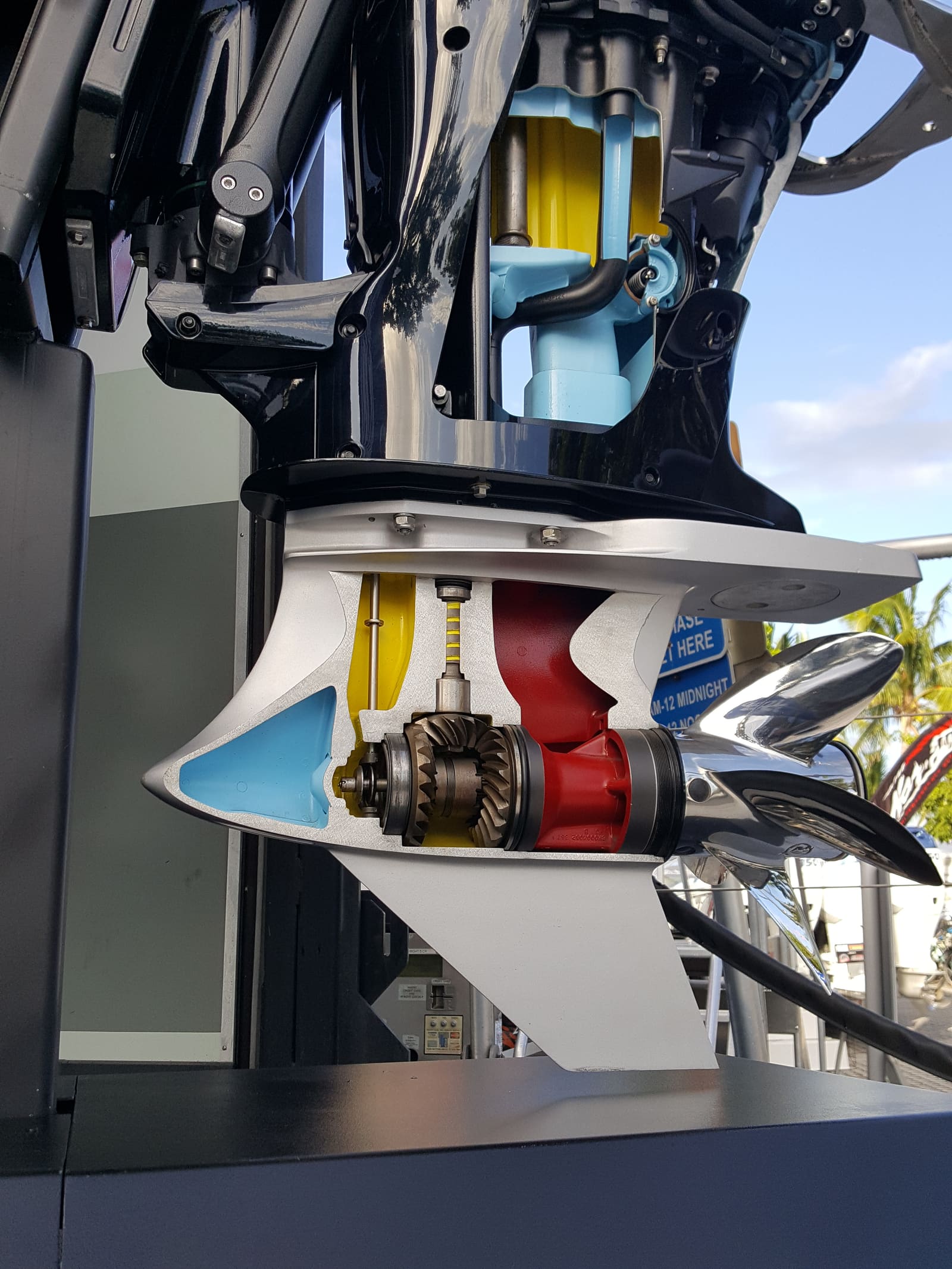
Cutaway of a Volvo Penta Aquamatic sterndrive. Forward and reverse are selected by the clutch and gears in the upper housing, which run in gear oil. Photo: Herranderssvensson / Wikimedia Commons · CC0 If the drive is hard to pull out of gear, stalls when you shift, or grinds as it goes in:
- Rule out idle speed and technique (steps 2 and 3).
- Disconnect the helm cable to check it (step 4).
- If the engine-side lever is stiff, suspect the lower shift cable (step 7) and the interrupt switch setting (step 6).
Grinding usually means the clutch isn't being pushed fully into engagement, which is an adjustment or cable problem. Keep shifts quick and firm until it's fixed, and get it adjusted before the clutch teeth round off.
If RPM climbs but the boat doesn't speed up to match (and the prop isn't spun on its hub; see the spun propeller hub guide), a cone-clutch drive may be slipping. This often follows a period of bangs and hesitation. It needs the drive opened up by a technician. Bring your notes and an oil sample if you can.
After any adjustment or repair, test with the boat in the water and securely tied, with the area behind clear and the engine warm. The engine should start only in neutral. Shift to forward and reverse at idle, pausing in neutral between directions. Engagement should be prompt, quiet and repeatable, and the lever should land in the same spot every time. Watch the propeller too: BoatUS's spring commissioning checklist says the prop must stop turning when you return to neutral; a prop that keeps creeping in neutral means the shift isn't fully disengaging and needs adjusting before you dock with it. Then test on open water at low speed before trusting it in close quarters.
You can safely do steps 1 to 5, 8 and 12 yourself. Leave these to a sterndrive technician:
- Lower shift cable adjustment and replacement
- Shift interrupt switch adjustment
- Linkage adjustment at the drive on Volvo Penta drives
- Cone clutch inspection, shimming or rebuild
- Removing and reinstalling the drive (and replacing the bellows while it's off)
Tell the shop your engine and drive model and serial numbers (see the engine serial number guide), your symptoms and what you've already checked.
Common mistakes
- Shifting slowly or at high RPM, then blaming the drive.
- Replacing the helm cable when the problem is the lower cable or the drive.
- Disconnecting the shift interrupt switch to stop stalling.
- Continuing to use a drive that bangs into gear, until the cone clutch needs a rebuild.
- Using whatever gear oil is on the shelf, or overfilling the drive.
- Oiling a Teflon-lined cable that wasn't meant to be lubricated.
- Ignoring milky drive oil.
- Adjusting cables with no marks, so the original position is lost.
When to call a pro
- The engine stalls or stumbles every time you shift
- The drive bangs into gear, hesitates then slams in, or slips under load
- Metal chunks or heavy glitter in the drive oil, or milky oil
- The engine-side shift lever is stiff with the helm cable disconnected
- Shifting changed right after the drive was removed or serviced
- The engine starts in gear or won't return to neutral
- You lose shifting on the water: shut down, anchor if needed and call TowBoatUS or Sea Tow; VHF 16 or 911 in an emergency
Tips
- Have the shop replace the lower shift cable whenever the drive is off for bellows or a gimbal bearing; the labor is mostly the same.
- Ask for the old cable and clutch parts back. Seeing the wear helps you understand what happened.
- Shift a new or freshly adjusted drive gently and decisively at idle for the first outings, and note any change.
- Keep a record of drive oil changes and what the old oil looked like in your BoatMend maintenance log. Changes from season to season are early warnings.
Official references
We read these to write this guide. Your engine's own manual always wins.
- BoatUS – Getting Your Boat in Gear (shifting at idle, pause in neutral)
- BoatUS – The Care and Feeding of Sterndrives (shift cable bellows, drive oil)
- BoatUS – Stern Drive Maintenance (control cables, drive lube)
- Mercury Marine – Quicksilver Lower Shift Cable for MerCruiser Alpha sterndrives (cannot be repaired, only replaced)
- Boating Magazine – How To Remove a Sterndrive (shift cable, drive weight, gaskets)
- BoatUS Magazine – Spring Engine Startup (shift and throttle checks, 2014)
- Mercury Marine – Owner FAQs (gear lube color)
Safety: BoatMend is for information only and does not replace a certified marine technician. You are responsible for your safety and your boat. Read the full disclaimer.
Last updated 2026-10-24
Related guides
How to Check and Adjust Boat Shift and Throttle Cables
Hard shifting, a lever that will not go fully into gear, or a gear that lands in a different spot every time usually point to the control cables. Learn how to find out whether the problem is the cable, the control box or the engine, how to adjust the cable ends, and when it is time to replace both cables.
How to Inspect Sterndrive Bellows, Gimbal Bearing, U-Joints and Shift Cable
Learn to spot a cracked sterndrive bellows before it lets water into the boat, and to recognize the warning signs of a worn gimbal bearing, U-joints and shift cable. A failed bellows is one of the top reasons boats sink at the dock, and a 20-minute inspection can catch it.
How to Change Lower Unit (Gearcase) and Sterndrive Oil
Drain and refill the gear oil in your outboard lower unit or sterndrive, and learn to spot water intrusion before it destroys the gears. It is a 30-minute job that protects a gearcase costing thousands to replace.
How to Winterize a Sterndrive (MerCruiser, Volvo Penta and Similar)
Get the water out of your sterndrive engine, protect it with antifreeze, and service the drive before storage. A cracked block or manifold from one missed drain plug can cost thousands, and doing it yourself saves a shop bill of several hundred dollars.
Water in the Lower Unit Keeps Coming Back - Seals and the Pressure Test Explained
Milky gear lube means water is getting past a seal, and changing the oil alone will not stop it. Learn where water gets in (prop shaft seals, driveshaft and shift shaft seals, drain and vent screw gaskets), how a pressure and vacuum test finds the leak, and when to do it yourself or hand it to a shop.
Remote Control Box Troubleshooting: Stiff Lever, Won't Crank, Trim Switch
The throttle and shift control at the helm (side-mount or binnacle) takes a beating. Learn how to find out why the lever is stiff, why the engine will not crank even with a good battery, why the trim button on the handle quit, and when the whole control box should be replaced along with its cables.
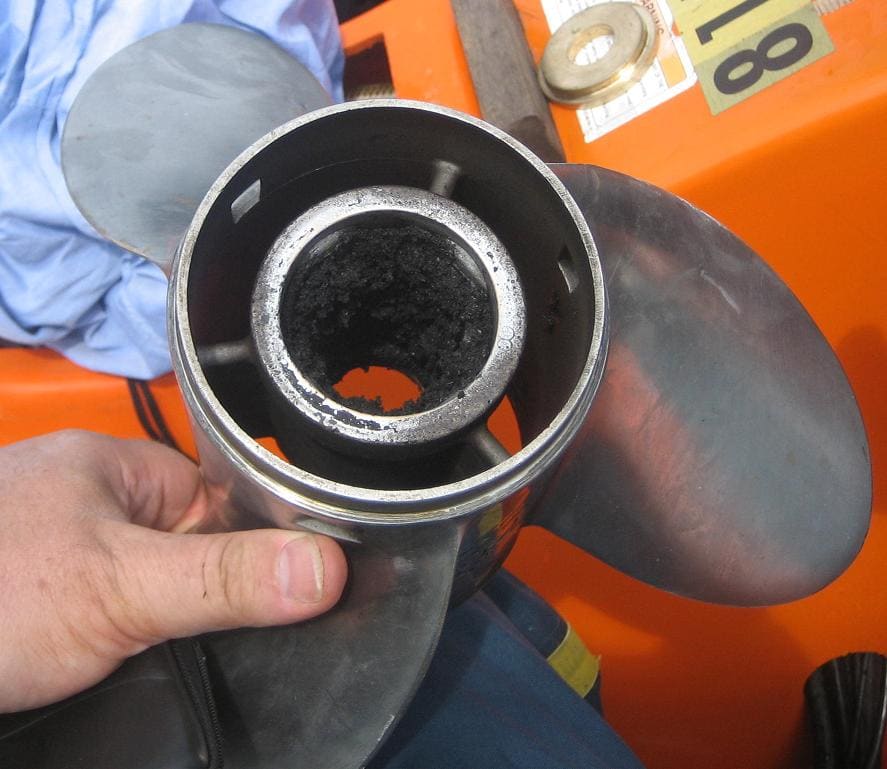
Spun Prop Hub - How to Tell, Quick Marker Test and Repair Options
If the engine revs up but the boat barely accelerates, the rubber or plastic hub inside your propeller may be slipping. Learn how a spun hub feels, how to confirm it with a simple marker test, the difference between pressed rubber hubs and replaceable hub kits, and your repair options.
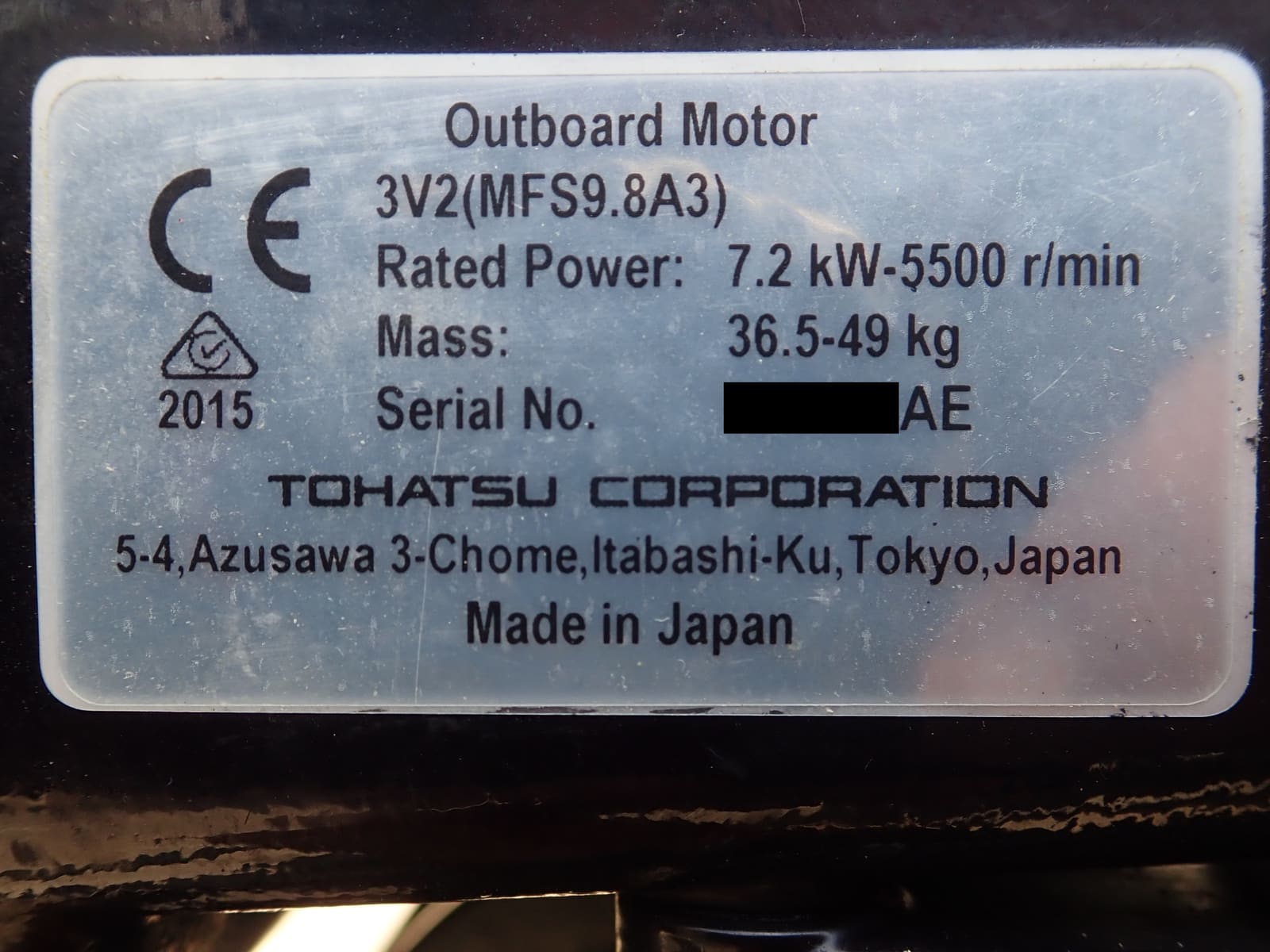
How to Find Your Engine's Serial Number, Model and Year (and Get the Official Manual)
Find the ID label on your outboard, sterndrive, inboard diesel or PWC, read the model and serial number correctly, tell it apart from the boat's HIN, and use it to open the free official owner's manual. It's the first step for ordering the right parts and following the right maintenance plan.