Transom Savers and Motor Supports: How to Trailer Your Outboard or Sterndrive
Potholes and driveway dips put real load on the transom, the tilt system and the engine bracket. Learn when engine makers want a support, why the tilt support lever is not one, how to choose and fit a transom saver or trim-ram support, and what goes wrong when it's fitted badly.
Time
30 min
Applies to
Outboard, Sterndrive (I/O)
Safety first: Never trailer an outboard resting only on its tilt support lever or tilt lock; the makers say it can break, and a motor that drops at highway speed can tear up the gearcase, the trailer and the transom. Never stand or put your hands between the lower unit and the trailer while someone runs the trim. If a support comes loose on the road, pull well off the highway before you fix it.
Owners often ask
- Do I really need a transom saver, or can I just trailer the outboard on the tilt lock?
- My skeg scrapes the street every time I pull out of the driveway, even with a transom saver. What should I change?
This guide walks you through it. Still stuck? Ask the AI Mechanic about your engine.
Tools
- Tape measure
- A helper to watch clearance while you trim and drive
- Flashlight
Parts & supplies
- Outboard or drive support sized for your engine and trailer (transom saver bar, trim-ram support or the engine maker's trailering support)
- Strap or bungee to hold the support at both ends (needed on motors without power trim)
Before you start
A "transom saver" is the common name for a support that carries part of the engine's weight while you tow, so the tilt system and transom don't take every bump. There are two main families:
- Trailer-mounted bars: a rod from the lower unit to the back of the trailer, usually with a V-shaped yoke that cradles the gearcase and a U-shaped end that sits over the rear roller or pins to the trailer frame. Some are fixed; some have a spring to absorb shock.
- Motor-mounted supports: short tubes or wedges that slip over a trim ram, or rods that wedge between the lower unit and the mounting bracket. Yamaha sells its own Outboard Trailering Support; several aftermarket brands make others. These need power trim to clamp them in place.
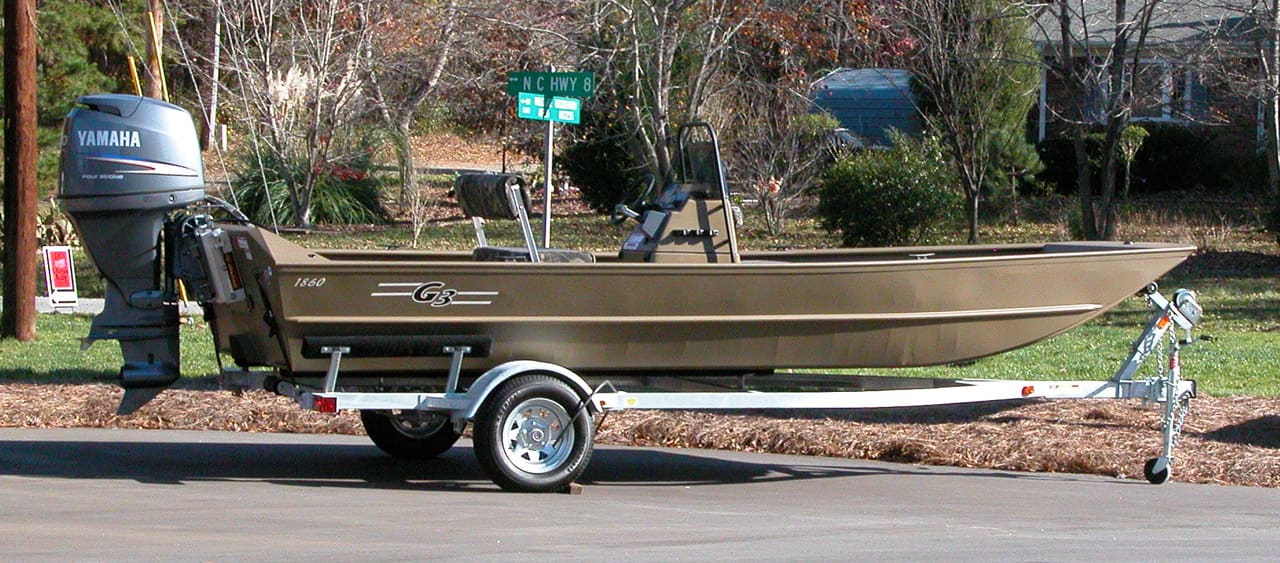
Whether you need one is not a universal yes. When BoatUS Magazine asked boatbuilders, most said their transoms don't need a saver and a few were almost offended by the question, while Tracker included a motor support with its packages and a Ranger trailer engineer called a trailer-mounted saver far better than the tilt lock at protecting the bracket and transom. The magazine's conclusion: smaller boats with a heavy motor for their size, aluminum boats, and rigs with little ground clearance benefit most, and the best advice is to follow your boat and engine maker. This guide walks you through that decision and the fitting.
Steps
Start with the "trailering" or "storage and transportation" section of your engine's owner's manual, then the boat builder's manual or dealer. Some boat packages ship with a support; others say not to use one. Write down the trailering position your engine maker wants (full down, tilted, or the "trailering" setting on some sterndrives) and whether they specify a support.
Mercury's advice is that towing with the outboard vertical puts the least strain on the motor and the transom, and its tow-prep checklist says the same keeps wear off the hydraulic tilt system and engine mounts. The catch is ground clearance.
- With the boat on the trailer and the trailer hitched (so the tongue is at towing height), lower the motor fully.
- Measure from the bottom of the skeg to the ground.
- Then think about the worst spot you drive over: the dip where your driveway meets the street, a steep ramp, a speed bump.
If the skeg clears all of those with room to spare, Mercury says riding vertical is the way to go. If not, you'll tow tilted, and then a support is recommended.
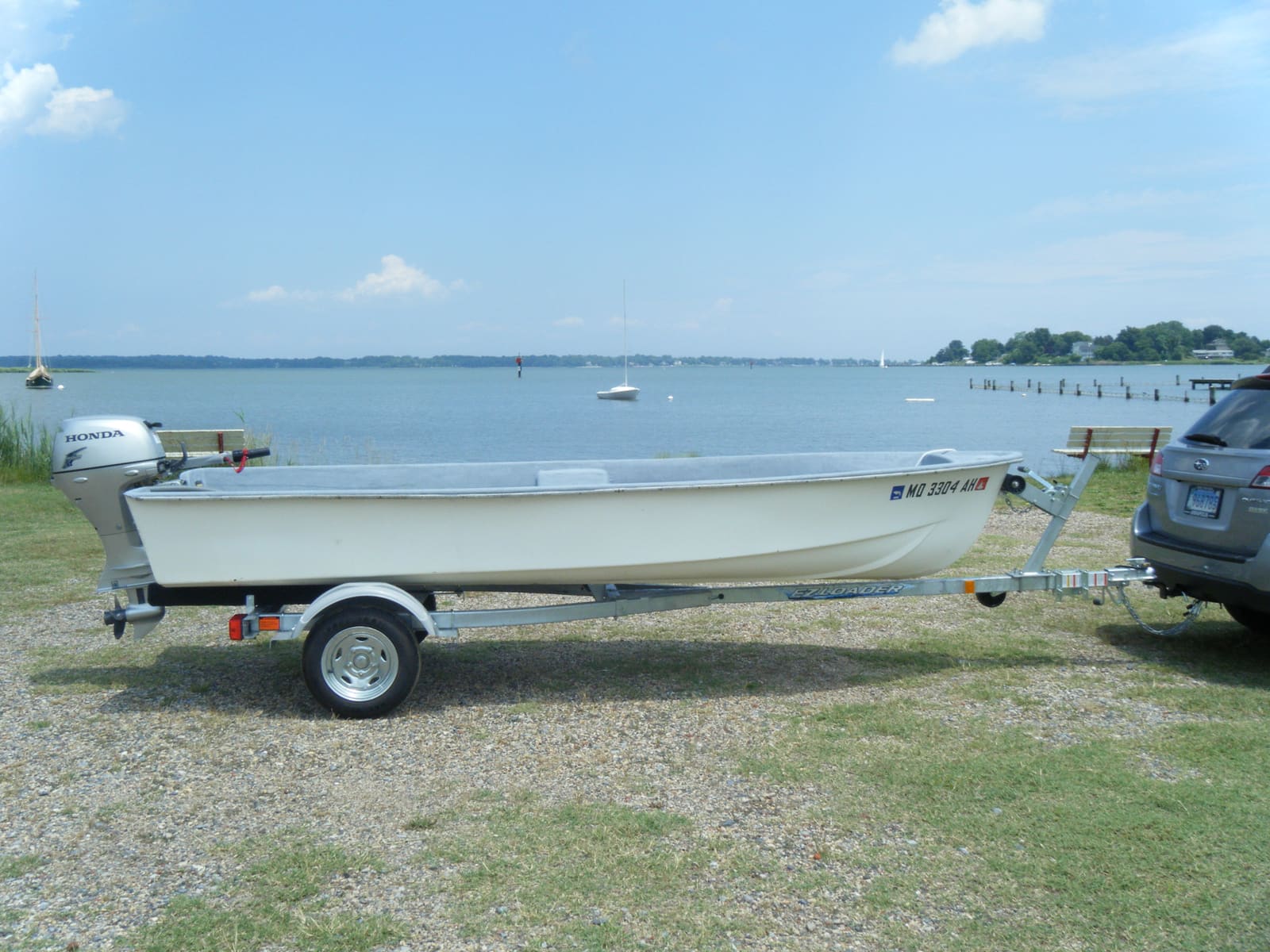
Many small rigs ride with the motor tilted for clearance. Check your manual for how yours should be held. Photo: Jimcameron / Wikimedia Commons · CC BY-SA 3.0 This is the one point every maker agrees on.
- Yamaha's FAQ: the tilt support lever is for storage only, wasn't designed for the strain of transport, and could break and damage the bracket. Yamaha points owners to its trailering support accessory.
- Suzuki's FAQ: same warning, and it suggests an aftermarket transom saver designed to work with your specific Suzuki.
- BoatUS adds that power tilt was never meant to hold a motor over potholes and dirt roads, only to lift it in shallow water or at the ramp.
Other brands have similar levers and similar warnings. If yours is flipped down when you hitch up, that's fine for parking in the driveway, not for driving.
Use the BoatUS findings as a checklist. A support makes the most sense when:
- The boat is small or light and the motor is heavy for it (jon boats, bass boats, aluminum boats, setback brackets or jack plates)
- You have to tow tilted because of low clearance
- You tow long distances or on rough or unpaved roads
The argument against: a trailer-mounted bar moves load from the transom (built to carry the motor) to the trailer, and because the boat and trailer bounce separately, road shock can come back up the bar into the lower unit. Some critics also point out that motor-mounted wedges protect the tilt rams but take nothing off the transom. If your builder says no support, follow the builder, and keep checking the transom (step 12).
- Trailer-mounted bar: works with or without power trim. Best when the motor tends to move up and down on the tilt pivot, for example a manual-tilt motor. Needs a sturdy spot on the trailer (rear cross member or roller bracket) and a yoke that fits your gearcase.
- Trim-ram support (wedge or tube): small and easy to store. You trim up, slip it over the ram, and trim down until it's snug. Only for motors with hydraulic trim, and only one designed for your model. Yamaha notes its own support doesn't fit every model.
- Lower-unit-to-bracket rods: also need power trim; they hold the motor in relation to its own bracket rather than the trailer.
- Sterndrives: Mercury's tow checklist mentions a trailer support bracket or clips to hold the sterndrive unit high enough to clear the road. Use only the type and position your drive's manual allows. Owners of older sterndrives often find the drive slowly settles toward the pavement on the way home from buying the boat. Don't wedge a board in and hope: stop, raise the drive to its trailering position, and fit the support or bracket made for that drive before you continue. A drive that won't stay up also points to a trim system that needs checking.
Bar or motor tote? Boating Magazine put the question to a maker of motor totes (the brace that sits between the trim rams and the tilt bracket), and even he said neither is better everywhere:
- A trailer bar is often the better pick on small aluminum boats or older fiberglass boats with wood-cored transoms, because it lets the trailer carry part of the motor's weight instead of the transom.
- A tote makes motor and boat move as one, so there's no gap to change as the boat bounces on the trailer, and nothing rubs the gearcase finish (the V-cradle of a bar often scratches it). A tote does need steering locks or clips to stop the motor flopping to one side, and its tilt height is fixed.
- On twin or triple outboards, or a motor on a long setback bracket, a trailer bar is often impractical, and totes are usually the answer.
Mercury suggests asking a marine professional which size and type suits your boat, trailer and engine. A dealer can tell you if your engine has a built-in trailering support (BoatUS noted that some Evinrudes came with a spring-loaded lock arm) or a factory accessory.
For a trailer-mounted bar:
- Tilt the motor to the height you want for towing, enough to clear your worst dip but not higher than necessary.
- Measure from the point where the yoke will sit on the lower unit to the trailer mounting point.
- Pick a bar whose adjustment range covers that length with room to spare. Adjustable bars let you fine-tune.
- Check that the yoke fits the gearcase without touching the propeller, the speedometer pickup or other small parts. If the instructions show where on the lower unit it should rest, use that spot.
For a trim-ram support, buy the size listed for your engine model, not "close enough."
- With power trim: BoatUS explains that the motor should be trimmed down onto the support until hydraulic pressure holds it in place. Snug is the goal. Don't keep running the trim down after the support is loaded: that pushes hard on the bar, the gearcase and the transom.
- Without power trim: the bar must be strapped or bungeed at both ends so it can't pop out as the motor bounces.
- Wiggle the motor by hand at the lower unit. It should feel solid, with no clunk.
- Center the motor or drive before you snug it down. A Mercury engineer quoted by Boating Magazine says to trim down "reasonably tight" into the saver's cradle, without overdoing it. If you tow with no support at all, tilt up just enough to clear the road, and don't rest the motor on the flip-down tilt lock, which he says is meant to take load off the tilt system while the boat sits in the water, not road shocks.
- Look at the bar from the side: it should be straight, both ends fully seated, with no sharp edge digging into paint.
BoatUS reports a classic complaint: a support that works fine on the highway, but the skeg still scrapes as the trailer drops from a raised driveway to the street, or the other way on the way home. Have a helper watch from the side while you drive slowly over your driveway transition, then over a speed bump. If the skeg comes close, raise the motor a little and readjust the support, or take that spot at an angle.
- Steering: keep the motor pointed straight back so the yoke stays centered. If it swings side to side on bumps, the bar can roll off the gearcase.
- Propeller: a BoatUS trailering tip is to put the engine in gear so the prop doesn't spin in the wind.
- Covers: only use an engine cover made for towing (see our pre-trailering checklist).
Stop and fix it if you see any of these:
- The bar rattles, rotates or has slid along the gearcase
- One end is half off the roller or bracket
- Fresh scrape marks on the gearcase, skeg or prop
- The motor sits lower than when you left (the trim may be bleeding down, or the support is collapsing)
- A spring-type bar is fully compressed at rest
Risks of getting it wrong include the bar popping out and the motor dropping, a gearcase or skeg cracked by a point load, a bent trim ram, and a support that hammers the lower unit instead of cushioning it.
At the ramp, raise the motor slightly, remove the support and stow it in the tow vehicle before you back in. Trimming down against a forgotten support can damage the support, the trim system or the transom. Add it to your launch routine next to the drain plug and transom straps, and put it back only after the boat is on the trailer and out of the ramp lane.
- Every trip: look over the support after the first few miles and at every fuel or rest stop, along with the straps and hubs.
- Each season: inspect the yoke pads, pins and springs, and replace worn pads so bare metal never rests on the gearcase.
- Each season: look for cracks around the motor mounting bolts and the transom corners, and on aluminum boats for cracked welds or loose rivets. Our transom and stringer rot guide covers what to look for. Damage there is a reason to call a pro, with or without a saver.
Common mistakes
- Towing on the tilt support lever, then finding it broken (and the motor resting on the trailer) at the ramp.
- Trimming down hard on a trailer bar "to make it tight," which loads the gearcase and transom instead of relieving them.
- Putting a trim-ram wedge on a motor without hydraulic trim, or one sized for a different model.
- A bar on a manual-tilt motor with no strap: it pops out on the first big bump.
- Forgetting the support at the ramp and trimming down onto it.
- Setting the support for highway clearance but never checking the driveway dip, where most skeg scrapes happen.
- Assuming a saver means you can skip the motor and transom checks.
When to call a pro
- You're not sure which support (or none) your boat and engine makers approve: ask your dealer
- The motor creeps down while trailering or won't hold trim (possible trim system leak)
- Cracks near the motor bolts, a soft or flexing transom, or cracked welds on an aluminum transom
- A bent or cracked gearcase, skeg or trim ram after a support failure
- A sterndrive whose trailering position or support you can't confirm in the manual
Tips
- Keep the support in a fixed spot in the tow vehicle so it travels both ways and is never left on the ramp.
- Mark the right bar length or trim height with a piece of tape once you've found it.
- Mercury's tow checklist suggests keeping the boat keys and the drain plug in the tow vehicle too; the same bin works for the support.
- If you change tow vehicles, ball mounts or tires, recheck clearance; the tongue height changes the skeg height.
Official references
We read these to write this guide. Your engine's own manual always wins.
- Mercury Marine – Quick Tip, Protect Your Boat and Outboard from the Stress and Strain of Trailering
- Mercury Marine – Boating Basics, Getting Ready to Tow
- Yamaha Outboards – Outboards FAQs (tilt support lever and trailering support)
- Suzuki Marine – FAQs (tilt support lever is for storage only; transom savers)
- BoatUS Magazine (Spring 2012, archived copy) – Transom Savers
- Mercury Marine – Pre-Tow Checklist for Hauling Your Boat
- Boating Magazine – How to Choose Between a Motor Tote and Transom Saver
- Boating Magazine – How to Support an Outboard or Sterndrive While Towing (Mercury engineer interview)
Safety: BoatMend is for information only and does not replace a certified marine technician. You are responsible for your safety and your boat. Read the full disclaimer.
Last updated 2026-10-25
Related guides
Get Your Boat Ready for the Road: Pre-Trailering Checklist
Most trailering trouble starts in the driveway: an engine left without support, a loose strap, a cover that balloons at 60 mph, gear that blows out or tongue weight that makes the rig sway. Work through this checklist before every trip and do a quick walkaround at each stop.
Boat Damaged While Trailering: What to Do on the Road or at the Ramp, Insurance, and Hidden Damage Checks
Step-by-step help after a crash, blowout, sway accident or ramp mishap with your boat on the trailer: making the scene safe, police reports, photos, which insurance usually pays (your auto policy, your boat policy's trailer coverage, or the other driver's insurer), and how to inspect the trailer, hull, drive and bunks for damage you can't see at first. Policies and state rules vary, so your own policy wording and state law win.
How to Check a Boat for Transom and Stringer Rot
Many older fiberglass boats have wood inside the transom, stringers and deck, and water that gets in slowly rots it. Learn the tap test, the flex test, how to read a moisture meter and the other warning signs, and why a rotten transom or stringer is a structural job for a pro, not a weekend patch.
How to Mount or Re-Tighten an Outboard on the Transom
A loose outboard can steer badly, crack the transom or fall off the boat. Learn how to center the motor, check engine height, tighten clamp screws, seal and bolt through the transom with backing plates, add a safety cable on small motors and spot transom flex before it becomes a costly repair.

How to Check for Worn Outboard Motor Mounts
A clunk when you shift, buzzing vibration at idle or a motor that wobbles side to side can mean the rubber mounts between the outboard and its bracket are worn out. Learn how to rule out the cheap causes first, check the mounts yourself and know when replacement belongs in a shop.

How to Check and Top Up Power Trim and Tilt Fluid
Check and top up the hydraulic fluid in your power trim and tilt unit, then work through the simple checks when the motor won't go up, won't go down or slowly sinks. Most trim problems are a dead battery, a bad relay, low fluid or a release valve left open, and you can find those yourself.
Trim Leaks: When the Motor or Drive Won't Stay Up
Track down why your outboard or sterndrive slowly sinks, trails down on the trailer or leaks trim fluid. Work from the free checks (release valve, fluid level) to hoses, ram seals and internal leaks, and learn when a rebuild or a new cylinder makes more sense.
Launch Day and Haul-Out Checklist for Trailer Boats
A step-by-step checklist for getting your boat off the trailer and back on again safely and quickly, from the drain plug and tie-downs to the blower and ramp etiquette. Following it in order prevents the classic mistakes that sink boats and back up the ramp.