How to Launch and Retrieve Your Boat Alone
A repeatable routine for putting a trailer boat in and taking it out by yourself: what to do in the staging area, how to rig one long line so you can control the boat from the dock, when power loading is off-limits, and the safety habits that keep you, your boat and the next boater out of trouble.

Time
30 min
Applies to
All engines
Safety first: Set the parking brake and put the vehicle in Park (or in gear with the engine off) every time you get out on the ramp, and chock a wheel on steep or slick ramps. Never stand behind or downhill of the boat while it can slide off the trailer, and never wrap a line around your hand or wrist. Ramps are slippery: wear a life jacket and grippy shoes. If you or anyone else ends up in the water and can't get out, call 911 or hail the Coast Guard on VHF channel 16.
Owners often ask
- How do I launch and load my boat by myself without a helper?
- Is power loading my boat onto the trailer allowed at the ramp?
- My rear-wheel-drive truck spins its tires pulling the boat up a slimy ramp. What can I do?
This guide walks you through it. Still stuck? Ask the AI Mechanic about your engine.
Tools
- One long dock line (roughly twice the boat's length) or your anchor line
- A second line for the bow eye (backup)
- Wheel chocks
- Fenders
- Shoes with good grip that can get wet, laced tight
- Life jacket (wear it on the ramp and the dock)
Parts & supplies
- Drain plug (and a spare)
Before you start
Know your limits. BoatUS's singlehanded launching article says solo launching is realistic for boats in the low 20-foot range or smaller, and only once you've launched with help many times. Small, light aluminum boats are the easiest. Wind, current, a steep ramp or a bouncing floating dock can turn an easy launch into a hard one; if conditions look wrong, wait or get help.
Practice on a quiet day. Discover Boating suggests making your first attempts on a weekday or another time when the ramp isn't busy, so you don't feel rushed.
Learn your ramp. Check whether power loading is allowed (see step 11) and whether there's a courtesy dock you can tie to.
Steps
Park out of the way and walk down to the ramp. BoatUS and Discover Boating both suggest checking:
- How steep the ramp is and how deep the water looks.
- Which side the dock is on, so you know which side of the boat to put the fenders and line on.
- Wind and current. Ideally they push the boat toward the dock once it's afloat.
- The traffic flow and where you'll park the vehicle and trailer.
- Whether the dock has cleats, pilings or both.
Discover Boating's ramp etiquette guide is clear: prep happens in the staging area, away from the ramp, even on a quiet day. Work through this list:
- Drain plug in. Check it twice.
- Load all gear, coolers and tackle. Mercury's trailering basics suggest doing this at home, before you leave for the ramp, with light items stowed in compartments or strapped down so they can't blow out on the highway; it saves time while others wait. Keep spare trailer bulbs and a pair of wheel chocks in the tow vehicle.
- Remove the transom tie-down straps and any motor support bracket.
- Put the key in the ignition and bump the key to confirm the battery is alive. Discover Boating warns not to actually start a raw-water-cooled engine out of the water, since it can damage the water pump.
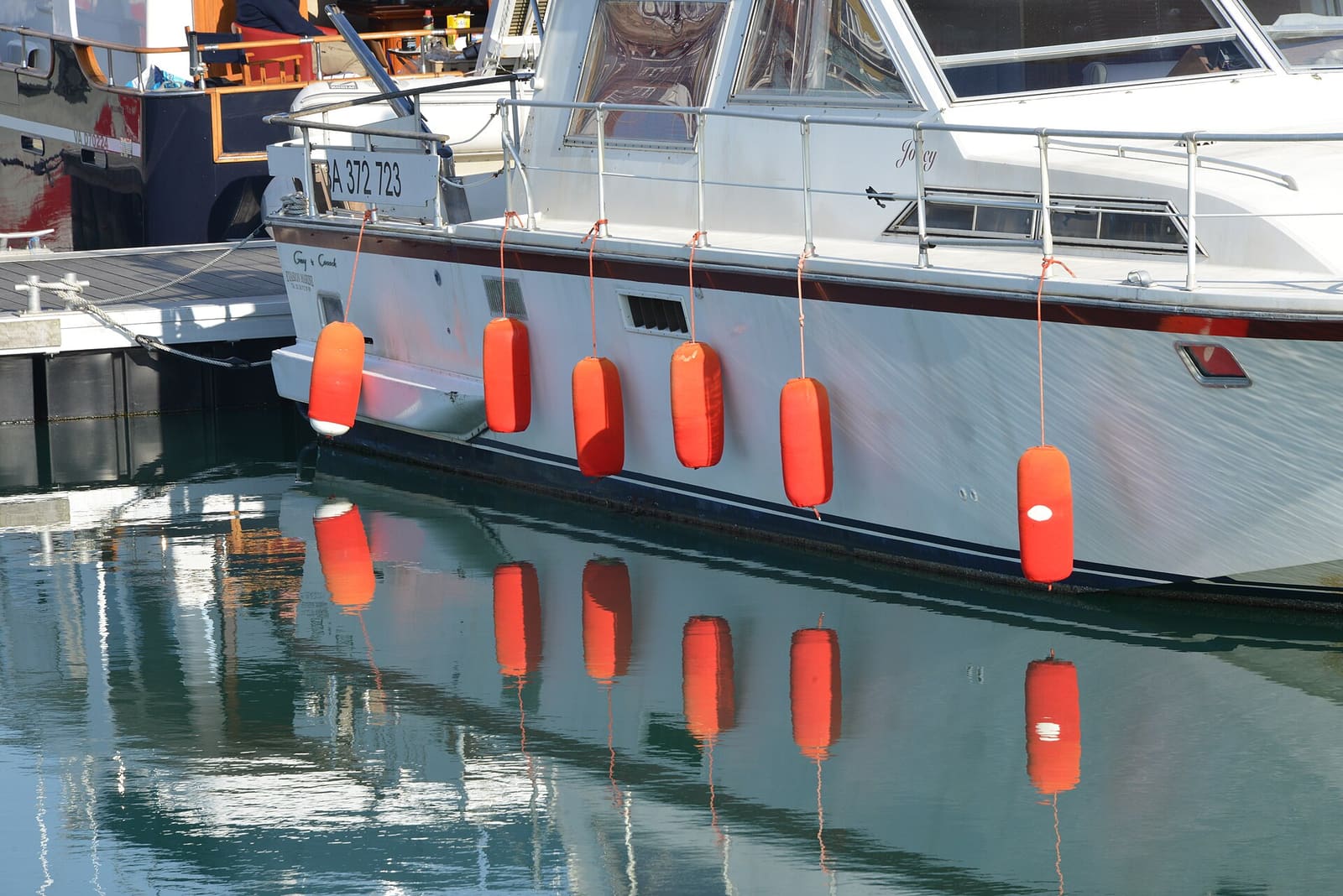
- Hang fenders on the dock side.
- Unplug the trailer lights from the vehicle. Discover Boating says hot bulbs can be damaged by cold water.
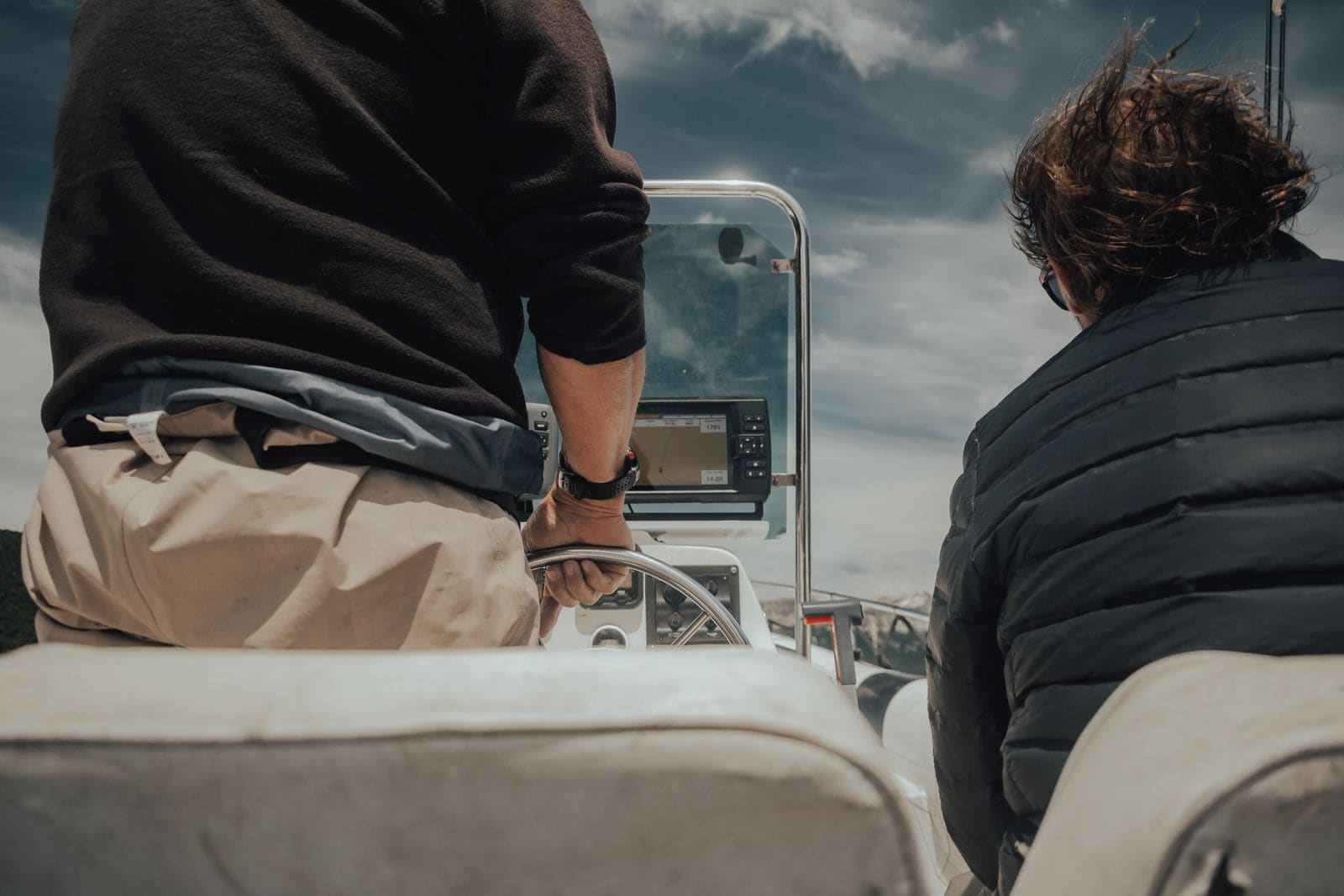
- Put on your life jacket and clip the engine cut-off lanyard where you'll find it.
- Leave the winch strap and safety chain attached.
BoatUS recommends this setup for solo launches: instead of separate bow and stern lines, tie one long line from the bow cleat to the stern cleat, with plenty of slack, on the dock side. From the dock you can then pull in or ease out either end without walking back and forth. Use your anchor line if you don't have a dock line long enough.
Other options, depending on the ramp (Discover Boating describes these):
- High dock: tie a long line to the boat's middle (spring) cleat and, after backing down, tie the other end to a cleat or piling well down the dock. Once the boat floats free, pull it along the dock.
- No usable dock: tie about 25 feet of line to the bow cleat, coil it on the bow, and tie the other end to the trailer. After the boat floats off, untie it from the trailer and walk the boat to the dock or shore.
- Very small, light boats in calm water: BoatUS says a single bow line can be enough.
- Line up straight before you start. Discover Boating's trick: hold the bottom of the steering wheel and move your hand the way you want the trailer to go in the mirror.
- Back slowly; small corrections are easier at low speed.
- Get the trailer as close to the dock as you safely can.
- EZ Loader suggests that for launching, the back of the trailer fenders just under the water is a typical starting point; every ramp and hull is a little different. Backing in too far can let the boat drift off uncontrolled. Discover Boating's trailer tips give a similar rule of thumb (the front of the fender at the water line on most ramps; farther on flat ramps, less on steep ones) and add one more limit: keep the tow vehicle's rear wheels out of the water so its exhaust stays dry.
- Parking brake on, transmission in Park, engine running or off as you prefer.
- On steep or slick ramps, chock a rear wheel of the tow vehicle.
- Walk down the upslope side of the trailer, never behind it.
BoatUS's order:
- Wait until the stern is starting to float.
- Release the winch strap and unhook it from the bow eye.
- Unhook the safety chain only when you're sure the boat won't float away on its own.
- Step onto the dock with your long line, take a wrap on a cleat or piling, and pull the boat free of the trailer.
BoatUS lists these options, roughly in order:
- Back in a little farther, with the winch strap still hooked so the boat can't float off before you're ready.
- Rig a second line from the bow eye to the trailer's bow stop post, unhook the strap, and give the boat a firm push.
- Climb in over the bow, start the engine and back off under power, making sure the skeg and prop won't hit the ramp or bottom.
Some solo boaters launch by backing down and hitting the brakes to "shoot" the boat off. BoatUS says the risk of damaging the boat or trailer is significant and recommends it only as a last resort by a very experienced operator, always with a line from the bow eye to the trailer post.
- Walk the boat as far down the dock as possible and tie it off bow and stern so it lies parallel to the dock. BoatUS suggests looping the long line over a piling near the bow and another near the stern; if there are only cleats, take full wraps and secure them before you walk away.
- Drive the vehicle up, park in a designated trailer spot, and walk back. Discover Boating's rule: don't leave the vehicle and trailer at the bottom of the ramp once the boat is in the water.
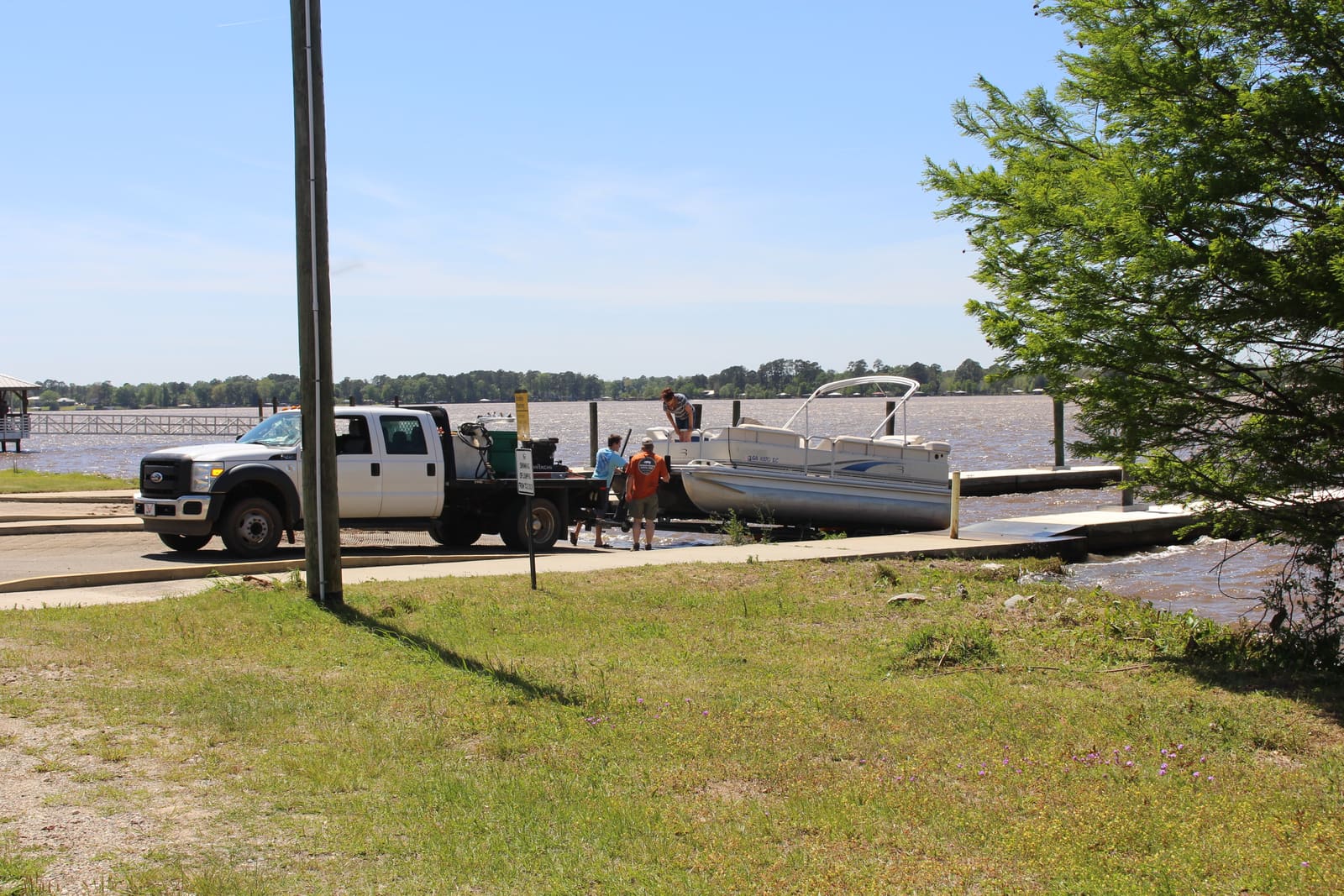
Busy public ramps leave little time: do your prep in the staging area, launch, and get the vehicle out of the lane. Photo: Michael Rivera / Wikimedia Commons · CC BY-SA 4.0 - Lower the engine or drive, start it and let it settle before you cast off.
- Check for cooling water from the telltale (outboards) and normal gauges.
- Clip on the kill-switch lanyard, bring the fenders in once you're clear, and stow the long line where you can grab it for the return.
- Tie up at the courtesy dock or another dock away from the launch lane while you get the vehicle. Discover Boating says it's fine to wait there.
- Walk up, get the vehicle in line and wait your turn.
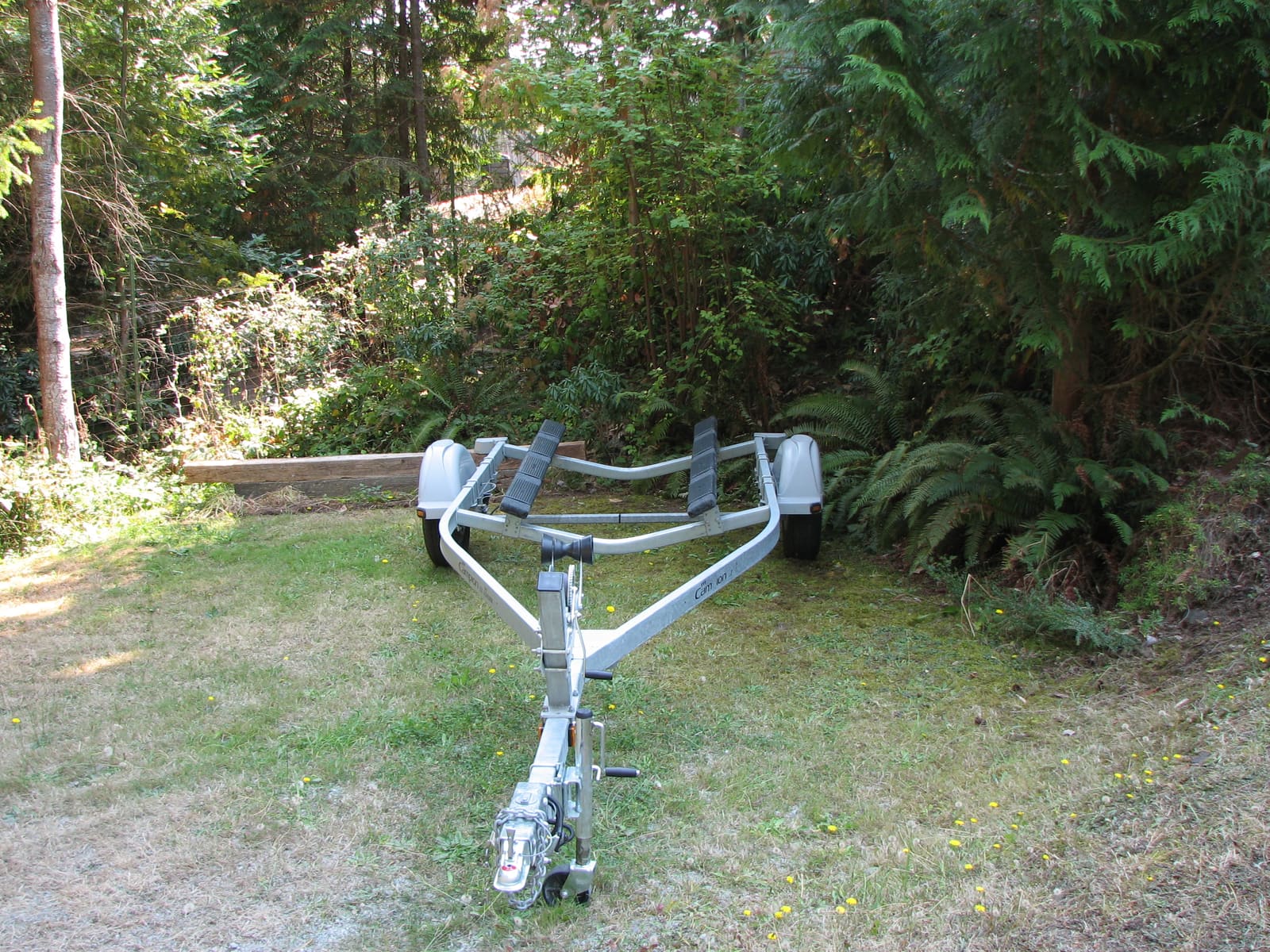
- Back the trailer down. For bunk trailers, EZ Loader suggests submerging the bunks, then pulling forward until about 6 to 8 inches of the center bunks are out of the water; adjust for your ramp.
- Park, parking brake on, and walk back to the boat.
- Walk the boat to the trailer with your long line and guide it onto the bunks or rollers. With a small boat you can winch it on from the trailer; with bigger boats you may drive on at idle where allowed (next step).
- Hook the winch strap to the bow eye, crank the boat snug to the bow stop, lock the winch and attach the safety chain.
- Tilt the engine up before you pull out so the skeg clears the ramp.
- Pull straight up to the staging area. Discover Boating says to unload gear and fit the transom straps, motor support and trailer lights there, not on the ramp.
If the tires spin on the way up (a common worry with two-wheel-drive trucks and SUVs), BoatUS's "Ramp It Up" tips, gentlest first:
- Ease onto the throttle on a wet or slimy ramp so the wheels never break loose; use 4WD Low if you have it.
- Put weight over the drive wheels (a loaded pickup bed or SUV back seat).
- Rear-wheel drive: winching the boat all the way forward adds tongue weight and traction. Front-wheel drive is the opposite: less tongue weight helps.
- Scrape the slime in front of the drive wheels or throw down sand.
- Still stuck? Get a fellow boater to pull you with a strap rated for vehicle recovery, or float the boat off again, drive the empty trailer up and try another lane. Ramps can have a drop-off where the concrete ends, often dug out by power loading, that catches trailer wheels.
If the bow won't seat against the bow stop, the trailer is usually too deep or too shallow for that ramp. Pull out, adjust the depth and try again rather than forcing it with the winch. If it happens every time, the bunks, winch post or bow stop need adjusting.
Power loading means staying in the boat and driving it onto the trailer with the prop turning. The Oregon State Marine Board explains why many ramp operators discourage or ban it: prop wash digs a hole at the toe of the ramp, undermines the concrete and can close a ramp for costly repairs, and it can damage your trailer too. The Board asks boaters to walk and guide the boat onto the trailer with a bow line instead.
- Look for signs: many local governments and ramp owners prohibit power loading, sometimes with fines.
- Where it's allowed, use only idle or just above it, trim the engine up as far as you safely can, and stop as soon as the bow reaches the roller. Oregon suggests that owners of long wake boats without winches only "bump" the throttle and then shift to neutral.
- Some trailer makers also limit power loading on certain trailers. Check your trailer manual.
In the staging area (Discover Boating's leaving-the-ramp checklist):
- Bow strap and safety chain tight; transom straps on.
- Trailer lights plugged in and working; hitch latched and pinned.
- Pull weeds off the boat and trailer, and drain the livewell, bait well and bilge before you leave the ramp, as many states require to stop invasive species.
- Pull the drain plug if your boat's maker recommends it for the trip home.
Common mistakes
- Prepping on the ramp instead of in the staging area.
- Unhooking the winch strap before backing down, and watching the boat slide onto the concrete.
- Getting out of the vehicle without setting the parking brake.
- Using a short bow line only, so the stern swings out into the launch lane.
- Forgetting the drain plug, the most common launch-day mistake owners admit to.
- Standing behind or downhill of the boat while freeing it from the trailer.
- Power loading at a ramp where it's banned, or with the throttle well above idle.
- Leaving the boat tied at the launch dock while you go park and chat.
When to call a pro
- Your boat is too big or heavy to handle alone, or conditions at your usual ramp are too rough: launch with a helper or use a marina launch service
- The trailer doesn't let the boat float on and off cleanly at normal depth: the bunks or rollers may need adjusting (our bunks guide)
- Brakes, lights or the winch don't work properly
- Someone falls in or gets hurt: call 911 or hail the Coast Guard on VHF 16
Tips
- Tie the drain plug to the boat keys so you can't run the engine without seeing it.
- Mark the right trailer depth on your fenders or guide-ons with a strip of tape once you find it.
- Tall guide-on posts make solo retrieval much easier in a crosswind.
- Keep the long line flaked, not coiled tight, so it pays out without tangling.
- If the ramp is busy and you're struggling, it's fine to pull out, re-rig in the staging area and try again.
Official references
We read these to write this guide. Your engine's own manual always wins.
- BoatUS – Launching A Boat Singlehanded
- Discover Boating – How to Launch a Boat
- Discover Boating – Boat Ramp Etiquette
- Discover Boating – How to Tow a Boat (arriving at and leaving the ramp)
- Oregon State Marine Board – Power Loading
- BoatUS – Ramp It Up! (2013, wheel spin and ramp tips)
- EZ Loader – FAQ (how deep to back in for launching and loading)
- Discover Boating – Boat Trailer Tips
- Mercury Marine – Boating Basics, Getting Ready to Tow
Safety: BoatMend is for information only and does not replace a certified marine technician. You are responsible for your safety and your boat. Read the full disclaimer.
Last updated 2026-10-25
Related guides
Launch Day and Haul-Out Checklist for Trailer Boats
A step-by-step checklist for getting your boat off the trailer and back on again safely and quickly, from the drain plug and tie-downs to the blower and ramp etiquette. Following it in order prevents the classic mistakes that sink boats and back up the ramp.
Get Your Boat Ready for the Road: Pre-Trailering Checklist
Most trailering trouble starts in the driveway: an engine left without support, a loose strap, a cover that balloons at 60 mph, gear that blows out or tongue weight that makes the rig sway. Work through this checklist before every trip and do a quick walkaround at each stop.
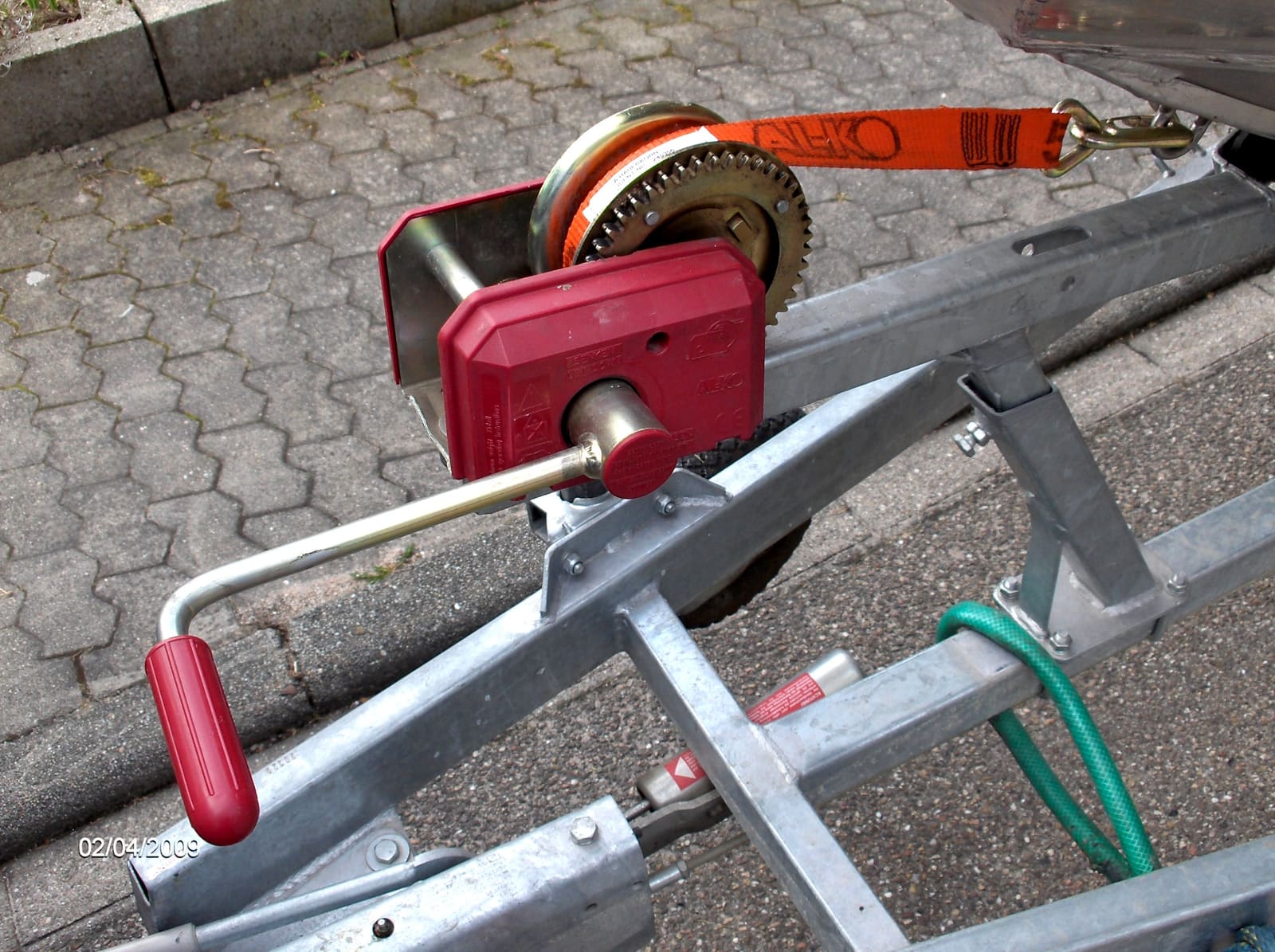
How to Inspect and Use the Trailer Winch, Strap, Tie-Downs and Safety Chains
Check the winch, strap or cable, bow safety chain, transom tie-downs and the safety chains to your vehicle, and learn how each one is meant to be used. These parts keep the boat on the trailer and the trailer behind your truck.
How to Size, Rig and Inspect Dock Lines and Fenders
Pick the right dock line diameter and fender size for your boat, set up bow, stern and spring lines in a slip, add chafe gear, inspect for wear and UV damage, and double everything up before a storm.
How to Adjust and Replace Trailer Bunks and Rollers So Your Boat Sits Right
Set up your boat trailer so the hull is supported in the right places: bunks and rollers clear of the strakes, the transom fully supported, the bow snug against the winch stop and the weight balanced on the tongue. Also covers replacing rotten bunk boards and worn carpet or rollers.
Engine Cut-Off Switch (Kill Switch) and Lanyard: The Law, Testing and Daily Use
How the engine cut-off switch (ECOS) and its lanyard or wireless fob work, when federal law requires you to wear it (boats under 26 feet, 3 hp or more, on plane), how to test it before every trip, and why a spare clip aboard matters.

Clean, Drain, Dry: Stopping Zebra and Quagga Mussels and Other Invasive Species
What Clean, Drain, Dry means in practice for your boat, trailer and motor, what to drain before you leave the ramp, what happens at a watercraft inspection or decontamination station, and examples of state rules you may run into when you trailer between lakes.