Inheriting a Boat: Title Transfer, Coast Guard Documentation, Insurance, Taxes and Keep-or-Sell
What to do when a boat comes to you from a relative's estate: secure it and keep it insured, find out how ownership passes (joint owner, transfer-on-death, probate or a small-estate affidavit), transfer a state title or a Coast Guard documented vessel, deal with the trailer, liens and taxes, and decide whether to keep or sell. General information, not legal or tax advice.
Time
4 h
Applies to
All engines
Safety first: This is general information, not legal or tax advice. Estate law, title rules and taxes differ by state, so confirm every step with the agency that titles boats in that state, and talk to a probate attorney or tax professional when the estate is large, contested or in debt. A boat that has sat for months can hide stale fuel, leaking fuel lines, swollen batteries and old propane: don't start the engine or light the stove until it has been checked. If you smell fuel or see water rising in the bilge, stop and call a marine technician (or the marina) right away.
Owners often ask
- My dad passed away and the boat title is still in his name. How do I transfer it to me without going through probate?
- Do I need to keep insuring an inherited boat while the estate is being settled?
- Can the boat be registered to my father's estate while probate is still open?
This guide walks you through it. Still stuck? Ask the AI Mechanic about your engine.
Tools
- Certified copies of the death certificate (order several)
- The will, court papers (letters testamentary or of administration) or your state's affidavit form
- Title, registration card, Certificate of Documentation and any loan papers you can find
- Camera or phone to photograph the HIN, engine serial numbers and the boat's condition
Before you start
Inheriting a boat usually means two jobs at once: dealing with the paperwork, which is slow, and looking after a boat that keeps costing money while you wait. Most of the work is the same as any used-boat transfer, with one difference: the person who could sign the title is gone, so someone else has to prove they have the right to sign.
Who can act depends on how the estate is handled:
- Joint owner with right of survivorship: the surviving co-owner usually just needs a death certificate.
- Transfer-on-death (TOD) beneficiary: a few states let owners name one on the boat's record (Minnesota's DNR has a form for it). Ownership passes to the beneficiary at death, subject to any lender's rights.
- Probate: the court names an executor or administrator (the "personal representative"), who signs for the estate using court papers often called letters testamentary or letters of administration.
- No probate: many states have a shortcut, usually a notarized affidavit signed by the heirs, when no estate administration has been opened. Rules on who must sign, debts and dollar limits vary.
- Trust: if the boat was owned by a living trust, the successor trustee transfers it under the trust's terms.
Your first call should be to whoever is handling the estate. If that's you, the steps below are your checklist.
Steps
Find out where the boat is and who is holding it: a home driveway, a marina slip, a storage yard or a dealer's shop. Ask about unpaid storage or repair bills, because an unpaid yard can eventually start lien-sale proceedings (our storage-lien guide explains how). Then collect:
- The state title and registration card (or the Coast Guard Certificate of Documentation for a documented boat)
- The trailer title or registration and any separately titled outboard motor paperwork
- Loan statements, the insurance policy, the slip or storage contract, and service records
- Photos of the HIN on the transom and the engine serial numbers
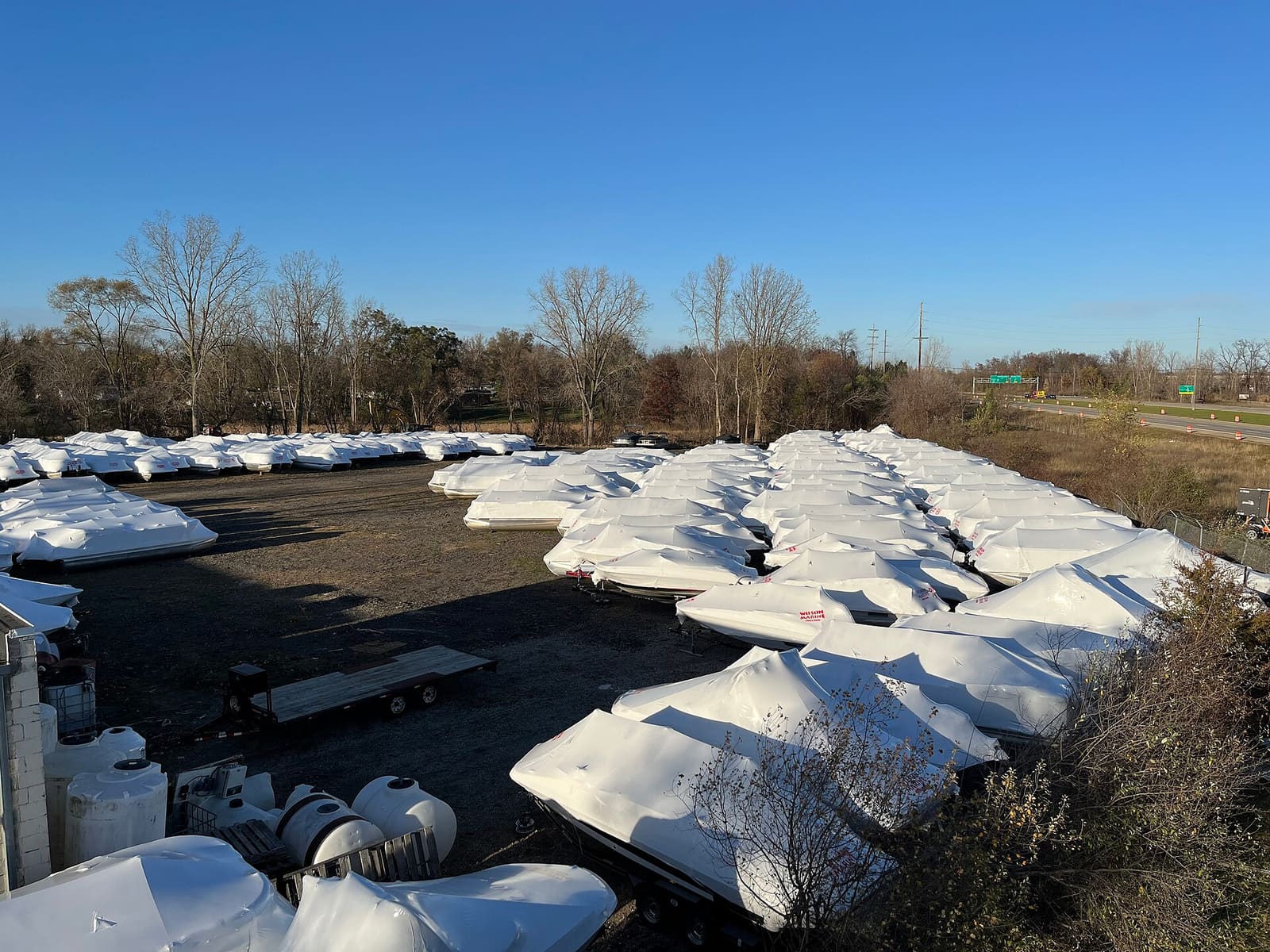
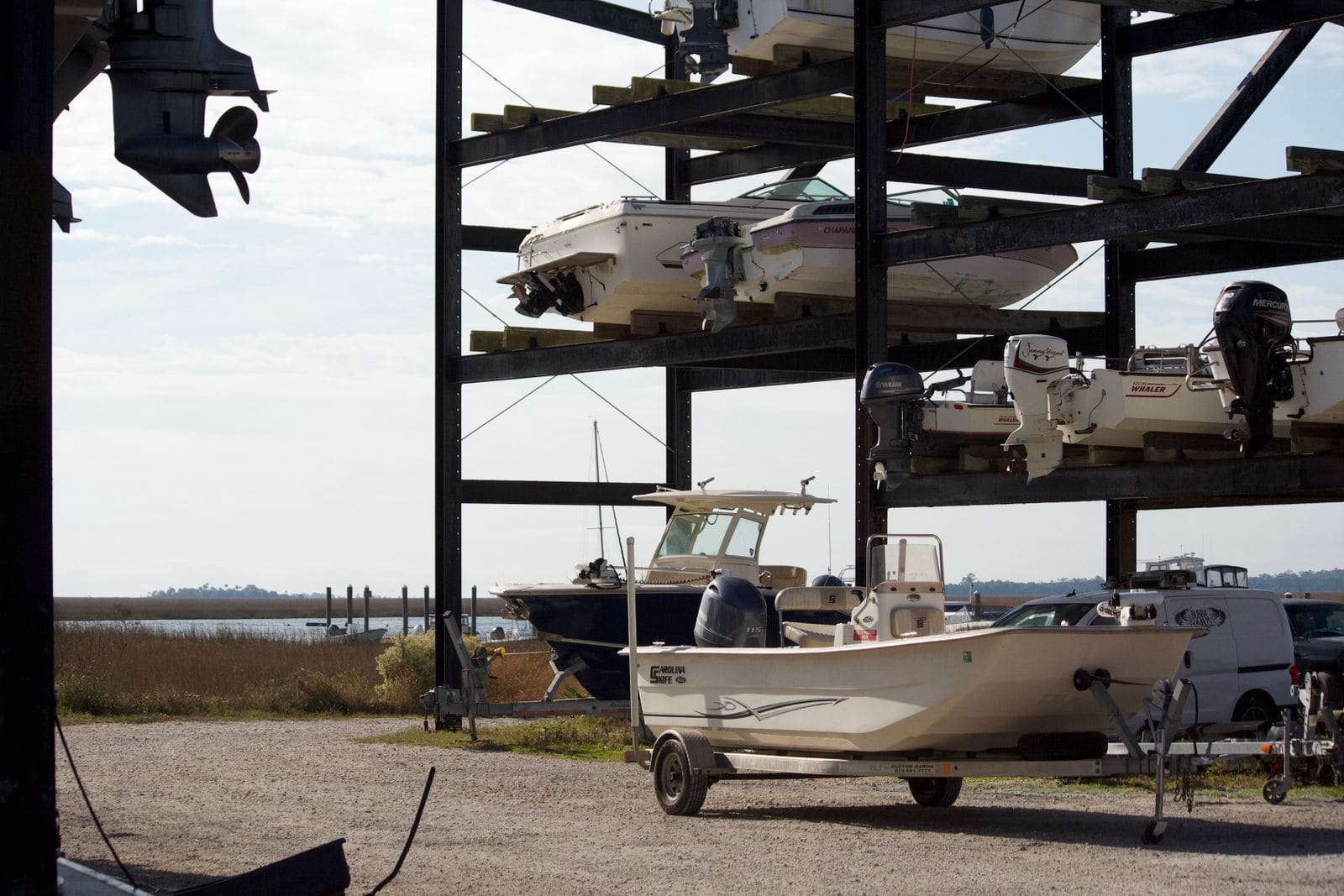
Ask the marina or storage yard what's owed and keep the bill paid while the estate is open. Photo: Colin Venable / Wikimedia Commons · CC BY-SA 4.0 Call the insurer as soon as you can, tell them the owner has died and ask how the policy is handled while the estate is open. A policy doesn't automatically move to an heir. The usual path is to keep coverage in place for the estate and then write a new policy in the new owner's name once title passes. A boat in a slip still needs liability coverage, and most marinas require it. Don't let anyone use the boat until the insurer confirms who is covered.
Match the situation to one of the paths in "Before you start": surviving joint owner, TOD beneficiary, probate, a no-probate affidavit or a trust. Read the will if there is one, but note that the boat's title or TOD designation can control over the will in some cases. If heirs disagree, or the estate owes more than it owns, stop here and get a probate attorney.
Every state has its own form, so search the titling agency's website (wildlife department, DMV, or natural resources department) for "deceased owner." Four examples show how different they are:
- Texas: if the estate was probated, the executor or administrator provides certified probate papers or letters. If not, the heirs can use TPWD's Affidavit of Heirship (PWD 738). Signatures are notarized, and the form explains which heirs must sign (for example, a surviving spouse alone in some cases, or the spouse plus children from an earlier marriage in others). If the title is found among the owner's papers, it must be assigned and attached.
- Virginia: DWR's form BRT-003 is for estates with no executor or administrator. The heir certifies that the decedent's debts are paid (or the sale money will go to them), everyone with an interest in the boat signs consent, and the application goes in with the title, a copy of the death certificate and the will if there is one. The form can't be used if an executor has been named.
- Wisconsin: the DNR's Affidavit of Authority to Transfer Boat Title (Form 9400-619) is filed by a legal representative such as a personal representative or an heir using transfer by affidavit, with the supporting papers attached. The form itself has no filing fee; a replacement title costs extra if the original is missing.
- Washington: the state's titling rule for a deceased owner (WAC 308-93-520) lists several options, including one that helps while probate drags on: the boat can be titled and registered in the name of the estate until the estate is settled. The personal representative signs to release the deceased owner's interest and attaches a county clerk's certificate or the court order appointing them. That keeps the registration legal in the meantime.
Expect to send the death certificate, the agency's application, the old title (or a lost-title statement) and the fee. Some states also want a bill of sale or "change of status" form.
Look at the title for a listed lienholder and search the estate's mail for loan statements. A lender's lien stays on the boat after death. The estate can pay it off, an heir can arrange to refinance, or the boat may have to be sold to clear it. Get a written payoff letter and lien release before anyone signs over the title (our title-and-liens guide covers how to check).
For a documented boat, the Coast Guard's National Vessel Documentation Center (NVDC) needs proof of how title passed:
- By court action (probate): copies of the relevant court orders, certified by a court official.
- Without court action: a certified death certificate when title passes to a surviving joint tenant or tenant by the entirety; or, where state law allows transfer without court action, evidence that you followed that state law (for example, the state's heirship affidavit).
The new owner then applies through the NVDC's online eStorefront (form CG-1258 covers an exchange of the certificate). If the estate is selling instead, the executor signs a bill of sale (CG-1340) to the buyer. Remember that a recreational documented vessel must be owned by a U.S. citizen: an heir who isn't a citizen will need to ask the NVDC about removing the boat from documentation and titling it with the state instead. Our documentation-renewal guide covers fees and the look-alike "documentation service" letters you'll probably start receiving.
The trailer usually has its own title or registration, often through the motor vehicle agency rather than the boat agency (in Texas, TPWD titles boats and outboards, but trailers go through the county tax office for the state DMV). Some states also title outboard motors separately. Transfer each one, or the trailer can't legally go on the road.
Once title is in your name, register the boat and put the new decals on (or keep the documentation current plus any state registration your state requires for documented boats). Then ask about tax:
- Sales or use tax: many states don't charge it on a transfer by inheritance, but some ask you to file a form claiming the exemption. Ask the titling agency.
- Yearly property or excise tax: if the state or county taxes boats, the bill continues and will come to you.
- Estate value: the executor may need a fair market value for the estate. Our valuation guide explains how to get one.
Treat it like a used boat with an unknown history, even if you knew it well. Check fuel age and the fuel system, batteries, the water pump impeller, belts, hoses, through-hulls, the trailer tires and bearings, and the expiry dates on flares and extinguishers. A boat that sat outdoors for years needs a full inspection (see our weathered used boat guide); one that was just laid up for winter needs a normal spring commissioning.
Be honest about the yearly cost: storage, insurance, maintenance, taxes and the repairs an idle boat collects. Our ownership-budget guide helps you total it. If you sell, the executor or new titled owner signs, and buyers will want the clean paperwork from the steps above. If several heirs share the boat, put the plan in writing: who pays storage now, who decides on the price, and how the money is split.
Common mistakes
- Letting the insurance lapse because "nobody's using it."
- Using the boat, or letting a relative use it, before title and insurance are sorted.
- Selling the boat on a handshake with the decedent's signed-but-undated title. The buyer may not be able to register it, and it skips the estate's process.
- Forgetting the trailer title, then finding out it's needed to sell the package.
- Ignoring storage bills while the estate is open until the yard starts a lien sale.
- Paying a private "documentation service" several times the NVDC's real fee.
- Starting an engine that has sat for years without checking fuel, oil and cooling first.
When to call a pro
- Probate attorney: heirs disagree, there's no will and many heirs, the estate has debts, or the boat is valuable
- Tax professional: estate tax, a large boat, or a boat located in a different state from the estate
- Marine surveyor: you need a fair market value for the estate or before selling a larger boat
- Marine technician: fuel smell or leaks, water in the bilge, swollen batteries, or an engine that has sat for a long time
- The titling agency or NVDC: whenever you're unsure which form fits your situation
Tips
- Order several certified death certificates; the boat agency, the NVDC, the insurer and the lender may each want one.
- Keep a copy of every form you send and note the date; transfers can take weeks.
- Photograph the boat, engine hours and equipment early, for the estate's records and for a later sale.
- If you plan to keep the boat, ask your state whether it offers transfer-on-death or similar designations, so your own heirs have an easier time.
- Start a maintenance log in BoatMend the day the boat becomes yours, with whatever service history you found.
Official references
We read these to write this guide. Your engine's own manual always wins.
- Texas Parks and Wildlife – Affidavit of Heirship for a Vessel/Boat and/or Outboard Motor (PWD 738, state form)
- Texas Parks and Wildlife – Buying and Selling a Boat or Outboard Motor
- Virginia DWR – Certification of Authority to Transfer Watercraft Registration/Title When the Owner Is Deceased (BRT-003, state form)
- Wisconsin DNR – Affidavit of Authority to Transfer Boat Title (Form 9400-619, state form)
- Minnesota DNR – Application for Transfer-on-Death Beneficiary, watercraft (state form)
- eCFR – 46 CFR 67.77, Passage of title by court action
- eCFR – 46 CFR 67.79, Passage of title without court action following death of owner
- eCFR – 46 CFR 67.75, Transfers by sale or donation subsequent to documentation
- eCFR – 46 CFR 67.33, Citizenship of an individual owner
- USCG National Vessel Documentation Center – Instructions and Forms
- Washington Administrative Code – WAC 308-93-520, Owner deceased (vessel titling options)
Safety: BoatMend is for information only and does not replace a certified marine technician. You are responsible for your safety and your boat. Read the full disclaimer.
Last updated 2026-11-06
Related guides
Used Boat Paperwork: Titles, Liens, HIN Checks, Bill of Sale and Registration
A practical checklist for the paperwork side of buying a used boat: state title or Coast Guard documentation, checking for liens and theft, verifying the hull ID number, writing a proper bill of sale, the trailer's own title, registering in your name, and transferring warranties and checking recalls. Rules vary by state, so confirm each step with your state agency.
USCG Documentation Renewal: When, How, What It Costs and How to Avoid Look-Alike Renewal Mailers
Keep your boat's Coast Guard Certificate of Documentation current: how long a recreational certificate lasts (1 to 5 years), the federal fee schedule, renewing directly with the NVDC online, what happens if it lapses, why many states still want registration and a decal, and how to spot the third-party letters that charge several times the real fee.
Boat Taxes by State: Sales and Use Tax, Yearly Property or Excise Tax, Visiting Limits and Moving
Understand the taxes a boat can trigger in the US (sales or use tax when you buy, a yearly property or excise tax where you keep it, and deadlines when you visit or move to another state) so you can budget for them and avoid penalties. General information, not legal or tax advice.
How Much Is a Used Boat Worth? Pricing Guides, Comps and Condition
Work out a realistic price for a used boat, whether you're buying or selling: check sold and listed comps, read J.D. Power, BUCValu and ABOS values the right way, value the engines separately, adjust for hours, condition, upgrades and location, and know when a valuation survey is worth paying for.
Boat Insurance Policy Basics: Agreed Value vs Actual Cash Value, Navigation Limits, Storm Deductibles and Exclusions
Learn to read a boat insurance policy before you need it: agreed value versus actual cash value, navigation limits and lay-up periods, named storm deductibles, towing, salvage and wreck removal, liability limits, and the exclusions that cause most claim surprises. General information, not legal or insurance advice.
Buying a Boat That Sat Outside for Years: What Fails, How to Inspect It and What It Really Costs
A boat that sat in a yard for years can be a bargain or a money pit. Learn what usually fails (fuel system, waterlogged foam, stringers and transom, wiring, upholstery, trailer), how to inspect and weigh it, when to pay for a survey, and how to price the repairs before you make an offer.
Spring Commissioning - Getting Your Boat Ready for the Season
Wake your boat up after storage with a step-by-step check of the battery, fuel system, engine, drive and safety gear. Catching a cracked hose or dead battery in the driveway beats a tow on opening weekend, and saves a typical shop commissioning fee.
Buying a Documented Boat With an Expired or Deleted Coast Guard Certificate
What an expired or deleted Certificate of Documentation means when you buy a used boat, how to check the record and any mortgage with an Abstract of Title, your two paths (keep it documented or move it to a state title), and how to spot private sites that look like the Coast Guard. General information, not legal advice.
Marina and Storage Liens: How Lien Sales Work, Buying a Lien-Sale Boat, and Not Losing Yours
How unpaid slip, storage or repair bills turn into a lien and then a sale, using Florida and California as examples; what an owner can do to stop it; and how a buyer checks that a lien-sale or abandoned boat comes with paperwork the state will actually title. Every state has its own process and deadlines, so confirm with your state agency.
Sharing a Boat: Co-Ownership Agreements, Partnerships and Boat Club Alternatives
How to share a boat without losing a friend: choosing a partner, what a written agreement should cover (shares, costs, scheduling, maintenance standards, insurance, title, decisions and the exit), how to handle the inevitable disagreements, and when a boat club, rental or peer-to-peer option makes more sense. Practical guidance, not legal or tax advice.
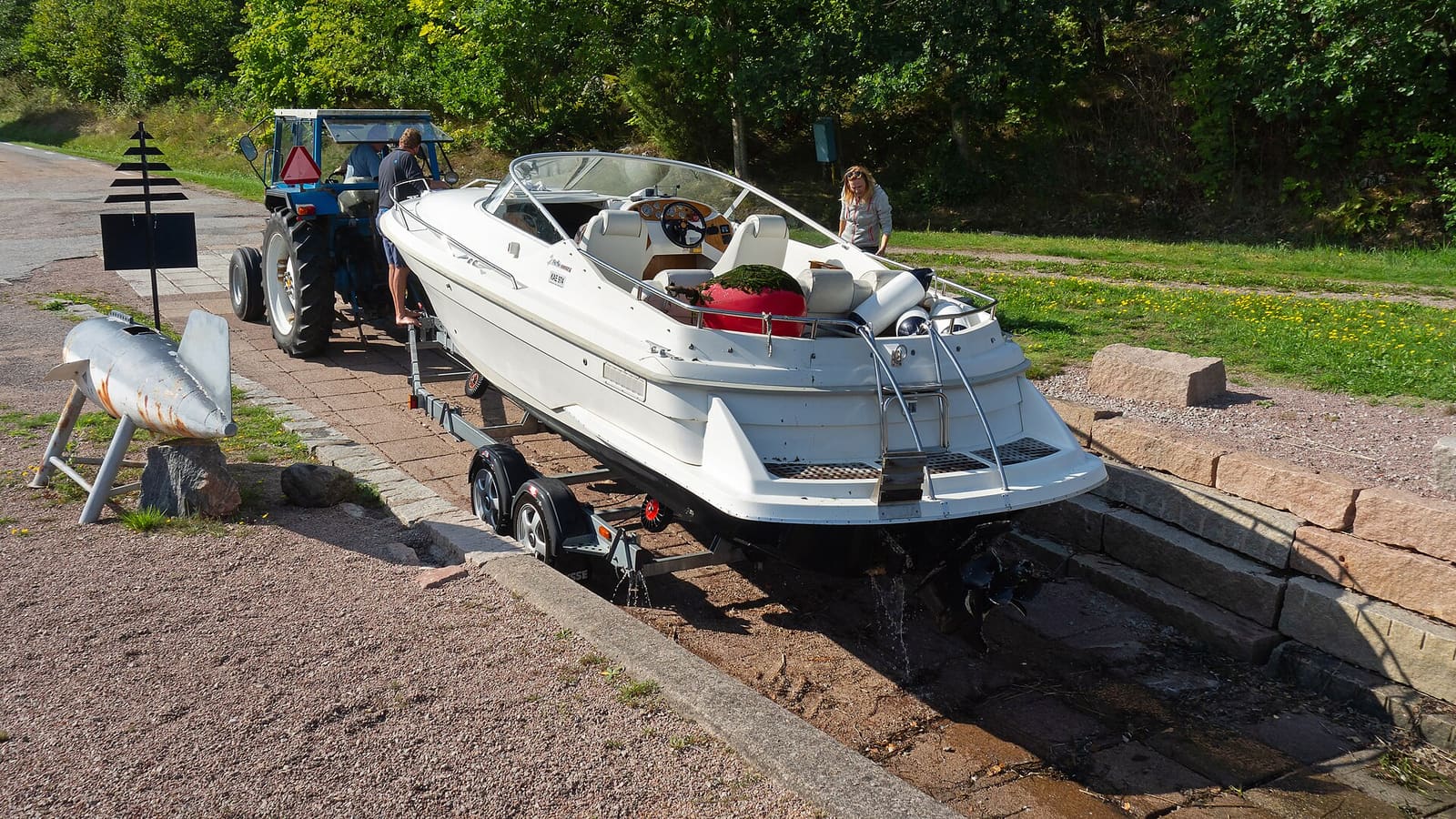
The Real Cost of Owning a Boat: Building a Yearly Budget and Cutting Costs with DIY
Add up what a boat really costs each year (storage, insurance, fuel, maintenance, winterizing, registration, depreciation and the surprise repair), check it against the common rules of thumb, and find the places where do-it-yourself work and smarter choices save real money. Practical planning help, not financial advice.

How to Get Your Boat Ready to Sell (Records, Title and Prep)
Prepare your boat for sale the way buyers and surveyors expect: gather the title, registration and HIN paperwork, organize your maintenance records and receipts, fix the small stuff, detail the boat, get it ready for a sea trial and buyer's survey, and close the deal with the right documents.
Selling Your Boat: Broker, Private Sale, Consignment or Dealer Trade-In
Compare the four ways to sell a used boat (yacht broker, selling it yourself, dealer consignment and trade-in) on cost, effort, speed and risk, then handle the listing agreement, buyer scams, sea trial and survey etiquette, deposit and closing the right way. Practical help, not legal or financial advice.