Selling Your Boat: Broker, Private Sale, Consignment or Dealer Trade-In
Compare the four ways to sell a used boat (yacht broker, selling it yourself, dealer consignment and trade-in) on cost, effort, speed and risk, then handle the listing agreement, buyer scams, sea trial and survey etiquette, deposit and closing the right way. Practical help, not legal or financial advice.
Time
2 h
Applies to
All engines
Safety first: This is practical help, not legal or financial advice; for a large or complicated sale, have an attorney review the contract. Never hand over the boat, the keys or a signed title until the money has truly cleared your bank, and never wire back an "overpayment." Meet strangers in public or at a marina office, bring someone with you, and don't let an unknown buyer take the boat out alone. On a trial run, you or your own captain stay at the helm, everyone aboard wears or has a life jacket, and you turn back at the first fuel smell, alarm or water in the bilge.
Owners often ask
- Should I sell my boat through a broker or on my own, and what does a broker charge?
- A buyer wants to pay by cashier's check and have his shipper pick up my boat. Is that a scam?
- Does a California yacht broker need a license, and how do I check one?
This guide walks you through it. Still stuck? Ask the AI Mechanic about your engine.
Tools
- Title or Certificate of Documentation, trailer title, loan payoff letter
- Maintenance records and receipts
- A recent valuation (price guides, comps or a valuation survey)
- Phone or camera for listing photos
Before you start
There are four common ways to sell a used boat:
- Private sale (by owner): you set the price, write the ad, show the boat and close the deal. No commission, all the work and risk are yours.
- Yacht or boat broker: a professional markets the boat, screens buyers, coordinates the sea trial and survey, and handles the deposit and closing, for a commission.
- Consignment: a dealer keeps and shows your boat on its lot or docks and sells it for you for a fee, while you still own it.
- Dealer trade-in: the dealer takes your boat as part payment on another one. Fast and simple, but the lowest price.
Which one fits depends on the boat's value and size, how much time you have, how far the boat is from home, and how comfortable you are handling strangers and money. Plan for it to take a while: BoatUS reported that used boats were averaging about 165 days on the market in early 2025 (Boats Group data).
Get your paperwork and records in order first; our sale-prep guide covers the title, HIN check, records, detailing and repairs.
Steps
Whatever route you choose, start with a number backed by evidence: recent comparable listings, the J.D. Power and BUC values, and an honest condition adjustment (our valuation guide walks through it). BoatUS notes that in a stable market, asking prices typically run about 6% to 10% above what boats actually sell for. A broker or a valuation survey can help when comps are scarce.
- Broker: BoatUS describes 10% of the selling price as the traditional commission, sometimes negotiable, with minimum fees that can run from about $2,500 to $7,000 to cover marketing. In return you get marketing reach, access to sold-price data, buyer screening and a managed closing.
- Private sale: no commission, but you pay for ads, answer every call, show the boat, run the trial, and handle the money and paperwork yourself.
- Consignment: a fee or percentage set by the dealer; terms vary widely, so get them in writing. Works well for small trailer boats a broker may not want.
- Trade-in: BoatUS explains the offer will be below market value because the dealer has to store, finance and resell the boat at a profit. In exchange, you get a firm number right now, and a dealer that regularly takes trades may be able to work around a loan you still owe. Ask whether your state taxes only the difference between the new boat and the trade.
A rough rule: the bigger and more valuable the boat, the more a broker earns its fee. For a small, easy-to-show trailer boat near home, a private sale often makes sense.
Discover Boating suggests choosing a broker who is a member of the Yacht Brokers Association of America or a Certified Professional Yacht Broker. Some states license brokers. In Florida, for example, a person who sells yachts over 32 feet for others must hold a state license (owners selling their own yacht are exempt), deposits must be kept in a trust account at a Florida financial institution, and the broker must give both sides an itemized closing statement. The Florida act also makes it a felony for a broker to intentionally skip the trust account, which tells you how seriously deposits are treated. California licenses yacht brokers and salespersons through State Parks' Division of Boating and Waterways, which says it regulates them and reports broker violations to the public; the California DMV notes that some licensed brokers are also authorized as vessel agents who can collect registration fees and use tax for the buyer. In a licensing state, check the license before you sign. Ask for references and look at how the broker's current listings are photographed and described.
Before you sign, make sure you understand:
- Type: an exclusive (central) listing with one broker, or an open listing with several
- Term: how long it lasts and how you can cancel
- Commission: the percentage, any minimum fee, and how it's split if another broker brings the buyer
- If you find the buyer yourself: whether you still owe a commission
- Costs: who pays for advertising, cleaning, haul-outs, and slip fees if the boat moves to the broker's dock
- Insurance: keep your own policy in force until closing, and ask the broker about their coverage for showings
Get a written consignment agreement that states the minimum price, the fee, how long the dealer holds the boat, storage or lot fees, who insures it on the lot, and how fast you're paid after a sale. Keep the title in your possession until the dealer's payment to you has cleared, then sign it over. Photograph the boat, engine hours and included gear on drop-off day.
Write an honest ad with plenty of clear photos, the engine hours, recent work and any known problems. List the trailer and gear that come with it. Screen callers on the phone first, show the boat by appointment, and keep a written "known issues" sheet to hand to serious buyers. Our sale-prep guide covers detailing and fixing the small stuff.
BoatUS lists the classic warning signs:
- A "buyer" who asks questions already answered in the ad and never wants to see the boat
- An offer to pay by cashier's check, with a "mover" or "shipper" picking the boat up after the check is cashed
- A check for more than the price, with a request to wire back the difference
- A buyer who insists on their own escrow or shipping company
- Messages from a different email address each time
Fake checks can look real and be accepted at first, then be reversed days or weeks later. The FTC's advice is simple: don't accept a check for more than the selling price, and never wire or forward money from a deposited check to anyone. Ask your bank how long until funds are truly final. Our scams guide covers what to do if you've already been targeted.
Only take a buyer out after you have a signed purchase agreement and deposit, or at least a serious, screened buyer you've met. The seller (or a captain the seller hires) runs the boat. BoatUS's survey guide points out that the buyer and the buyer's broker shouldn't drive the boat, especially leaving or returning to the dock, because of liability; a few minutes at the helm in open water is a courtesy, not a test drive. Have the boat fueled, batteries charged, and safety gear current and aboard.
The buyer chooses and pays the surveyor, and the surveyor works for the buyer, not you. Your job is access: an uncluttered boat with every compartment, the bilge, batteries and wiring reachable, and safety gear current. A standard pre-purchase survey usually includes an in-water inspection, a short haul-out and a trial run, so book the yard early. Agree in writing who pays for the haul-out. If the survey turns up problems, expect a renegotiation request; decide in advance what you'll accept.
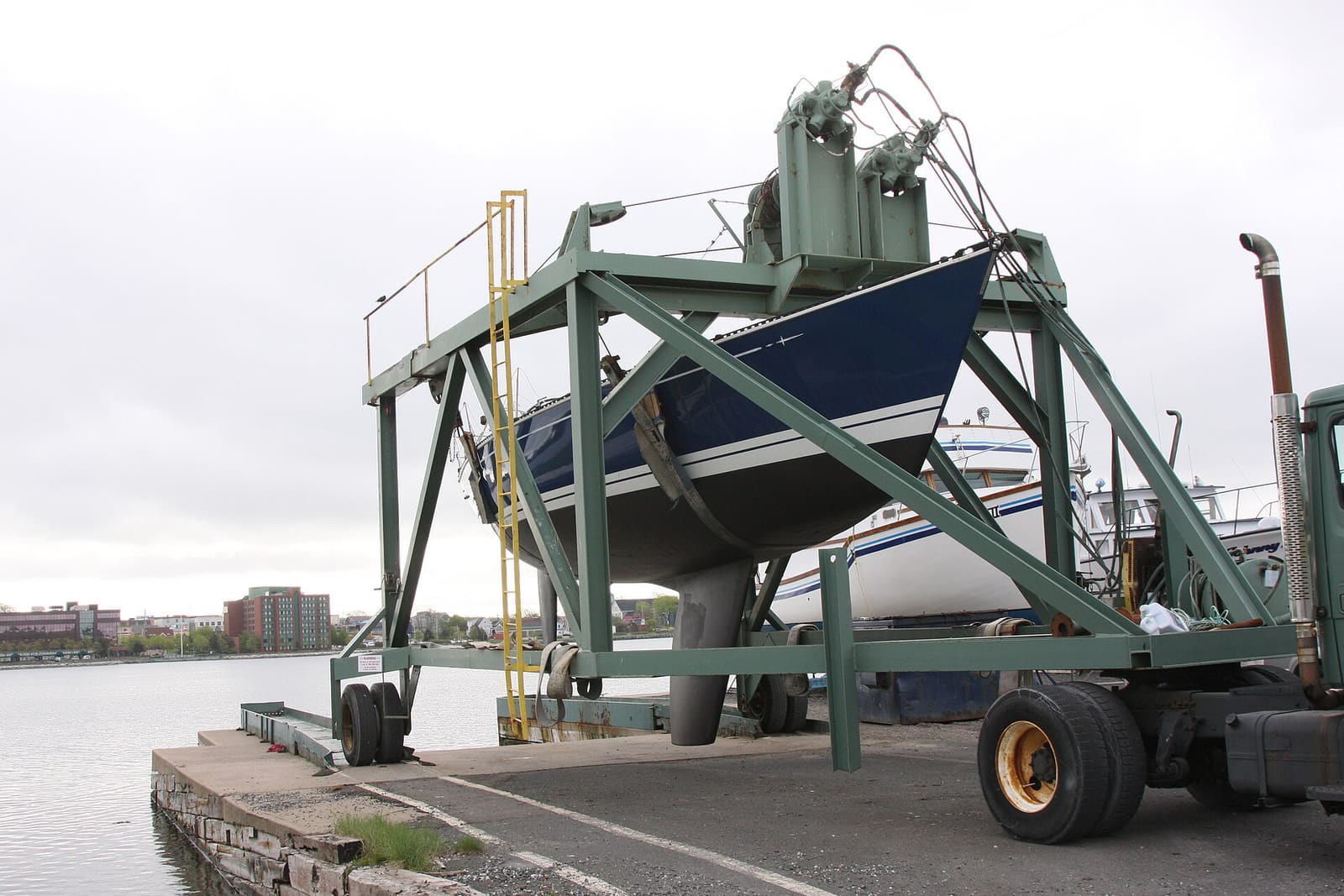
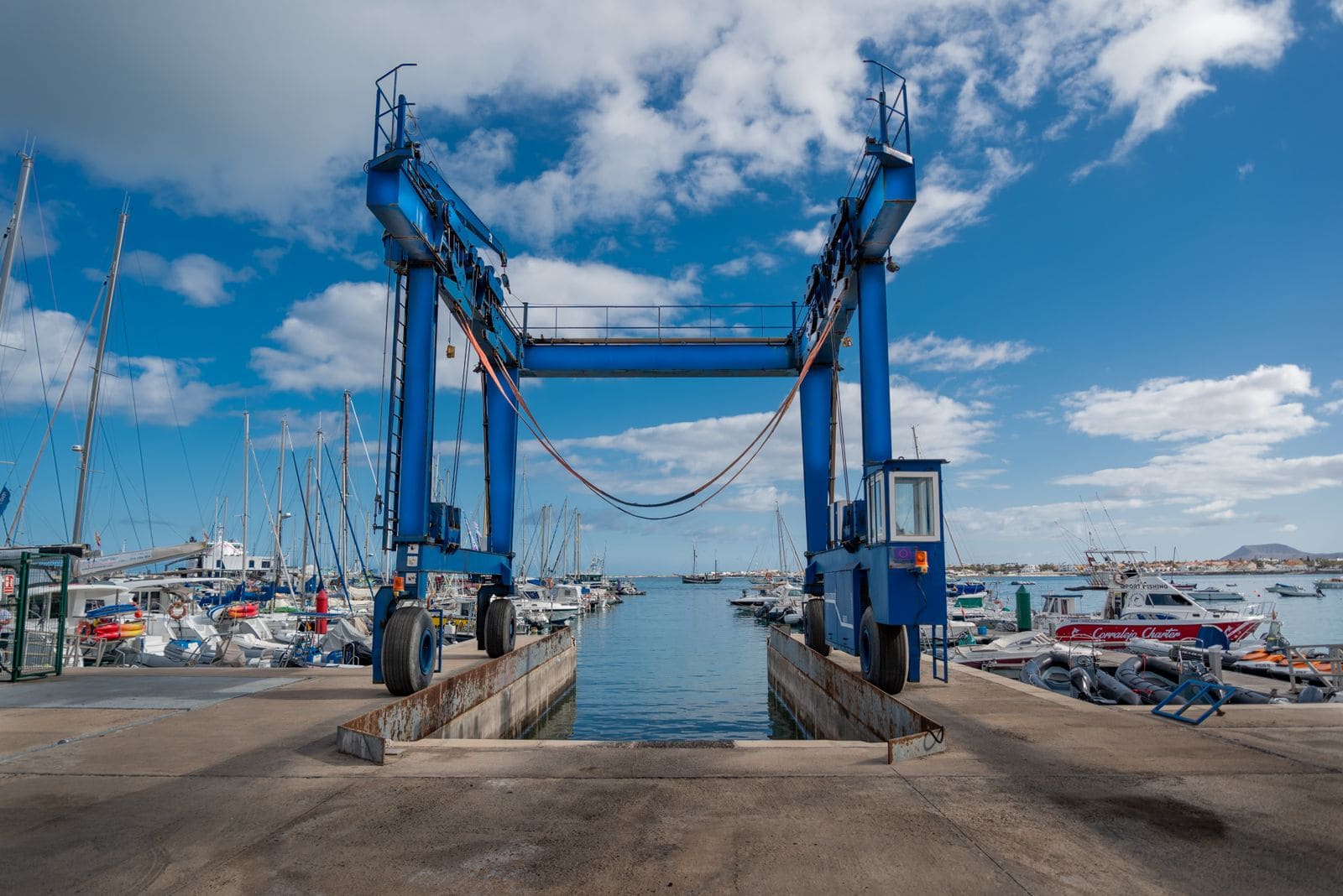
Most pre-purchase surveys include a short haul-out so the surveyor can see below the waterline. Photo: Ken Heaton / Wikimedia Commons · CC BY-SA 3.0 With a broker, the deposit goes into the broker's escrow or trust account. In a private sale, use an escrow or closing service that you choose and verify yourself, or complete the deal at the buyer's bank where you can see funds issued. The purchase agreement should say how much the deposit is, who holds it, and when it's refundable (our purchase agreement guide covers the details).
- If you have a loan, get a payoff letter and have the lender release the lien at closing.
- Sign the title (and trailer title) and a bill of sale with the date, price, HIN, engine serial numbers and the buyer's name. For a documented boat, the buyer applies to the NVDC with the bill of sale.
- Hand over keys, manuals, spare parts and records only once funds are final.
- Agree in writing which equipment stays, so personal electronics and gear don't cause an argument.
Tell the state you sold the boat. In Texas, for example, the seller must notify TPWD within 20 days of a transfer, and TPWD suggests going to the office with the buyer, because the title stays in your name until the new title is processed. Cancel or transfer your insurance after closing (not before), end the slip or storage contract, and keep copies of everything.
Common mistakes
- Pricing from asking prices alone and sitting on the market for a season.
- Signing an exclusive listing without reading the term, cancellation and "if I find the buyer" clauses.
- Letting a buyer drive the boat off the dock.
- Accepting a cashier's check and releasing the boat the same day.
- Canceling insurance before the sale actually closes.
- Forgetting the trailer title, the outboard title (in states that title motors) or the lien release.
- Not reporting the sale, then getting the next owner's tickets or storage bills.
When to call a pro
- A broker: a larger boat, a boat far from home, or no time to handle showings and closing
- An attorney: an unusual deal (trade plus cash, seller financing, an LLC or estate as seller, an international buyer)
- A marine surveyor: a seller's valuation or condition survey to price a high-value boat
- A marine technician: fix fuel leaks, electrical faults or water ingress before you show the boat, not during the trial
Tips
- A recent condition and valuation survey that you paid for can reassure buyers, and BoatUS notes a buyer's insurer or lender may accept one if it's recent.
- Keep a binder (or BoatMend records) with receipts and a maintenance log; organized records support your price.
- Sell in your local season: spring for most of the country, while buyers are thinking about summer.
- Take listing photos on a sunny day, with the boat clean and uncluttered, plus clear shots of the engine, hour meter and helm.
- If a trade-in offer feels low, get a private-sale estimate too, so you know what the convenience is costing you.
Official references
We read these to write this guide. Your engine's own manual always wins.
- BoatUS – How Much Is My Boat Worth? (2025)
- BoatUS – Boat Selling Scams To Avoid (2023)
- BoatUS – The Boat Survey (2026)
- BoatUS – Sales Contracts (2019)
- Discover Boating – Sell Your Boat or Trade-In, Understanding Your Options
- Florida Statutes – Chapter 326, Yacht and Ship Brokers' Act
- Texas Parks and Wildlife – Buying and Selling a Boat or Outboard Motor
- FTC – How To Spot, Avoid, and Report Fake Check Scams
- California State Parks, Division of Boating and Waterways – Consumer Protection and Licensing Programs (yacht brokers)
- California DMV – Vessel handbook 24.185, Yacht and Ship Brokers
Safety: BoatMend is for information only and does not replace a certified marine technician. You are responsible for your safety and your boat. Read the full disclaimer.
Last updated 2026-11-06
Related guides

How to Get Your Boat Ready to Sell (Records, Title and Prep)
Prepare your boat for sale the way buyers and surveyors expect: gather the title, registration and HIN paperwork, organize your maintenance records and receipts, fix the small stuff, detail the boat, get it ready for a sea trial and buyer's survey, and close the deal with the right documents.
How Much Is a Used Boat Worth? Pricing Guides, Comps and Condition
Work out a realistic price for a used boat, whether you're buying or selling: check sold and listed comps, read J.D. Power, BUCValu and ABOS values the right way, value the engines separately, adjust for hours, condition, upgrades and location, and know when a valuation survey is worth paying for.
Used Boat Purchase Agreement and Closing: Deposit, Contingencies, Bill of Sale and Who Pays What
A plain-English walk-through of buying a used boat on paper: getting ready before you offer, what the purchase and sale agreement should say, how the deposit is held and when it comes back, survey, sea trial, financing and insurance contingencies, paying off the seller's loan, the bill of sale, closing and transferring the paperwork, and the costs each side usually covers. Practical help, not legal advice; rules vary by state.
Avoiding Boat-Buying Scams: Fake Listings, Fake Escrow, Overpayment Checks and Safe Payment
How to spot and avoid the scams that target boat buyers and sellers: too-good-to-be-true listings, sellers who are always overseas, look-alike escrow and shipping websites, overpayment checks and fake payment notices. Covers verifying the boat, the title, the HIN and the seller, paying safely, and what to do fast if you already sent money. Practical help, not legal advice.
Used Boat Paperwork: Titles, Liens, HIN Checks, Bill of Sale and Registration
A practical checklist for the paperwork side of buying a used boat: state title or Coast Guard documentation, checking for liens and theft, verifying the hull ID number, writing a proper bill of sale, the trailer's own title, registering in your name, and transferring warranties and checking recalls. Rules vary by state, so confirm each step with your state agency.
USCG Documentation Renewal: When, How, What It Costs and How to Avoid Look-Alike Renewal Mailers
Keep your boat's Coast Guard Certificate of Documentation current: how long a recreational certificate lasts (1 to 5 years), the federal fee schedule, renewing directly with the NVDC online, what happens if it lapses, why many states still want registration and a decal, and how to spot the third-party letters that charge several times the real fee.
How to Prepare Your Boat for an Insurance or Condition Survey
Get ready for a marine survey your insurer or lender asked for: what a SAMS or NAMS surveyor looks at, the common findings you can fix beforehand (hose clamps, seacocks, bilge, fire extinguishers, wiring), the paperwork to have ready, and how to handle the recommendations afterward.

How to Keep a Boat Maintenance Log and Organize Your Receipts
Set up a simple maintenance log that records the date, engine hours, work done, parts and who did it, and keep receipts and photos organized. Good records help with warranty and insurance claims, show buyers the boat was cared for and reveal wear patterns before something fails.
Inheriting a Boat: Title Transfer, Coast Guard Documentation, Insurance, Taxes and Keep-or-Sell
What to do when a boat comes to you from a relative's estate: secure it and keep it insured, find out how ownership passes (joint owner, transfer-on-death, probate or a small-estate affidavit), transfer a state title or a Coast Guard documented vessel, deal with the trailer, liens and taxes, and decide whether to keep or sell. General information, not legal or tax advice.
Owning a Boat in an LLC or Trust: Reasons, Registration, Coast Guard Documentation, Taxes and Insurance
Why some owners put a boat in an LLC or a trust, what it does and doesn't do for liability, how it changes state titling and Coast Guard documentation, why states go after out-of-state LLC tax schemes, and how to keep the insurance, loan and paperwork lined up. General information, not legal or tax advice.