Dinghy and Tender Rules: Lights, Registration, Capacity, Life Jackets and Kill Switch
Your dinghy is a boat in its own right. Learn which navigation lights it needs after dark (rowing or under power), when the outboard means it must be registered, and how capacity plates, life jackets and the kill-switch law apply to a small tender.
Time
1 h
Applies to
Outboard
Safety first: A small, low dinghy is very hard for other boats to see at night, even with lights. Stay out of channels after dark when you can, keep the trip short, and wear your life jacket. If you or anyone in the dinghy ends up in the water or the dinghy is swamped, call for help right away: USCG on VHF channel 16 or 911.
Owners often ask
- Does my dinghy need to be registered if it has a small outboard?
- What navigation lights does my dinghy need when I come back to the boat after dark?
This guide walks you through it. Still stuck? Ask the AI Mechanic about your engine.
Tools
- Flashlight or headlamp (to test lights after dark)
- Tape measure
- Clean rag and rubbing alcohol (for applying numbers and decals)
Parts & supplies
- Battery-powered navigation light set for small boats (sidelights plus an all-round white light), or a bright waterproof white flashlight for a rowed dinghy
- Spare batteries for the lights
- Registration numbers (block letters, contrasting color) and your state's validation decal, if your state requires registration
- USCG-approved wearable life jacket for each person in the dinghy
- Spare engine cut-off lanyard (or wireless fob) for the outboard
- Whistle or air horn
Before you start
Owners often treat the tender like a piece of deck gear. Legally, it is a separate boat. The mothership's registration or Coast Guard documentation does not cover it, and the rules for lights, life jackets and the kill switch apply to it on its own.
The rules that matter most depend on three things:
- How it moves. A dinghy you row follows the rules for "vessels under oars." The moment the outboard (gas or electric) is driving it, it is a power-driven vessel.
- Where you use it. U.S. Inland Rules and International Rules (COLREGS) differ slightly on small-boat lights. The line between them is marked on charts; most bays, rivers and lakes fall under the Inland Rules.
- Which state you're in. Registration is a state matter, and rules for tenders vary a lot.
Plan to spend an hour: half reading your state's boating agency page, half checking gear and testing lights at dusk.
Steps
Write down how you really use it: only rowing, a small electric motor, or a gas outboard that can get it on plane. Note whether you'll ever be out between sunset and sunrise (late dinners ashore count). And note whether it only shuttles between your boat and the dock, or also goes exploring, fishing or snorkeling. Every rule below hangs on these answers.
Under the Navigation Rules, a vessel under oars may show the same lights as a sailboat, but it doesn't have to. At minimum it must have a white electric torch (a flashlight) or a lit lantern ready at hand, and show it in time to prevent a collision. The U.S. Inland Rules add the option of showing an all-round white light instead.
In practice: keep a bright, waterproof white light in the dinghy, within reach of the rower, and shine it toward any boat approaching. A headlamp leaves both hands free for the oars.
Once the outboard is pushing the dinghy, it's a power-driven vessel. A power-driven vessel under 12 meters (about 39 feet) may show an all-round white light plus red and green sidelights in place of the usual masthead and stern lights.
Under the International Rules only, a power boat under 7 meters whose top speed is 7 knots or less may show just an all-round white light (and sidelights if practical). That small-boat shortcut is not in the U.S. Inland Rules, so on most inland and bay waters a motoring dinghy needs sidelights plus the all-round white light. You will see boating articles say a slow tender "only needs a white light"; that describes the international rule. The Inland version (33 CFR 83.23) gives boats under 12 meters only the white-light-plus-sidelights option.
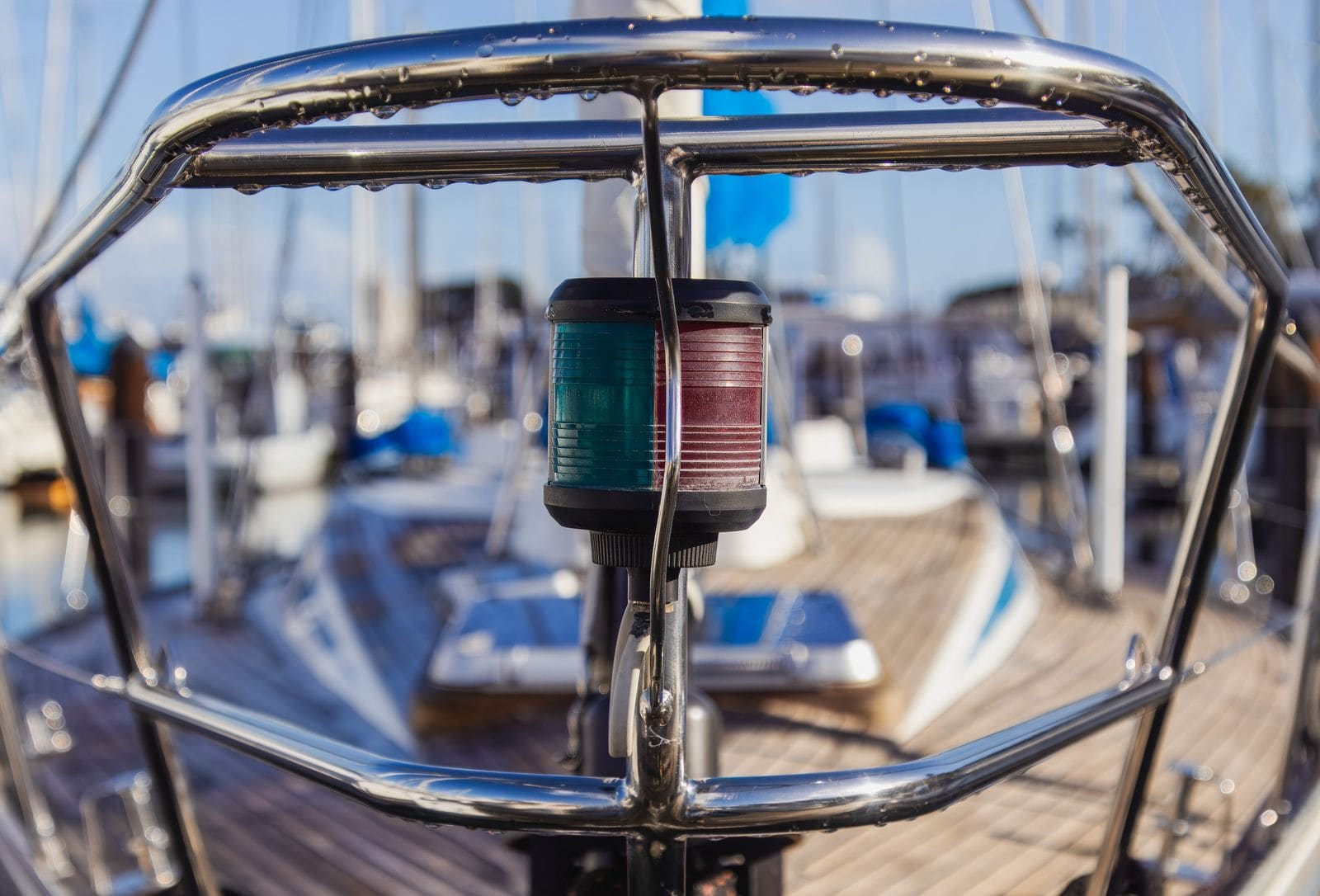
A combination sidelight puts red (port) and green (starboard) in one fixture on the centerline, which the rules allow on small boats. Battery-powered clip-on versions are sold for dinghies. Photo: Robert So / Pexels · Pexels License Battery-powered sets made for dinghies and small boats usually include a combination red/green bow light and a pole-mounted all-round white light. A few points to check:
- Placement. The rules let small boats combine the sidelights in one lantern on the centerline, and move the white light off center if a centerline mount isn't practical. The white light must be high enough that you, the motor and passengers don't block it from any direction.
- Visibility. For boats under 12 meters, sidelights must be visible at 1 mile and the all-round white light at 2 miles. Look for lights marketed as meeting those ranges.
- Colors facing the right way. Red goes to port (left, facing forward), green to starboard.
- Batteries. Test at dusk before every night trip and carry spares. Cheap lights die faster in salt air.
- Nothing in the way. A marine surveyor writing in BoatUS estimates that as many as 30% of the boats he inspects fail their navigation-light requirements, mostly from fogged lenses, dead bulbs, broken wires, and lights blocked by a rail stanchion, canvas, fenders or tape used to hold them on. He has also found red and green lenses swapped after an owner replaced a light. Look at your lights from a little distance at dusk, from ahead and each side.
- LEDs need paperwork. BoatUS notes some LED lights aren't as bright as older bulbs; buy ones whose maker states in writing that they meet the USCG visibility requirements.
A flashlight held in your hand is not a substitute for proper lights once the motor is running.
A vessel under 7 meters at anchor doesn't need an anchor light, as long as it isn't in or near a narrow channel, fairway, or anywhere other boats normally travel. If you anchor the dinghy near a busy landing or in a channel at night, show an all-round white light.
If the dinghy is tied behind the big boat at anchor overnight, keep it close and on a short line so it doesn't drift into the path of passing boats.
Most states require you to register any boat with a motor, including electric trolling motors, according to Discover Boating. Rowed dinghies are often exempt, but some states register non-powered boats above a certain length. Search "[your state] boat registration" and open the official boating agency page (often the DMV, fish and wildlife, or natural resources department).
Look specifically for tender exemptions. Some states have them, with strict conditions. Washington, for example, exempts a ship's tender only if it is properly identified as the tender to a registered or documented parent vessel, is used only to go directly between that vessel and shore, and has less than 10 horsepower. Use it to go fishing or exploring and the exemption no longer applies. Washington also lists inflatable boats with motors as boats that must be registered. Other states have different rules, so don't assume one state's exemption applies where you are.
If you cruise to another state, its rules can apply once you stay past its visitor period. Check before you go.
If registration is required, the number goes on both sides of the bow, on the forward third of the hull. Discover Boating notes the characters must read left to right, contrast with the hull color, and usually be at least about 3 inches tall in block letters. The state's validation decal goes where the state says (often next to the number). Carry the registration card when you use the dinghy.
On an inflatable, clean the tube with rubbing alcohol before applying vinyl numbers, and apply them with the tube fully inflated so they don't wrinkle. Some states require a space or hyphen between the letter and number groups: copy the exact format printed on your card.
Federal rules require a capacity plate (maximum persons, maximum weight and maximum horsepower) on monohull boats under 20 feet, but they exclude inflatable boats, along with sailboats, canoes and kayaks. So:
- A hard dinghy, jon boat or small skiff under 20 feet should have a capacity plate. Don't exceed it.
- Most inflatables carry a builder's plate or label from the manufacturer with a maximum number of people, load and horsepower. Treat it the same way.
Overpowering a light dinghy makes it easy to flip at speed or in a sharp turn. Overloading it brings the tubes or gunwales close to the water, so a wake can swamp it. Put the heaviest person near the middle when you can.
The Coast Guard requires a USCG-approved wearable life jacket for each person aboard any recreational boat, and the dinghy is no exception. Jackets left aboard the big boat don't count. Boats under 16 feet don't need a throwable device; boats 16 feet and longer do (except canoes and kayaks).
Federal rules also require children under 13 to wear a life jacket while the boat is underway, unless they're in an enclosed cabin; many states set their own age, so check yours. For inflatable life jackets, the cylinder must be full and all indicators green, or the jacket doesn't count as one.
Dinghy rides are when many people fall in: stepping in or out at the dock, standing up to grab a line, or coming back after dark. Wearing the jacket is the easy fix.
The federal engine cut-off switch law applies to motorized boats under 26 feet with 3 horsepower or more. If the outboard has a cut-off switch, the operator must wear the lanyard (or wireless fob) while on plane or above displacement speed. Many dinghy outboards in the 10 to 30 horsepower range can plane a light tender easily.
Clip the lanyard to your life jacket or belt, not the tiller arm. On a tiller outboard, a sharp turn or a wave can throw you off the tube while the motor keeps going. Keep a spare lanyard in the dinghy so a passenger can restart the motor if you go overboard.
Boats under 12 meters must have some means of making an efficient sound signal; a whistle or small air horn does the job. Add a waterproof handheld VHF or a phone in a waterproof pouch, so you can call the mothership, a tow service or USCG if the motor quits or you get swept away by current. If you'll be out after dark on coastal waters, check whether night visual distress signals are required for your dinghy (see USCG safety equipment).
BoatUS suggests a small floating dinghy grab bag, tied to the boat, so the gear actually goes along every time: handheld VHF, whistle, waterproof flashlight, a signal mirror, a small first-aid kit, and a spare spark plug with its wrench. Always carry oars or at least a paddle, even with a motor.
Before leaving the big boat:
- Life jackets on, kill-switch lanyard clipped on, spare lanyard aboard.
- Lights tested if you'll come back after dark.
- Fuel, oars, bailer or pump, and a light aboard.
- Registration card aboard and numbers readable.
- Someone on the big boat or ashore knows where you're going and when you'll be back.
Log the registration renewal date in BoatMend so the decal never lapses.
Common mistakes
- Assuming the mothership's registration or documentation covers the dinghy. It doesn't; the tender has its own requirements.
- Using a flashlight as the only light while motoring at night. Under power, the dinghy needs sidelights and an all-round white light.
- Relying on the international "under 7 meters and 7 knots" exemption on inland or bay waters, where it doesn't apply.
- Assuming a tender exemption covers fishing, snorkeling or beach trips. Where tender exemptions exist, they usually cover only direct trips between the big boat and shore.
- Leaving the life jackets aboard the big boat "because it's just a quick run to the dock."
- Clipping the kill-switch lanyard to the tiller instead of to yourself.
- Putting a bigger outboard on the dinghy than its plate allows.
When to call a pro
- You want to permanently wire navigation lights into a hard dinghy or RIB (have a marine electrician do the wiring and battery connection).
- You're not sure whether your state's tender exemption applies to how you use the dinghy: call the state boating agency directly and ask.
- You're buying a used dinghy or outboard without a title or registration history (see used boat paperwork).
- The dinghy's outboard won't start reliably or stalls: get it serviced before you depend on it at night or in current.
Tips
- A small white all-round light on a short pole is also easier for you to find when the dinghy is tied to a crowded dinghy dock at night.
- Reflective tape on the tubes and oars costs little and shows up well in a spotlight.
- Mercury's night-boating tips apply in a tender too: a red-filtered headlamp protects your night vision, a small LED strobe clipped to each life jacket makes a person in the water easier to find, and slow speed gives you time to react. Many states also ban towing activities between sunset and sunrise.
- Coming back to an anchored boat in the dark is easier if it carries a small marker light low on the rail; BoatUS suggests something like a solar garden light. Make sure it can't be mistaken for, or hide, the boat's required anchor light.
- Lock the outboard to the dinghy and the dinghy to the dock with a cable when you go ashore; BoatUS recommends a bar lock over the outboard's clamp screws.
- Take a photo of the registration card and keep it on your phone as a backup.
- If you trade up to a bigger outboard, re-check registration, the plate's horsepower limit and the kill-switch law.
Official references
We read these to write this guide. Your engine's own manual always wins.
- U.S. Coast Guard Navigation Center – Amalgamated International & U.S. Inland Navigation Rules (Rules 22, 23, 25, 30)
- eCFR – 33 CFR 83.23, Power-driven vessels underway (Inland Rule 23)
- eCFR – 33 CFR 83.25, Sailing vessels underway and vessels under oars (Inland Rule 25)
- BoatUS – Outfit Your Dinghy (safety gear and grab bag)
- BoatUS – Dinghy Basics (security and night returns)
- U.S. Coast Guard – Engine Cut-Off Switch
- USCG Boating Safety – Life Jacket Wear / Wearing your Life Jacket
- Discover Boating – Boat Registration Guide
- Washington State Legislature – WAC 308-93-030, vessel registration and exemptions (ship's tender example)
- Cornell LII – 33 CFR 183.31, capacity marking applicability (monohulls under 20 feet; inflatables excluded)
- BoatUS Foundation – Crew Overboard (throwable device on boats 16 feet and longer)
- BoatUS – Inspect Your Boat's Navigation Lights (2021)
- BoatUS – Anchor Light Requirements (LED brightness)
- Mercury Marine – Nighttime Boating Safety Tips (Dockline)
Safety: BoatMend is for information only and does not replace a certified marine technician. You are responsible for your safety and your boat. Read the full disclaimer.
Last updated 2026-10-25
Related guides
How to Test and Fix Your Boat's Navigation Lights
Learn which navigation lights your boat must show and when, then test them and fix the usual culprits such as corroded sockets, loose pole-light plugs and blown bulbs. Working lights are legally required at night and in poor visibility and are how other boats see which way you are heading.
Engine Cut-Off Switch (Kill Switch) and Lanyard: The Law, Testing and Daily Use
How the engine cut-off switch (ECOS) and its lanyard or wireless fob work, when federal law requires you to wear it (boats under 26 feet, 3 hp or more, on plane), how to test it before every trip, and why a spare clip aboard matters.
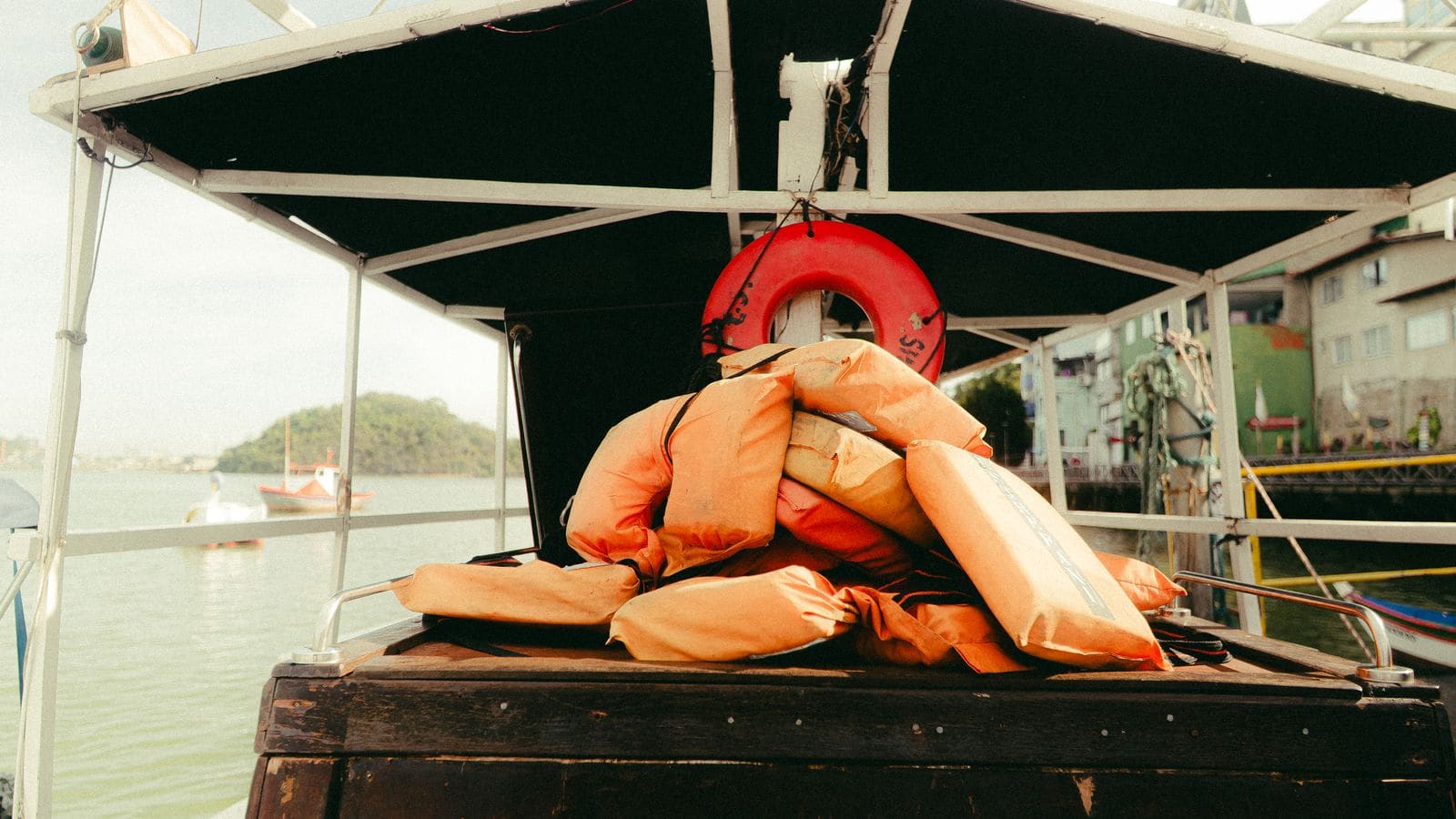
USCG Required Safety Equipment Check by Boat Length
Walk through your boat and confirm you carry every piece of safety gear the US Coast Guard requires for your boat's length and type, and that none of it is expired or worn out. Missing or expired gear is one of the most common tickets on the water, and it is the gear you need when things go wrong.
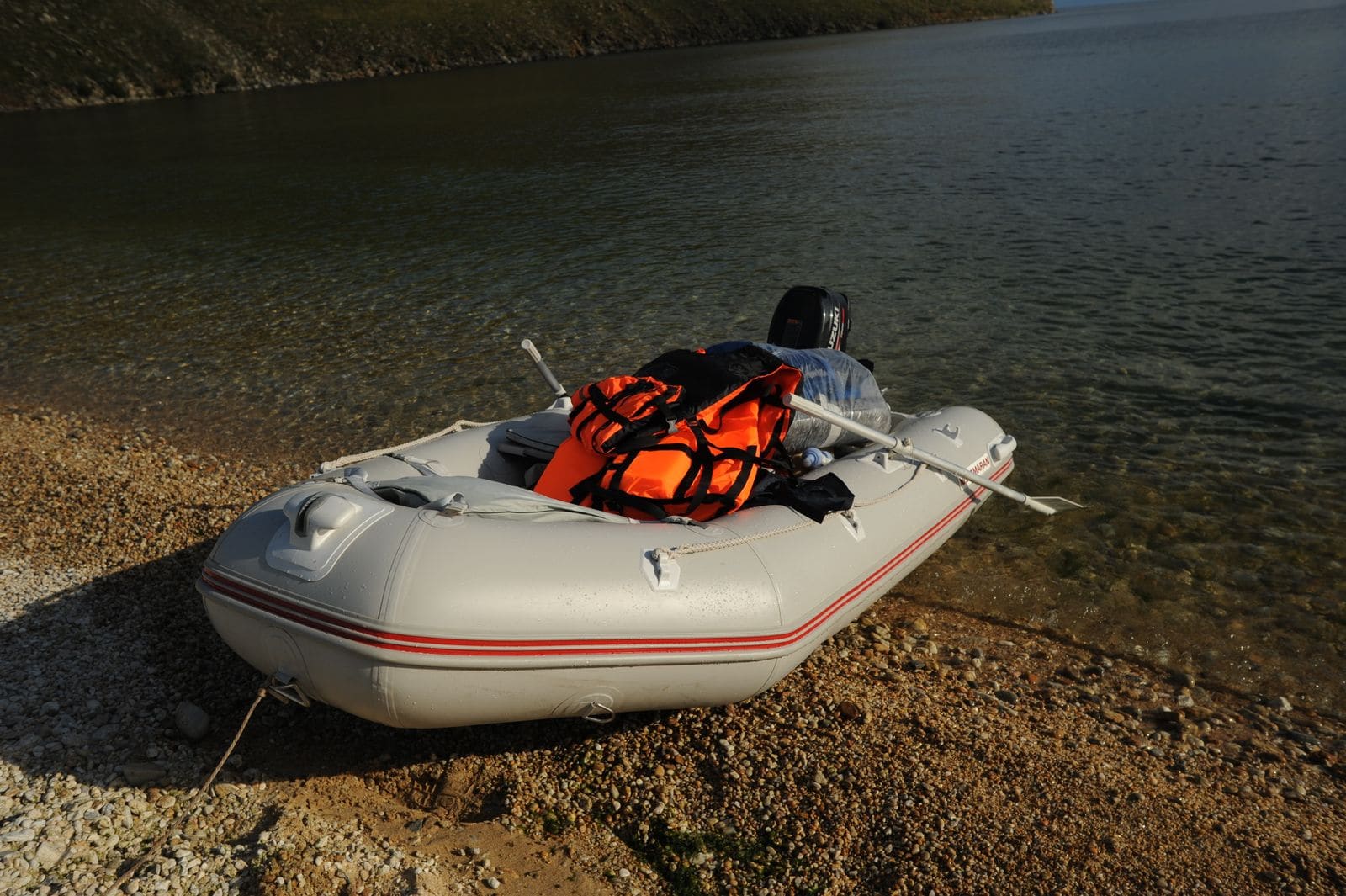
Inflatable Boat and Dinghy Care: Cleaning, UV Protection, Leaks and Storage
Keep your inflatable or RIB tender holding air for years. Rinse and clean it the right way, protect the tubes from sun, check pressure with a gauge, find slow leaks with soapy water, service the valves, patch small holes with the correct glue for PVC or Hypalon, and store it clean and dry.
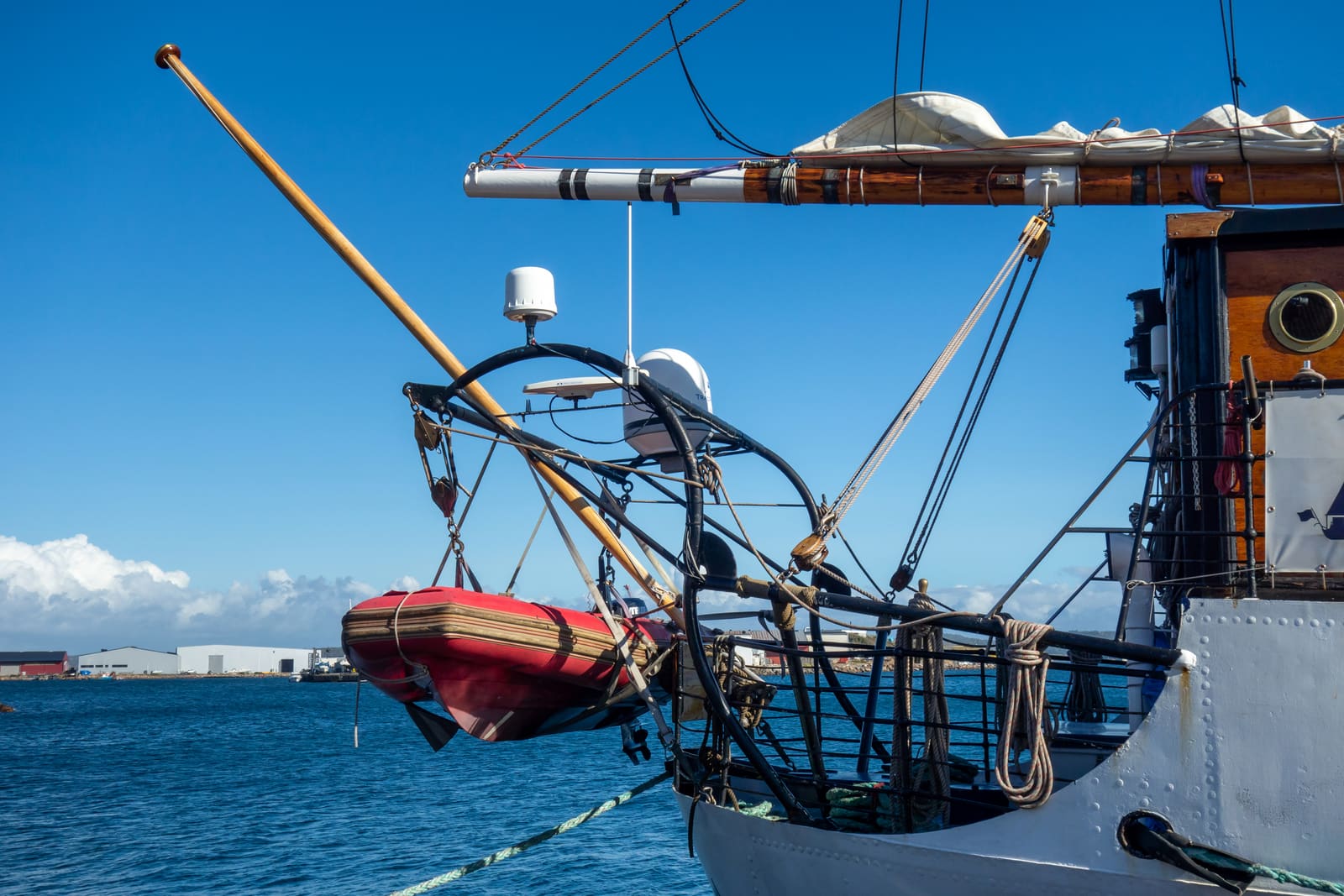
Carrying Your Dinghy: Davits, Swim Platform Mounts and Safe Towing
How to check davits and swim-platform dinghy mounts against the maker's load limit, secure the tender so it can't swing or fill with water, and tow it safely when you have to, with the right bridle, line length and speed, and the outboard off.
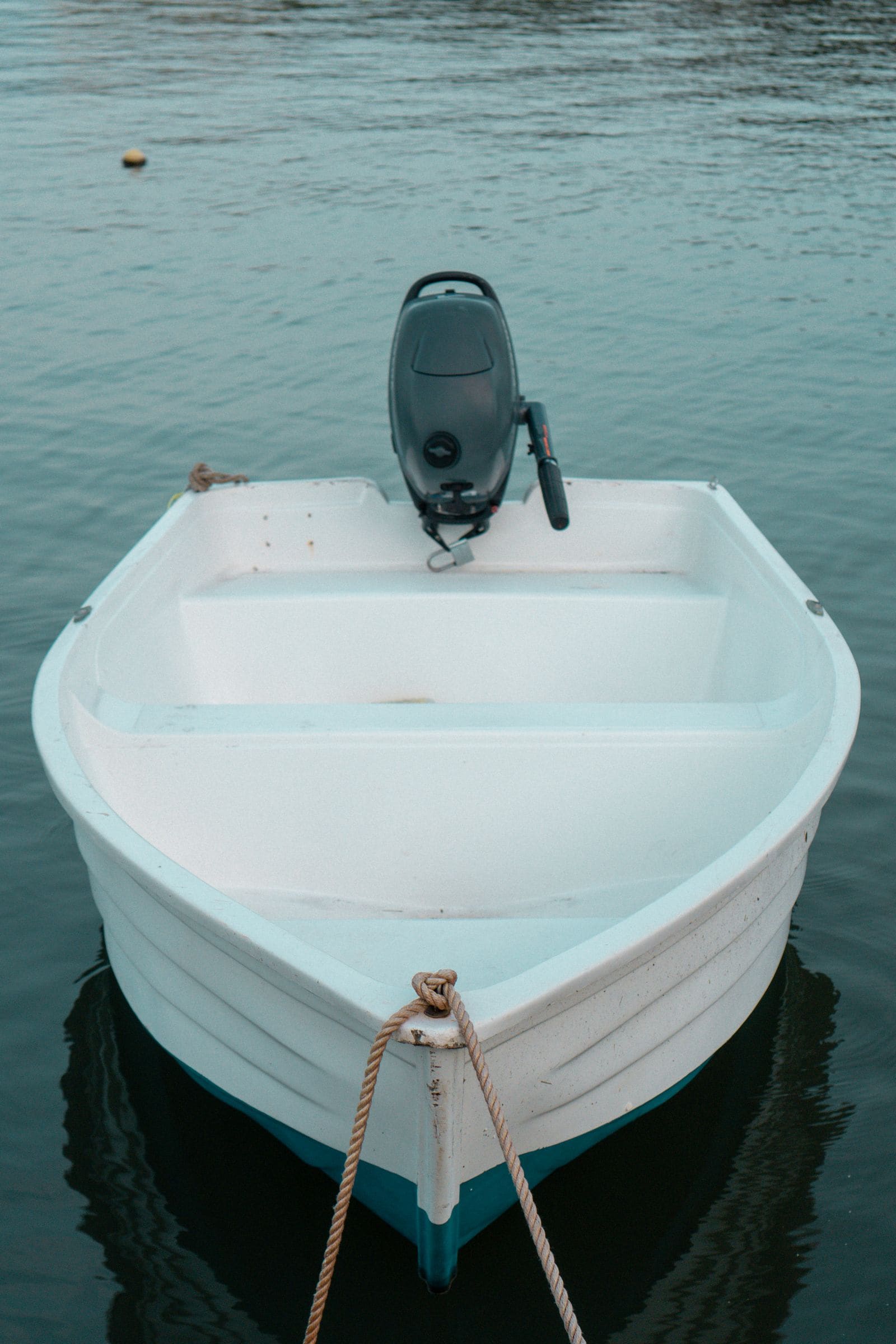
Small Portable Outboard Care (2.5 to 20 hp Kickers and Dinghy Motors)
Keep your dinghy motor or kicker starting on the first few pulls. Use fresh fuel, flush it, run the carburetor dry before you put it away, carry and lay it down on the correct side so oil doesn't flood the cylinders, and check the shear pin or prop, gear oil and engine oil on schedule.
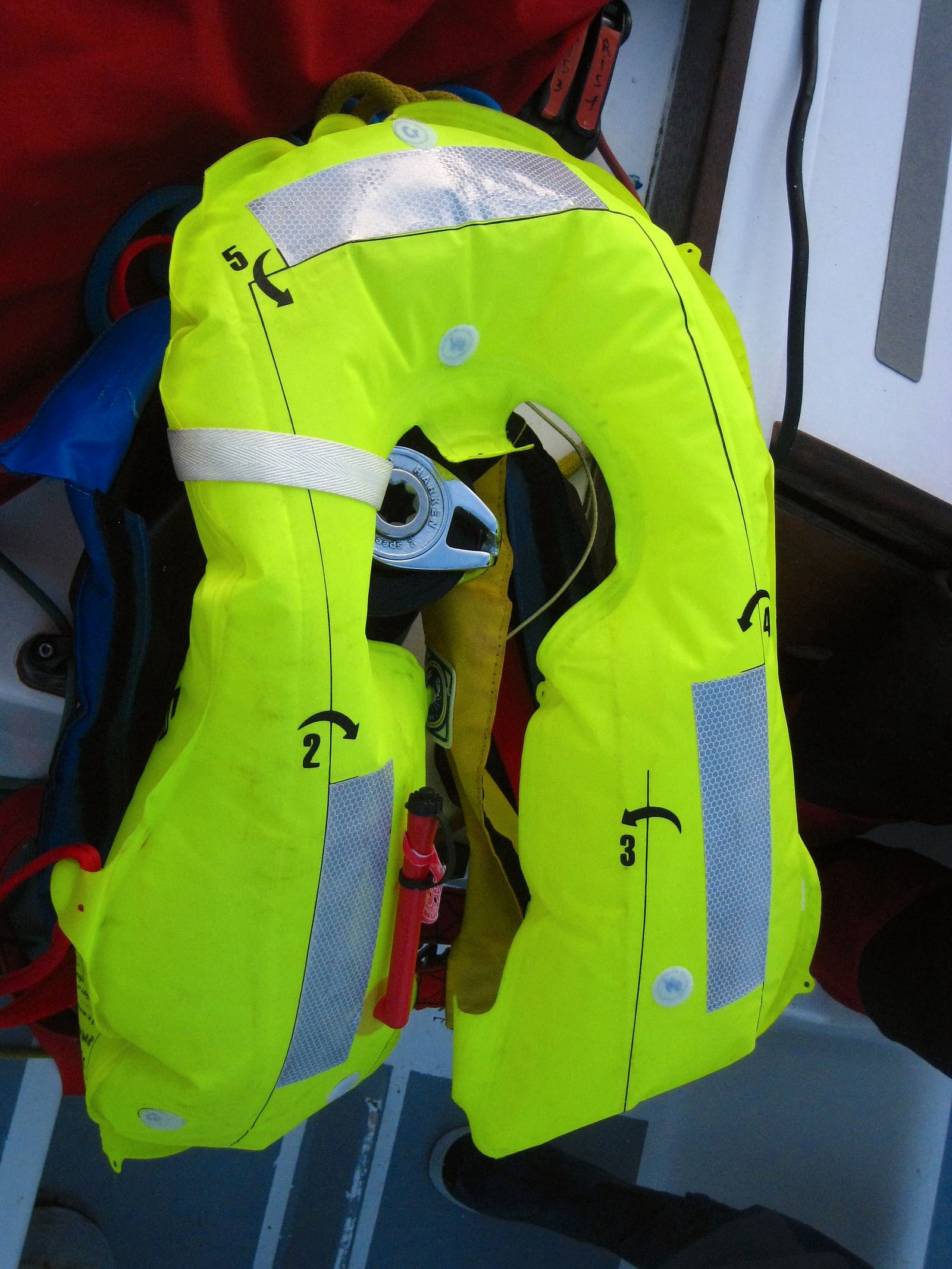
Inflatable Life Jacket Care: Inspect, Test and Rearm
An inflatable life jacket only saves a life if the cylinder is full, the inflator is armed and the bladder holds air. Learn the quick check before every trip, the overnight leak test, how to read replacement dates and how to rearm it after it fires.