How to Check and Change Marine Transmission (Gearbox) Oil
Check, read and change the oil in the reverse gear behind your inboard diesel (ZF/Hurth, Kanzaki, Yanmar KM, Volvo Penta MS and similar). Learn what milky, burnt or gritty oil means, and why the oil cooler and its zinc matter.
Time
1 h
Shop would charge
$100-250
Applies to
Marine diesel, Gas inboard · Sailboat, Cabin cruiser, Yacht, Fishing boat
Safety first: Work with the engine off and the key out, and keep hands away from the shaft coupling: on a boat afloat, current or a passing wake can turn the propeller and shaft even with the engine stopped. Hot transmission oil can burn; let it cool to warm before pumping it out. Collect all used oil for recycling and never pump it into the bilge. If you find water in the transmission and the boat is also taking on water, deal with the leak first and call TowBoatUS, Sea Tow or the Coast Guard on VHF 16 if you can't stop it.
Owners often ask
- I found water in my diesel's gearbox oil (it looks milky). Where is it coming from?
- What oil goes in my marine transmission, and do I read the dipstick screwed in or not?
This guide walks you through it. Still stuck? Ask the AI Mechanic about your engine.
Tools
- Oil extraction pump with a thin tube that fits the dipstick/fill hole
- Wrench or socket for the dipstick, fill plug or drain plug (size varies)
- Drain pan, absorbent pads and rags
- Small funnel with a flexible spout
- Flashlight or headlamp
- Clean glass jar to look at the old oil
- Nitrile gloves and safety glasses
Parts & supplies
- Transmission oil of the exact type your gearbox manual specifies (ATF, engine oil or gear oil, depending on the model)
- New sealing washer or O-ring for the dipstick or drain plug, if your manual calls for one
- Filter or screen gasket (only on gearboxes that have a filter)
- Oil cooler zinc, if your cooler has one
Before you start
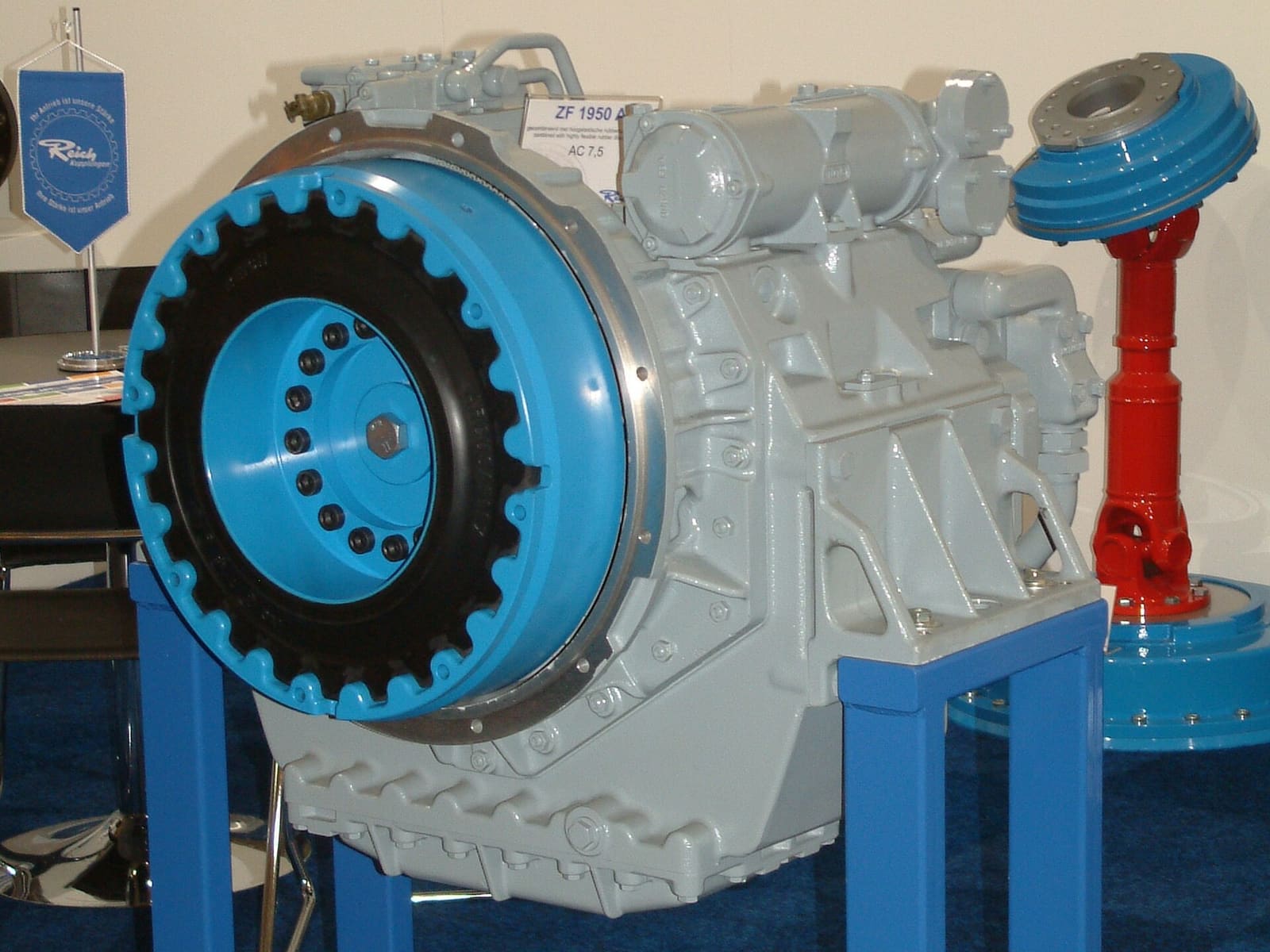
What the transmission does: on most inboard diesels, a small gearbox (often called the reverse gear or marine gear) bolts to the back of the engine. It gives you forward, neutral and reverse and usually reduces shaft speed. Common makers on US boats include ZF (which absorbed Hurth), Kanzaki (used behind many Yanmar engines, sometimes branded Yanmar KM), Borg-Warner/Velvet Drive on older trawlers, and Volvo Penta's own MS-series gears. Saildrives use a different lower unit and have their own oil service.
Which oil: this is the most important thing to get right. Depending on the model, gearboxes are filled with automatic transmission fluid (ATF), engine oil or gear oil. Boating Magazine, written with ZF Marine, says to always use the manufacturer's recommended oil type and weight. Look for a data plate on the gearbox with the model, then find the oil spec and capacity in the gearbox or engine manual. If an older manual calls for a fluid you can't find (such as Type F ATF), ask the gearbox maker or your dealer for the current equivalent. Never guess and never mix types. Yanmar's FAQ makes the same point: the right oil depends on both the engine and the gear model, so check the manual or a dealer for your exact combination. Owners regularly report that the recommended oil changed over the years for the same gearbox model, so when you ask, give the gearbox serial number from the data plate, not just the model. ZF Marine's advice, quoted in Yachting, is to read the transmission's own owner's manual (it is separate from the engine manual) and to use genuine filters and the recommended oil.
How often: Westerbeke lists the transmission fluid level as a daily (before use) check, a first change after 50 hours, and a change at winter lay-up. Boating Magazine says to change the fluid every year at lay-up. Practical Sailor suggests every other year at least, or yearly if the engine runs more than about 50 hours a year. ZF Marine notes that most pleasure boaters never reach the hour-based interval, so a yearly change is the practical plan. Typical; confirm in your manual.
Steps
Look behind the engine where the propeller shaft starts. The dipstick or fill plug is usually on top of the gearbox case. Some boxes have a drain plug on the bottom, many small ones don't. Note any oil cooler: a small tube-shaped cooler with two hoses, often near the gearbox or on the engine, that uses raw water to cool the transmission oil.
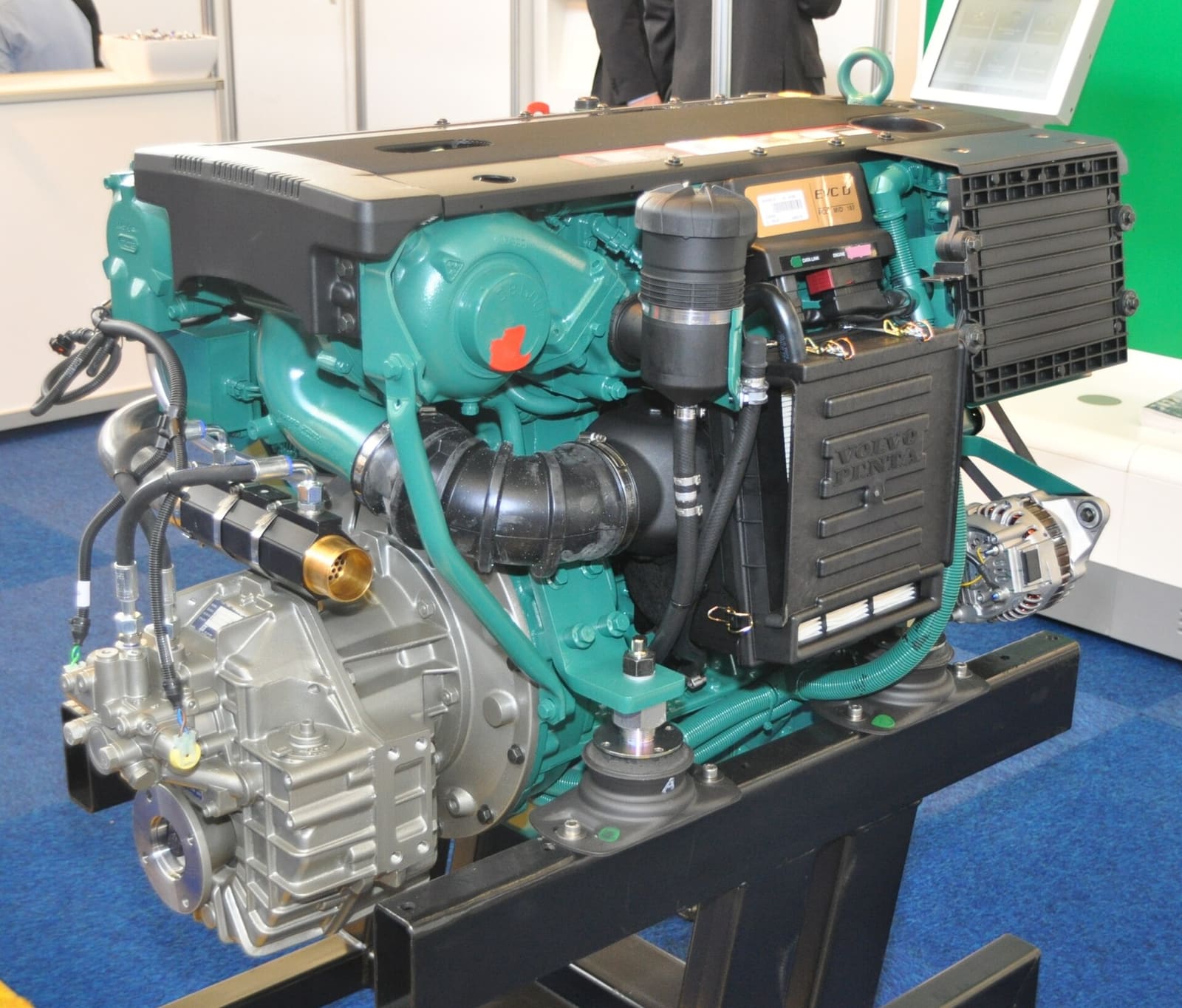
Photo: S.J. de Waard / Wikimedia Commons · CC BY-SA 3.0 Wipe the case clean and check for oil running down the sides or sweating seals, especially at the output (shaft) seal and the input seal toward the engine. Boating Magazine also says to look for water dripping onto the gearbox from above, such as from a leaking stuffing box, hose or deck, which corrodes the case.
Gearboxes differ. On some, the dipstick screws in and you read it screwed in; on others (many Hurth/ZF small gears) you set it on the threads without screwing it in. Some are read with the oil warm, others cold. Boating Magazine notes that on gearboxes with a cooler, a cold reading can sit above the mark, and that the mark shows the right level with the transmission running. Your manual tells you which method applies. Using the wrong method is the most common reason owners overfill or underfill.
For a warm check (typical for gearboxes with a cooler), Boating Magazine describes running the engine at idle for about five minutes, shifting a couple of times (boat afloat with lines secure), shutting down and reading the stick right away; if you wait, oil drains back from the cooler and reads high. Pull the stick, wipe it, reinsert it the correct way and pull it again. The level should be between the marks.
Put a few drops on a white paper towel or in a clean jar:
- Clear, the color it went in (red/pink for ATF, amber like maple syrup for oil): good.
- Milky, pink-tan or foamy: water is in the gearbox. See step 11.
- Dark and burnt-smelling: overheating or slipping clutches. BoatUS adds that oil gone black most often points to a worn clutch, or a gearbox that was run low on oil.
- Grit, metal flakes or glitter: internal wear.
Boating Magazine says to call a pro for any of the last three. A change of oil won't fix them.
Want a second opinion without opening the box? BoatUS points out that transmission oil can be sent to a lab for analysis, just like engine oil. The report flags water, coolant, fuel and wear metals, and it's most useful as a yearly series so changes stand out. Take the sample from warm oil through the dipstick tube with a clean sampling pump, keeping the tube off the bottom of the case, and give the lab the hours on the oil (about 50 hours in service gives meaningful results).
Run the engine briefly so the oil is warm and contaminants are stirred up (afloat with the raw-water seacock open, or with cooling water fed to the intake if the boat is on the hard), then shut down and remove the key. Put pads under the gearbox. Westerbeke and BoatUS both pair the gearbox change with the engine oil change at lay-up, which saves a warm-up.
If there's a drain plug, remove the dipstick first so air can get in, then remove the plug and let it drain into the pan. Boating Magazine notes that if there's no drain plug, you pump the oil out through the dipstick tube with an extractor. Push the tube to the bottom of the case and move it around to get as much as you can. Measure what comes out; it's a useful guide for the refill.
Most small sailboat gearboxes have no filter. Larger ones may have a screen or cartridge. Boating Magazine says to clean and inspect a screen (any material caught in it means call an expert) and to change a cartridge filter with every oil change, using original equipment filters when you can.
Reinstall the drain plug with a new washer if specified. Pour the correct oil in a little at a time through the dipstick or fill hole, using the drained amount and the manual's capacity as a guide. Check the level often; gearboxes hold little oil, so it's easy to overfill.
Westerbeke's routine: run the engine, shift into forward and reverse once or twice (boat afloat and secured, prop clear; never in gear on the hard, where the shaft bearing runs dry), stop, then check the level again and top up as needed. Look for leaks around the plug and dipstick. Write the date, hours and oil type in your log.
Water in a marine gearbox usually comes from one of three places:
- The oil cooler. Raw water runs on one side of a thin wall and transmission oil on the other. When the cooler corrodes through, water mixes into the oil (or oil leaks into the raw water). Boating Magazine says coolers can corrode or clog with scale and often need replacing.
- Water from above, such as a dripping stuffing box, a leaking hose or deck, or a flooded bilge reaching the gearbox seals or breather.
- A failed seal on the output shaft.
Flush and refill to protect the gears, but don't run the boat until the source is found. A pro can pressure test the cooler.
Boating Magazine says a transmission oil cooler that has a zinc should get a new one every year, and the cooler should be flushed and tested, with lines and fittings checked for leaks. Westerbeke's schedule calls for checking the Hurth transmission cooler at 500 hours and removing and cleaning the hydraulic transmission cooler at 1,000 hours. Not every cooler has a zinc; check yours. Close the raw-water seacock before opening anything on the raw-water side. BoatUS suggests planning to replace a transmission oil cooler roughly every six years (typical; confirm with your engine maker), because there's often no warning before it fails: the only clue may be an oily sheen in the water behind the boat on a raw-water-cooled engine, or in the coolant on a freshwater-cooled one.
Boating Magazine suggests checking that the shift lever at the helm and the lever on the gearbox line up exactly in forward, neutral and reverse, that the push-pull cable isn't wearing through at bends, and that the neutral safety switch keeps the engine from starting in gear. A gearbox that doesn't go fully into gear slips and overheats. See the shift cable guide for adjustment.
If shifting feels stiff, BoatUS describes a simple test with the engine off: disconnect the cable at the gearbox and move the gearbox lever by hand. If it moves easily, the cable is worn or binding; if the lever itself is stiff, the problem is inside the transmission and needs a pro.
Common mistakes
- Using the wrong oil type because "it's just gear oil": many marine gearboxes take ATF or engine oil.
- Reading the dipstick screwed in when it should rest on the threads (or the other way round).
- Waiting too long after shutdown on a gearbox with a cooler, then "correcting" a false high reading.
- Overfilling a small gearbox by pouring in the full book capacity.
- Changing milky oil and running on without finding where the water came from.
- Forgetting the oil cooler zinc until the cooler fails.
- Never changing the gearbox oil because the engine oil gets all the attention.
When to call a pro
- Milky oil that comes back after a change, or a cooler you suspect is leaking
- Burnt-smelling oil, metal flakes or debris in a filter screen
- Slipping, slow engagement, clunking, whining or the boat creeping in neutral
- Oil leaking from the input or output seals
- Water in the bilge reaching the gearbox, or a stuffing box you can't stop dripping onto it
- Any job that means uncoupling the shaft or removing the gearbox
Tips
- Keep a quart of the correct gearbox oil aboard, labeled, so nobody tops it up with engine oil by mistake.
- Make the gearbox stick part of your pre-start routine, the same as engine oil and coolant.
- A drill pump or manual extractor that fits the dipstick hole makes this a 20-minute job.
- When you buy a used boat, check the gearbox oil first. Milky or burnt oil is a strong bargaining point.
- Record the gearbox model and serial number in your BoatMend boat profile so the right manual is one tap away.
Official references
We read these to write this guide. Your engine's own manual always wins.
- Boating Magazine – Marine Transmission Care Tips (with ZF Marine)
- Westerbeke – Maintenance and Use FAQs (daily checks, maintenance schedule, winter lay-up)
- Practical Sailor – Is Your Marine Diesel Winterizing Routine Complete?
- BoatUS – Winterizing Your Boat Engine
- Mercury Marine – Power Trim and Steering Fluid (Type F note)
- Yachting – Four Tips for Transmission Maintenance (with ZF Marine)
- BoatUS – Maintaining Marine Diesel Engines (transmission fluid color, stiff shifting, oil cooler)
- BoatUS – Oil Sample Analysis (engine and transmission oil)
- Yanmar Marine – Frequently Asked Questions (oils vary by engine and gear model)
Safety: BoatMend is for information only and does not replace a certified marine technician. You are responsible for your safety and your boat. Read the full disclaimer.
Last updated 2026-10-24
Related guides
Marine Diesel Service: Oil Change, Fuel Filters and Bleeding Air
Change the oil and oil filter, replace the primary and secondary fuel filters, and bleed air from the fuel system on a Yanmar, Volvo Penta, Beta, Cummins or similar marine diesel. These three skills cover most routine diesel care and can get you out of trouble when the engine dies on a passage.
How to Winterize a Marine Diesel Inboard (Sailboat or Trawler)
Lay up a marine diesel for winter the way the engine makers describe it, covering fresh oil, a full and treated fuel tank, antifreeze through the raw-water side, the impeller out, the coolant checked, openings plugged and the battery cared for. Freeze damage to a diesel's raw-water circuit is one of the most expensive and most avoidable winter repairs.
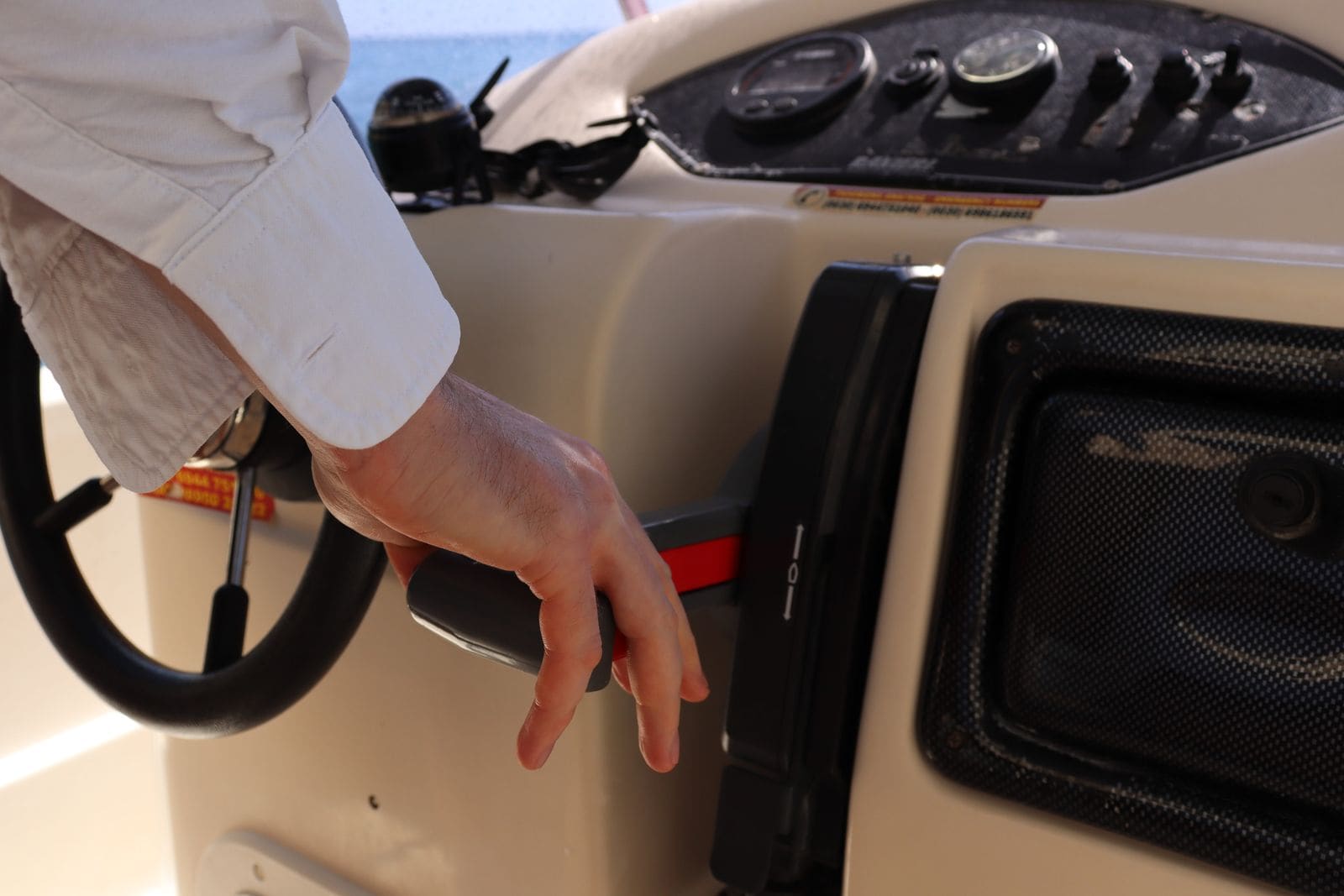
How to Check and Adjust Boat Shift and Throttle Cables
Hard shifting, a lever that will not go fully into gear, or a gear that lands in a different spot every time usually point to the control cables. Learn how to find out whether the problem is the cable, the control box or the engine, how to adjust the cable ends, and when it is time to replace both cables.
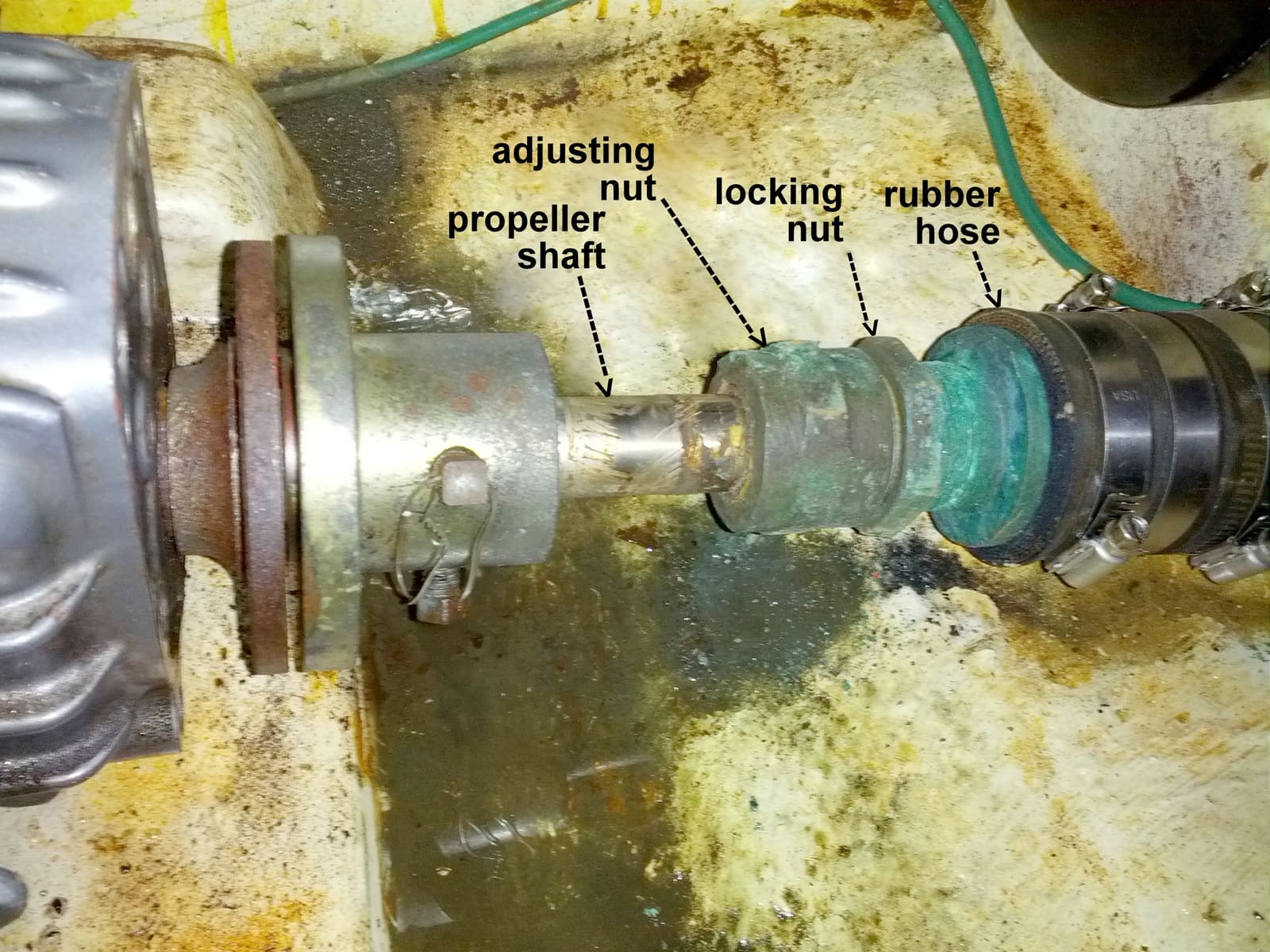
How to Check, Adjust and Repack a Stuffing Box (and Care for a Dripless Shaft Seal)
Learn the right drip rate for a traditional packing gland, how to adjust it safely, when to repack it, and how to inspect and service a dripless shaft seal. The shaft seal is one of the few holes in an inboard boat that moves, and a neglected one can sink a boat at the dock.
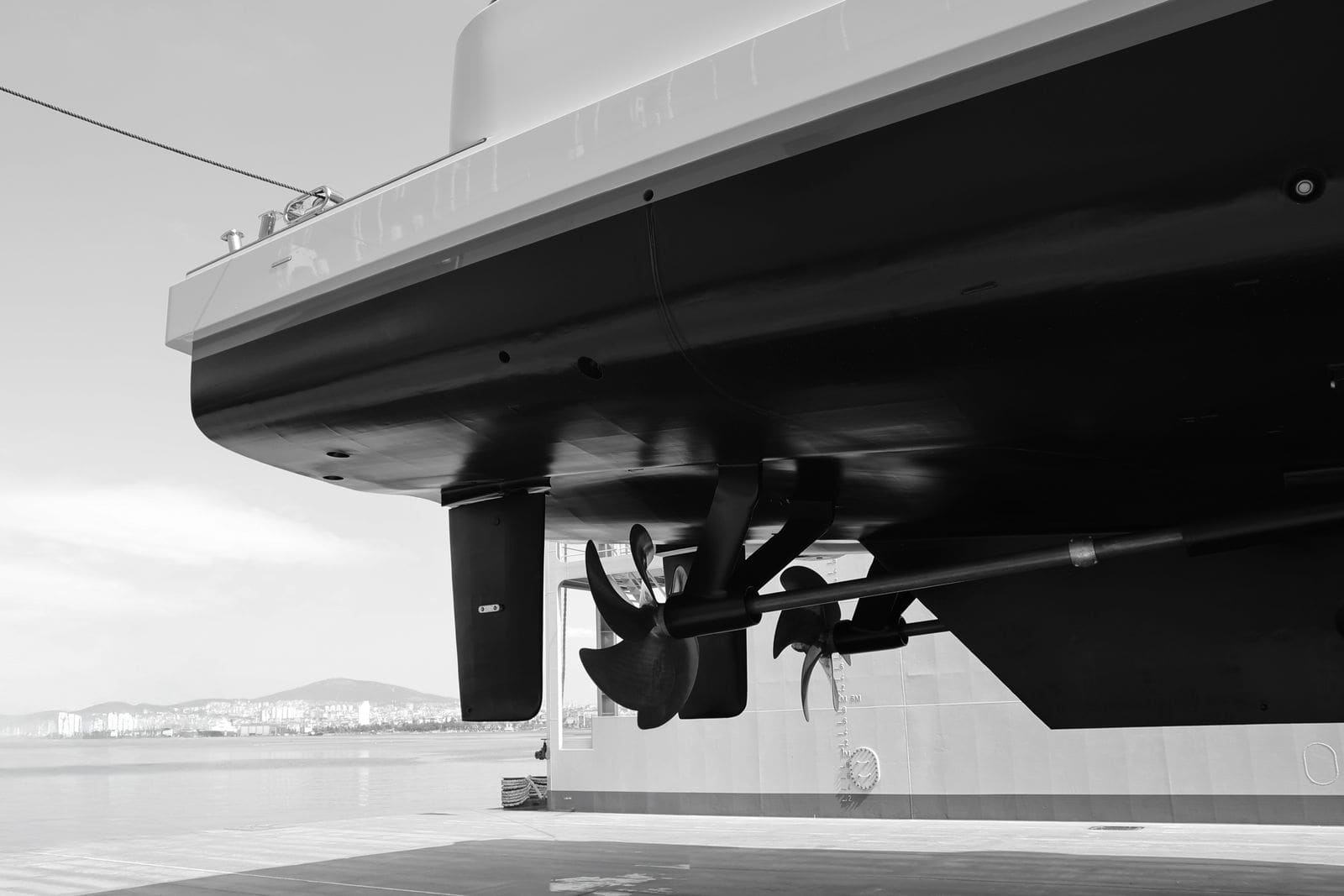
How to Check the Cutless Bearing, Prop Shaft and Strut
Find out if new vibration or rumbling from the stern is a worn cutless bearing, a bent shaft, a loose strut or poor engine alignment, using simple checks you can do at the dock and at haul-out. Catching bearing wear early protects the shaft, the seal and the transmission.
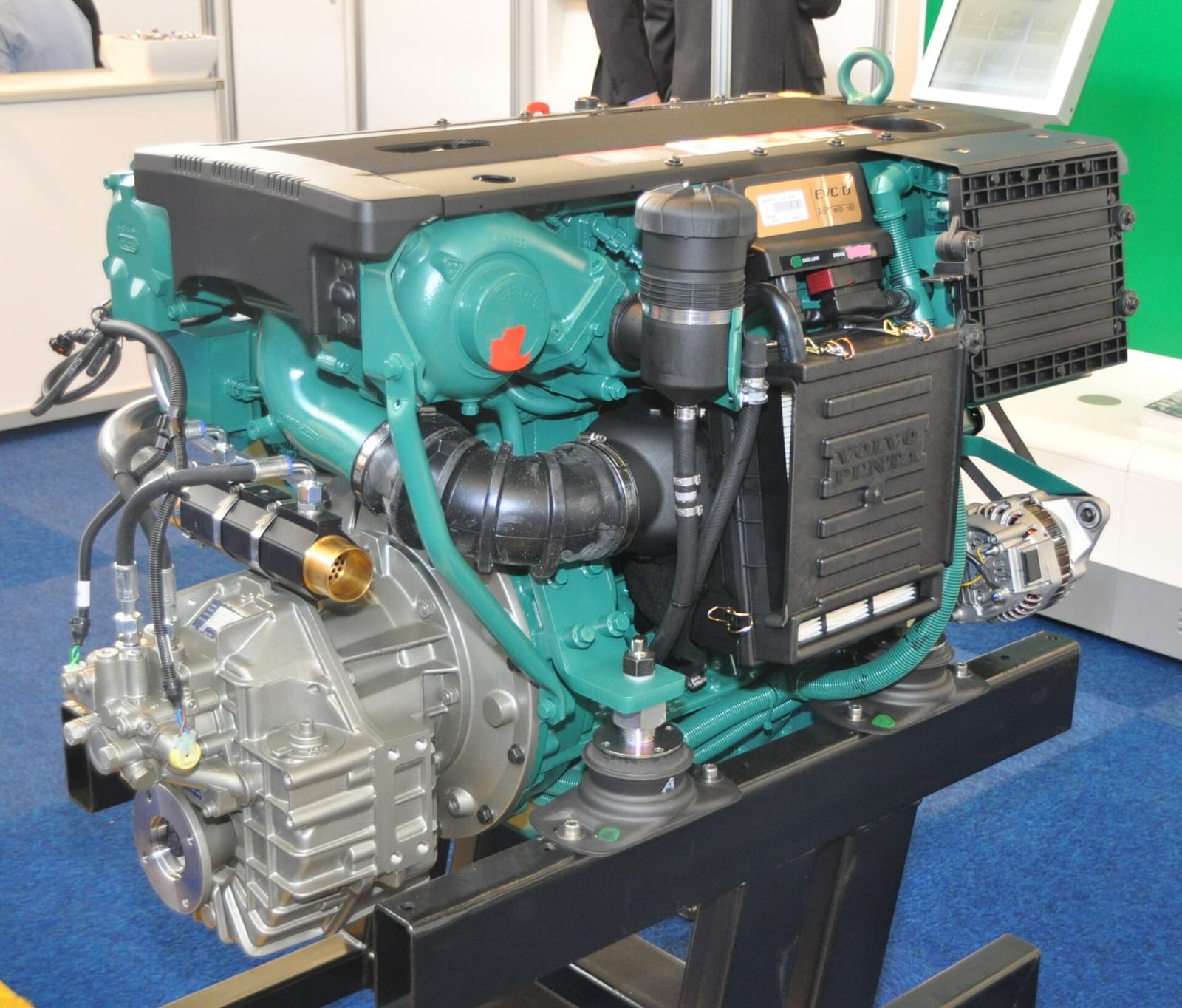
How to Check and Change Coolant in a Closed Cooling System
Check, test and change the coolant in a freshwater-cooled (closed cooling) inboard, sterndrive or diesel, and learn the heat exchanger basics that keep it working. Old coolant quietly eats hoses, pumps and engine passages, and many boats go a decade without a change.
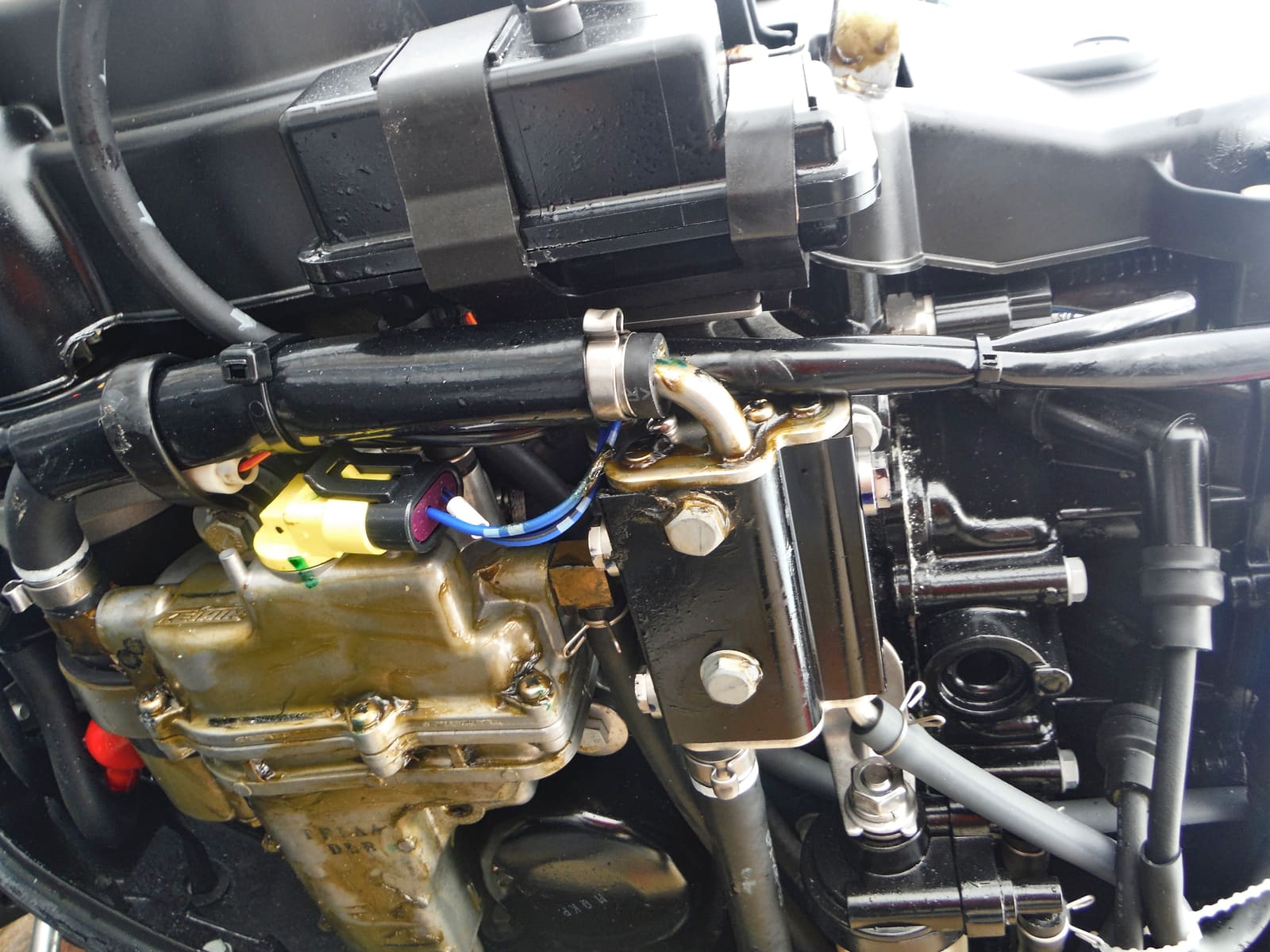
Four-Stroke Outboard Oil Level Rising or Smelling Like Gas: What It Means and What to Do
If the oil on your four-stroke outboard's dipstick keeps going up or smells like gasoline, fuel is probably getting into the crankcase. Learn how to check the level the right way, why lots of idling, trolling, short runs and cold water cause it, what you can do yourself, and when a fuel-system fault needs a dealer.