How to Check the Cutless Bearing, Prop Shaft and Strut
Find out if new vibration or rumbling from the stern is a worn cutless bearing, a bent shaft, a loose strut or poor engine alignment, using simple checks you can do at the dock and at haul-out. Catching bearing wear early protects the shaft, the seal and the transmission.
Time
1 h
Shop would charge
$400-1500
Applies to
Gas inboard, Marine diesel · Sailboat, Cabin cruiser, Yacht, Fishing boat
Safety first: Never grab the shaft, prop or coupling unless the engine is off and the key is out of the ignition. Never go under the boat while the engine runs. If vibration suddenly gets violent underway, slow down or stop and check the bilge: a badly worn bearing, broken strut or loose shaft can damage the shaft seal and let water in. If water is coming in faster than your pumps can handle, call USCG on VHF 16 or 911 and your tow service.
Owners often ask
- I have a new vibration in gear and the shaft seems to have play. Is it my cutless bearing?
This guide walks you through it. Still stuck? Ask the AI Mechanic about your engine.
Tools
- Flashlight and an inspection mirror
- Work gloves
- Paint marker or a strip of tape
- Notepad or phone to record what you find
- Camera for close-ups of the strut and bearing at haul-out
Parts & supplies
- None for inspection. A replacement cutless bearing must match your shaft diameter, bearing outside diameter and length exactly.
Before you start
What these parts do:
- Prop shaft: the steel or bronze rod from the transmission coupling, through the shaft seal, out of the hull to the propeller.
- Cutless bearing: a tube with a grooved rubber liner that supports the shaft where it leaves the boat. It sits in the hull's stern tube or in a strut (also called a P-bracket), the metal leg hanging below the hull just ahead of the prop. Seawater flows along the grooves to cool and lubricate it.
- Strut: holds the bearing and the shaft in line. It is bolted through the hull.
How long they last: a properly aligned bearing can run for several thousand hours (Good Old Boat), or 10 years or more (Practical Boat Owner). Bad alignment, a bent shaft, a damaged prop or running in sandy, silty water wears it out much faster.
When to check: every haul-out, any time you hear or feel a new vibration, and after you hit something or wrap a line around the prop.
Steps
Before you touch anything, write down what you feel on your next run. BoatUS's vibration guide sorts causes by when the vibration appears:
- Even in neutral: usually the engine itself or worn engine mounts, not the shaft.
- Only in gear: look at the prop first (fouled, bent or badly fitted).
- Gets worse at certain speeds: prop out of balance or a worn cutless bearing.
- Deep rumbling felt through the hull aft: a classic sign of a worn bearing (Practical Boat Owner).
A prop with rope, fishing line or weed on it, or a dinged blade, causes most stern vibration. BoatUS notes props are often the culprit. If a diver is available, have them check and clear it. Otherwise check at haul-out (see the BoatMend propeller guide).
Engine off, key out, transmission in neutral. Try turning the shaft by hand inside the boat, or have someone turn it. Cruising World's quick check: if the shaft takes a lot of effort to turn while the boat is afloat, something is binding, usually alignment, a bent shaft or a tight bearing. Note it for the pro.
Put a paint mark or a tape flag on the shaft. With the engine off, turn the shaft slowly by hand while a helper watches the shaft and coupling from the side. BoatUS suggests watching from several angles: a shaft that visibly wobbles or a coupling that "nods" can mean a bent shaft or a coupling that is out of true.
With the engine off, run a finger around the shaft where it enters the stuffing box or dripless seal. BoatUS points out that a groove or ridge you can feel means a worn shaft, which can cause shake and also stops the seal from sealing. Note any extra leaking at the seal too: a sloppy bearing lets the shaft move and works the seal.
With the boat on the hard, grab the prop with one hand and the shaft right next to the bearing with the other. Push and pull hard up and down, then side to side.
- Any clunk or visible movement between the shaft and the bearing: the bearing is worn and should be replaced (BoatUS).
- Fore-and-aft movement: there should be none. If the shaft slides in and out, BoatUS says suspect a loose prop, a loose shaft coupling or wear in the transmission. Have a mechanic check before launching.
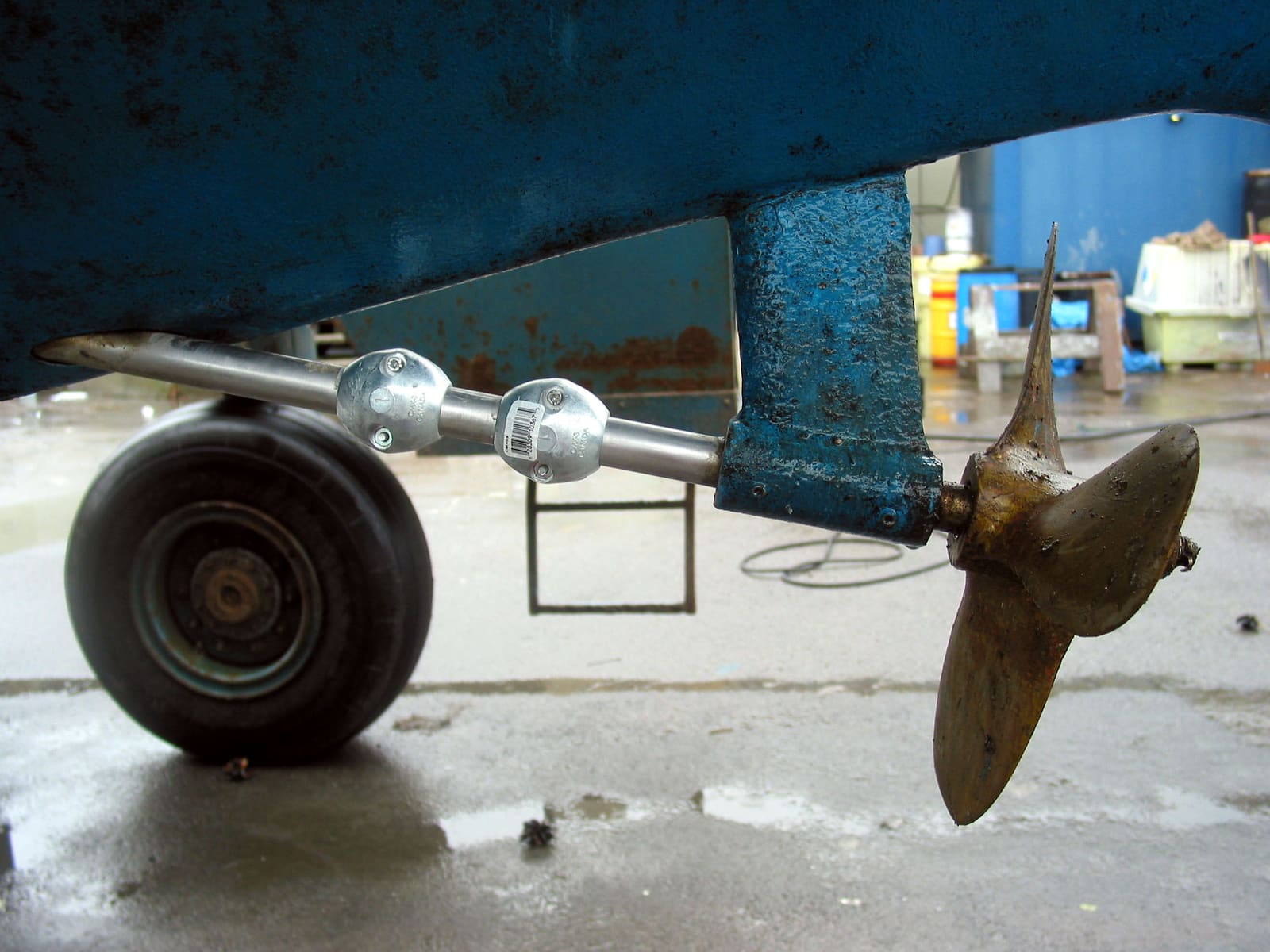
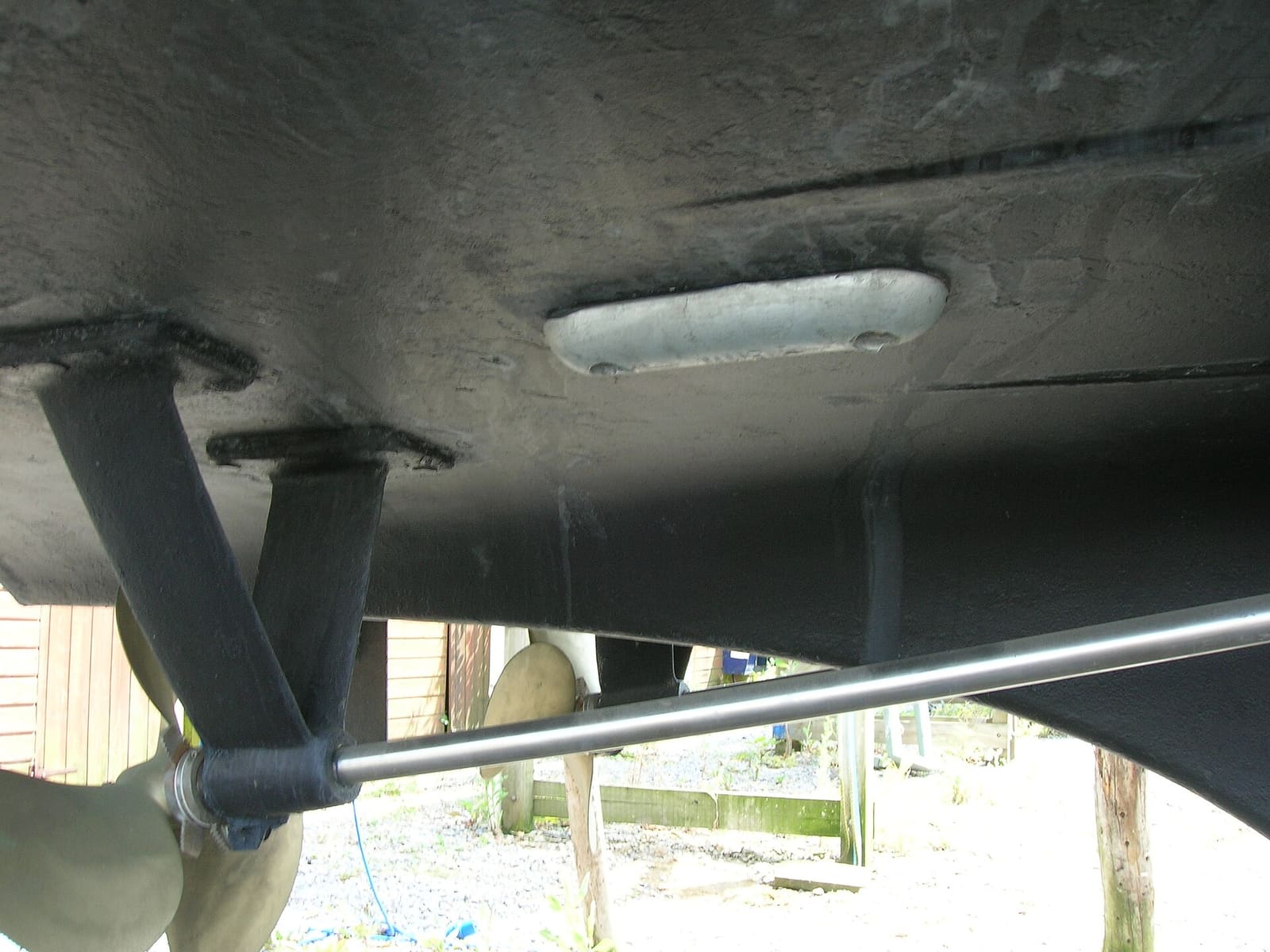
The shaft leaves the hull, passes two shaft zincs, and runs through the bearing housing just ahead of the prop. That is where you shake-test for play. Photo: Paul Schultz / Wikimedia Commons · CC BY 2.0 Shine a light into the gap between the shaft and the bearing at each end. The rubber liner has lengthwise grooves. A cutless bearing distributor's rule is to replace it when those grooves are roughly half worn away. Also look for rubber that is torn, swollen, peeling from its shell, or pushed out of the housing (a line wrap can do that).
Check the strut for cracks, especially where the leg meets the hub and the base. Look for twisting or a bent leg, and for corrosion on bronze. Inside the boat, find the strut's through-bolts and check for weeping, cracked gelcoat or movement around them. BoatUS lists a cracked or twisted strut, or loose mounting bolts, as a cause of vibration that needs a repair or replacement by a yard.
Shaft zincs should be tight on the shaft and not in contact with the bearing housing. Replace them if they are half gone (see the BoatMend anodes guide). If you had the prop off, BoatUS also suggests checking the key, keyway and taper for damage, since a poorly seated prop vibrates.
The faces of the transmission coupling and the shaft coupling must be centered and parallel. Cruising World estimates more than half of the boats a yard manager sees have some misalignment, which causes vibration, early cutless bearing wear, transmission bearing failure and even broken shafts. A pro separates the couplings, measures the gap all the way around with feeler gauges against a published tolerance, and adjusts the engine mounts. BoatUS's quick test: with the shaft uncoupled from the transmission, if it suddenly turns easily, alignment is the likely problem. Final alignment is always done with the boat afloat, after it has settled for a while.
Look at each mount for torn or sagging rubber, rust or rubber dust under it. Worn mounts let the engine drop out of line with the shaft, so the alignment goes off again even after it is set. BoatUS lists worn mounts as a common cause of vibration both in neutral and in gear.
Replacing a cutless bearing is a haul-out job. The prop has to come off, and on a strut the shaft usually has to be pulled, which can mean dropping the rudder too. Old bearings are often stuck and need a puller or careful cutting. Then alignment has to be checked afterward. Practical Boat Owner calls it doable for an owner with mechanical experience; for most owners it is a yard job. Order the bearing by shaft diameter, bearing outside diameter and length, and confirm them by measuring.
Bearings also come with different outer shells, typically brass or non-metallic, depending on the maker's line. Some housings use a flanged bearing that bolts to the strut or stern tube; Pacific Marine's ordering notes ask for the flange diameter, thickness and hole pattern in that case. Match what came out of your boat unless your yard recommends a change, for example where the old brass shell corroded.
This bearing is cooled and lubricated by the water around it, so never run the shaft in gear with the boat on the hard.
Common mistakes
- Blaming the bearing before checking the prop for fouling or a ding.
- Replacing the bearing but not the cause. If alignment, a bent shaft or a worn strut wore it out, the new one will wear out fast too.
- Skipping alignment after shaft or engine work. It has to be checked once the boat is back in the water.
- Ignoring a groove on the shaft at the seal or bearing. A worn shaft won't seal or support properly.
- Letting a "little" vibration go for a season. It hammers the seal, the strut bolts and the transmission.
When to call a pro
- There is play between the shaft and the bearing, or the grooves are badly worn
- The strut is cracked, bent, loose or weeping at its bolts
- The shaft looks bent, wobbles, or is hard to turn by hand
- Vibration remains after the prop has been checked or repaired
- Any alignment work or engine mount replacement
- The shaft moves fore and aft
- Vibration comes with new leaking at the shaft seal; if water comes in faster than the pumps remove it, call USCG on VHF 16 or 911
Tips
- Note in BoatMend the date of each haul-out check and what you felt. A gradual increase in play is easy to miss from memory.
- If the bearing is borderline and your next haul-out is a year or more away, many owners replace it now. The bearing is cheap compared with another haul-out.
- After any line wrap, have a diver or the yard check the bearing and seal.
- Pair this check with your shaft seal and anode checks so the yard can do everything in one lift.
Official references
We read these to write this guide. Your engine's own manual always wins.
- BoatUS – Troubleshooting Boat Vibrations
- Cruising World – Play It Straight (engine and prop-shaft alignment)
- Good Old Boat – Shaft Log 101
- Practical Boat Owner – Cutless bearing replacement step by step
- Pacific Marine & Industrial – How to install a Johnson Duramax cutless bearing
- Practical Sailor – Stuffing Box Care
Safety: BoatMend is for information only and does not replace a certified marine technician. You are responsible for your safety and your boat. Read the full disclaimer.
Last updated 2026-10-26
Related guides
How to Check, Adjust and Repack a Stuffing Box (and Care for a Dripless Shaft Seal)
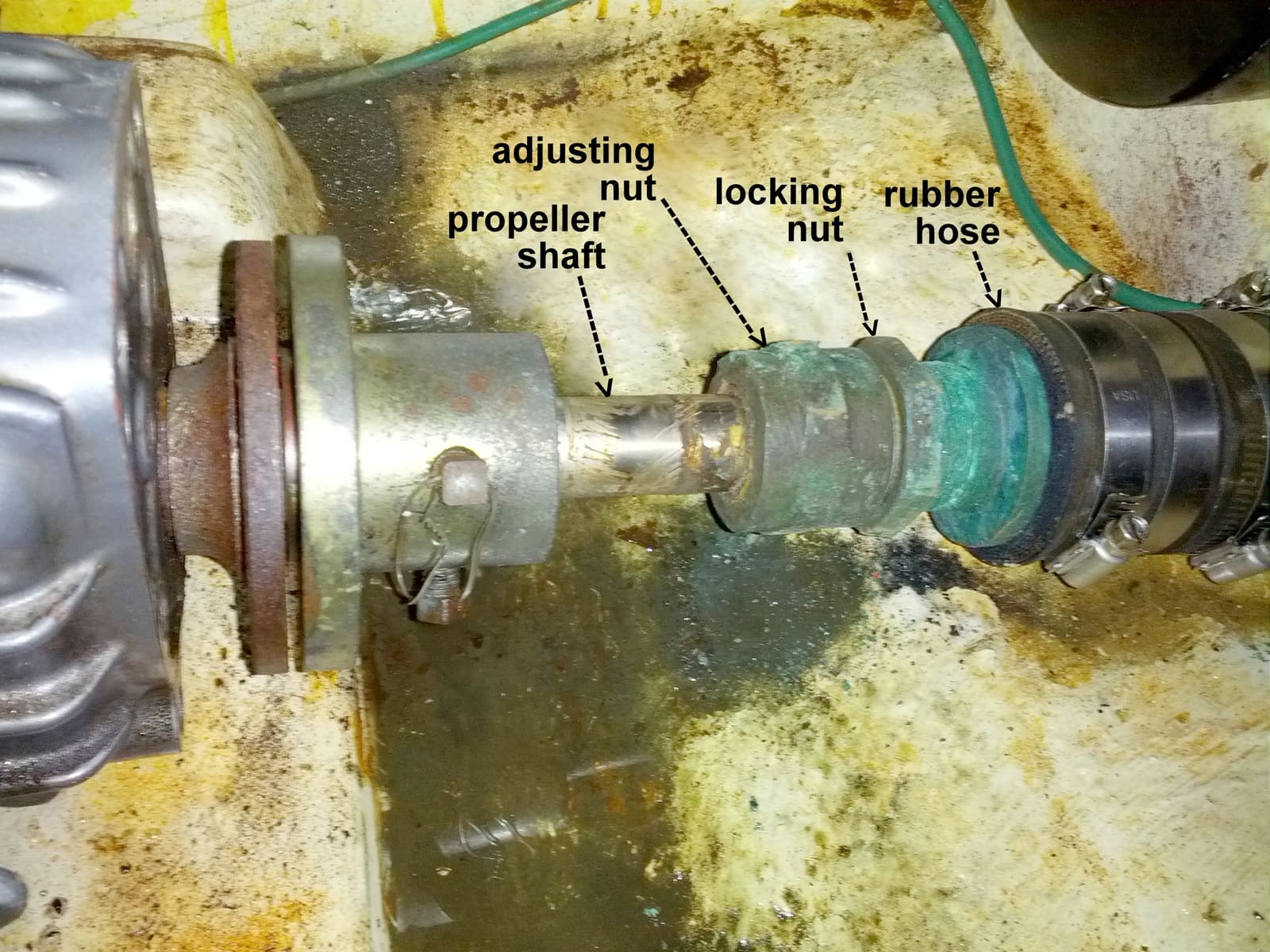
Learn the right drip rate for a traditional packing gland, how to adjust it safely, when to repack it, and how to inspect and service a dripless shaft seal. The shaft seal is one of the few holes in an inboard boat that moves, and a neglected one can sink a boat at the dock.
Propeller Care: Inspect, Remove, Replace and Choose the Right Pitch
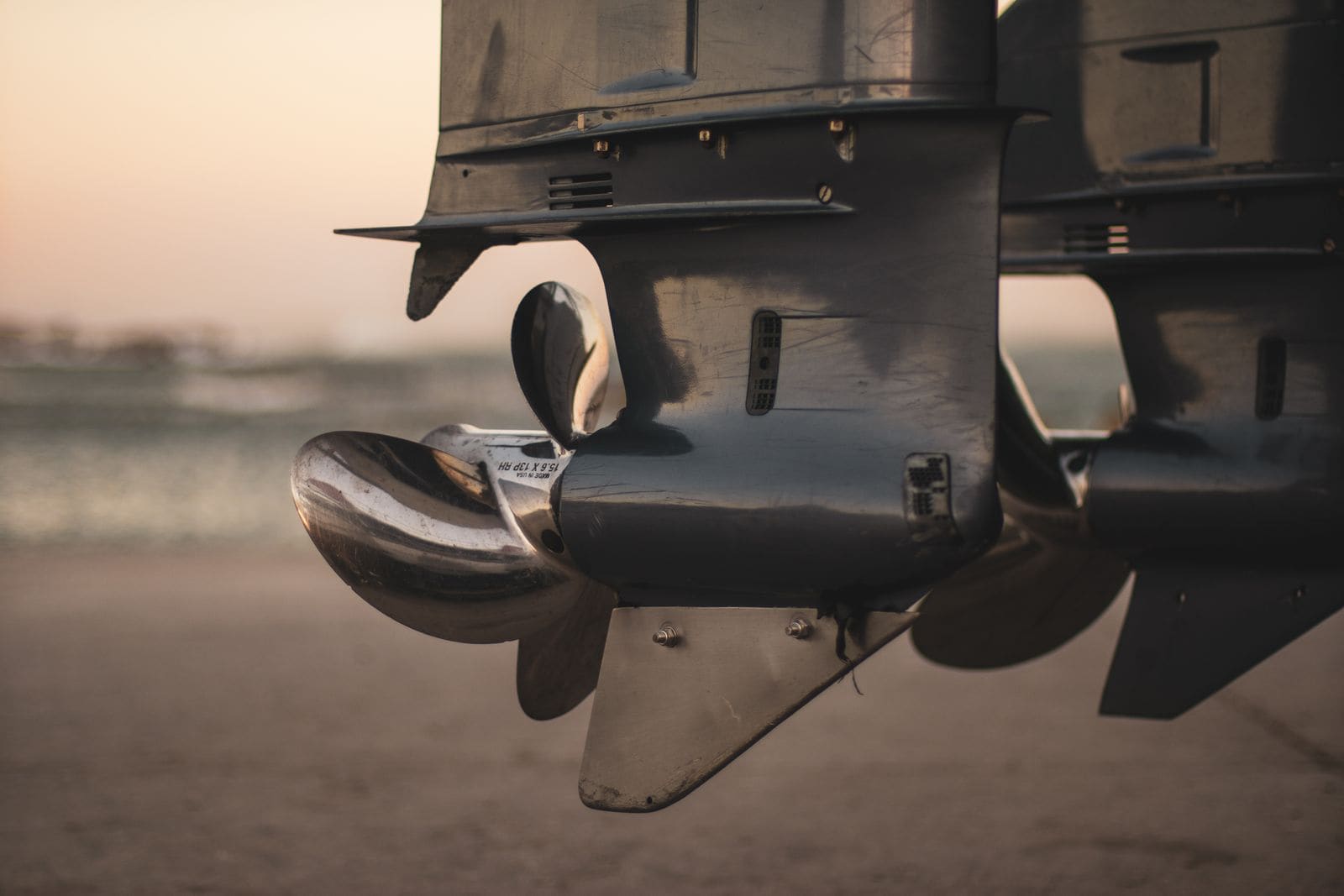
Check your prop for damage, pull it to clear fishing line and grease the shaft, reinstall it correctly, and learn how pitch affects your engine's wide-open-throttle RPM. The right prop in good shape protects your engine and often makes the boat run better and use less fuel.
How to Inspect and Replace Sacrificial Anodes (Zincs)
Check the anodes on your outboard, sterndrive or inboard running gear, replace them when they are half gone, and choose the right metal for the water you boat in. Fresh anodes are cheap insurance against expensive corrosion damage to your lower unit, drive and prop.
Launch Day and Haul-Out Checklist for Trailer Boats
A step-by-step checklist for getting your boat off the trailer and back on again safely and quickly, from the drain plug and tie-downs to the blower and ramp etiquette. Following it in order prevents the classic mistakes that sink boats and back up the ramp.