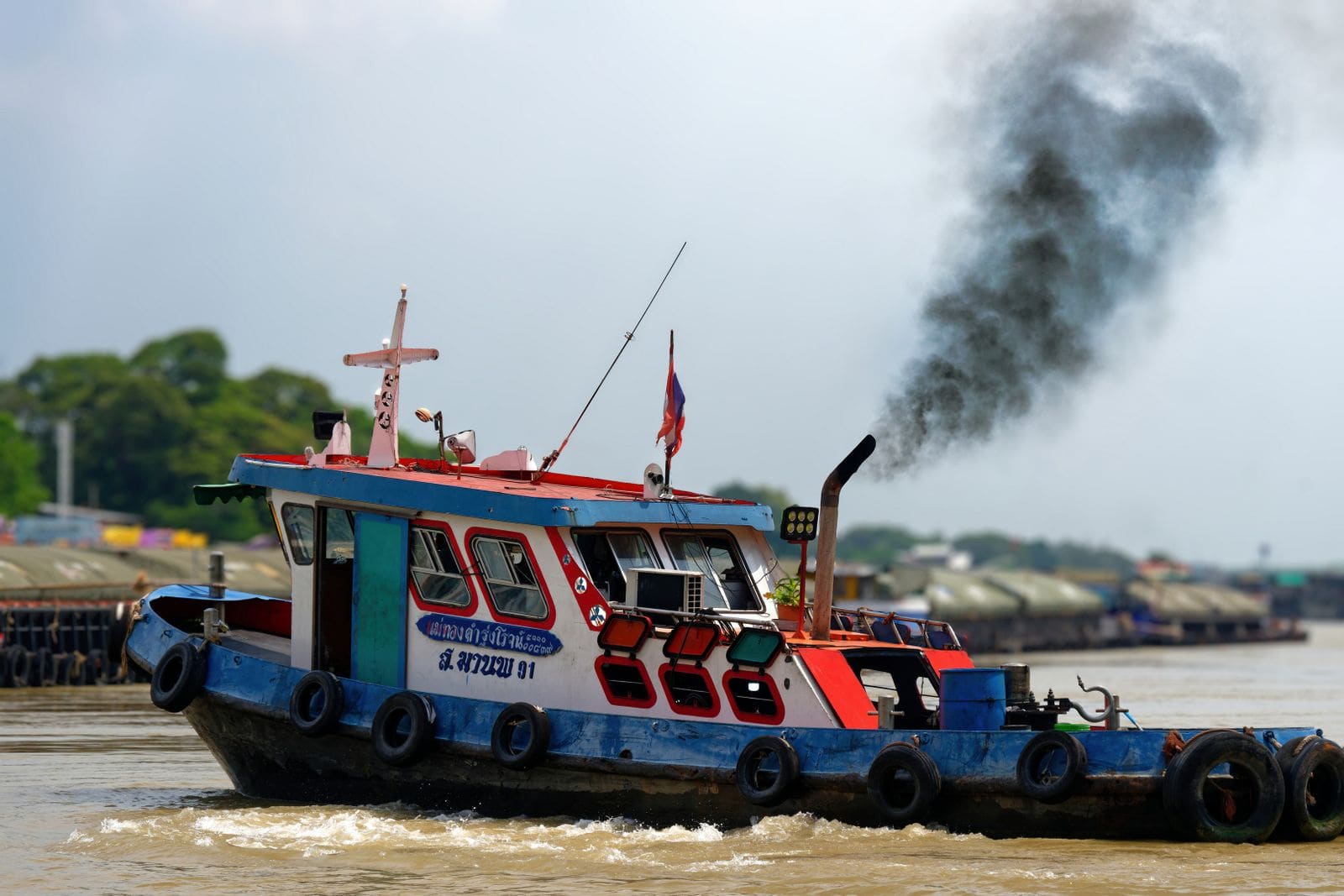
Diesel Exhaust Smoke: What Black, White and Blue Smoke Mean
Learn to read the color of your marine diesel's exhaust and run the simple checks that go with each color, from a dirty air filter or fouled prop to a worn mixing elbow or head gasket. Catching smoke early can save an engine.
Time
45 min
Shop would charge
$150-500
Applies to
Marine diesel, Gas inboard
Safety first: Exhaust contains carbon monoxide (CO). Never stand or let anyone sit near the exhaust outlet or on a swim platform while the engine runs, and keep hatches and ports on the exhaust side closed. If you smell exhaust inside the boat, a CO alarm sounds, or someone feels dizzy, sick or has a headache, shut down, get everyone into fresh air and call 911 or the USCG on VHF 16. If you see a lot of steam with little water at the exhaust, or the temperature alarm sounds, shut the engine down right away.
Tools
- Flashlight or headlamp
- White paper towel or rag (to check exhaust water and oil)
- Screwdrivers and wrenches for the air filter cover
- Notebook or phone to record what you see, when and at what RPM
- Nitrile gloves
Parts & supplies
- Air filter element if yours is dirty (match your engine)
- Engine oil of the type in your manual, only if the level is low
Before you start
A healthy, well-maintained diesel makes little or no visible smoke once it is warm. A small puff of white or gray smoke on a cold start that clears in a minute or two is normal. Anything that stays, gets worse, or changes color is the engine telling you something.
The three colors in short:
- Black (or dark gray): too much fuel for the air available. Often simple: a clogged air filter, a starved engine room, or the engine is overloaded.
- White: either unburned fuel (common when cold, or with weak preheat or poor fuel) or water/coolant getting into the cylinders or exhaust (serious).
- Blue (blue-gray, oily smell): engine oil is being burned.
Do the checks below in order. Most of them are free and take minutes. Note the engine hours and what you found in BoatMend; a smoke problem that slowly grows is much easier to diagnose with notes.
Steps
Get off the boat (dock or dinghy) and watch the exhaust outlet during a cold start, then again once the engine is warm, at idle and under load (in gear, tied securely at the dock or underway). Write down the color, when it happens, the RPM, and the smell: diesel, sweet (coolant) or burning oil.
A wet exhaust always makes some vapor, especially on cool, humid days. Steam disappears within a few feet; smoke hangs in the air and smells. Check the water flow too: it should spit out steadily with the exhaust. Lots of steam with little water means a cooling problem (clogged strainer, worn impeller): shut down and see the raw-water impeller guide before anything else.
With the engine off and cool, check the dipstick and the coolant tank (on freshwater-cooled engines).
- Oil level above full: too much oil can be thrown into the cylinders and burned (blue smoke). It can also mean fuel or water is getting into the oil, especially if it smells of diesel or looks milky.
- Milky or gray oil: water or coolant in the oil. Stop running the engine and call a pro.
- Coolant dropping with no visible leak: coolant may be going into the cylinders (white smoke). Call a pro.
Open the air filter or intake silencer and look at the element. A dirty filter, a rag, plastic bag or insulation sucked against the intake will starve the engine of air. Clean or replace the element as your manual says. BoatUS notes a blocked air cleaner can cause black smoke, overheating and loss of power, and a fully clogged one can stop the engine.
Diesels need a lot of air. Make sure the engine room vents are not blocked by gear, covers or closed hatches. A quick test: if black smoke drops when you open the engine hatch while running at the dock, the engine is short of air.
If black smoke appears mainly under load and clears when you ease off the throttle, the engine may be working too hard. Common causes are a fouled bottom, barnacles on the prop, a bent or wrong-size prop, a heavily loaded boat, or running at full throttle for long periods. Clean the bottom and prop and compare. Black soot on the transom is a typical sign. On a generator, the same thing happens when you ask it for more electrical load than it is rated for (several big appliances at once). The opposite also causes trouble: Northern Lights warns that running its generators at very light loads plugs the exhaust elbow with carbon, leading to smoke and overheating, and suggests keeping them at roughly 40 to 50% of rated load or more. If it continues, worn injectors, a turbocharger problem or a carbon-choked exhaust elbow are next; those need a mechanic.
White smoke that lasts well after a cold start, often with hard starting, usually means fuel is not burning completely. Check that you are using the preheat (glow plugs or intake heater) as the manual says and that it actually works (see the no-start guide). Poor or old fuel can do it too. Change the fuel filters and look for water in the separator bowl. Westerbeke adds an engine that simply runs too cold (long light-load idling, or a thermostat stuck open) and injector or timing faults to the list of white-smoke causes.
A pattern owners often ask about: lots of white smoke at idle that disappears once you raise the RPM, with no coolant loss and no water in the oil. That usually means one cylinder isn't firing at idle, often a faulty injector that only works properly at higher RPM. A diesel mechanic can find which one by testing the injectors one at a time. Have the oil checked as well; a misfiring cylinder can wash fuel into the crankcase and raise the oil level.
Persistent white smoke once the engine is fully warm, especially with a sweet smell, coolant loss, rough running or power loss, can mean water or coolant is getting into the cylinders. Common causes:
- A corroded exhaust mixing elbow (where water joins the exhaust). These can rot inside while looking fine outside and let water back into the engine.
- A leaking head gasket or a cracked head.
- Water backing up through the exhaust (poor exhaust design or long cranking).
Stop running the engine and call a pro. Running an engine that is taking in water risks hydrolock and major damage.
Blue-gray smoke with a burning-oil smell means oil is being burned. First rule out the easy one: an overfilled crankcase (step 3). On low-hour engines the most likely cause is valve stem seals; on high-hour or neglected engines, worn piston rings. Engines that idle for long periods with little load (charging batteries at anchor, for example) can also glaze their cylinders and burn oil. Track how much oil you add between changes.
On a turbocharged engine, heavy blue smoke can come from a leaking turbo seal. Have any oily turbo checked by a pro right away, before it gets worse.
In rare cases, oil leaking into the intake can make the engine "run away": it races and keeps running on its own oil, and the key or stop control won't shut it down. This is an emergency. Get everyone away from the engine, put on life jackets and call for help (USCG on VHF 16 or 911). The way to stop a runaway is to starve it of air, and your engine manual describes how for your installation. Never put your hand over the air intake: the suction and heat can cause serious injury. Ask your diesel mechanic to show you, before you ever need it, what your boat's emergency shutdown plan is.
After running, look behind the exhaust for an oil sheen or black soot film. A sheen that keeps appearing points to oil getting into the exhaust (or a leaking oil cooler on some engines). Wipe the inside of the exhaust outlet with a white rag: dry black soot, wet oil and clean water each tell you something. Never let oily water drain overboard.
Log the color, conditions and what you checked. If a simple fix (air filter, prop, overfill) cleared the smoke, keep an eye on it for a few outings. If smoke persists, give your notes to a diesel mechanic. They may do a compression test, check the injectors, or pull the mixing elbow.
Common mistakes
- Assuming "all diesels smoke." A modern, healthy diesel should be close to smoke-free once warm.
- Confusing steam with smoke, or ignoring steam that comes with a weak water flow.
- Topping up oil without noticing the level is rising on its own (fuel or water getting in).
- Running at low idle for hours to charge batteries, then wondering why the engine burns oil.
- Judging the mixing elbow by its outside. They often rust through on the inside first.
- Using thicker oil or additives to hide blue smoke instead of finding the cause.
When to call a pro
- White smoke that continues when warm, sweet-smelling exhaust, or coolant you cannot account for
- Milky oil, or oil level rising between changes
- Heavy blue smoke on a turbocharged engine, or any sign the engine will not stop with the key
- Black smoke that stays after you have cleaned the air filter, checked ventilation and cleaned the prop
- Any exhaust smell inside the boat, or a CO alarm
- Rough running, knocking or loss of power along with smoke
Tips
- Take a short video of the exhaust at cold start every season. Comparing it year to year shows slow changes you would otherwise miss.
- Run the engine under a reasonable load for part of every outing instead of only idling; your manual lists the recommended cruising RPM.
- An oil analysis once a year can show fuel, coolant or wear metals before smoke appears.
- Use your ears as well as your eyes. The USCG's carbon monoxide checklist asks boaters to listen for any change in exhaust sound and to look for rust or black streaks, water leaks and cracked fittings along the exhaust. Once a year, have a mechanic check the metal exhaust parts, including the short threaded pipe between the manifold and the mixing elbow, which can rot unseen.
- When rafted up or docked close to other boats, remember their exhaust can reach you too.
- Keep the bottom and prop clean; it saves fuel and keeps black smoke away.
Official references
We read these to write this guide. Your engine's own manual always wins.
- 48° North – Diesel Deep Dive, Is Your Engine Sending Smoke Signals?
- Cruising World – How to Read Smoke Signals
- BoatUS – Maintaining Marine Diesel Engines
- BoatUS – Inspecting Exhaust Manifolds and Risers
- Westerbeke – Troubleshooting FAQs (white smoke, black smoke)
- USCG Boating Safety – Carbon Monoxide Checklist
- Northern Lights – Top 10 Generator Maintenance Tips and Tricks
Safety: BoatMend is for information only and does not replace a certified marine technician. You are responsible for your safety and your boat. Read the full disclaimer.
Last updated 2026-10-24
Related guides
Marine Diesel Won't Start: Troubleshooting From Battery to Fuel
Work through the usual reasons a Yanmar, Volvo Penta, Westerbeke, Beta or similar marine diesel won't crank, or cranks but won't fire, starting with the free and simple checks. Most no-starts come down to the battery, preheat, air in the fuel or a fuel shutoff solenoid.
Marine Diesel Service: Oil Change, Fuel Filters and Bleeding Air
Change the oil and oil filter, replace the primary and secondary fuel filters, and bleed air from the fuel system on a Yanmar, Volvo Penta, Beta, Cummins or similar marine diesel. These three skills cover most routine diesel care and can get you out of trouble when the engine dies on a passage.
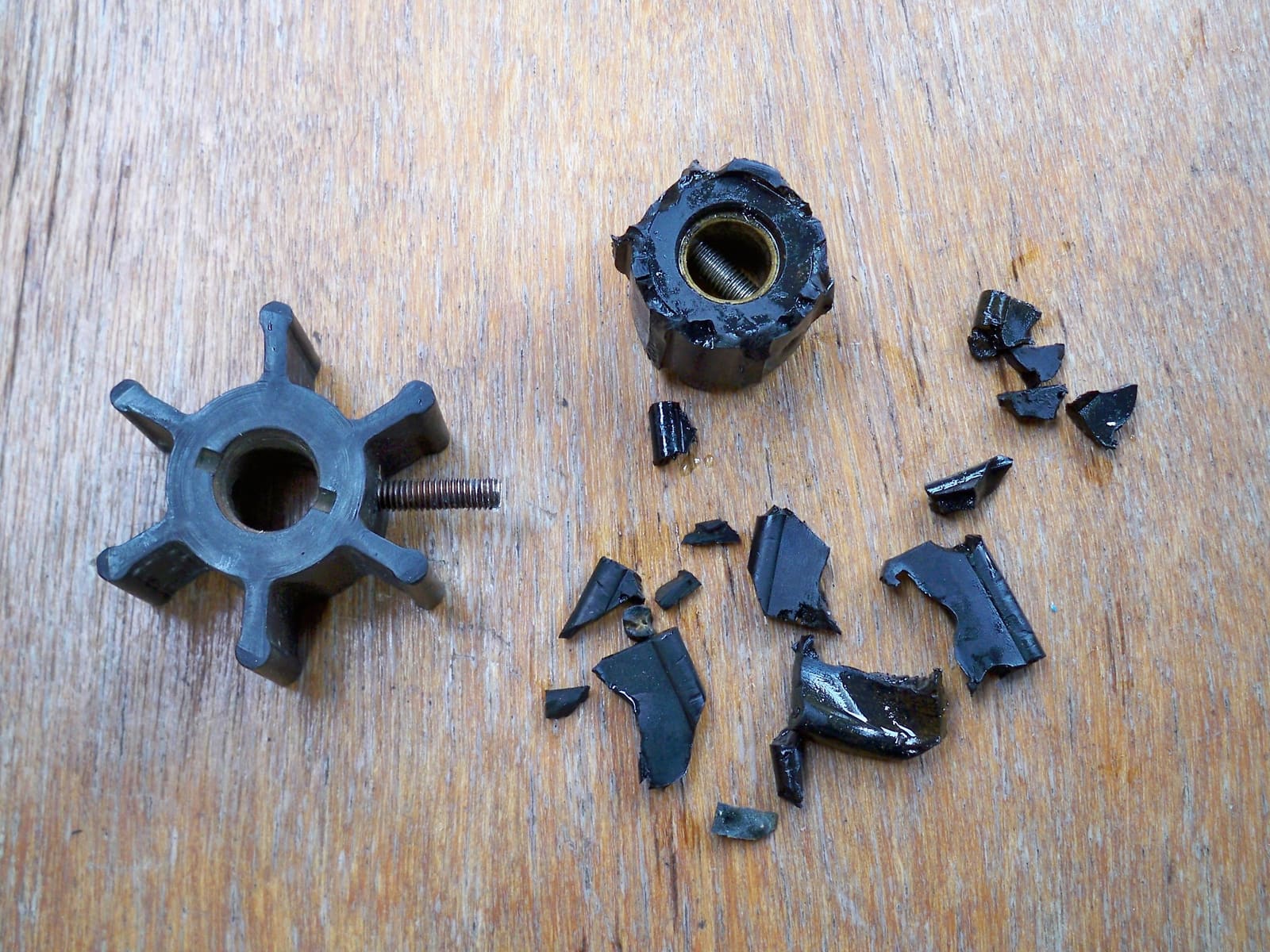
How to Clean the Raw-Water Strainer and Replace the Impeller on a Marine Diesel
Clean the sea strainer and swap the rubber impeller in the raw-water pump of a Yanmar, Volvo Penta, Westerbeke, Beta or similar inboard diesel. A worn impeller is one of the most common reasons a diesel overheats, and this job takes about an hour with basic tools.
Engine Overheating - Troubleshooting Guide
Work through the most likely causes of a hot engine or overheat alarm, from a blocked water intake to a worn impeller or stuck thermostat. Acting fast and in the right order can save your engine and often gets you home without a tow.
Loss of Power, Hesitation or Misfire - Troubleshooting Guide
Figure out why your engine bogs down, stumbles, will not reach full rpm or runs rough. Work from simple checks like trim, prop and fuel filter to ignition and engine protection modes before paying for diagnostics.
How to Check and Change Coolant in a Closed Cooling System
Check, test and change the coolant in a freshwater-cooled (closed cooling) inboard, sterndrive or diesel, and learn the heat exchanger basics that keep it working. Old coolant quietly eats hoses, pumps and engine passages, and many boats go a decade without a change.