How to Fix a Loose Boat Seat Pedestal, Base or Leaning Post
Find out why seat pedestals and leaning posts work loose, through-bolt the base with a proper backing plate, deal with soft or rotten floor under it, and keep swivels and slides working smoothly so your helm seat stays solid in rough water.
Time
2 h
Shop would charge
$150-600
Applies to
All engines · Fishing boat, Center console, Pontoon, Bowrider / runabout
Safety first: A seat or leaning post that lets go at speed can throw the driver away from the wheel and throttle. If the helm seat moves, rocks or creaks under load, don't run the boat fast until it is fixed, and always wear the engine cutoff lanyard. Before drilling, find out what is under the floor: fuel tanks, fuel lines, wiring and the hull itself can be just below the deck.
Owners often ask
- My pedestal seat base keeps pulling out of the floor. Can I just use bigger screws?
- My helm seat wobbles. Is it the floor or the pedestal?
This guide walks you through it. Still stuck? Ask the AI Mechanic about your engine.
Tools
- Socket set and wrenches (two, to hold the nut while you turn the bolt)
- Screwdrivers and a cordless drill with sharp bits
- Plastic putty knife and a scraper
- Awl or small screwdriver to probe for soft wood
- Flashlight and an inspection mirror
- Masking tape, rags and acetone or the cleaner your sealant maker recommends
- Safety glasses, dust mask and gloves
Parts & supplies
- Marine sealant for bedding hardware (not plain household silicone)
- Stainless steel bolts, flat washers and locking nuts sized to the base holes
- Backing plate (G10 fiberglass board, aluminum, stainless steel, or epoxy-sealed marine plywood)
- Epoxy resin with a thickening filler (for sealing holes and bedding the backing plate)
- Replacement pedestal bushing, swivel or slide parts if worn (match your brand and post size)
Before you start
Why bases loosen: most come loose for one of these reasons:
- Wood screws into a thin deck. Every time the boat pounds, the screws work the floor around their threads until they spin.
- Bolts with only washers underneath. The nuts crush the floor or core, so the bolts lose tension.
- Water in the floor. Unsealed screw holes let water into plywood or balsa core, which rots and stops holding fasteners.
- Worn pedestal parts. Sometimes the base is fine and the wobble is a worn bushing, swivel or slide.
Know your floor: older fiberglass and aluminum boats often have plywood floors (sometimes under carpet or vinyl). Newer fiberglass boats may have cored or solid composite decks. Pontoons usually have plywood or composite decking over aluminum cross-members.
Plan access: BoatUS points out that bolts with large washers or a backing plate hold far better than screws, but you need to reach the underside. Look for hatches, the console, a storage box or the space under the deck. If there is no access at all, see step 9.
Steps
Sit in the seat and rock it side to side and front to back. Watch three places: the seat on top of the swivel, the post in the base, and the base on the floor. Only the last one means a floor or fastener problem. A wobble between the seat and post, or the post and base, is usually a worn bushing or loose clamp (step 11).
Take the seat off the swivel, then lift or unlock the post from the base (many posts pull straight up; some have a lock screw or lever). Take photos of how the swivel, slide and any spacers go together. Now you can see the base and its fasteners.
Try to tighten each fastener. If it's a screw that just spins, the wood around it has failed. If it's a bolt, look underneath: is there a nut with only a small washer, or a real backing plate? Note any fasteners that are missing or rusted.
Unscrew the base and set it aside. Push an awl into each hole and around the area. Firm, dry wood resists; soft, dark, wet or crumbly wood is rotten. Press down on the floor around the base with your heel and listen for cracking or feel for flex. Wet wood around holes usually means water has been getting in for a while.
- Sound floor, just stripped holes: go to step 6.
- Soft spot only around the holes: dig out the soft wood, dry the area, and fill it with thickened epoxy before re-drilling.
- Large soft area, a spongy floor, or rot that keeps going: the floor (and possibly the stringers underneath) needs replacing. BoatUS notes that on small boats with plywood stringers, the plywood deck is usually rotten too. That is a bigger job; see "When to call a pro".
Bare wood or core exposed in a hole will soak up water again. The method BoatUS describes for backing plates works here too: drill the old holes oversize, fill them with thickened epoxy, let it cure, then drill the new fastener hole through the epoxy plug. The fastener then sits in solid epoxy instead of bare wood or core.
A backing plate spreads the load over a much bigger area than washers alone. BoatUS lists four good materials: G10 fiberglass board, aluminum, stainless steel, or void-free marine plywood with waterproof glue that is fully sealed with epoxy (including inside the bolt holes). Make the plate a little bigger than the seat base and taper its edges. BoatUS advises against soft plastic boards such as StarBoard here, because it slowly deforms under bolt pressure and the bolts loosen.
If you're moving the seat or fitting a new pedestal, set the whole seat and post on the base, line it up with the wheel and actually sit in it before you mark anything: Boating Magazine's install checks that you can reach the wheel and throttle comfortably and that the seat has room to swivel, slide and clear any footrest. Then use the base itself as the drilling template, after checking under the deck. Dry-fit first. BoatUS's trick for perfect alignment: drill one hole, drop in a fastener, drill the opposite hole and drop in a second one, then drill the rest. Remove the base, clean off all dust, and put a generous dab of marine sealant on and into every hole. Set the base, push the bolts through with sealant under the heads, add the backing plate, washers and locking nuts underneath, and tighten evenly in a crisscross pattern until snug. Don't crank hard enough to crush the floor; check your sealant label and let it cure fully before using the boat.
You have three options:
- Add an access hatch (inspection port) nearby so you can reach the nuts. BoatUS suggests sounding the deck first and not cutting the port so close to the base that it weakens the floor.
- On a sound plywood floor without access, use the right size stainless screws in epoxy-filled holes as above. They will grip far better than screws in bare wood, but bolts are always stronger. BoatUS also suggests coating each screw's threads with a flexible marine sealant before driving it: pounding slowly crushes the wood fibers around the threads and opens a path for water, and the sealant keeps that gap from wicking water into the floor.
- If the floor is solid composite with no access, ask a pro about bonded-in backing or mounting plates.
Leaning posts and big helm-seat frames carry much more leverage than a single pedestal, especially when people grab them in waves. Check every foot: tighten bolts, look for cracked welds or powder-coat cracks around the feet, and look underneath for backing plates. Any cracked weld on a post or tower-style frame is a job for a welder.
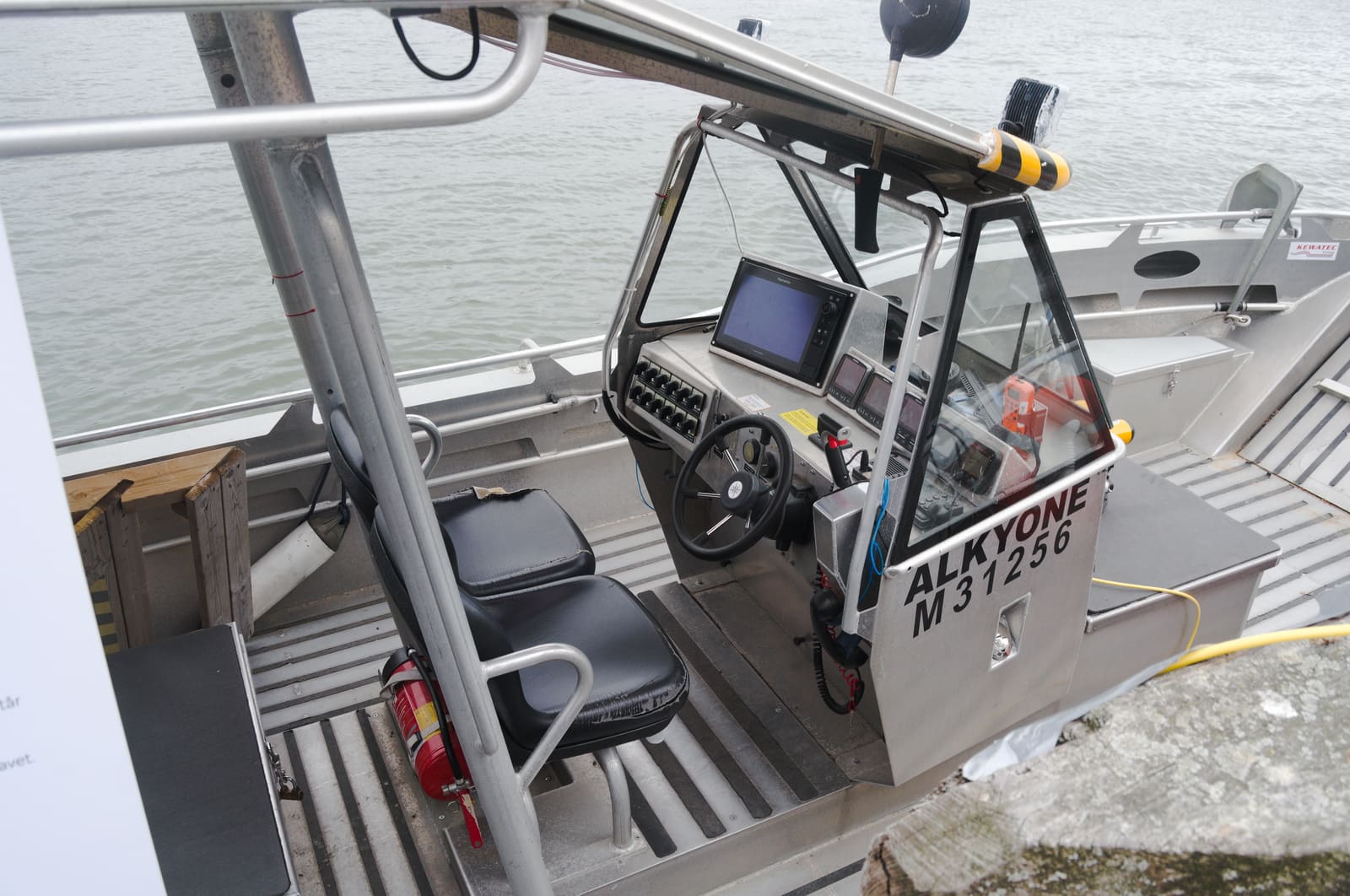
Helm seats on a tubular frame: every leg where it meets the deck takes leverage when someone grabs the seat in a wave, so check each foot, its fasteners and the welds. Photo: Antti Leppänen / Wikimedia Commons · CC BY 4.0 Clean the post and the inside of the base with fresh water and let them dry. Look at the bushing (the plastic sleeve the post sits in): if the post rocks inside it, replace the bushing with one made for your pedestal brand and post size. Measure the post diameter and the old bushing before ordering; sizes vary. If the old bushing is stuck and has to be cut out, stuff a rag in the base first: many bases have a drain hole, and broken pieces can drop through it into the bilge. Rinse salt and sand out of swivels and slides. Lubricate only where the maker says to, with the product they name; some slides run on self-lubricating pads that grease would only gum up. Check that the swivel and slide levers lock firmly. A folding helm seat or bolster that jams is usually salt, sand or a loose or missing screw in the hinge mechanism: rinse it, look for screws lying in the seat base, lubricate the pivots with a product that's safe on the upholstery, and work it gently rather than forcing it. Bent or cracked hinges on cheap aftermarket folding seats are common; replace them with heavier hardware.
Put the post, swivel, slide and seat back on, using your photos. Sit and rock the seat hard in every direction. Then take a short test run in moderate chop at a sensible speed and check everything again afterward. Recheck the base fasteners after a few trips, and log the job in BoatMend so you remember when you did it.
Common mistakes
- Using bigger screws in the same rotten holes. It holds for a weekend. Fix the wood first.
- Bolting through a cored deck without solid backing. Tightening the nuts crushes the core and the bolts loosen again.
- Leaving holes unsealed. Water wicks into plywood or core and the next repair is a new floor.
- Plain silicone or no sealant at all under the base. Use a marine sealant made for bedding deck hardware.
- Blaming the floor when it's the bushing. Rock the seat and see where the movement really is before you drill anything.
- Drilling blind. Fuel tanks, fuel lines, wiring and the hull can be right under the deck.
When to call a pro
- The floor is soft over a large area, flexes when you walk on it, or the stringers under it are soft
- You smell fuel or find a fuel tank or fuel lines right under the area you need to drill (stop and get help)
- Water comes in when you remove the fasteners, or you're not sure how close the hull is
- A leaning post, T-top or seat frame has cracked welds or bent tubing
- You'd need to cut a hatch in a structural area or don't know how your deck is built
Tips
- Stainless bolts with locking nuts and a backing plate are the "do it once" fix.
- Add an access port near the helm while you're at it; you will thank yourself later.
- Keep a spare pedestal bushing aboard if your boat sees a lot of rough water.
- Thinking about a shock-absorbing pedestal? Boating Magazine's install of an air-spring pedestal shows it can often go on the old base footprint, but the same rules apply: check under the deck for wires and hoses, bed the holes, through-bolt with a backing plate or large washers and locking nuts, and use threadlocker if the maker calls for it. Mount it so you can reach the air valve, and set the pressure for the usual driver's weight following the pedestal maker's instructions. Measure your seat's mounting-plate hole pattern before you order, or ask for the right adapter.
- On carpeted floors, trim the carpet back from the base footprint so the base beds on the floor itself, not on wet carpet that wicks water into the holes.
Official references
We read these to write this guide. Your engine's own manual always wins.
- BoatUS – How To Install A Seat Pedestal Base
- BoatUS – The Critical World Of Backing Plates
- BoatUS – Replacing Rotten Stringers In A Small Boat
- BoatUS – The "Hole" Story (deck penetrations and sealing core)
- Boating Magazine – Installing a Shock-Absorbing Seat Pedestal
- Boating Magazine – Installing an Adjustable Pedestal Seating System for a Boat
- BoatUS – Seat Mounting (sealing screw holes in wood decks)
Safety: BoatMend is for information only and does not replace a certified marine technician. You are responsible for your safety and your boat. Read the full disclaimer.
Last updated 2026-10-24
Related guides
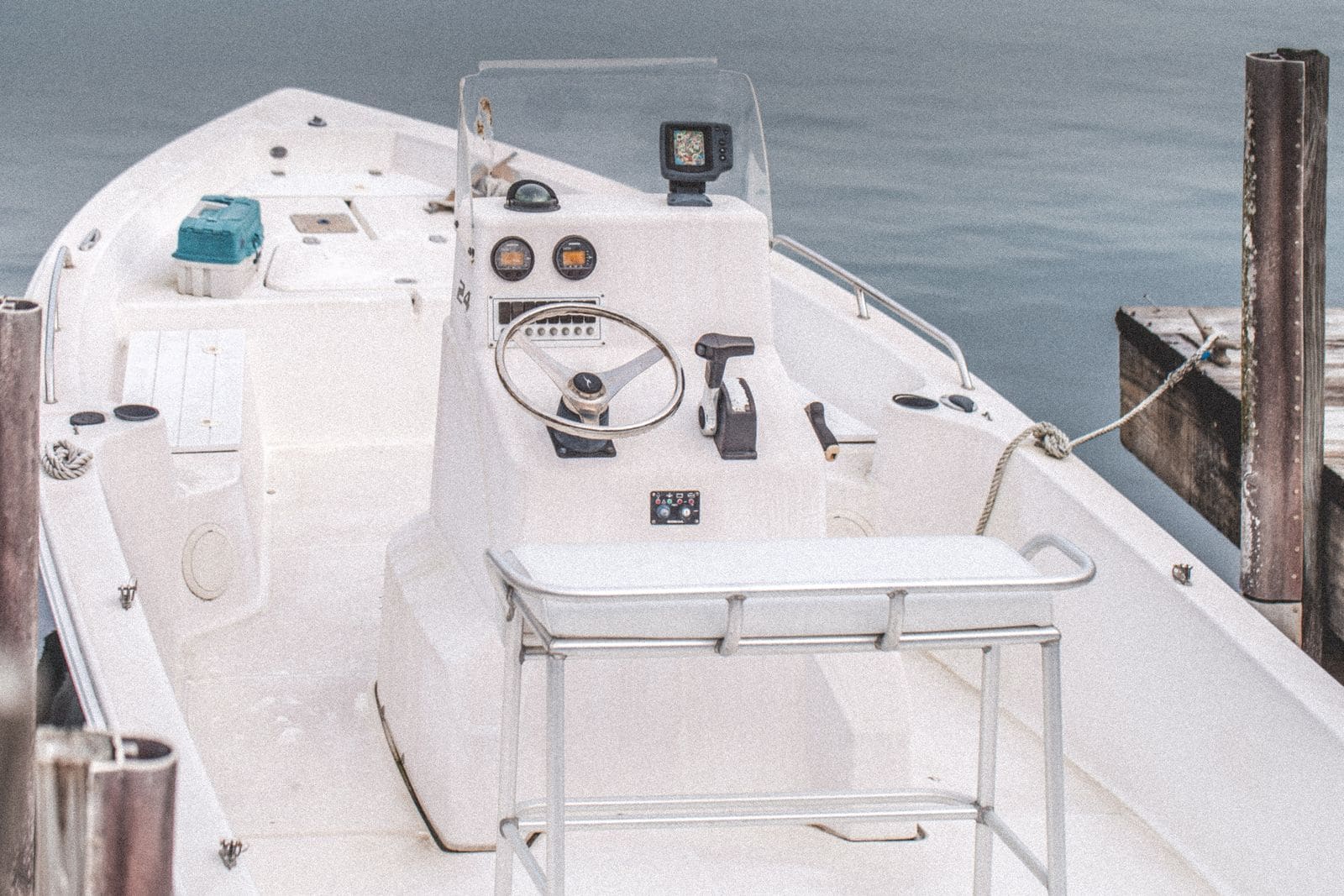
How to Mount Rod Holders, Fish Finders, Cleats and Antennas Without Causing Leaks
Add accessories to your boat the right way, with through-bolts, backing plates, sealed core and proper wire pass-throughs, so every new hole stays dry and strong. Also learn where you should never drill.
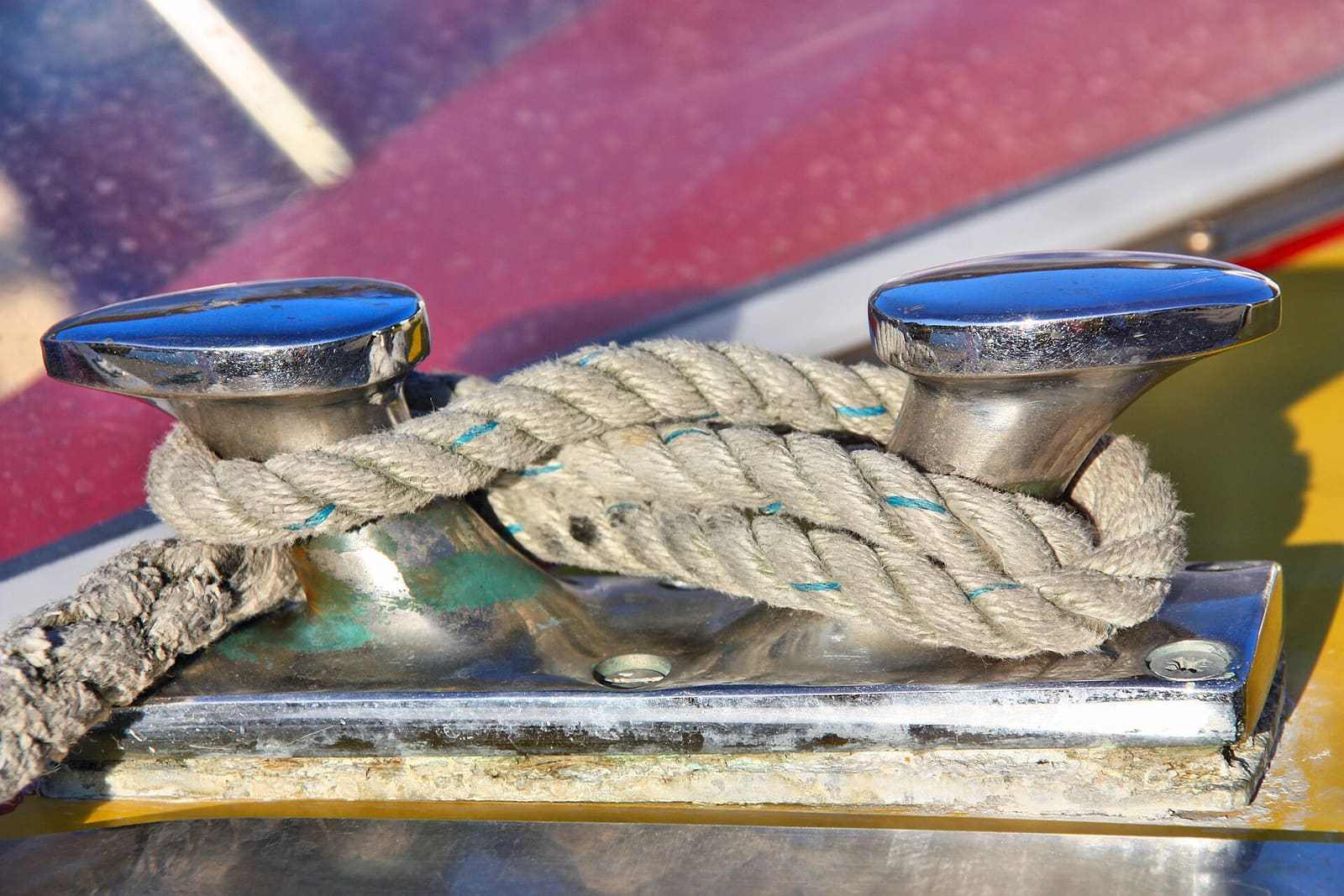
How to Find and Fix Leaking Deck Hardware (Rebedding Cleats, Stanchions and Tracks)
Track down the cleat, stanchion base or track that is dripping into the cabin, then remove it, seal the deck core and bed it again with the right sealant so the leak stops for years instead of weeks. Catching it early protects the deck core from rot.
How to Check a Boat for Transom and Stringer Rot
Many older fiberglass boats have wood inside the transom, stringers and deck, and water that gets in slowly rots it. Learn the tap test, the flex test, how to read a moisture meter and the other warning signs, and why a rotten transom or stringer is a structural job for a pro, not a weekend patch.

How to Care for a Pontoon Deck, Flooring, Fence and Furniture
Keep a pontoon's carpet or vinyl floor clean and dry, find soft spots in the plywood deck before they spread, check fence rails, gates and seat bases, care for furniture vinyl, and cover and store the boat so mildew and sun do not win.

How to Tell if Your Boat's Flotation Foam Is Waterlogged
Learn the signs that the foam under the floor or seats of a small boat has soaked up water, how to check without tearing the boat apart, what the Coast Guard flotation rules mean for you, and why replacing foam is usually a big job for a pro.
How to Inspect a Used Boat Before You Buy
A step-by-step checklist for looking over a used boat, from paperwork and the hull ID number to the transom, engine, compression test, sea trial and trailer. Know what to check yourself, what the red flags mean, and when to pay a marine surveyor.