How to Use a Pump-Out Station: Finding One, Hooking Up and Rinsing the Tank
Find a pump-out near you with state maps and free apps, hook up to the deck fitting without spills, rinse the holding tank, leave the station clean for the next boat and know the rules for no-discharge zones and mobile pump-out boats.
Time
20 min
Shop would charge
$0-25
Applies to
All engines · Cabin cruiser, Yacht, Sailboat, Pontoon
Safety first: Holding-tank waste carries germs, so wear gloves, keep your hands away from your face and wash up afterward. Make sure you open the waste deck fitting, not the fuel or water fill: they often sit close together. Holding tank gases can build up in a closed compartment, so do not use flames or smoke near an open fitting, and ventilate a cabin that smells strongly of sewage.
Owners often ask
- How do I find a pump-out station near me, and do they cost money?
- The pump-out station is running but nothing comes out of my holding tank. Why?
This guide walks you through it. Still stuck? Ask the AI Mechanic about your engine.
Tools
- Deck plate key for your waste fitting
- Disposable nitrile gloves
- Paper towels and a small trash bag
- Flashlight (for night or dark docks)
Parts & supplies
- Spare waste-fitting cap O-ring (if yours is cracked)
- Pump-out nozzle adapter that fits your deck fitting (optional)
Before you start
Know the rules. The EPA says it is illegal to discharge untreated sewage within three miles of shore, and in a no-discharge zone (NDZ) even treated sewage cannot go overboard. Most recreational boats with an installed toilet store waste in a holding tank (a Type III marine sanitation device), so the pump-out station is how that tank gets emptied legally. In an NDZ, the EPA says boats with flow-through treatment devices (Type I or II) must secure them so nothing can go overboard, for example with a non-releasable wire tie on the seacock or a padlocked head door.
State waters can reach farther than three miles. Florida's DEP, for example, says untreated sewage may not be discharged anywhere in Florida state waters, which extend 9 nautical miles off the Gulf coast and 3 off the Atlantic coast, and treated sewage is also banned in certain lakes and rivers. Check your state's rules.
Portable toilet? If your boat has a porta-potty instead of an installed head, you use a dump station, not the pump-out nozzle. North Carolina's Clean Vessel Act page explains the difference: pump-outs empty holding tanks, dump stations empty portable toilets. Oregon Sea Grant notes that dump stations, often built next to a pump-out, also take waste from a bucket or other container, and that wipes and other trash go in a garbage can, never into the dump station. Many are free; some charge a small fee.
Know your boat. Find the waste fitting on deck (it is usually marked "WASTE"), the key that opens it, and any Y-valve or overboard seacock on the head system. If the boat has a tank gauge, check it before you head to the station. See marine head and holding tank for how the system works.
Steps
Pump-outs are at many marinas, fuel docks, public docks and some ramps. A few ways to find one:
- Your state's Clean Vessel Act program. The US Fish and Wildlife Service's Clean Vessel Act program gives grants to state boating agencies to build and run pump-out stations and to tell boaters where they are. Most state boating agencies list or map their stations.
- EPA's NDZ page. The EPA's no-discharge-zone page by state links to many state pump-out and clean boating pages, and has a map of current NDZs.
- Apps. Pumpout Nav is a free app that shows the nearest stations, whether they are working, hours and cost. It was built by the San Francisco Estuary Partnership with Clean Vessel Act money and now covers several areas beyond California, such as Lake Champlain. Coverage varies, so check your area.
- Your marina office or harbormaster. They know which stations are working this week.
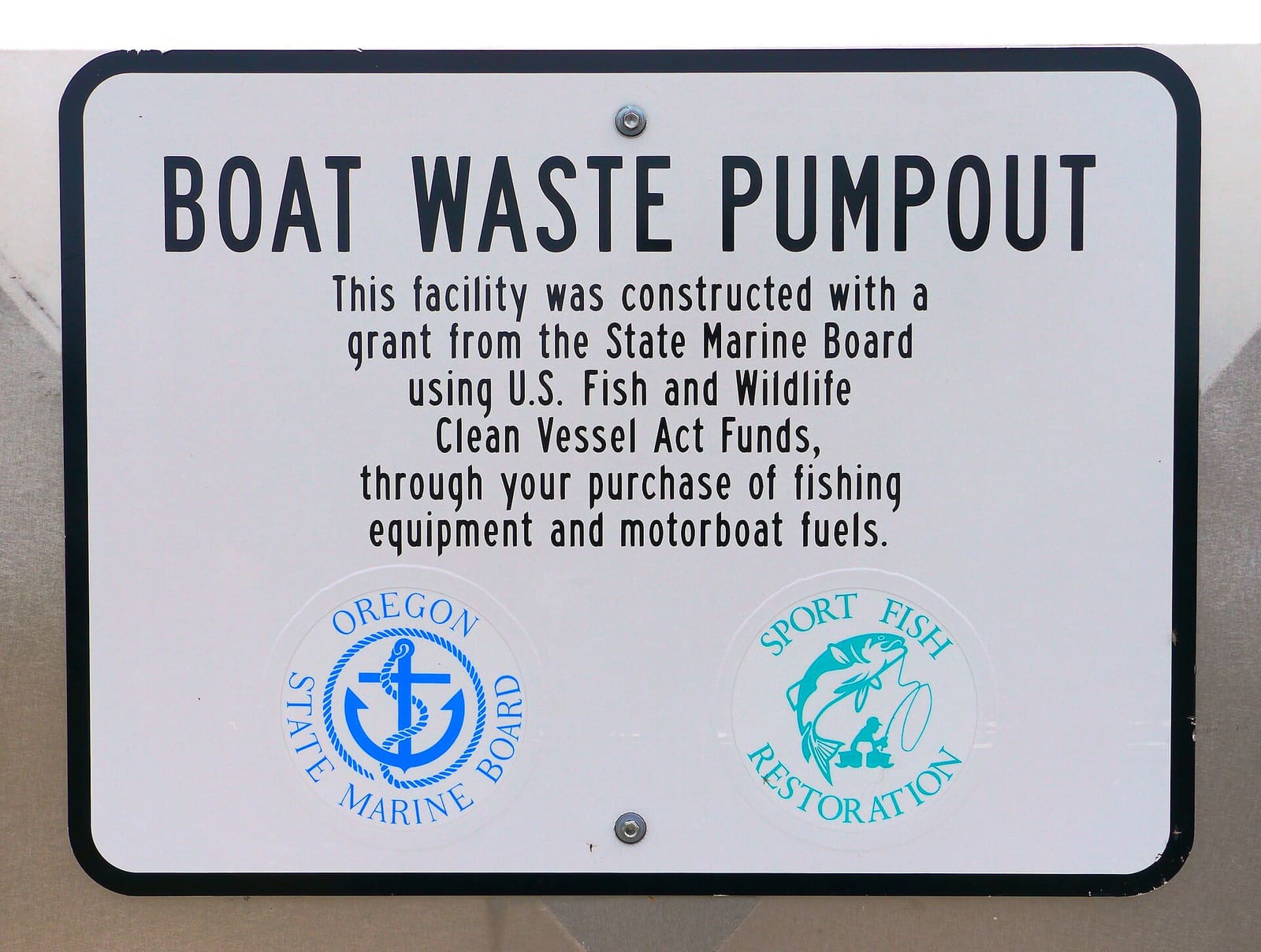
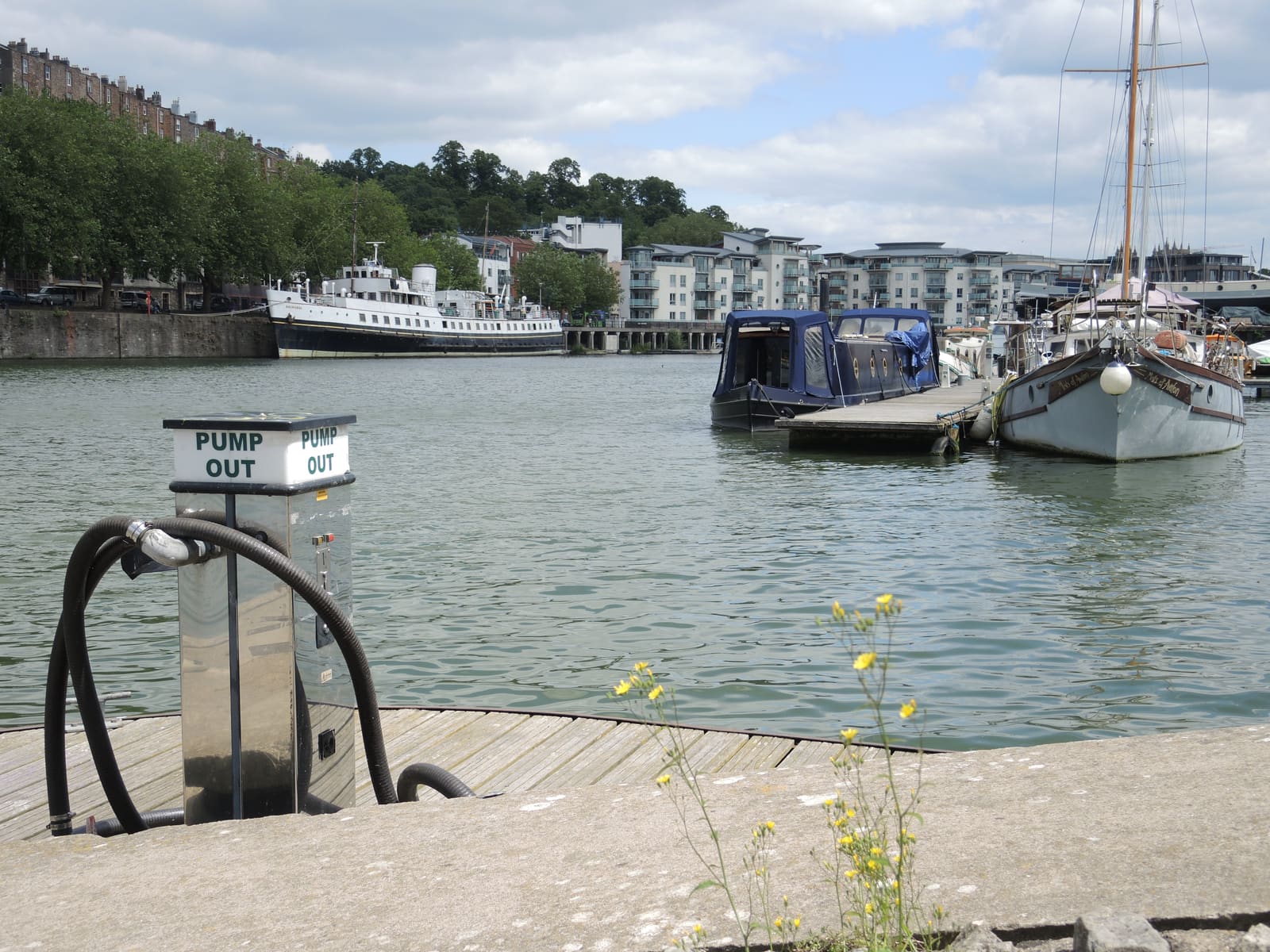
Many stations are paid for with Clean Vessel Act grants, which is why many are free or cheap. Photo: Rick Obst / Wikimedia Commons · CC BY 4.0 Pump out before the tank is full, not after. An overfilled tank can push waste and paper into the pump-out hose and vent line and clog them. On summer weekends the pump-out dock can have a line, so go early or mid-week when you can.
Come alongside, tie up bow and stern, and shut off the engine if you will be there more than a minute or two. Leave room for the next boat. Read the instructions posted on the station; BoatUS notes that most stations have them, and machines differ.
Open the waste cap with the deck key and set it somewhere it cannot roll overboard. Double-check that it is the waste fitting. Look at the O-ring on the cap; if it is cracked, replace it so the cap seals and does not let odor or water in.
Make sure the valve on the pump-out nozzle is closed, then check that the rubber tip fits your deck fitting. BoatUS says that if it does not, you may need an adapter, which stations often have. Some boats carry their own adapter to be safe.
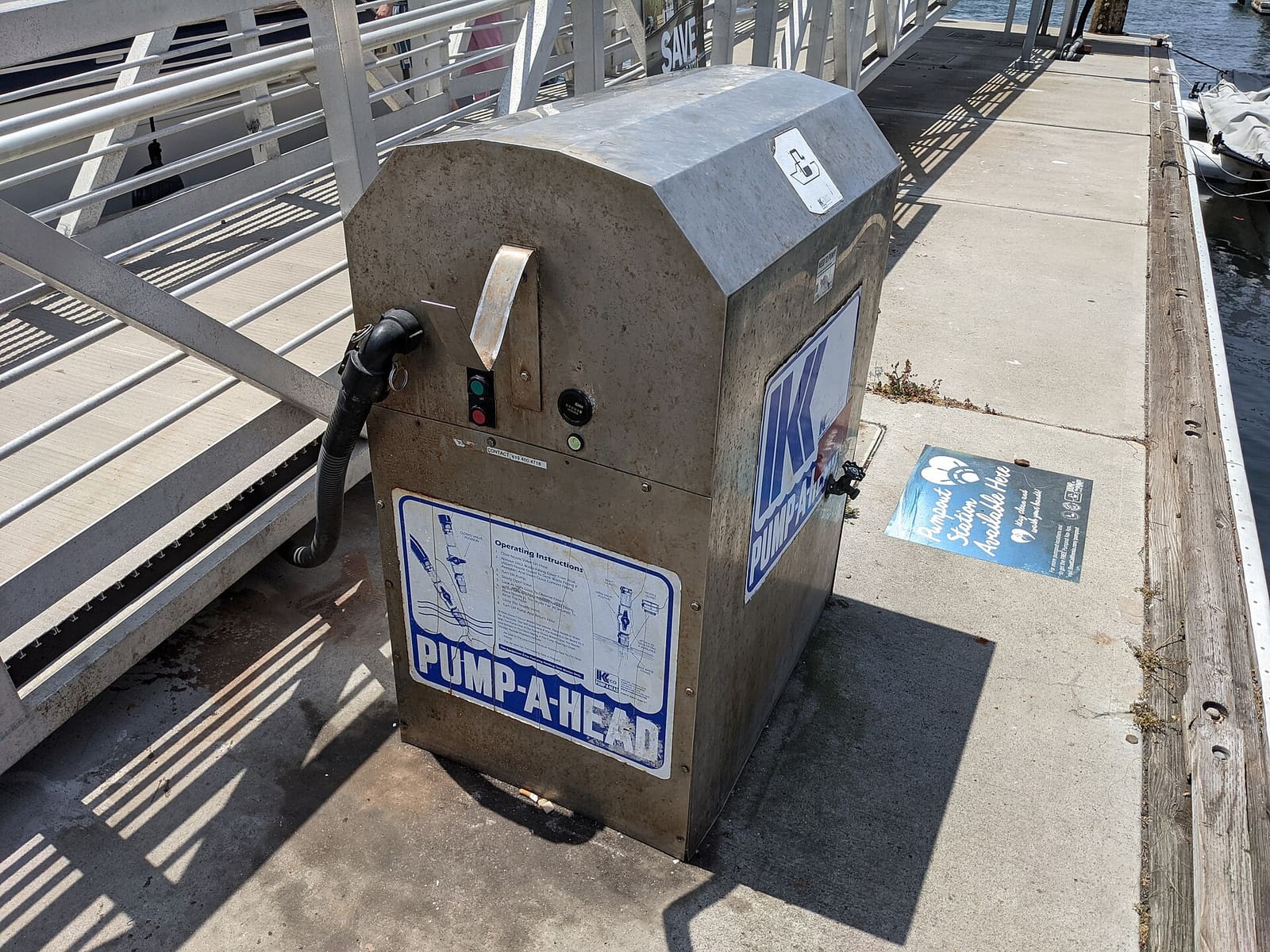
Start the station (usually a button or switch), let it build suction, then press the nozzle firmly into the fitting and slowly open the valve. If the hose has a sight glass, you will see waste moving; if not, listen for the change in sound when the tank empties.
When the tank is empty, BoatUS suggests flushing some fresh water through the head and pumping that out too. Many owners repeat this a couple of times to rinse solids off the tank bottom and the sensor. Some stations have a rinse hose for this; never put a potable water hose into the waste fitting, and never use the station's rinse hose to fill your drinking water tank.
Keep the pump running for a few seconds after the tank is empty so the hose clears, then close the nozzle valve and remove it. If the station has a bucket of clean water or disinfectant, BoatUS describes drawing a little through the nozzle and closing it again, without letting it drip into the water.
Put the cap back on your fitting and tighten it. Coil the hose the way you found it, turn the pump off if it has a switch (some run on a timer and shut off by themselves), and wipe up any drips. Put used gloves and paper towels in the trash, not in the water.
BoatUS says a machine that runs but has little suction usually has lost its prime or has a worn diaphragm. Report it to the marina or the app and go to another station. Do not try to repair it yourself.
The problem is likely on your boat:
- Clogged pump-out hose. BoatUS says this often happens after overfilling or when the boat heels and sloshes waste into the hose. A plumber's snake down from the deck fitting can clear it.
- Clogged vent. If air cannot get into the tank, the station cannot pull waste out, and BoatUS warns the tank can even collapse under vacuum. Check the vent fitting on the hull for a blocked or corroded screen. See holding tank vent filter.
- Tank refills while pumping. BoatUS says this almost always means the overboard seacock at the end of the macerator line is open, letting seawater flow back in. Close it.
Many harbors have pump-out boats that come to you, often on a schedule or by call or VHF. Ask the harbormaster how to request one and whether there is a fee. Have your deck fitting open (or the key ready) and keep the boat steady while they work.
Regular pump-outs, good hoses and a working vent keep odors down. BoatUS notes that old sanitation hoses let odor pass through them, and that household cleaners can stop holding-tank treatments from working. See holding tank deep clean and sanitation hose descaling.
Common mistakes
- Opening the fuel or water fill instead of the waste fitting.
- Waiting until the tank is overfull, then clogging the pump-out hose and vent.
- Opening the nozzle valve before the pump is running or before the nozzle is seated, and spilling.
- Leaving the overboard seacock or Y-valve open, so the tank never empties (and breaking the law in an NDZ).
- Pulling the nozzle out while the hose is still full of waste.
- Using a potable water hose in the waste fitting.
- Leaving the station dirty or the hose on the dock.
When to call a pro
- The tank will not empty at several working stations, even after you snake the hose
- The tank sides suck in, or the tank cracks, during pump-out
- There is a persistent sewage smell in the cabin even after pump-outs
- You want to add a holding tank, change the Y-valve setup or replace sanitation hoses and do not want to do it yourself
- A deck fitting is loose or leaks water below
Tips
- Keep the deck key on a floating key chain, and carry a spare.
- Learn the NDZs where you boat; the EPA map is a quick way to check before a trip.
- Pump out before you put the boat away for the winter so the tank does not sit full.
- If your station is broken, use the app or call the number on the station so it gets fixed for everyone.
- Some marinas include pump-outs in slip fees; ask.
Official references
We read these to write this guide. Your engine's own manual always wins.
- BoatUS – Pumpouts: The Scoop On Poop
- US Fish and Wildlife Service – Clean Vessel Act program
- US EPA – No-Discharge Zones (NDZs) by State
- US EPA – Vessel Sewage Frequently Asked Questions
- Florida DEP – Clean Vessel Act Grant Program
- North Carolina Wildlife Resources Commission – The Clean Vessel Act
- Oregon Sea Grant – Boater Outreach (pumpouts and porta-potty dump stations)
- Lake Champlain Sea Grant (UVM) – Sewage Pumpout Navigation App
Safety: BoatMend is for information only and does not replace a certified marine technician. You are responsible for your safety and your boat. Read the full disclaimer.
Last updated 2026-10-25
Related guides
Marine Head and Holding Tank Care: Odors, Clogs, Pump-Outs and Winterizing
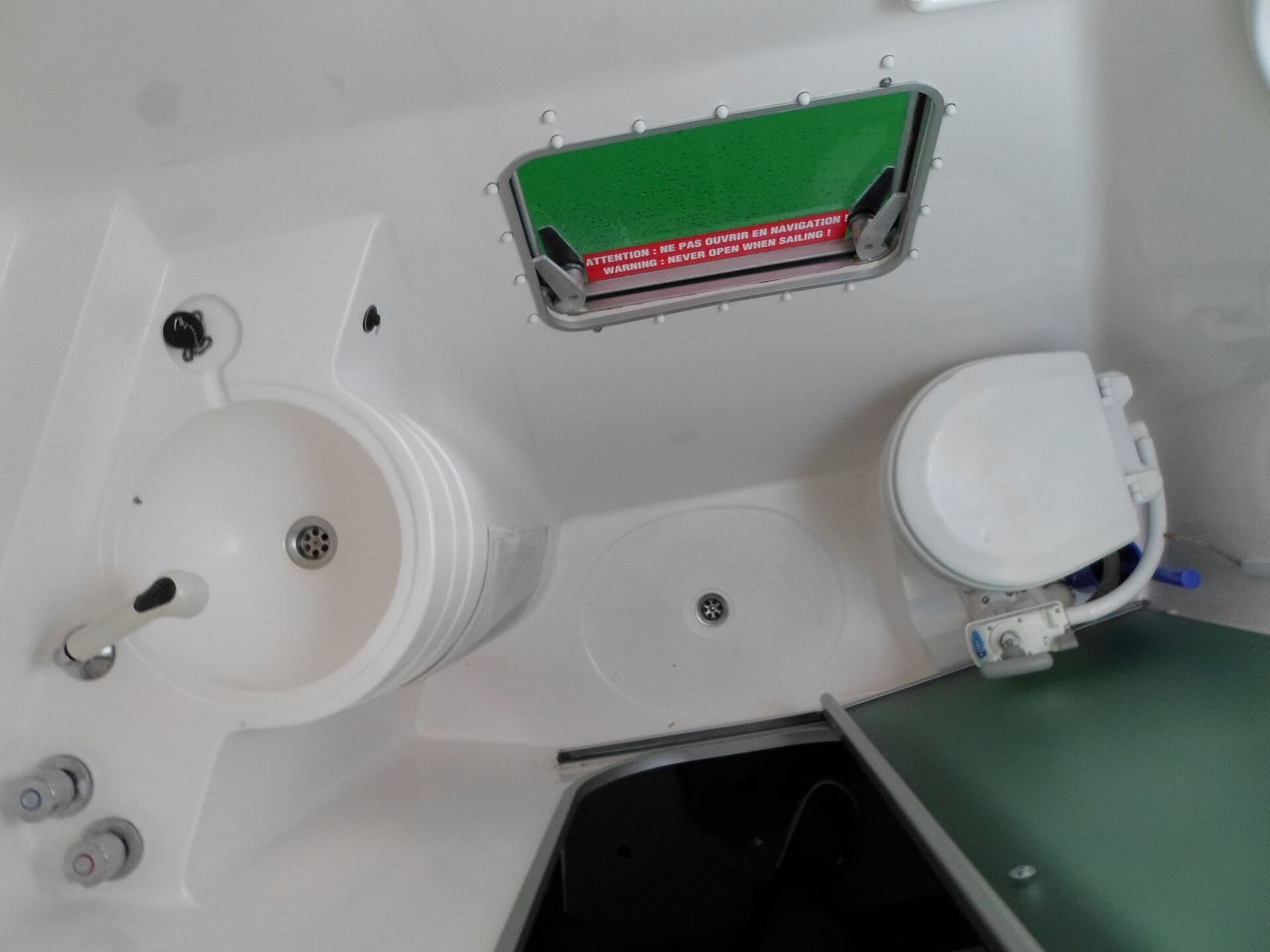
Keep your boat's toilet and holding tank working and odor-free, clear common clogs, pump out the right way, and winterize the system. Also covers the Y-valve and the federal no-discharge rules every owner with a head needs to follow.
How to Deep Clean a Boat Holding Tank
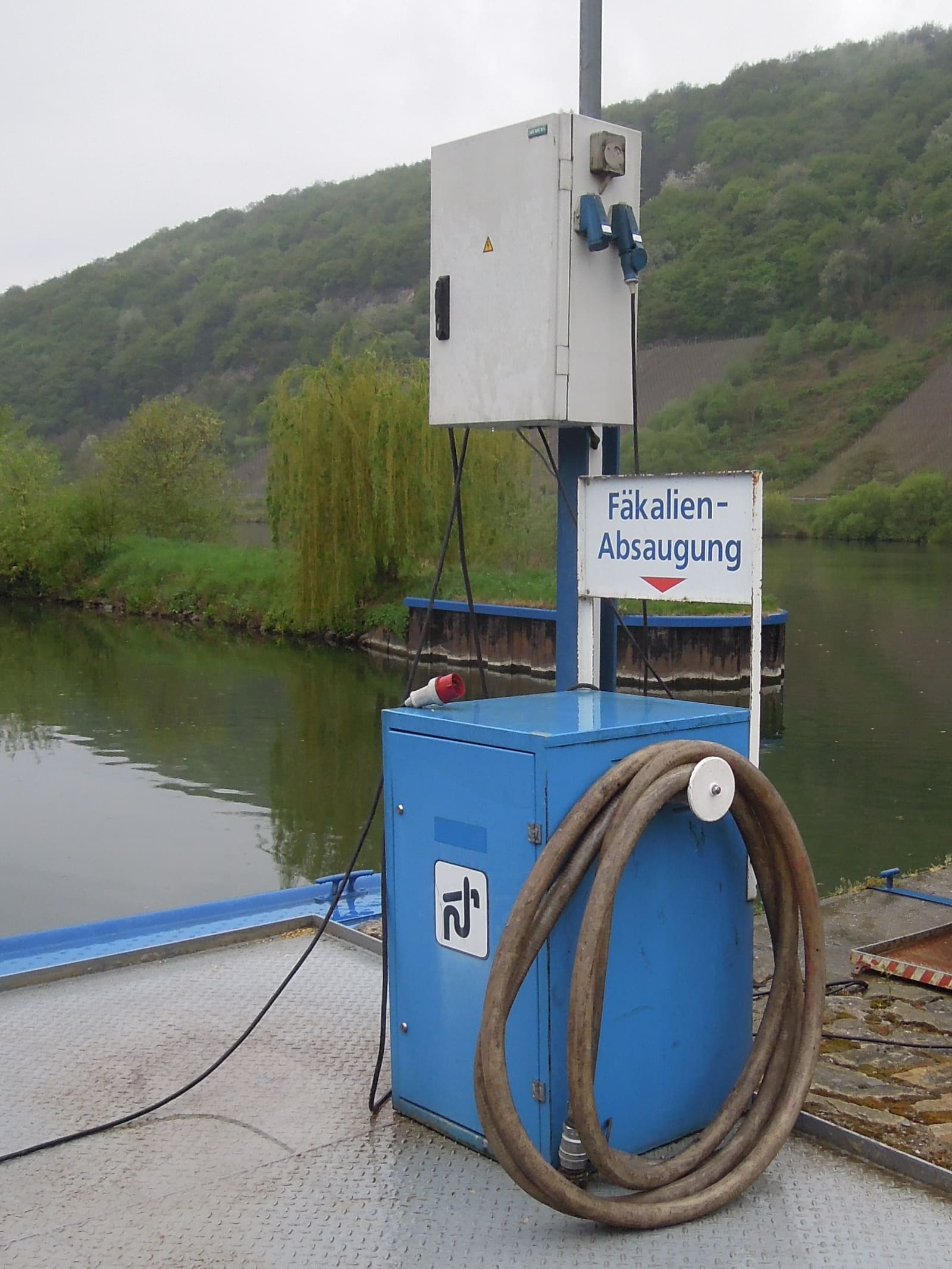
Clear the buildup that causes odors, slow pump-outs and false tank-level readings with a twice-a-year deep clean: pump out, rinse, soak with a tank-safe cleaning mix, slosh, pump out and rinse again, then inspect the tank and fittings while they are clean.
How to Check a Holding Tank Vent and Replace the Vent Filter
A blocked holding tank vent makes the head gurgle, pressurizes the tank every flush and can collapse it at the pump-out dock. Learn the warning signs, how to clear the vent fitting and hose, when and how to replace the carbon vent filter, and how to keep insects and overfills from plugging it again.
Holding Tank Level Monitors: Fix, Calibrate or Upgrade Your Tank Gauge
Find out why your holding tank gauge reads wrong, clean or calibrate the sensor, and choose a better internal or external monitor so you never overfill the tank and push sewage up the vent.
Smelly Head Hoses: How to Test, Choose and Replace Sanitation Hose
Find out if your toilet and holding-tank hoses are the source of that sewage smell with a simple hot-rag test, then pick the right sanitation hose, route and clamp it properly, and get rid of the old hose cleanly.
How to Prevent and Remove Scale in Marine Toilet Discharge Hoses
A head that gets harder to pump, flushes slowly or lets water creep back into the bowl often has mineral scale building up inside the discharge hose. Learn a simple monthly vinegar routine, when to use a maker-approved descaler, what never to pour in, and when replacing the hose or switching to a freshwater flush is the real fix.