Marine Diesel Turbocharger Care: Warm-Up, Cool-Down and Simple Checks
A turbocharger needs little attention, but the attention it needs matters. Learn how to warm up and cool down a turbo diesel, keep its oil and air clean, track boost, spot leaks and salt corrosion early, and know when a turbo needs a professional.
Time
45 min
Shop would charge
$200-3500
Applies to
Marine diesel
Safety first: A turbo spins tens of thousands of rpm and its housing gets hot enough to burn skin and ignite oil. Never put a hand or tool near the air intake or turbo while the engine is running; remove intake hoses and filters only with the engine off and cool. BoatUS warns that an oily, dirty or cracked turbo insulation blanket is a fire hazard. If an engine ever keeps racing after you press stop (a "runaway," which can happen when a failing turbo leaks oil into the intake), get people clear, put on life jackets and call for help. A runaway is stopped by starving it of air (some engines have an emergency air shutoff); your engine manual describes how for your installation, and it's worth asking your diesel mechanic to show you before you ever need it. Never use your hand. Afterwards, do not restart it. For fire or an emergency, call the Coast Guard on VHF 16 or 911.
Owners often ask
- How long should I idle my turbo diesel before shutting it off?
This guide walks you through it. Still stuck? Ask the AI Mechanic about your engine.
Tools
- Flashlight or headlamp and an inspection mirror
- Screwdrivers or nut drivers for the air filter housing and intake hose clamps
- Notebook or the BoatMend log for boost and rpm readings
- Shop vacuum with a soft brush nozzle (for the turbine check during elbow service)
- Nitrile gloves and safety glasses
Parts & supplies
- Air filter element specified in your manual (or the cleaning kit for a washable filter)
- Engine oil and oil filter to your manual's diesel specification
- Turbo cleaner approved by your engine maker (only if your manual calls for turbo washing)
Before you start
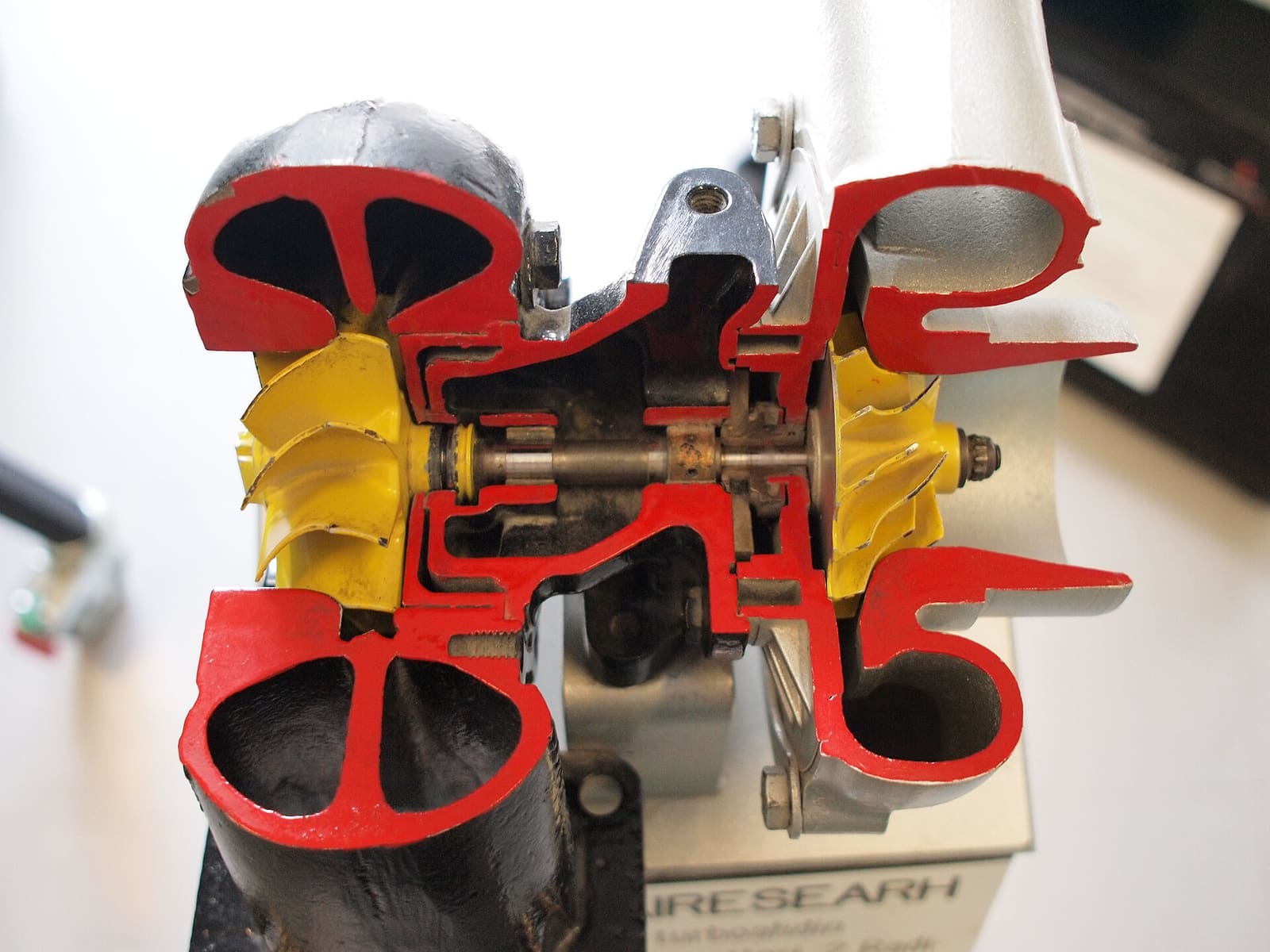
How it works: exhaust gas spins a turbine wheel, which drives a compressor wheel on the same shaft. The compressor pushes extra air into the engine (often through an intercooler or aftercooler), so the engine can burn more fuel and make more power. Practical Sailor notes that on small diesels the turbo works whenever the engine runs, while bigger engines may use a wastegate to control boost. The turbo's shaft floats on a thin film of engine oil.
What it needs: Power & Motoryacht sums it up: clean air, clean oil, regular hard use, a gentle shutdown, and a look now and then. Typical items are an air filter about every hundred hours or every year, an internal cleaning every couple of hundred hours on engines whose makers call for it, and a rebuild after thousands of hours. The exact schedule is in the maintenance pages of your engine's operation manual; read those pages before you start.
Do not forget the generator. Many larger gensets have turbo diesels under the sound shield and need the same care.
Steps
Start the engine and let it idle briefly so oil pressure comes up and oil reaches the turbo bearings. Then run at moderate rpm and light load until the engine reaches normal temperature, as your manual describes. Avoid revving a cold engine hard in neutral or pushing straight to full throttle from a cold start.
Turbo diesels do not like endless idling and light loads. A yard manager quoted by Power & Motoryacht says the biggest turbo problem he sees is owners who never use them. When conditions allow, run the engine up to its full rated rpm for a short time each outing. PassageMaker adds that this also tells you whether the engine can still reach its rated rpm; if it cannot, it is overloaded and you should find out why.
After running hard, let the engine idle for about five minutes before switching it off (Power & Motoryacht's guidance; Westerbeke says 5 to 10 minutes at no or light load for turbo generators). A turbo that is still spinning fast loses its oil supply the moment the engine stops, which wears the bearings, and the heat can bake the leftover oil into deposits. A slow run through the no-wake zone and docking time count toward the cool-down. Check your own manual's guidance.
Change the oil and filter on your manual's schedule with oil that meets its diesel specification (see the diesel oil and filters guide). The turbo's bearings run on engine oil, so old, sooty or fuel-diluted oil hits the turbo first. An annual oil analysis can show early wear. Watch for oil leaks at the turbo's oil feed and drain lines.
With the engine off, open the air filter housing and look at the element. A clogged filter starves the engine of air. BoatUS warns it causes black smoke, overheating and power loss, and on a turbo engine can damage the oil seals. Clean or replace it as your manual says, at least once a year. Make sure nothing (rags, tools, bits of filter) is left in the intake.
If your engine has a boost gauge or shows boost on its display, write down boost at several rpm settings when the boat is clean and running well, along with the sea state. A Yanmar technical specialist told Power & Motoryacht that boost is the best tool for judging a turbo, and that a drop of about 10 percent from your normal reading (with a clean bottom and clean filters) means the turbo needs cleaning. Black smoke alone can also come from a dirty air filter, so boost readings are more useful.
With the engine off, look all around the turbo and its hoses for:
- oil on the outside of the turbo or inside the intake hose
- water dripping onto the turbo, or rust and salt crust on it
- soot around flanges (an exhaust leak)
- a rusty wastegate actuator rod
Power & Motoryacht describes a "failed" turbo that was really a wastegate rod rusted by saltwater dripping on it. Find and fix the drip, usually a raw-water hose or fitting above. Lift the insulation blanket where you can to check underneath, and replace a blanket that is oily, torn or cracked.
With the air filter or intake hose off, shine a light at the compressor wheel. Its blades should be clean and sharp right to the tips. Rolled, nicked or bent blades mean something got in and the turbo needs a professional; don't just wash it. Oil inside the compressor housing or intake also needs a mechanic. BoatUS adds that, with the engine off, a turbo that has play or does not turn easily needs replacing; if you check this, touch only the center nut gently, never the fragile blades. Never put anything near the wheel with the engine running.
Some makers, Yanmar among them, specify a turbo wash: a water-based cleaner sprayed slowly into the air intake in small bursts with the engine running at the rpm the manual specifies, usually in neutral. It cleans soot from the compressor, intake and turbine. Use only the cleaner and method your manual names, go slowly, and never pour a large amount in at once. If you are not comfortable doing it, let your mechanic do it at the next service.
When the exhaust elbow or mixing elbow is off for inspection, look into the turbine outlet. A light coat of fine ash is normal; Power & Motoryacht suggests removing it with a vacuum without touching the blades. Oily clumps, rust or moisture mean raw water or oil is getting where it shouldn't, and the turbine blades should not be damaged or rubbing. Check the elbow itself for rust and clogging at the same time (see the exhaust elbow guide).
Keep the engine room dry and clean so drips are easy to spot. Fix raw-water leaks right away, keep hatches and vents from letting spray land on the engine, and touch up rust before it spreads. The late Richard Thiel, a former diesel mechanic writing in Power & Motoryacht, noted that big diesels can draw salt spray in with their combustion air; if you regularly find a film of fine salt on the engine, ask a mechanic about intake baffles or demisters for the engine-room vents. He also points out that hot engine-room air holds less oxygen, so blocked or undersized vents cost power, and any changes to engine-room ventilation should follow the engine maker's air requirements. Water in the exhaust can also come from backflow, so follow good shutdown habits and keep the exhaust system in good shape.
Record boost readings, filter changes, cleanings and anything you saw in BoatMend. Comparing year to year is how you catch a slowly failing turbo early.
Common mistakes
- Shutting down straight from cruise or full throttle and then walking away from a hot turbo.
- Idling for hours, or running only at low rpm, so the turbo and engine never get worked properly.
- Washing a turbo that really has damaged blades, which no cleaner will fix.
- Pouring turbo cleaner in too fast, or using a product your maker does not approve.
- Leaving a rag or loose filter part in the intake after service.
- Ignoring a slow drip of raw water onto the turbo or wastegate.
- Running with a soaked, torn or oil-stained turbo blanket.
When to call a pro
- Boost stays low after a clean bottom, clean filters and a turbo wash
- Rolled or damaged compressor blades, rubbing, or noticeable shaft play
- Oil in the intake, the compressor housing or the turbine outlet, or lots of blue smoke
- A new whistle, siren or grinding noise from the turbo
- Unusual overheating with no cooling-system cause
- Any runaway, or water found in the turbine
- Rebuilds and variable-geometry turbos: Power & Motoryacht notes these are hard to rebuild and often replaced
Tips
- Add boost readings to your regular log entries; it takes seconds and builds the baseline you need.
- Run each engine and the generator under real load once in a while to see if temperatures and boost are where they should be.
- Keep a spare air filter on board for long trips.
- A well-used, well-cared-for turbo usually lasts a long time; Power & Motoryacht quotes a shipyard manager who sees more turbo trouble from outside causes like saltwater leaks than from mechanical failure.
Official references
We read these to write this guide. Your engine's own manual always wins.
- Power & Motoryacht – How To Make Sure Your Turbo Runs Forever
- BoatUS – Maintaining Marine Diesel Engines
- Westerbeke – Maintenance FAQ
- Practical Sailor – PS Advisor: Tangled Up in Turbochargers
- 48° North – Diesel Deep Dive: Is Your Engine Sending Smoke Signals?
- PassageMaker – Marine Diesel Maintenance: Prevent Engine & Generator Heat
- Power & Motoryacht – The Simple Truth About Marine Engine Maintenance
Safety: BoatMend is for information only and does not replace a certified marine technician. You are responsible for your safety and your boat. Read the full disclaimer.
Last updated 2026-10-25
Related guides
Marine Diesel Service: Oil Change, Fuel Filters and Bleeding Air
Change the oil and oil filter, replace the primary and secondary fuel filters, and bleed air from the fuel system on a Yanmar, Volvo Penta, Beta, Cummins or similar marine diesel. These three skills cover most routine diesel care and can get you out of trouble when the engine dies on a passage.

Diesel Exhaust Smoke: What Black, White and Blue Smoke Mean
Learn to read the color of your marine diesel's exhaust and run the simple checks that go with each color, from a dirty air filter or fouled prop to a worn mixing elbow or head gasket. Catching smoke early can save an engine.

Engine and Gearbox Oil Analysis: How to Take a Clean Sample and Read the Report
A lab oil analysis is like a blood test for your engine, transmission or lower unit. Learn how to pull a clean sample, what the lab measures, what wear metals, coolant, sea water and fuel in the oil can mean, and why the trend over several samples matters more than any one number.
Closed-Cooled Gas Engines: Why the Exhaust Elbows Still Need Checking
Closed (freshwater) cooling protects the block, but on gas sterndrives and inboards the exhaust elbows or risers, and on some systems the manifolds, are still cooled by raw water. Learn which parts still see salt or lake water, the warning signs, what the engine makers and BoatUS say about intervals, and how to inspect and look after them.
Diesel Aftercooler (Charge-Air Cooler) Care: Why It Needs Service and Warning Signs
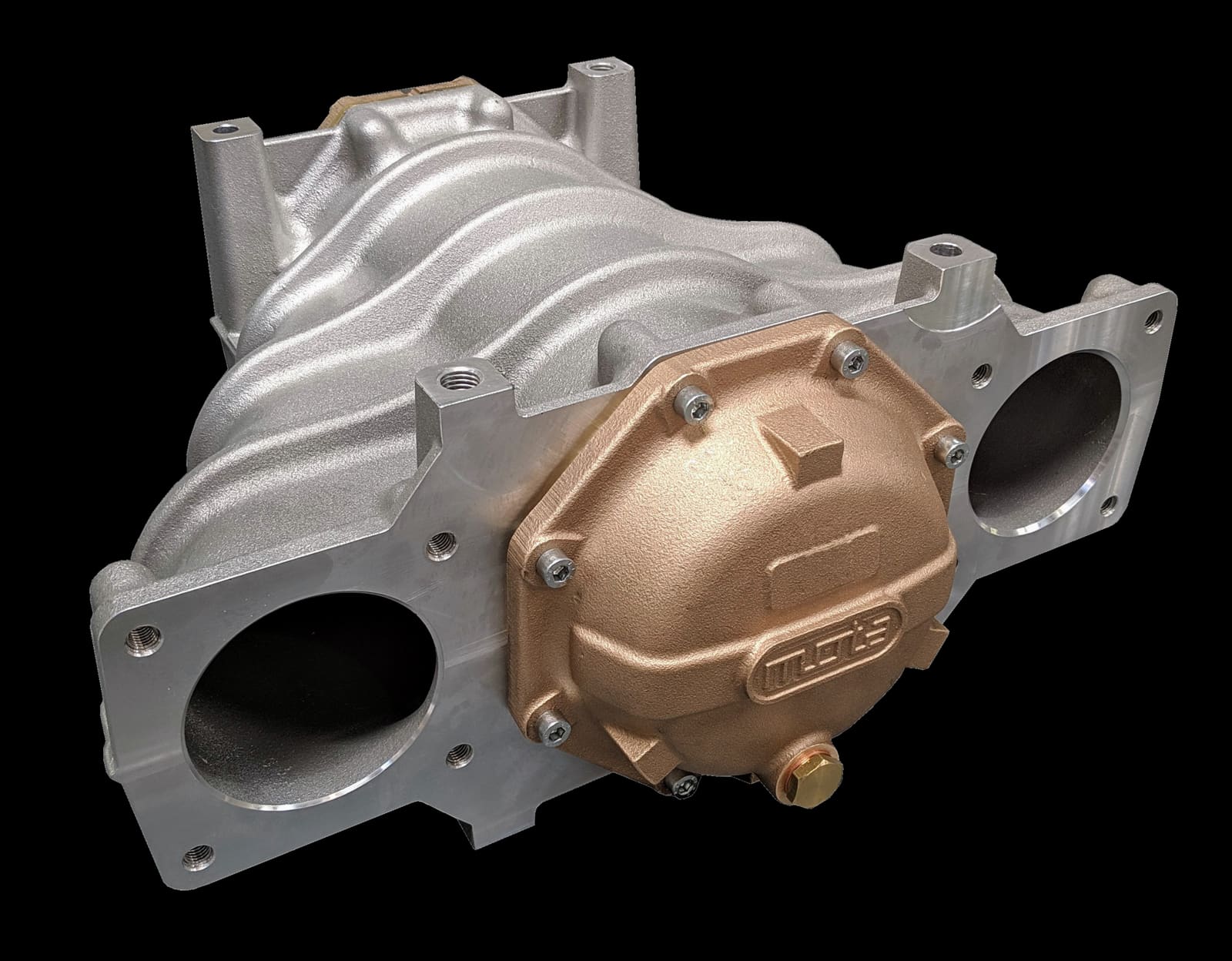
Many turbo diesels cool their intake air in an aftercooler with raw seawater running through it. If that cooler corrodes through, seawater can reach the cylinders and wreck the engine. Learn how to tell which type you have, the warning signs, the owner checks, and why the periodic removal and cleaning is a job for a pro.

Engine Overheating - Troubleshooting Guide
Work through the most likely causes of a hot engine or overheat alarm, from a blocked water intake to a worn impeller or stuck thermostat. Acting fast and in the right order can save your engine and often gets you home without a tow.