Diesel Aftercooler (Charge-Air Cooler) Care: Why It Needs Service and Warning Signs
Many turbo diesels cool their intake air in an aftercooler with raw seawater running through it. If that cooler corrodes through, seawater can reach the cylinders and wreck the engine. Learn how to tell which type you have, the warning signs, the owner checks, and why the periodic removal and cleaning is a job for a pro.
Time
45 min
Shop would charge
$600-3000
Applies to
Marine diesel
Safety first: A leaking aftercooler can let seawater into the cylinders. Water does not compress, so starting or even cranking an engine with water in a cylinder can bend a connecting rod or crack the block. If you find milky oil, a rising oil level, water in the intake, or the engine cranks slowly or stops suddenly while cranking, do not keep trying to start it. Leave it and call a marine diesel mechanic. Hot engine parts burn, so do your checks with the engine off and cool. If the boat is taking on water, call Sea Tow / TowBoatUS, or the Coast Guard on VHF 16 (911 in an emergency).
Owners often ask
- How often does the aftercooler on my Cummins need to be serviced?
This guide walks you through it. Still stuck? Ask the AI Mechanic about your engine.
Tools
- Flashlight or headlamp and an inspection mirror
- Clean paper towel or rag for checking the dipstick
- Infrared thermometer (optional)
- Notebook or the BoatMend log for boost, temperatures and service dates
- Oil sample kit (optional, for oil analysis)
Parts & supplies
- None for the owner checks. For a shop service: new O-rings and gaskets for the cooler, zinc anodes if your cooler has them
Before you start
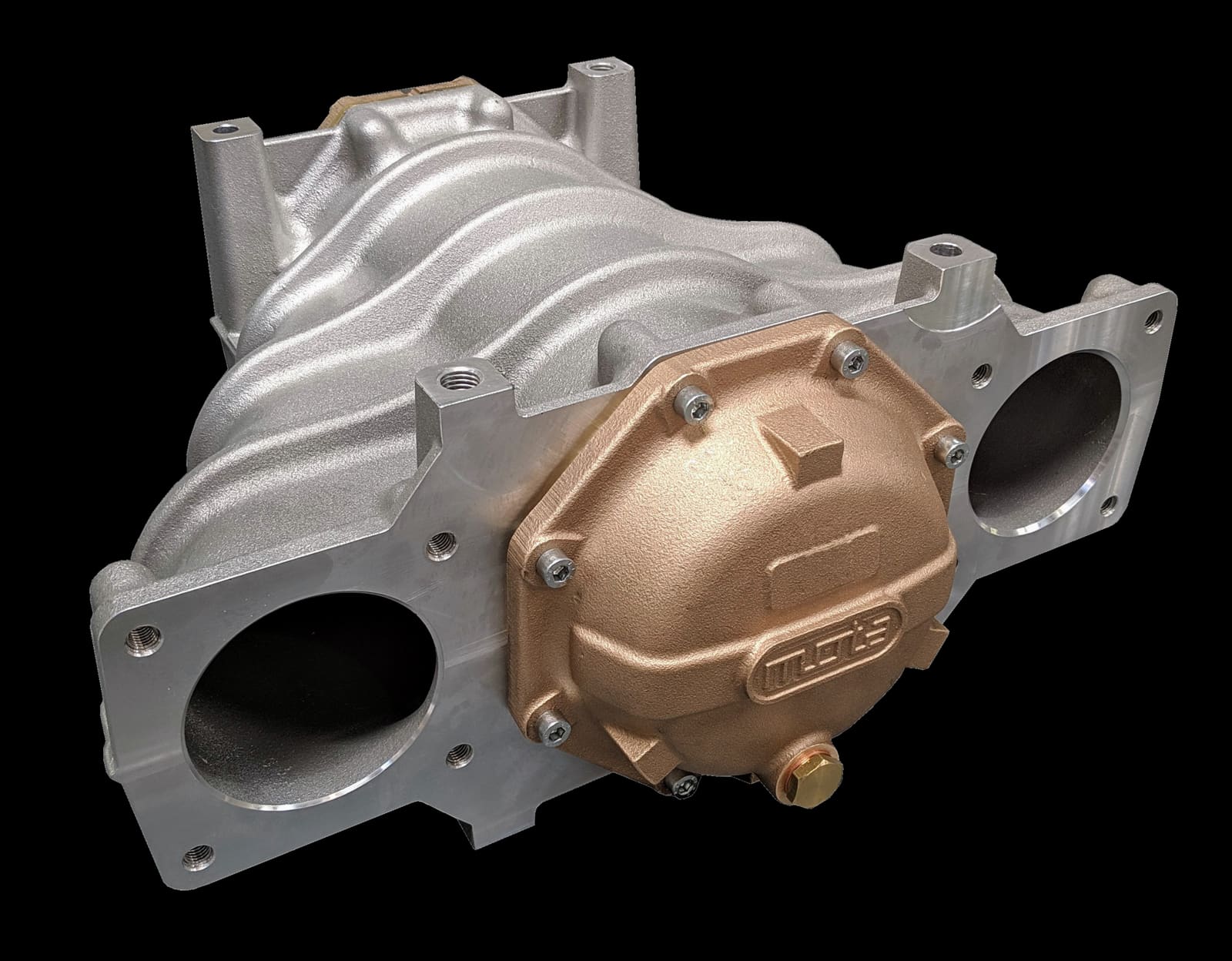
What an aftercooler does: the turbo heats the air as it compresses it. Cooler air is denser, so many turbo diesels pass it through a charge-air cooler before it enters the engine. Power & Motoryacht explains that "charge-air cooler" covers both intercoolers and aftercoolers. Inside is a core of thin tubes and fins: intake air flows around the fins while a cooling liquid flows through the tubes.
Why it needs regular service: how the cooler is cooled makes all the difference.
- Raw-water (seawater) cooled: seawater runs through the tubes. Over time it corrodes the metal and welds, scale builds up inside the tubes, and the air side gets coated in oily grime. Power & Motoryacht quotes a mechanic warning that if one of these coolers ruptures, seawater goes into the engine.
- Coolant (antifreeze) cooled: on many MTU engines, for example, the cooler runs on the engine's coolant. Yachting notes these can often go longer between services, though the extra heat may wear out the coolant sooner.
- Air-to-air: some engines use outside air. No seawater inside, but the fins still need to stay clean.
Intervals: follow your engine maker's schedule. As a general reference, the mechanics quoted by Yachting clean and test the seawater side of heat exchangers and auxiliary coolers every two years, and a mechanic quoted by PassageMaker sends heat exchangers and charge-air coolers out every three years. Yachting adds that Cummins aftercoolers are especially sensitive to delayed service. Warm salt water and boats that sit a lot are hardest on them.
This guide covers what you can check yourself and what to expect when a pro services the cooler. Removing, cleaning and pressure-testing the core is not a beginner job; the engine is at stake if it goes back together wrong.
Steps
Look in your operation manual's cooling-system diagram, or ask your dealer: does your engine have an aftercooler, and is it cooled by raw water, coolant or air? Find it on the engine. It is usually a finned box or tube between the turbo outlet and the intake manifold, sometimes built into the manifold, with raw-water or coolant hoses at its ends.
Check your log, the previous owner's records and any shop invoices. If you cannot find proof the cooler has been serviced, and it is raw-water cooled, treat it as overdue and schedule a service. Yachting points out that postponing service often leads to corroded parts and seized bolts, which makes the eventual job more expensive.
Yachting notes that charge-air cooler problems usually come on gradually: dirty fins on the air side or scale on the water side slowly reduce power and efficiency. Signs include lower top speed or rpm, more black smoke, higher exhaust temperatures, or boost that does not match your baseline (see the turbo care guide). Rule out a fouled bottom and dirty filters first.
Pull the dipstick before each trip. Milky, tan or gray oil, droplets on the stick, or an oil level that keeps rising can mean seawater is getting in. Stop and call a mechanic. Do not run it "to see if it clears."
Power & Motoryacht's sources say scheduled maintenance plus periodic oil samples protect against a cooler failure surprising you. A lab can flag traces of seawater (often seen as sodium) in the oil before you can see it. See the oil sample analysis guide. Engine-maker labs are not only for their own brand: Caterpillar's S·O·S fluid analysis, for example, tests oil, coolant and fuel from other makers' engines too, through its dealers, with do-it-yourself sample bottles available. On engines whose aftercooler is cooled by engine coolant, a coolant sample can also show trouble. What matters most is sampling at regular intervals so the lab can spot a change in the trend.
A mechanic quoted by Yachting warns that an internal leak can let water collect in a cylinder overnight. If an engine bogs, cranks unusually slowly, or stops abruptly while cranking, do not assume the batteries are weak, and do not keep cranking. Have a mechanic check for water in the cylinders first.
Look at the cooler housing and end caps for:
- white or green crust, weeping or drips at the end caps or hose connections
- bubbling paint or heavy corrosion where different metals meet
- loose or cracked hoses and rusty clamps
- zinc anodes, if your cooler has them; check and replace them along with the heat exchanger zincs, as your manual says
Any seawater leak on the outside means the seals or metal are failing, so book a service soon.
A clogged sea strainer or a failed impeller starves the whole raw-water circuit, and impeller pieces can lodge in coolers. Clean the strainer, change the impeller on schedule, and if an impeller loses blades, track down every piece (see the raw-water strainer and diesel impeller guides). If your boat has a freshwater flush system and your engine maker approves it, flushing salt out before the boat sits can help.
Tony Athens of Seaboard Marine, a Cummins repower specialist, writes that the air side of an aftercooler shows what is going on in the engine room: exhaust leaks, saltwater spraying or dripping near the air intake, oil mist and failed impellers all leave their marks. Keep the engine room clean, fix exhaust and raw-water leaks right away, and keep the air filter in good shape.
On schedule, or sooner if you see warning signs, a mechanic will usually:
- remove the cooler from the engine and mark the end caps so they go back the same way
- pull out the core and clean the air side with a degreaser (Athens advises against acid on the air side) and the tubes by rodding or a descaling bath
- inspect the housing and core for corrosion, and repair or replace parts as needed
- pressure-test the core before reinstalling it, so a leak is found on the bench instead of in your engine
- reassemble with new O-rings and gaskets, using a lubricant or anti-seize on the joints so it comes apart easily next time
Yachting notes a complete cleaning of either side needs a chemical bath that only a professional should do. Expect the cooler to be off the engine for a few days if it goes to a radiator or cooler shop.
Check the end caps and hoses for drips on the first run, then again after a few hours. Compare boost, top rpm and temperatures with your baseline. Check the oil level and condition, and consider another oil sample after some hours to confirm the oil is clean.
Record the date, engine hours, what the shop found (corrosion, scale, pressure test result) and the next due date in BoatMend. A shop report that says "heavy corrosion" is a reason to shorten the next interval.
Common mistakes
- Not knowing the engine has an aftercooler at all, so it never gets serviced.
- Stretching the interval on a raw-water cooled aftercooler because the engine "runs fine." They usually fail without much warning.
- Ignoring a slowly rising oil level or a milky dipstick.
- Cranking over and over when an engine bogs or stops suddenly on startup.
- Spraying the fins hard with a pressure washer, which bends them. Yachting suggests compressed air or a gentle water spray for light dirt on the air side.
- Reinstalling a cleaned core without a pressure test, or reusing flattened old O-rings.
- Leaving a raw-water drip or exhaust leak near the air intake unfixed.
When to call a pro
- Any sign of water in the oil, the intake or the cylinders
- The engine bogs, cranks slowly or stops abruptly during cranking
- External seawater leaks or heavy corrosion on the cooler
- Gradual power loss that is not explained by the bottom, prop or filters
- The cooler is due or overdue for removal, cleaning and pressure testing
- The engine is under warranty or electronically controlled
Tips
- Have the heat exchanger, aftercooler, oil coolers and gear cooler serviced together; the parts and labor overlap.
- Ask the shop for photos of the core before and after cleaning. They tell you a lot about how fast your boat's water fouls it.
- Keep a set of cooler O-rings and gaskets on board if you cruise far from dealers.
- If you buy a used diesel boat, ask for proof of aftercooler service; it is a common and expensive item to find neglected.
Official references
We read these to write this guide. Your engine's own manual always wins.
- Power & Motoryacht – How to Maintain Your Boat's Cooling System
- Yachting – Cooling System Tips
- Yachting – The 10 Most Common Diesel Engine Issues and Fixes: Part 1
- PassageMaker – Marine Diesel Maintenance: Prevent Engine & Generator Heat
- Seaboard Marine – Cummins Marine Aftercooler Maintenance
- Boating Magazine – How to Prevent Hydrolock
- Caterpillar – S·O·S Services Fluid Analysis
Safety: BoatMend is for information only and does not replace a certified marine technician. You are responsible for your safety and your boat. Read the full disclaimer.
Last updated 2026-10-25
Related guides
Marine Diesel Turbocharger Care: Warm-Up, Cool-Down and Simple Checks
A turbocharger needs little attention, but the attention it needs matters. Learn how to warm up and cool down a turbo diesel, keep its oil and air clean, track boost, spot leaks and salt corrosion early, and know when a turbo needs a professional.
Diesel Heat Exchanger Service: Zincs, End Caps, Tube Cleaning and Pressure Testing
Your diesel's heat exchanger moves engine heat into the seawater, and it slowly fills with scale, broken zinc pencils and impeller pieces. Learn how to check the zincs, open the end caps, clean the tubes safely, and when to have the core removed, descaled and pressure-tested by a shop.
Engine and Gearbox Oil Analysis: How to Take a Clean Sample and Read the Report
A lab oil analysis is like a blood test for your engine, transmission or lower unit. Learn how to pull a clean sample, what the lab measures, what wear metals, coolant, sea water and fuel in the oil can mean, and why the trend over several samples matters more than any one number.
Milky Engine Oil or Water in the Oil - What It Means and What to Do
Milky, creamy or rising engine oil usually means water is getting into the engine. Learn why you should stop running it right away, how to tell harmless condensation from a real leak, and which parts are the usual suspects: head gaskets, exhaust risers and manifolds, intake manifold gaskets, oil coolers and freeze cracks.
How to Inspect and Clean a Raw-Water (Sea) Strainer
The sea strainer is the cheap screen that keeps weeds, shells and plastic out of your engine, generator and A/C pumps. Learn how to clean it safely with the seacock closed, reseal the lid so it can't suck air, spot a cracked bowl before it floods the boat, and winterize it.
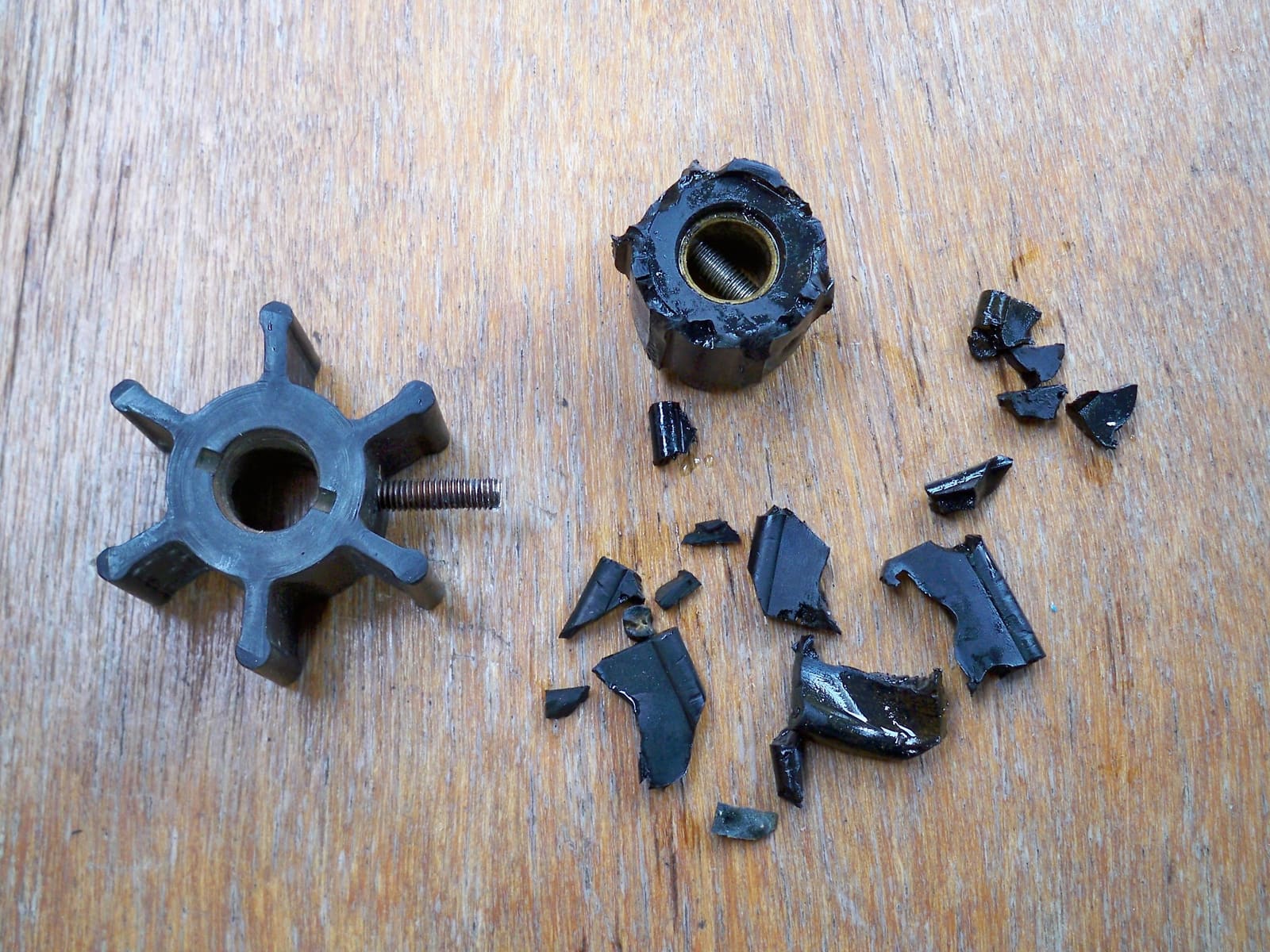
How to Clean the Raw-Water Strainer and Replace the Impeller on a Marine Diesel
Clean the sea strainer and swap the rubber impeller in the raw-water pump of a Yanmar, Volvo Penta, Westerbeke, Beta or similar inboard diesel. A worn impeller is one of the most common reasons a diesel overheats, and this job takes about an hour with basic tools.
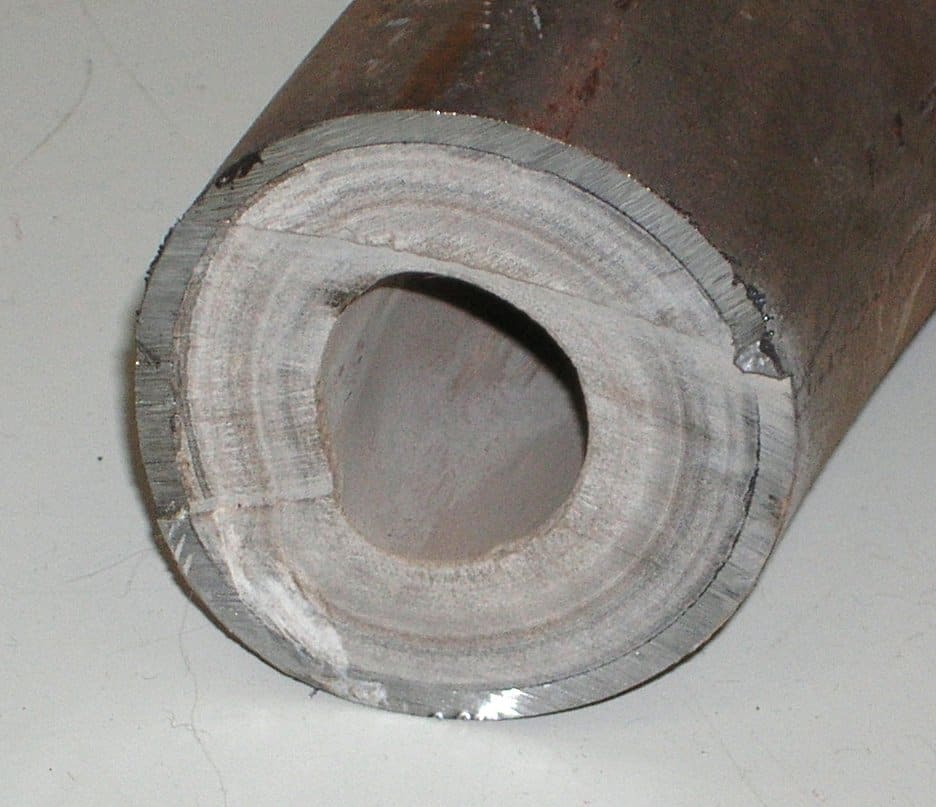
Salt and Scale in Raw-Water Cooling: Flushing Habits, Descaling and When It's a Shop Job
Learn how salt and scale slowly narrow your engine's cooling passages, how to spot the warning signs (a temperature that creeps up over seasons, a weak telltale, thermostats sticking), the flushing habits that prevent it, which descaling products and methods engine makers accept, what never to pour through an engine, and when to hand the job to a shop.
Diesel Exhaust Smoke: What Black, White and Blue Smoke Mean
Learn to read the color of your marine diesel's exhaust and run the simple checks that go with each color, from a dirty air filter or fouled prop to a worn mixing elbow or head gasket. Catching smoke early can save an engine.