Capsized or Swamped: What to Do in the Water, and How to Keep It from Happening
Most capsizes and swampings happen to small boats, fast, often on ordinary days. Learn the first moves that keep everyone alive (stay with the boat, count heads, life jackets, get out of the water, signal for help), how small sailboats are righted, why the cold-water "1-10-1" rule is a best case, and how loading, the drain plug and following seas cause most of these accidents.
Time
20 min
Applies to
All engines · Fishing boat, Bowrider / runabout, Pontoon, Center console, Sailboat, Jet boat
Safety first: If your boat capsizes or swamps, stay with the boat and call for help right away: VHF channel 16 (or the red DSC distress button), a PLB or EPIRB, or 911 by phone. Don't swim for shore; it is almost always farther than it looks, and cold water takes your strength fast. Never go back under an overturned hull to retrieve gear.
Fuel smell, water coming in, CO alarm or smoke? Stop, get everyone in life jackets and call USCG on VHF 16 or 911. For a tow: Sea Tow or TowBoatUS.
Owners often ask
- If my boat swamps or flips, should we swim for shore or stay with it?
- Is the 1-10-1 cold water rule something I can count on if we capsize?
- Is a swamped 17-foot outboard boat supposed to stay afloat, and what about older boats?
This guide walks you through it. Still stuck? Ask the AI Mechanic about your engine.
Tools
- Waterproof handheld VHF clipped to a life jacket
- Whistle on every life jacket
- PLB or EPIRB (registered)
Parts & supplies
- Life jackets worn by everyone aboard
- Visual distress signals stowed where they can be reached from the water or the hull
- Throwable flotation device
Before you start
What these words mean. BoatUS defines a capsize as a boat rolling onto its side or completely over, and swamping as filling with water (often after capsizing) while still floating.
Why it happens. BoatUS studied five years of insurance claims and found nearly all capsizes come from three causes: too much or badly placed weight, leaks (including a missing drain plug or a failed fitting), and bad weather. Most were small boats: the biggest group was 15 to 19 feet, often fishing boats with large cockpits.
Most small boats float when swamped, but not all. BoatUS notes most boats under 20 feet are required to have flotation, but most powerboats built before 1972 have none and can sink out from under the crew. Know which kind you have.
- The federal flotation rules (33 CFR 183, Subparts F through H) apply to monohulls under 20 feet; sailboats, canoes, kayaks, inflatables and race boats are excluded (33 CFR 183.201, for example).
- On outboard boats under 20 feet rated for more than 2 horsepower, the swamped test is strict: with the boat full of water and test weights standing in for the motor, battery and part of the load, it must float with no more than 10 degrees of heel and one end of the passenger area above the water (33 CFR 183.220 and 183.235). That's why a swamped small outboard boat usually stays upright enough to hang onto.
- Boats 20 feet and over, and older boats, have no federal flotation requirement. Foam can also soak up water or rot over the years (our waterlogged-foam guide covers how to check), so don't assume an old hull will float the way it did new.
Read this at home. You won't have time to look it up in the water. Walk your crew through steps 1 to 6 as part of your pre-departure briefing.
Steps
The moment you surface, grab the boat or anything floating and count heads out loud. Call each person's name. If someone is missing, check the immediate area and the air pocket you can see from outside, but don't swim under the hull: lines, canvas and gear can trap you. Keep kids and weak swimmers holding onto the boat or an adult.
If you were already wearing life jackets, you're in the best position. BoatUS says its tests showed even modest waves make it very hard to put a life jacket on in the water, especially if you have to search for one first. If life jackets are floating loose, grab them and help each person get one on or hold one tight to their chest. Grab cushions, coolers and the throwable as extra flotation. The Coast Guard's message is to wear one every time, because there's rarely time to reach them in an accident.
The Coast Guard's advice, as reported by Soundings, is to stay with the boat even if it is taking on water, and to climb onto the hull if it capsizes. A Coast Guard Auxiliary officer quoted in the Coast Guard's boating safety column compares a person in the water to a basketball seen from a helicopter: an overturned hull is a much bigger target. Swim toward the boat only if it's drifting away from someone, and only a short distance.
Leave the boat only if staying is clearly more dangerous: it is on fire, it is being driven onto rocks or into breaking surf, or it is sinking completely. If it sinks, stay together.
Cold water steals body heat much faster than air. Climb onto the hull, the swim platform, or anything that floats, and huddle with others; the Coast Guard column notes that getting out of the water and huddling slows heat loss and the poor judgment that comes with it. If you can't get out:
- Keep your life jacket on and stay still with your legs pulled up to your chest, rather than swimming around.
- In a group, a Coast Guard spokesman quoted by Soundings advises gathering in a circle, linking arms and huddling with legs pulled up, which also makes you easier to see.
You may have heard "1 minute to control your breathing, 10 minutes of useful movement, 1 hour before hypothermia knocks you out." The National Center for Cold Water Safety calls this a myth that gives a false sense of time:
- The gasping and uncontrolled breathing of cold shock can last longer than one minute, and you can inhale water in that phase.
- Your strength and hand control fade steadily from the first minute, not suddenly at minute ten.
- Most people in cold water drown from incapacitation long before they become hypothermic.
What that means in practice: do the important things immediately (life jacket, grab the boat, get out of the water, signal), while your hands still work. Our cold-weather guide covers dressing for immersion.
- VHF: a waterproof handheld clipped to a life jacket is the most useful thing you can have. Call Mayday on channel 16 with your position, the number of people and "capsized" or "swamped." If it has a DSC distress button, use it.
- PLB or EPIRB: activate it and keep the antenna pointed at the sky. BoatUS describes a 2019 Gulf of Mexico capsize where an EPIRB from the overturned center console brought a Coast Guard response, and all three crew, wearing life jackets, were rescued.
- Phone: call 911 if you have a signal and the phone is in a waterproof pouch.
- Visual signals: flares, a signal mirror, a whistle (three blasts), a bright cloth or waving arms. The Coast Guard column suggests grabbing flares and distress signals you can reach without leaving the boat.
- Float plan: someone ashore who knows when you're overdue will start the search. Leave one every time.
Small dinghies and beach cats are designed to be righted, and sailors are taught to do it. US Sailing and Discover Boating describe the basics:
- Make sure everyone is accounted for and holding the boat.
- Free the sheets (and vang) so the sail can spill water.
- One person climbs onto the centerboard, using a jib sheet to pull up if needed, keeping weight close to the hull, not on the tip of the board, which can break.
- Lean back with feet near the base of the board, holding a sheet or the gunwale, and let the boat come up slowly.
- In the "scoop" method, a second person lies in the cockpit on the low side and is scooped in as the boat comes up.
The guides note the boat comes up best with the mast pointing roughly into the wind; if the sail is on the upwind side, the boat may flip again as soon as it's righted. If the boat turns turtle (mast pointing down) and you can't right it, or anyone is tired or cold, stop trying, stay with the hull and signal for help. Practice capsize drills in warm water before you need them.
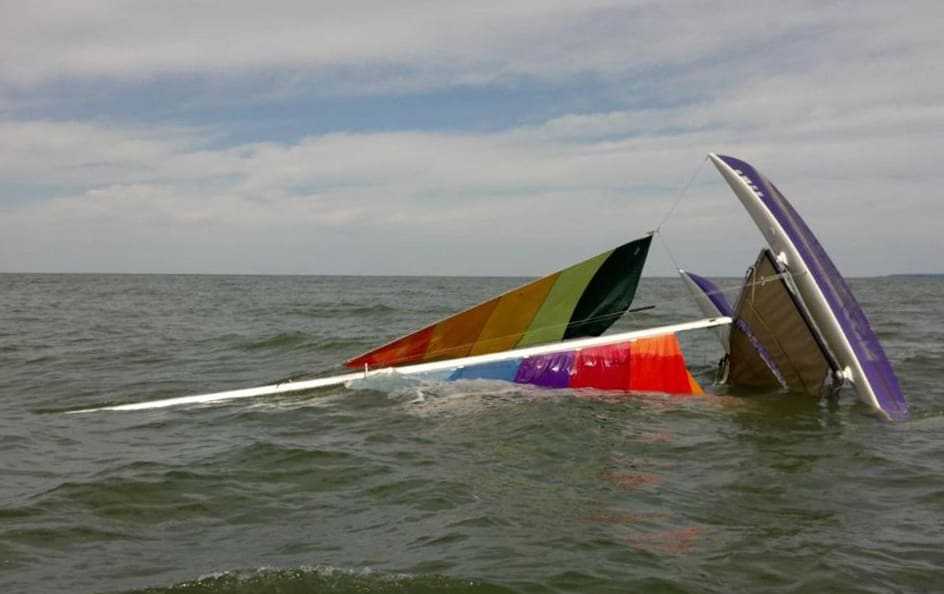
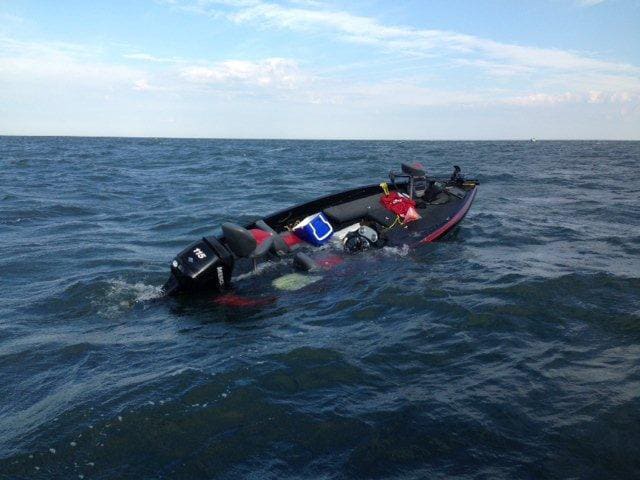
A capsized beach catamaran: stay with the hull and only try to right it if you've practiced. Photo: U.S. Coast Guard / Wikimedia Commons · Public domain - Swamped but upright powerboat: stay with it. If the engine is underwater, don't try to restart it. Bailing a swamped boat in waves rarely works without a big pump; focus on staying with it and signaling. A tow service or the Coast Guard can deal with the boat later; see our submerged-engine and taking-on-water guides for after.
- Overturned powerboat: don't try to right it. Climb on the hull if you can do so safely.
- Canoes and kayaks: if you've trained in self-rescue and the water is warm and calm, you can flip and re-enter. Otherwise, hang on and get help.
Tell rescuers about anyone still missing and how many people were aboard. Anyone who was in cold water, swallowed water, or seems confused should get checked by medical responders, even if they feel fine. Federal rules require a boating accident report in many cases; see our accident report guide.
BoatUS's claims study shows weight is the main cause. Small boats are very sensitive to one extra person or another heavy cooler. Keep within the capacity plate (persons and weight), count underway seating positions, spread people evenly, and don't let everyone rush to one side. Weight up high (people standing, on a tower or upper deck) makes boats less stable; BoatUS notes anglers and hunters can tip a small boat just by standing. Our loading guide covers the math.
- Drain plug in before launch; BoatUS suggests tying the plug to the boat key. See our drain-plug guide.
- Livewell and bait-well fittings: BoatUS found several claims from cheap PVC fittings and livewells with no shutoff valve. Any fitting through the hull should close, and be stainless, bronze or Marelon.
- Low transoms: BoatUS warns older outboard boats with low transom cutouts can flood from stopping quickly, especially with weight in the stern.
- Cockpits that drain into the bilge depend on the bilge pump; bilge pumps remove nuisance water and won't keep a boat afloat.
- Repowering with a heavier four-stroke can add 10% to 15% more weight than an older boat was designed for, according to BoatUS, and let water back in through cockpit drains.
Check the marine forecast, watch the sky, and head in at the first sign of bad weather. If a squall catches you, BoatUS advises having passengers stay low near the middle of the boat and keeping the bow into the waves. In following seas (waves coming from behind), Boating Magazine advises adjusting speed to ride the back of the wave ahead, trimming the bow up so it doesn't bury, and avoiding surfing down a wave face, which can make the stern swing out and roll the boat. Don't let a breaking wave catch your stern. In big following seas, running at an angle (quartering) can help. Boating Magazine's own example: the captain waited offshore, running with the seas, until the tide slacked and the inlet calmed down enough to run in safely.
Common mistakes
- Swimming for shore and leaving a floating boat.
- Life jackets stowed in a locker instead of worn, then impossible to put on in the water.
- Spending precious minutes trying to right a powerboat or salvage gear while getting colder.
- Diving under the hull to retrieve a phone or bag.
- Trusting "1-10-1" as a timeline.
- Overloading a small boat for "just a short ride," or forgetting the drain plug.
- Slowing down or stopping with a big wave right behind the transom.
When to call a pro
- Any capsize or swamping with people in the water: VHF 16, DSC, PLB or EPIRB, or 911, immediately.
- After the rescue: TowBoatUS, Sea Tow or a salvage company to recover the boat; a mechanic before restarting any engine that was submerged.
- Anyone who was in cold water, swallowed water, or is confused, shivering hard or not shivering: medical evaluation.
- Hull damage, leaking fittings or foam that's soaked up water: a marine surveyor or yard before the boat goes back out.
Tips
- Clip a waterproof VHF and a whistle to the skipper's life jacket every trip.
- Keep a PLB on your person, not in a locker.
- Practice a capsize talk-through with kids: "grab the boat, count off, stay together."
- Stow flares where you could reach them from the water or the hull.
- On cold days, dress for the water temperature, not the air.
Official references
We read these to write this guide. Your engine's own manual always wins.
- BoatUS Magazine – Avoiding Capsizing and Swamping (2016)
- Soundings Trade Only – Capsized or Swamped, Stay with the Boat! (U.S. Coast Guard boating safety column)
- Soundings – Family abandons boat, swims for shore (Coast Guard advice to stay with the boat)
- National Center for Cold Water Safety – The 1-10-1 Myth
- US Sailing – Seamanship and Water Safety, Capsize Recoveries
- Discover Boating – Sailing Capsize Recovery, Scoop and Single-Handed Methods
- Boating Magazine – Tips for Running a Boat in Following Seas
- U.S. Coast Guard Boating Safety – Life Jacket Wear
- eCFR – 33 CFR 183.201, Applicability (flotation for outboard boats under 20 feet)
- eCFR – 33 CFR 183.235, Level flotation test without weights for persons capacity (outboard boats over 2 hp)
Safety: BoatMend is for information only and does not replace a certified marine technician. You are responsible for your safety and your boat. Read the full disclaimer.
Last updated 2026-11-06
Related guides
What to Do When Your Boat Is Taking On Water: Emergency Steps and Prevention
A step-by-step emergency plan for water coming into the boat - life jackets on, call for help early on VHF 16, find and slow the leak, pump, and head for shallow water if needed - plus the maintenance checklist that prevents most sinkings.

Cold-Weather Boating: Cold Water Safety, Gear and Engine Care in Late Fall and Winter
Boating after the crowds leave can be beautiful, but cold water changes the risks. Learn why cold shock is the first danger, why the popular 1-10-1 rule needs caution, what to wear, how to plan, and how to care for the engine, battery and anything that holds water between trips.

How to Load Your Boat Safely: Capacity Plate, Balance and Stability
Too much weight, or the right weight in the wrong place, is behind most small-boat capsizes and swampings. Learn to read the capacity plate (persons, weight and horsepower), add up your real load, balance it side to side and fore and aft, and adjust for rough water, water aboard and towing riders.
Drain Plugs: Types, Pre-Launch Checks, Spares and Replacing a Garboard Drain
A forgotten or worn drain plug is one of the most common ways a boat floods at the ramp. Learn the plug types, a launch routine that makes it hard to forget, how to look after plugs and fittings, how to replace a garboard drain, and when the plug should come out for storage.
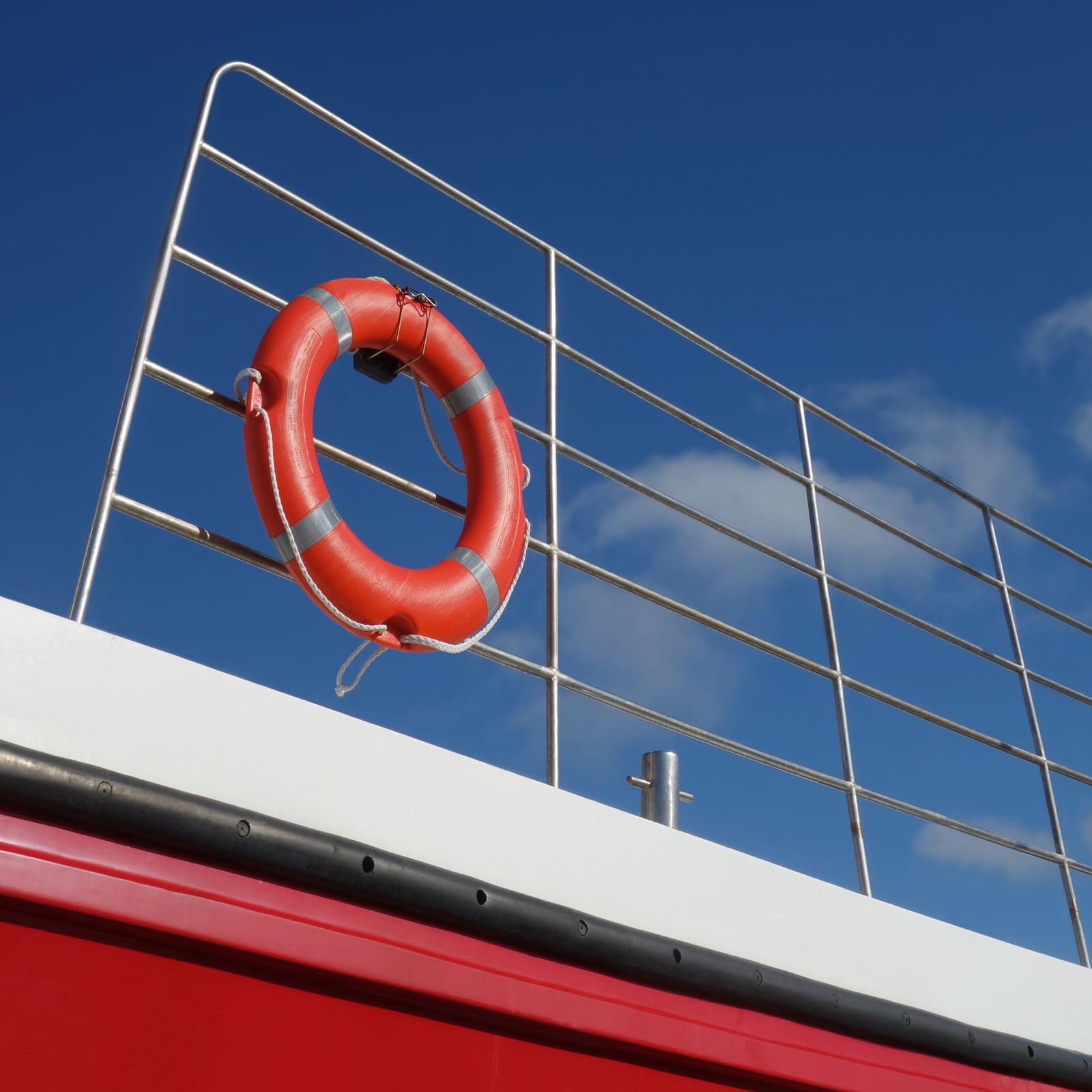
Man-Overboard Recovery Gear: Throwables, Lifesling, Ladders and MOB Alarms
Set up and check the gear that gets a person in the water back aboard - a throwable within reach, a floating rescue line or Lifesling-style sling, a boarding ladder someone in the water can pull down, and MOB alarms or AIS beacons - and practice the drill so it works when it counts.
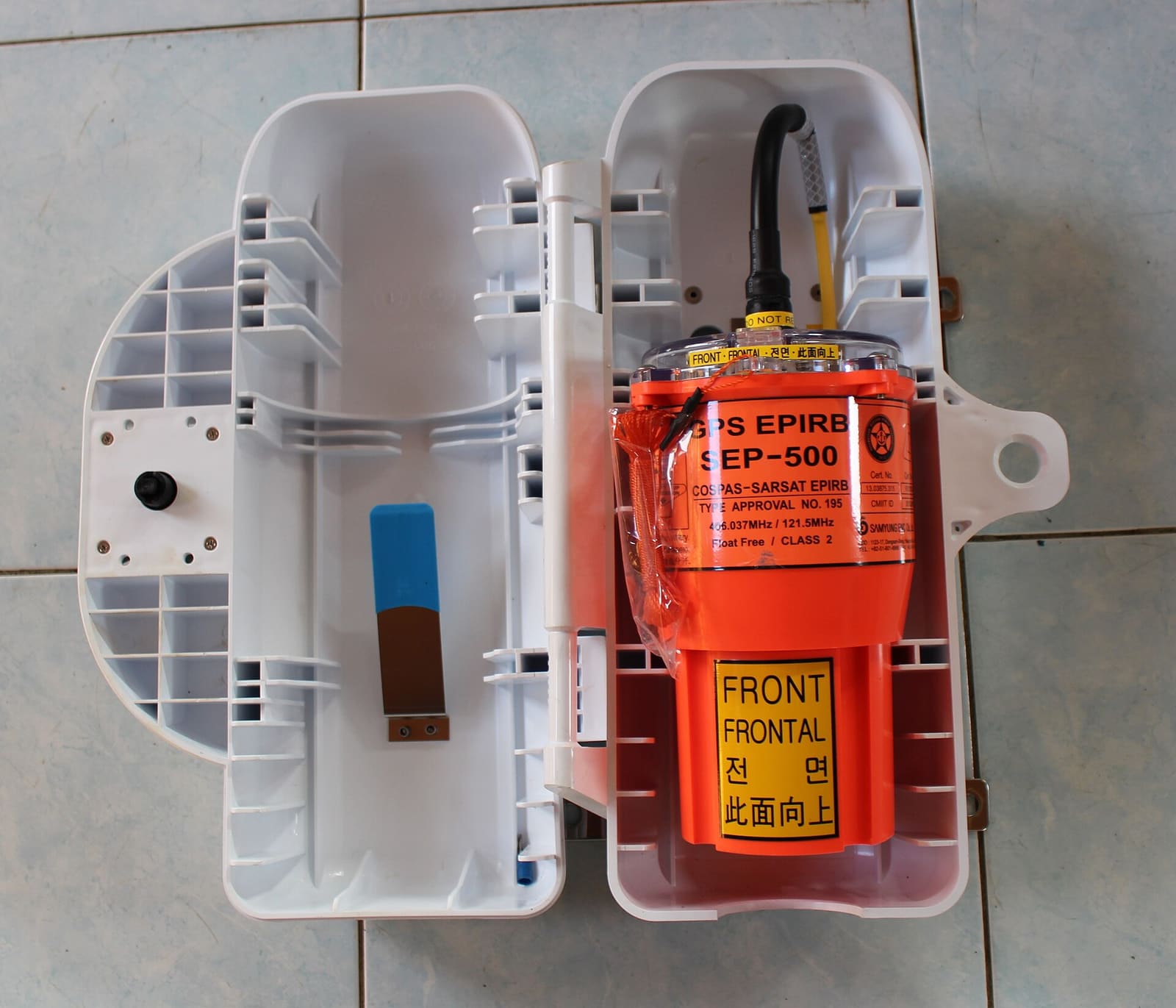
EPIRB and PLB Care: Registration, Batteries, Self-Test and Mounting
Keep your 406 MHz emergency beacon ready to work on the worst day of your life. Register it free with NOAA and renew every two years, track the battery and hydrostatic release dates, run the self-test without triggering a false alert, and know what happens after you press the button.
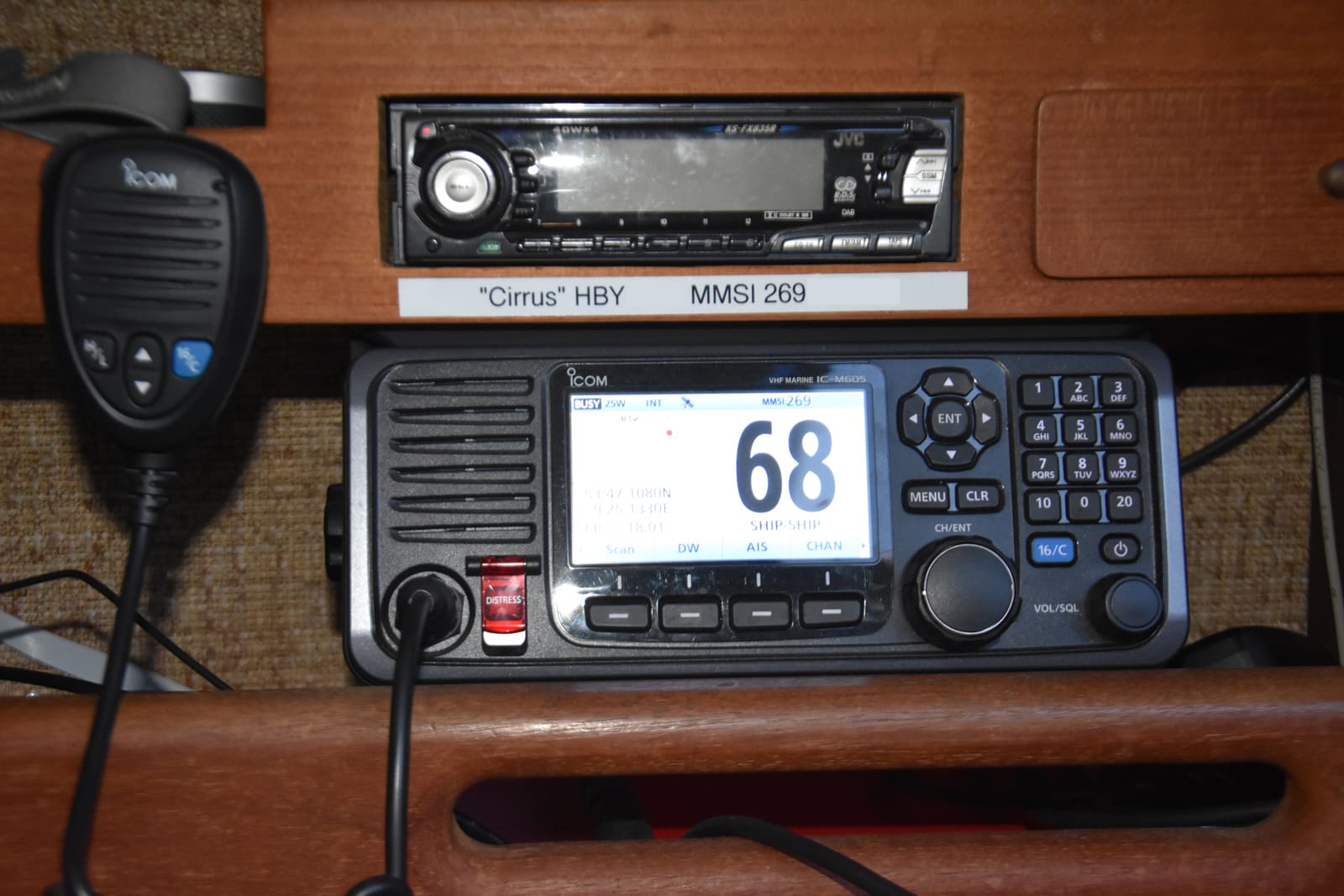
Set Up Your VHF Radio: MMSI, DSC, GPS Hookup and Radio Checks
Get a free or low-cost MMSI number, program it into your DSC radio, connect your GPS so a distress alert sends your exact position, check the antenna, and learn the Channel 16 rules and the right way to do a radio check.
Reading Marine Weather Forecasts: Advisories, Wind, Waves and Go/No-Go
Learn where to get the official NOAA marine forecast for your waters, what small craft advisories and warnings really mean, how to read wind and wave numbers, and how to make a simple go/no-go call before you leave the dock.
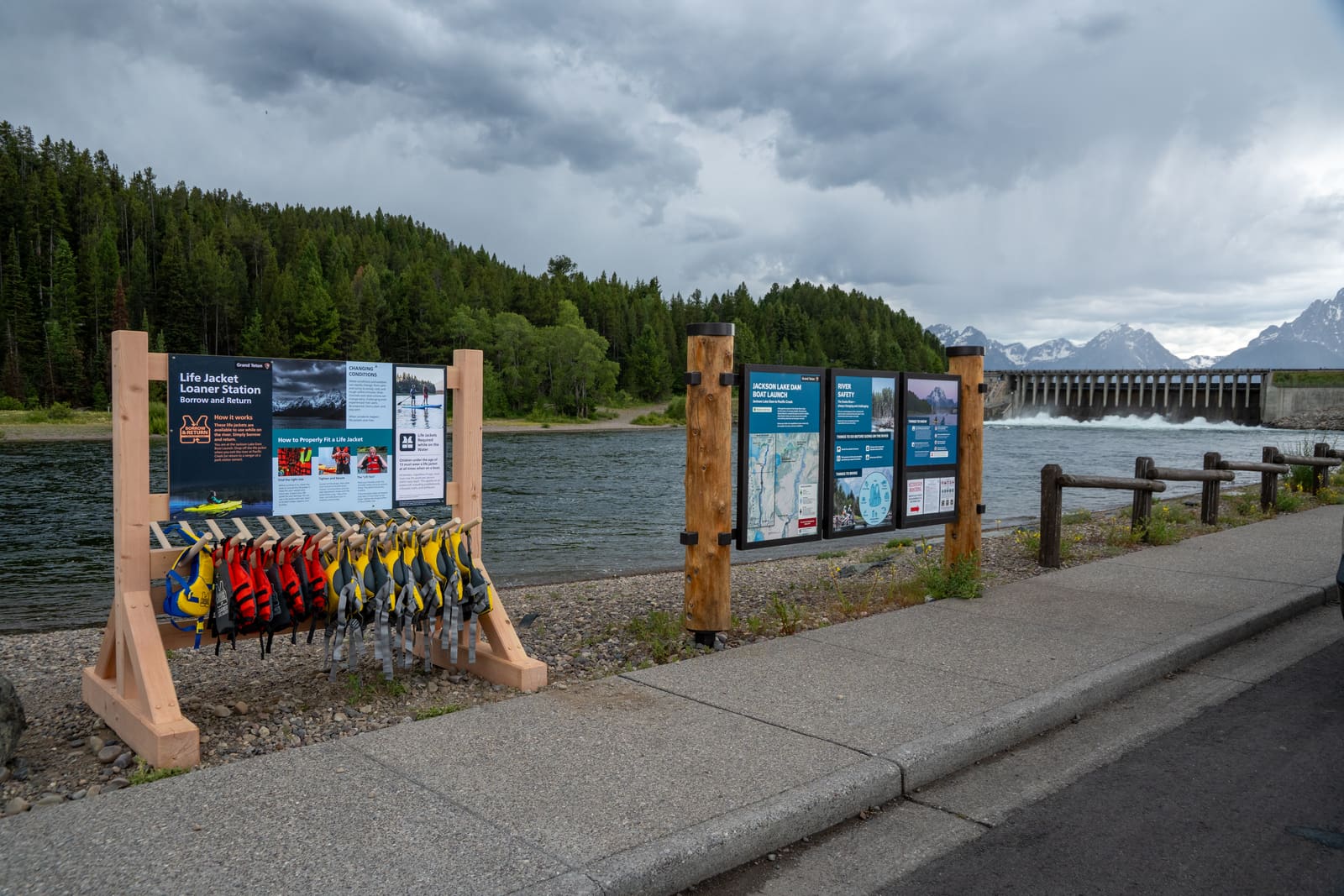
How to Choose and Fit Life Jackets for Children and Babies
Pick the right Coast Guard-approved life jacket for each child by weight, check the fit so it can't slip off, look for head support and a crotch strap on little ones, and learn the federal and state wear rules. Inflatables are not for kids, and a life jacket never replaces an adult watching.
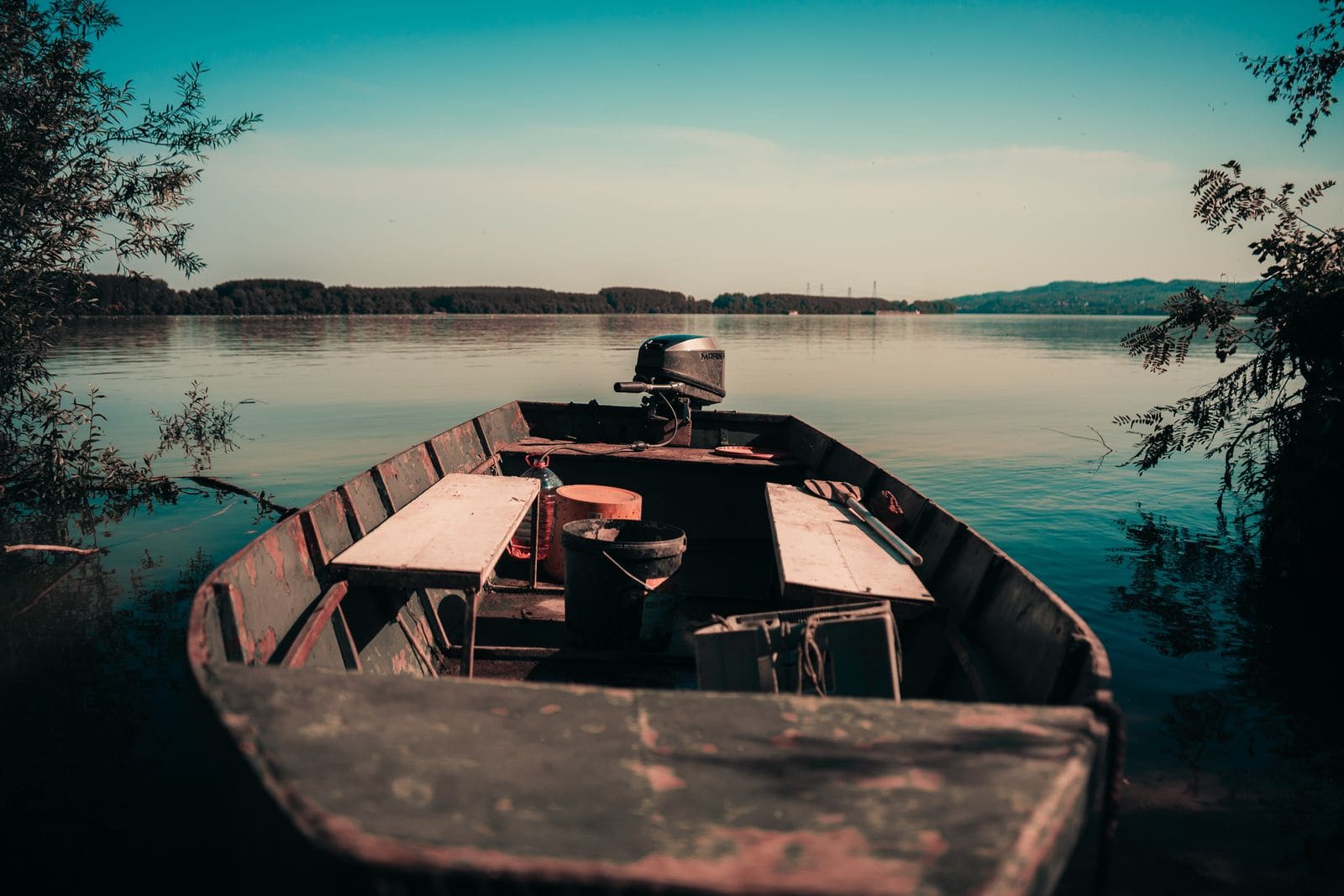
How to Tell if Your Boat's Flotation Foam Is Waterlogged
Learn the signs that the foam under the floor or seats of a small boat has soaked up water, how to check without tearing the boat apart, what the Coast Guard flotation rules mean for you, and why replacing foam is usually a big job for a pro.
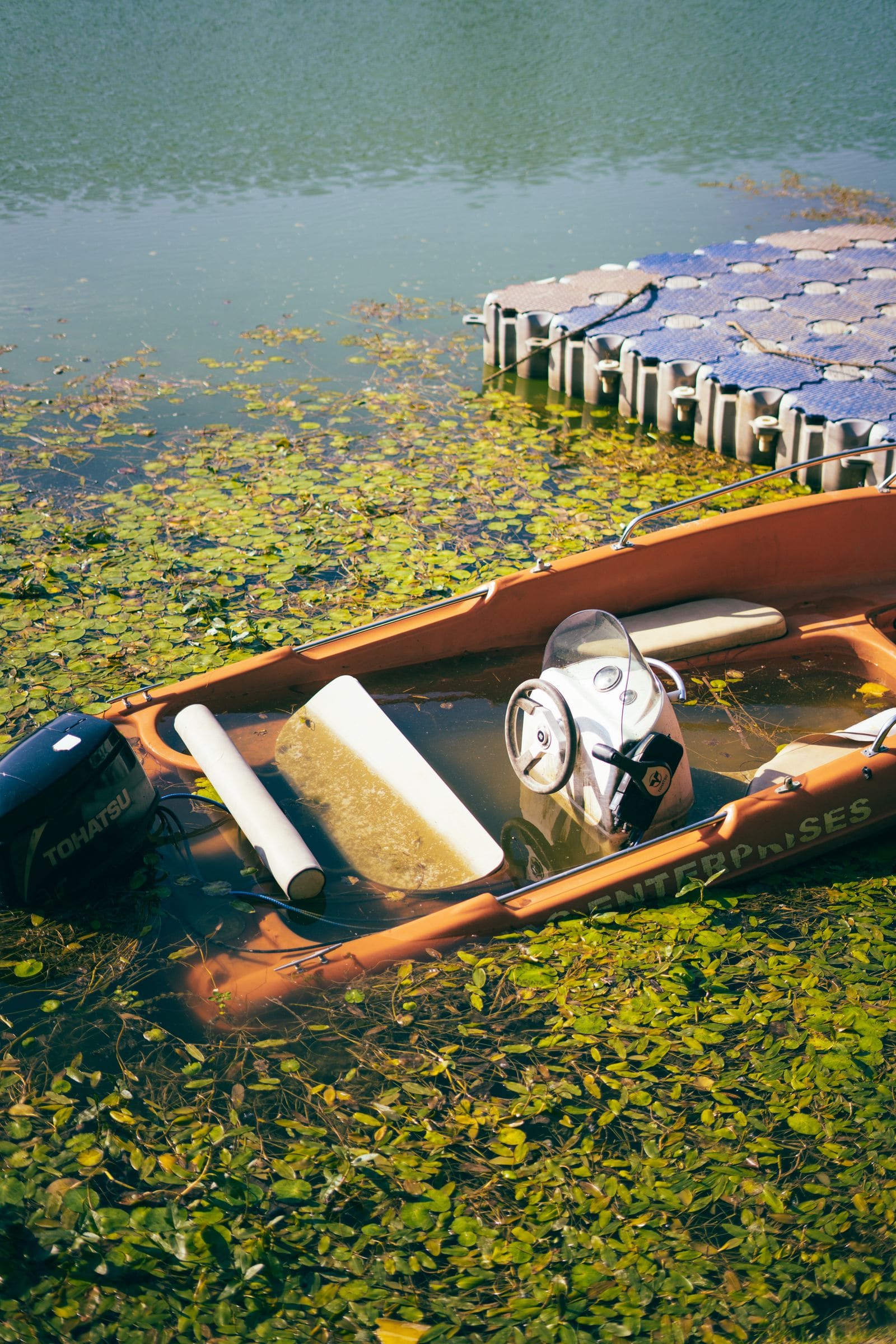
Outboard Fell Overboard or Engine Got Submerged: What to Do in the First Hours
A dunked engine can often be saved, but only if you act fast and in the right order. Learn what to do (and what never to do) in the first hours after an outboard goes overboard or a boat swamps, how to buy time until a shop can take it, and when it is a loss.
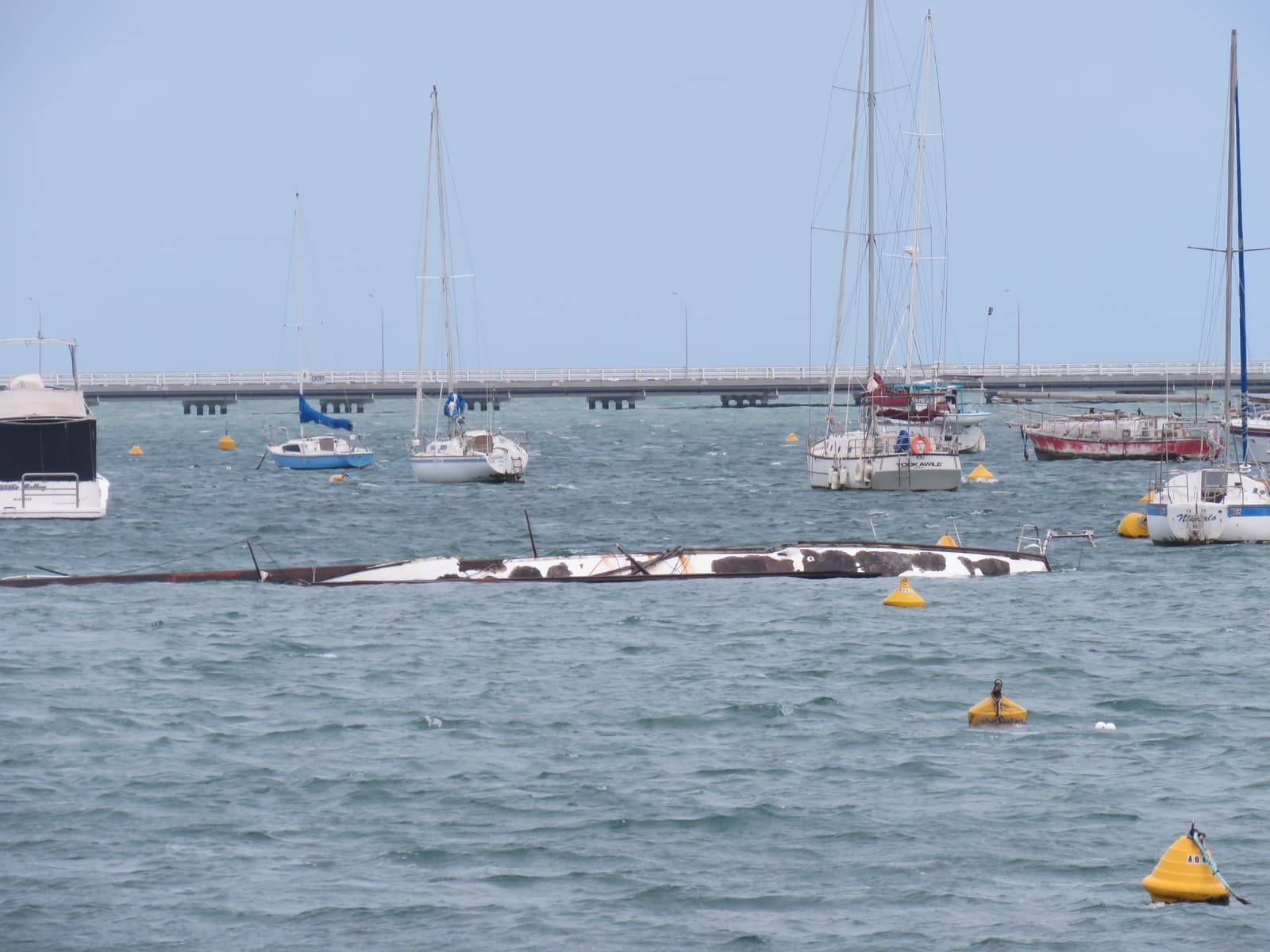
Boating Accident Reports: When You Must File and What to Collect
Know when federal rules require a written boating accident report, how fast it is due, who to send it to and what details and photos to gather at the scene, so you meet the deadline and your insurance claim goes smoothly. Practical help, not legal advice.