Wakesurf Safety: The Right Boat, Carbon Monoxide, Spotters and Distance
A pre-ride checklist for wakesurfing - surf only behind inboard or V-drive boats built for it, keep riders away from exhaust and the engine off when they board, use a spotter and a short surf rope, stay well away from shore, docks and other boats, and never overload the ballast.
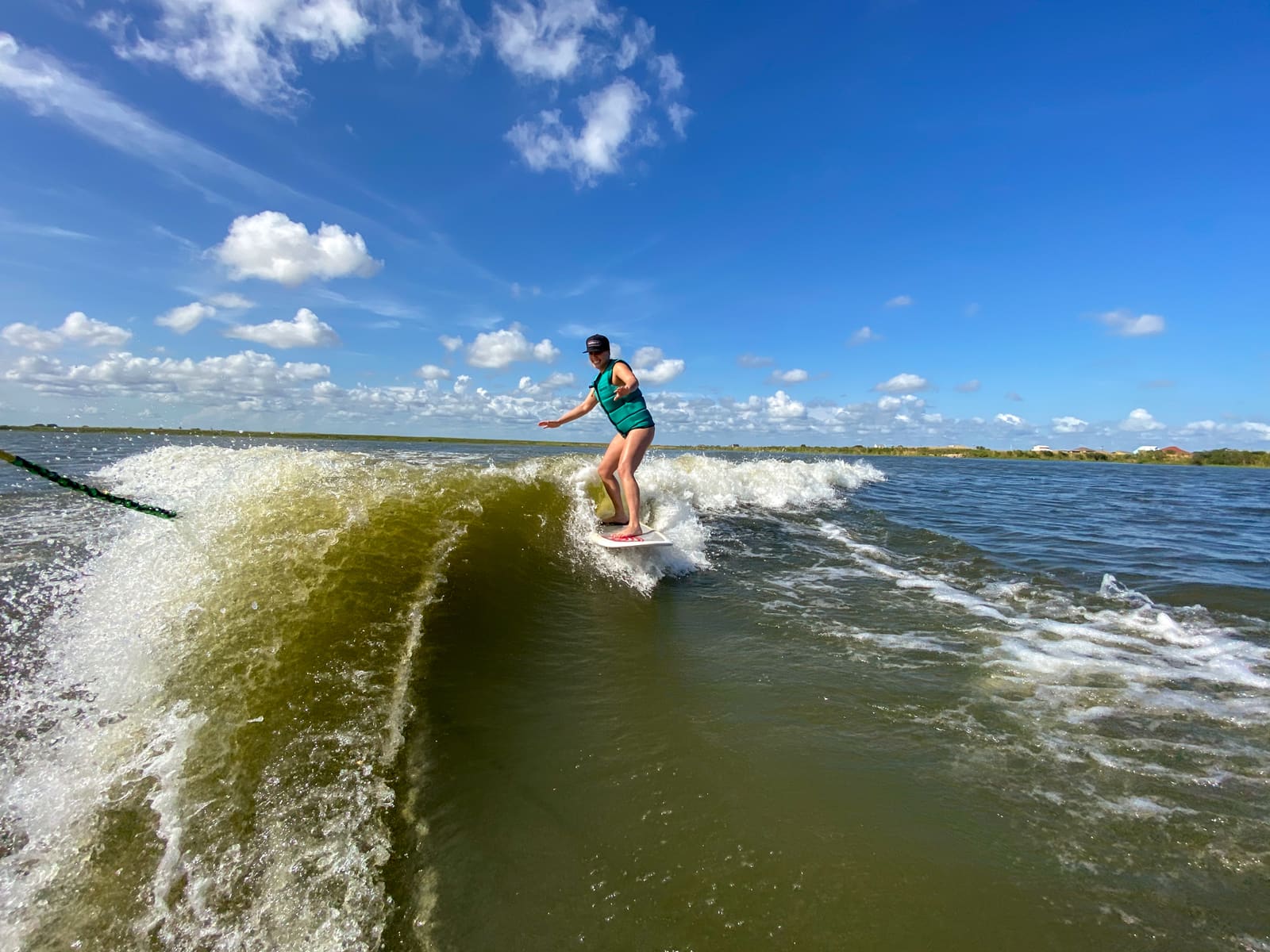
Time
20 min
Applies to
Gas inboard
Safety first: Never wakesurf behind an outboard, a regular sterndrive (I/O) or any boat whose propeller sits at or behind the transom, even with a prop guard or a big swim platform: the rider is only a few feet from the stern. Carbon monoxide collects right where wakesurfers ride and board, so shut the engine off (not just neutral) whenever anyone is on the swim platform or in the water near the stern. If anyone gets a headache, dizziness, nausea or drowsiness, treat it as CO poisoning: move them to fresh air and get medical help (911, or VHF channel 16 on the water).
Fuel smell, water coming in, CO alarm or smoke? Stop, get everyone in life jackets and call USCG on VHF 16 or 911. For a tow: Sea Tow or TowBoatUS.
Owners often ask
- Can I wakesurf behind my I/O or outboard if I add ballast bags and a prop guard?
- Is it OK to idle the engine while the surfer sits on the swim platform getting ready?
This guide walks you through it. Still stuck? Ask the AI Mechanic about your engine.
Tools
- USCG-approved life jacket for the rider, labeled for water sports (not an inflatable)
- Wakesurf-specific rope with a handle
- Skier-down flag (required in many states)
- Working CO alarm in any enclosed cabin or under-deck space
- Depth finder or a chart showing depths
Before you start
Wakesurfing puts the rider closer to the boat than any other towed sport. Once up, the rider drops the rope and surfs the wave only a few feet behind the swim platform, right in the zone where the propeller and the exhaust are. That's why the boat type, the engine and the crew routine matter more here than in tubing or wakeboarding.
Check your state's rules before you go. BoatUS notes that watersports laws vary widely: some states require a spotter (others allow a mirror), many require a skier-down flag, and several set minimum distances from shore, docks and other boats for wakesurfing specifically.
These rules keep getting stricter, so check them every season. One example: since June 11, 2026, Vermont allows wakesports on its inland lakes only inside mapped "wakesports zones" (large, deep areas at least 500 feet from shore), requires a 500-foot gap from swimmers and other boaters whenever the ballast is filled, and requires ballasted boats to be decontaminated when they move between lakes. Your state's boating agency or DNR website has the current rules and maps.
Steps
Surf only behind:
- Inboard direct-drive or V-drive boats with the propeller under the hull, forward of the transom, and
- Propulsion systems the builder designed and approved for wakesurfing (for example, some forward-facing drive packages). Follow that builder's instructions to the letter.
Never surf behind an outboard or a standard sterndrive. Monster Tower, a tower and watersports accessory maker, puts it plainly: wakeboarding behind those boats can be fine on a long rope, but wakesurfing is not, because the rider has no time to react if the boat slows and can hit the propeller. Tennessee's industry-backed law bans wakesurfing from any boat with a propeller exposed beyond the boarding platform. Prop guards and oversized swim platforms don't change the basic problem.
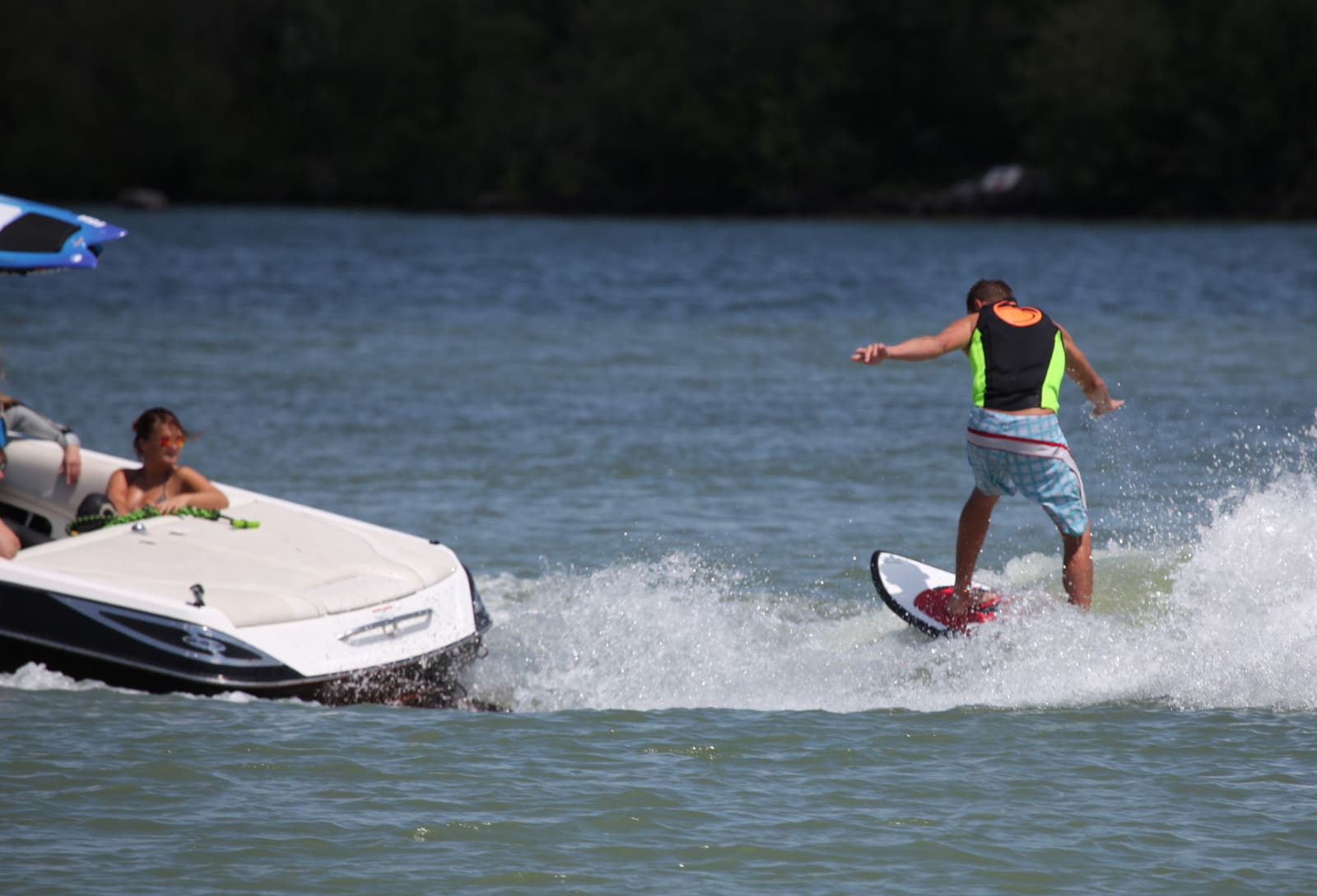
A surfer rides only a short distance behind the transom, which is why the propeller must be under the hull. Photo: Walter J. Sieberer / Wikimedia Commons · CC BY-SA 4.0 Find the maximum load on the capacity label or in the owner's manual. MasterCraft points out that the maximum includes added ballast bags and the water in them, gear, options and every person, that the number of people is limited to the number of designated seats, and that weight must be spread evenly. Check your own manual for how factory ballast tanks are counted. Water weighs about 8.3 pounds per gallon, so a full ballast system can use up much of the capacity before anyone steps aboard. Mercury notes that aftermarket ballast bags alone can add up to about 1,000 pounds. Keep everyone seated inside the boat while surfing: no one on the bow, gunwales or swim platform. See the ballast guide for fill and drain routines.
- Test the CO alarm in any cabin or enclosed head compartment.
- Know where your engine exhaust outlets are and keep people away from them.
- Don't run with a full bimini, side curtains or a back cover closed while surfing at low speed: the USCG and MasterCraft warn that fumes curl over the transom and into the boat (the "station wagon effect"), and canvas traps them.
- MasterCraft adds that CO is higher when the engine is cold, and that boats run at high altitude may need different engine tuning: ask your dealer.
Every rider wears a USCG-approved life jacket labeled for water sports or towed activities, snug and fully buckled. BoatUS points out that inflatable life jackets generally don't qualify for towed sports, and that "competition vests" don't meet Coast Guard requirements. Use a wakesurf-specific rope: the WSIA guideline cited by BoatUS is about 10 to 15 feet for wakesurfing, much shorter than a ski or wakeboard rope.
Have one person whose only job is watching the rider and telling the driver what happens. Some states require a spotter and set a minimum spotter age; BoatUS recommends a spotter even where it's optional. Before the first ride, agree on hand signals for faster, slower, stop, turn, "I'm OK" and "done."
Ride in open, deep water away from traffic. The WSIA's Wake Responsibly guidelines say to stay at least 200 feet from shorelines and docks so wakes can fade before they hit land. Big surf waves carry a lot more energy, though: University of Minnesota research found wakesurf boats running their usual surf setup needed 500 feet or more for their waves to shrink to what a typical boat makes at 200 feet. Give swimmers, paddlers, anglers, anchored boats and docks as much room as the lake allows, and don't make pass after pass along the same stretch of shore. The WSIA's Wake Responsibly campaign adds a third point: keep the music at a level that doesn't carry to the shore.
The rider gets in the water and comes back aboard at the swim platform, which is right next to the exhaust and the propeller. Shut the engine off before the rider enters the water from the platform and again when they swim back to it. Neutral is not enough: a bumped throttle can engage the prop, and a running engine keeps putting CO into the air the rider is breathing at water level. The USCG says never to sit, hang on or "teak surf" from the swim platform or back deck while the engine runs.
With the engine running and the rider a safe distance off the stern holding the rope, the driver eases into gear and slowly pulls the rider up. Keep the rope taut and the rider centered on the surf side. Driver: wear the engine cut-off lanyard if your boat has one; the USCG rule covers boats under 26 feet with 3 hp or more.
When the rider tosses the rope, the spotter pulls it into the boat right away so it can't drift toward the propeller or tangle the rider. Riders should throw the rope toward the boat and away from themselves, never wrap it around a hand or arm.
Drive straight and smooth at the speed your boat's surf system is set for (Mercury's tow-sports pros put typical wakesurf speeds at about 9 to 12 mph; your builder's settings come first). Avoid sudden slow-downs while a rider is close behind: a rider who falls forward toward the platform needs every foot of distance. Watch ahead, not just behind; the spotter watches the rider.
Turn back at idle speed, keep the rider in sight (the spotter points at them), and fly the skier-down flag where required. A ballasted surf boat tends to turn toward the lighter side, away from the surf wave, so turn that way. In Mercury's driving tips, pro riders suggest staying at idle through the full 180-degree turn, letting the waves pass, then coming back at 5 mph or less and stopping about 10 feet from the rider. Approach so the rider is on the driver's side where you can see them, shift to neutral well before you reach them, and shut the engine off as they come to the platform. Never back down toward a person in the water.
The USCG says CO symptoms look like seasickness or too much alcohol, and that in high concentrations a few breaths can be fatal. A rider or passenger who gets a headache, feels dizzy, sick or very sleepy should get to fresh air right away. Get medical help unless you're sure it isn't CO.
Daylight only: many states (Tennessee and Georgia among them) ban wakesurfing between sunset and sunrise. Empty the ballast before heading back to the ramp or dock, and drain and dry the ballast system and boat to avoid spreading invasive species (see Clean, Drain, Dry). Ballast tanks and bags never drain completely. The WSIA's free Boat Decontamination Database has diagrams from the boat builders showing where water stays trapped in many tow boat models (ballast, pumps, engine and bilge areas), searchable by brand and model year; look up your boat before you move it to another lake.
Common mistakes
- Surfing behind an I/O or outboard "with a prop guard" or because the swim platform covers the drive.
- Leaving the engine idling while a rider sits on the swim platform putting on a board or waiting to start.
- Running the bimini and back curtains closed at surf speed, trapping exhaust in the cockpit.
- Adding aftermarket ballast bags on top of factory ballast and a full crew, going over the boat's capacity.
- Surfing close to docks and shore because the water is calmer there.
- Using a long ski rope or letting the dropped rope trail in the water.
- Wearing an inflatable belt pack instead of a water-sports-rated life jacket.
When to call a pro
- Anyone shows signs of CO poisoning or is hit by the boat or propeller: call 911 or the Coast Guard on VHF 16 immediately
- A CO alarm sounds and you can't find why, or exhaust smell gets into the cabin: have the exhaust system inspected before using the boat again
- You want to add ballast, a surf system or a tower to a boat that didn't come with one: ask the builder or dealer whether the hull, drive and capacity allow it
- Surf system, ballast pumps or throttle controls behave oddly: have the dealer check them before the next ride
Tips
- Post your state's wakesurf rules and your boat's capacity number near the helm for guest drivers.
- Do a 30-second briefing before every session: who spots, the hand signals, "engine off at the platform."
- Teach new riders to get up while you're in open water away from other boats, with an experienced driver.
- If wakes are causing complaints on your lake, move to deeper, wider water: it's better for the shoreline and for the sport's future.
Official references
We read these to write this guide. Your engine's own manual always wins.
- USCG Boating Safety – Carbon Monoxide, Protect Yourself
- USCG Boating Safety – Carbon Monoxide
- MasterCraft Knowledge Center – Protection from Carbon Monoxide (CO)
- BoatUS – Ready, Set, Tow… WAIT! A Few Things First (watersports laws)
- Malibu Boats – Wake Responsibly (WSIA guidelines)
- Indmar Marine Engines – Wakesurfing and Wakeboarding Legislation Becomes Law in Tennessee
- Twin Cities Business – U of M Researchers Probe Impacts of Wakesurfing
- Monster Tower – Is it Safe to Wakeboard or Wakesurf Behind an Outboard Motor?
- MasterCraft Knowledge Center – Weight Limits and Distribution
- USCG Boating Safety – Engine/Propulsion Cut-Off Devices
- Vermont DEC – Wakeboating and Wakesports in Vermont
- WSIA – Boat Decontamination Database
- WSIA – Wake Responsibly
- Mercury Marine – Boating Basics, How to Drive for Wakesurfing
- Mercury Marine – Boating Basics, How to Ballast a Boat for Wake Sports
Safety: BoatMend is for information only and does not replace a certified marine technician. You are responsible for your safety and your boat. Read the full disclaimer.
Last updated 2026-10-24
Related guides
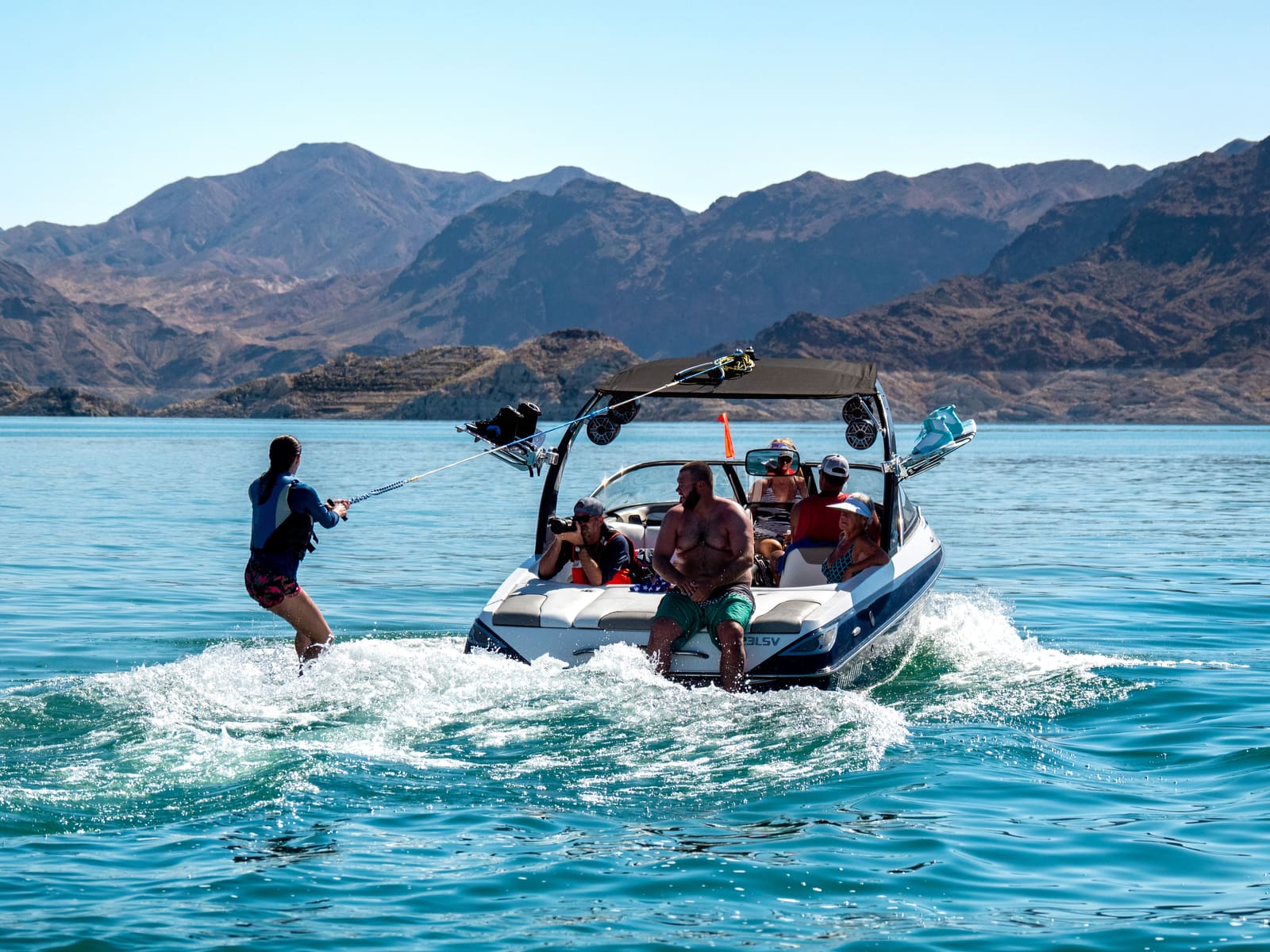
Wake Boat Ballast Systems - Care, Troubleshooting, Weight Limits and Winterizing
Keep your wake boat's ballast tanks, bags and pumps working: fill and drain them the right way, stay under the boat's weight capacity, fix tanks that won't fill or empty, change the pump impellers, stop invasive species from riding along, and protect the system from freezing.
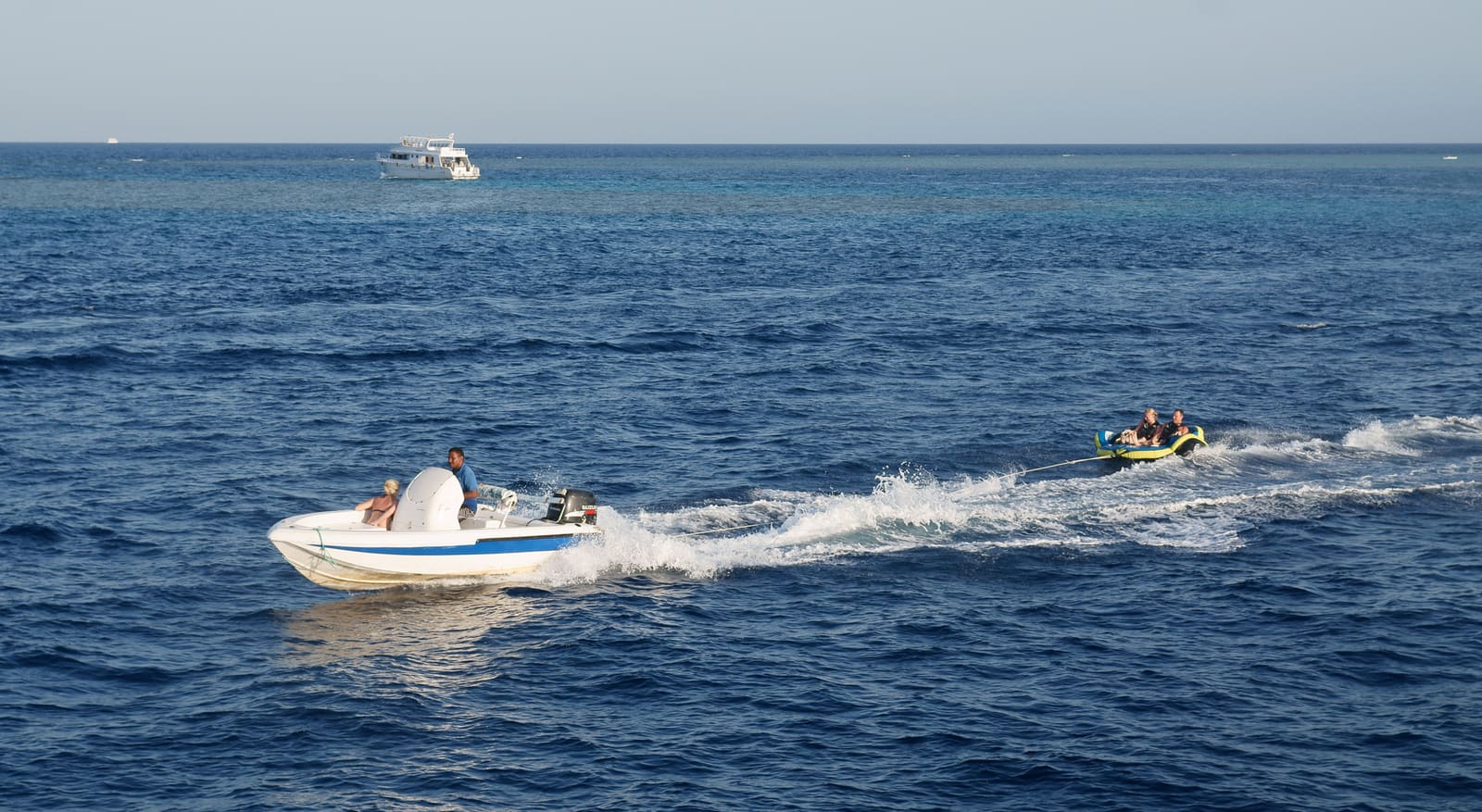
Tow Ropes, Tubes and Watersports Gear: Inspect, Rig and Retire
Check ski, wakeboard and tube ropes, handles, towable tubes and your boat's tow points before every outing, rig them the right way, and know when to throw gear out. Includes the safety basics (spotter, flag, life jackets, prop and carbon monoxide) that vary from state to state.
Carbon Monoxide on Boats: Where It Comes From, CO Alarms and Warning Signs
Carbon monoxide can build up in cabins, under canvas and around the swim platform, and its first symptoms look like seasickness. Learn the danger zones, where to mount marine CO alarms, how to test and replace them, and exactly what to do if an alarm sounds or someone feels sick.
Engine Cut-Off Switch (Kill Switch) and Lanyard: The Law, Testing and Daily Use
How the engine cut-off switch (ECOS) and its lanyard or wireless fob work, when federal law requires you to wear it (boats under 26 feet, 3 hp or more, on plane), how to test it before every trip, and why a spare clip aboard matters.
USCG Required Safety Equipment Check by Boat Length
Walk through your boat and confirm you carry every piece of safety gear the US Coast Guard requires for your boat's length and type, and that none of it is expired or worn out. Missing or expired gear is one of the most common tickets on the water, and it is the gear you need when things go wrong.
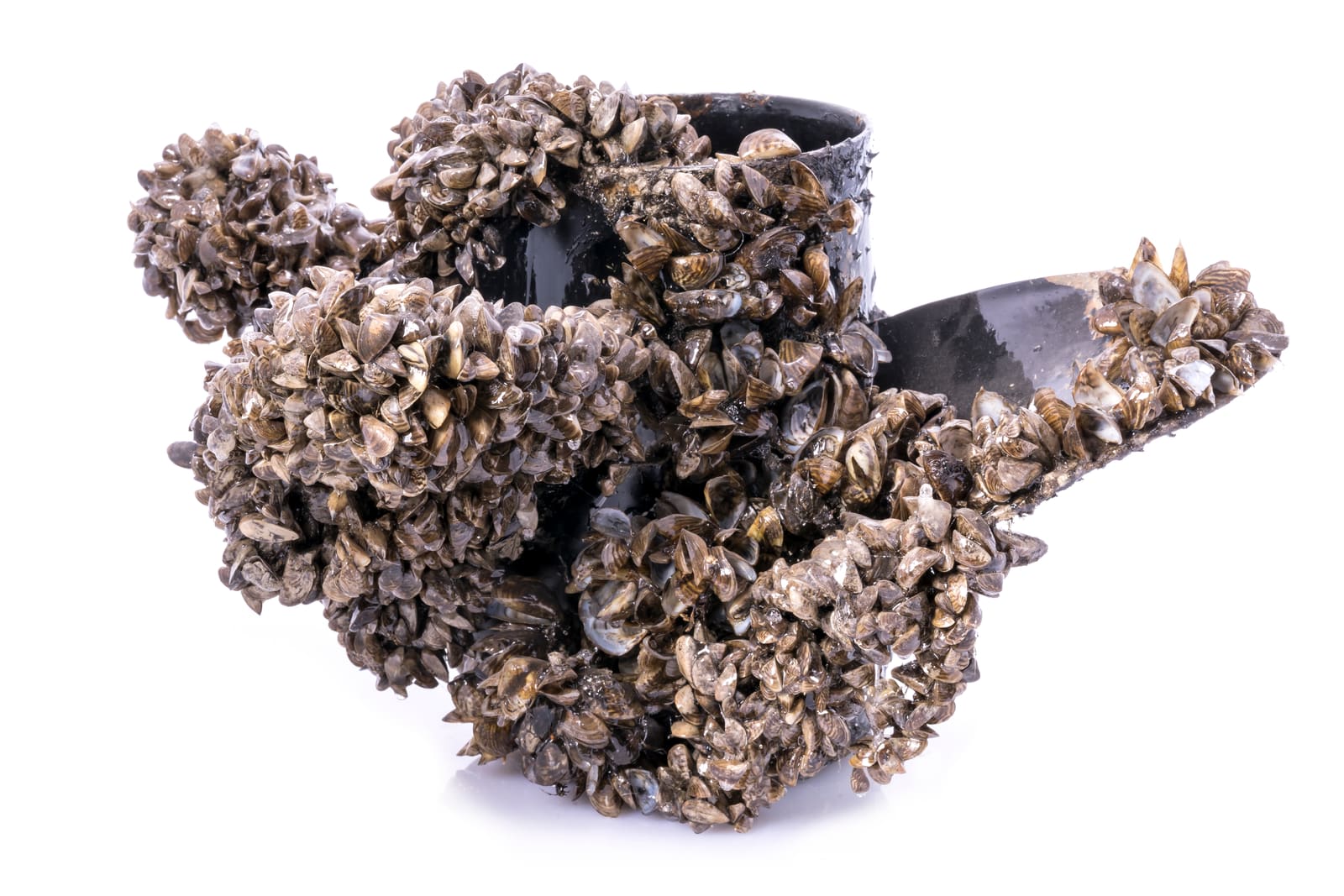
Clean, Drain, Dry: Stopping Zebra and Quagga Mussels and Other Invasive Species
What Clean, Drain, Dry means in practice for your boat, trailer and motor, what to drain before you leave the ramp, what happens at a watercraft inspection or decontamination station, and examples of state rules you may run into when you trailer between lakes.