Visual Distress Signals: Flare Expiry, Storage, Practice and Safe Disposal
Make sure your flares, smoke signals, distress flag or electronic distress light meet the Coast Guard rules for day and night, are not past their 42-month date, and are stored where you can grab them. Then get rid of expired flares the safe and legal way instead of letting them pile up in a locker.
Time
30 min
Applies to
All engines
Safety first: Flares burn hot enough to cause serious burns and start fires, and aerial flares behave like a firearm. Never light or fire a distress signal on or near the water except in a real emergency: it is illegal and can launch a search. Never throw old flares overboard or in household trash. If you are in trouble, call USCG on VHF channel 16 (or 911) first, then use your signals when you can see or hear a boat or aircraft.
Owners often ask
- What do I do with expired flares? Can I keep them on the boat as backups?
- Is an electronic distress light enough, or do I still need flares?
This guide walks you through it. Still stuck? Ask the AI Mechanic about your engine.
Tools
- Flashlight
- Marker
- Waterproof container or flare canister
Parts & supplies
- USCG-approved pyrotechnic signals (handheld, aerial or smoke) with a current date
- USCG-compliant electric distress light and orange distress flag (non-pyrotechnic option)
- Spare batteries for the electric distress light
Before you start
Do you need them? Federal rules require visual distress signals on coastal waters: the Great Lakes, the territorial seas, and bays, sounds and rivers connected to them until the water narrows to less than 2 miles wide. US boats on the high seas need them too. Most inland lakes and rivers are exempt federally, but your state may differ, and carrying them is smart anywhere.
Know the day and night rule.
- Boats 16 feet and longer: must carry signals for both day and night use (or devices that cover both).
- Boats under 16 feet: must carry night signals when out between sunset and sunrise.
- Exceptions: manually propelled boats, open sailboats under 26 feet with no engine, and boats in an organized race, regatta or parade only need night signals at night.
Steps
Empty the flare kit, the ditch bag and that old coffee can under the seat. Sort into three piles: pyrotechnics (handheld flares, aerial flares, smoke), non-pyrotechnic gear (orange flag, electric distress light), and launchers.
Every signal you count must show a USCG approval number or the manufacturer's certification statement. Common types and what they cover:
- Handheld red flare: day and night
- Aerial red meteor or parachute flare: day and night (some need a launcher, which must also be approved)
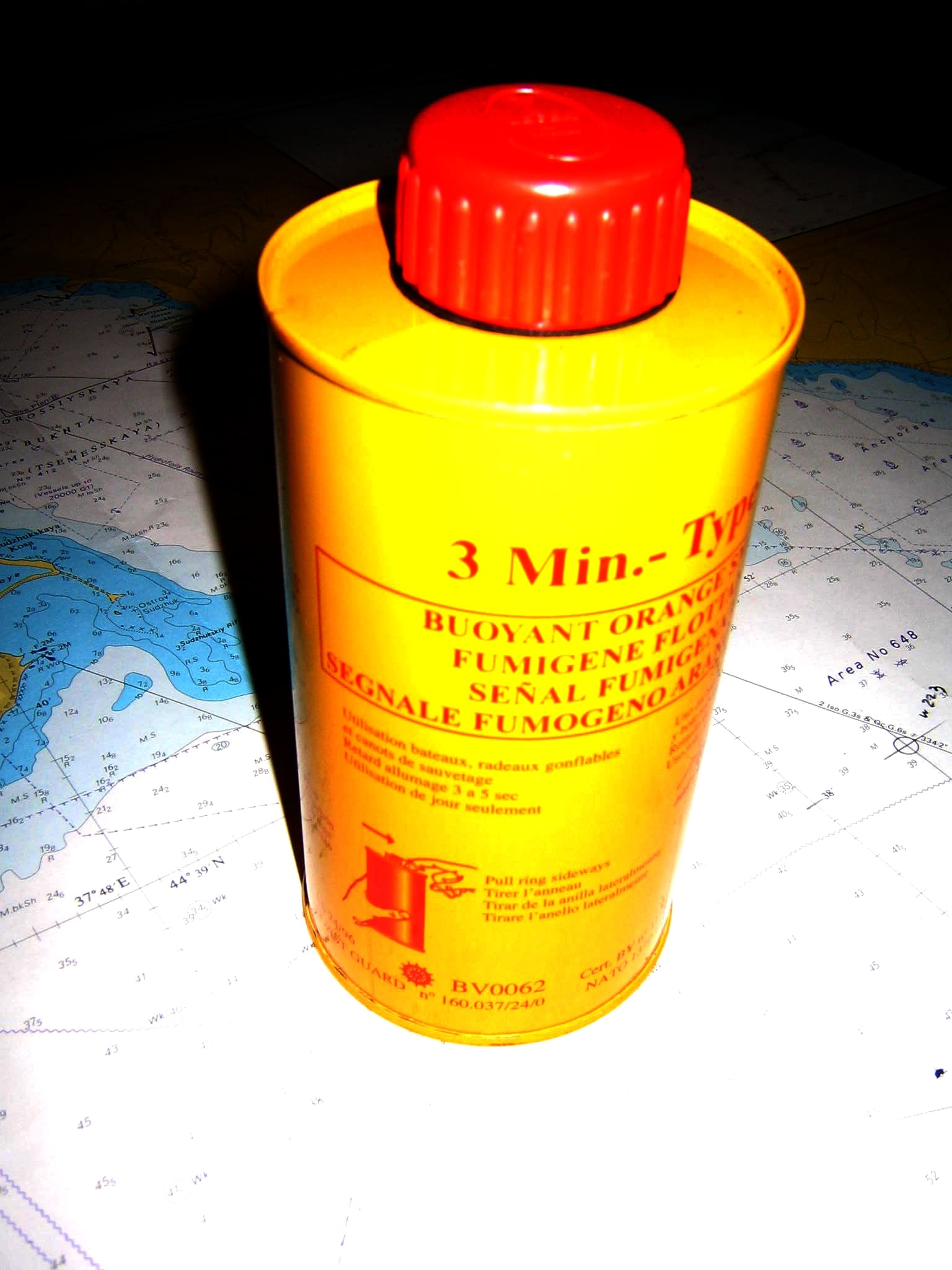
- Handheld or floating orange smoke: day only
- Orange distress flag with a black square and ball: day only
- Electric distress light that flashes SOS automatically: night only
Pyrotechnic signals expire 42 months after the date of manufacture, and each one is stamped with its expiration date. Flare makers point out that this usually means replacing them every three boating seasons. If a flare has expired, or will expire during the coming season, replace it now. Expired signals do not count toward the requirement.
The most common legal setups for a boat 16 feet or longer are:
- Three handheld or aerial red flares rated for day and night, or
- An orange distress flag (day) plus an electric distress light (night), or
- Three orange smoke signals (day) plus an electric distress light (night)
You can mix types as long as you have the required number for both day and night. Signals that need a launcher only count if the launcher is aboard.
Look for cracked or swollen casings, loose or missing end caps, water stains, and damp or corroded striker ends. Moisture, heat and rough handling all shorten a flare's life. Any flare that looks damaged should be treated as expired, even if the date is fine. Orion asks owners to inspect every signal and launcher for moisture damage at least once a year, even when the dates are good.
Turn the light on in a dark spot and confirm it flashes the SOS pattern. The label must give a battery replacement schedule; follow it and carry spares. Electric lights do not expire like flares, but dead batteries make them useless. Unfold the flag and check it is bright orange with the black square and circle, not faded or torn.
If you have an aerial flare launcher, check the firing pin is not bent. Then, as Orion describes, slide an unexpired shell all the way in and close the barrel. If it snaps fully shut, it works. Open it and remove the shell right away. Never store or carry a launcher loaded, and never force a barrel that will not close.
The law says signals must be readily accessible, which means not buried under fenders. Keep them in a waterproof container in a dry, shaded spot near the helm, out of reach of children. Store aerial shells separately from the launcher. When the boat is laid up for winter, take the flares home and store them safely away from heat and kids.
It is illegal to light flares on the water for practice, so practice the motions instead. Read the instructions printed on each signal while you are calm at the dock. With an unlit flare, rehearse:
- Removing the cap and finding the striker or pull ring
- Holding a handheld flare at arm's length, pointed up and out over the side, on the downwind side of the boat so smoke and dripping slag blow away from you
- For aerial flares, pointing up and slightly downwind, never at people, boats or aircraft
- Striking the igniter with a downward motion, pointed away from your face and body. Orion's instructions say to hold the burning flare over the side and not to wave it over your head, where hot slag can drip on you.
Orion also warns that a flare launcher used for anything other than emergency signaling can bring civil or criminal trouble, including under local firearms laws. Keep it in the flare kit, unloaded, and never show it off.
Many boaters also watch a supervised flare demonstration at a safety event, fire department or Coast Guard Auxiliary class. Make sure your crew, not just you, knows where the kit is and how to use it.
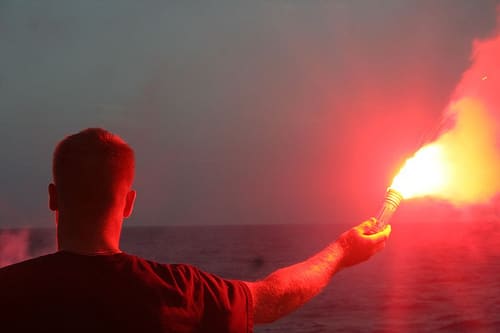
Photo: U.S. Coast Guard / Wikimedia Commons · Public domain Signals only work if someone can see them. Use pyrotechnics when you can see or hear a boat or aircraft, or are sure someone on shore can see you. An aerial flare attracts attention; a handheld flare or smoke helps rescuers home in on you once they are heading your way. Save at least one signal for when the rescuer is close.
A few tips from Orion's safety FAQ:
- Fire small aerial flares in pairs, one right after the other, so a spotter can confirm what they saw and which direction it came from. A parachute flare burns long enough that one is usually enough.
- Do not chase a plane that has passed. Search aircraft often fly a grid and may come back from another direction; save your aerials for the next pass.
- Plan for the wait. A handheld flare is seen only a few miles across the water, and a rescue boat can take 15 minutes or more to reach you, so carry more handhelds than the legal minimum.
- If a launcher clicks but does not fire, keep it pointed up and away over the water and wait at least five seconds before you open it. A delayed "hang-fire" can still go off.
You may keep a few expired flares aboard as extra backups, as long as you also carry the required number of current ones. Mark them "EXPIRED" with a marker and store them separately so nobody grabs them first. Old flares become less reliable, so they are only extras, never your main kit.
Flares that will no longer be used are classed as hazardous waste (toxic, reactive and ignitable) and are shipped as explosives, which is why disposal can be hard to find and some programs charge for it. The National Safe Boating Council notes that California law bans putting them in waterways, the trash or municipal landfills, and points boaters to their county household hazardous waste program. Options:
- Local collection events: some areas hold flare drop-off days. BoatUS, county waste agencies and harbors have run free events, especially in California, sometimes handing out coupons for electronic flares.
- Ask your local fire department, police, or household hazardous waste program. Many accept flares or can tell you where to take them. Call first; do not just leave them on a counter.
- Ask your marina, the Coast Guard Auxiliary or a local boating safety group about upcoming collections.
Some flare makers say handheld flares can be burned on land in a safe, open area away from water, like a road flare. Many towns forbid this, and a red flare seen from the water can still trigger a rescue call, so only do it with your fire department's approval. Never throw flares overboard, in the trash, or in a dumpster, and never fire aerial flares to get rid of them.
Common mistakes
- Carrying only expired flares. A boarding officer will count them as missing, and they may not light.
- Keeping the kit in a soggy locker. Damp flares can fail even before their date.
- Forgetting the day/night split. An electric light alone covers night only; you also need an orange flag or day signals.
- Storing the launcher loaded.
- "Testing" a flare on the Fourth of July or setting one off to see if it works. It is illegal, and it diverts rescuers from real emergencies.
- Tossing old flares overboard or in the trash.
When to call a pro
- You have a large pile of expired flares or damaged, leaking or wet signals: contact your fire department or hazardous waste program for pickup or drop-off
- Your launcher will not close, has a bent firing pin, or looks damaged: contact the maker for service or replacement
- You are unsure what your state requires: contact your state boating agency or book a free Vessel Safety Check
Tips
- Write the expiration year in large numbers on the outside of the flare canister.
- Consider adding a USCG-compliant electric distress light and orange flag. They do not expire like flares and fit easily in a ditch bag.
- Add the flare expiration date to BoatMend so you get a reminder before the season.
- Keep a small pair of leather gloves in the flare kit for handling a burning handheld flare.
Official references
We read these to write this guide. Your engine's own manual always wins.
- eCFR – 33 CFR Part 175 Subpart C (Visual Distress Signals)
- eCFR – 46 CFR 161.013 (Electric Distress Light for Boats)
- BoatUS Foundation – Flares & Distress Signals
- Orion Safety Products – Replacement and Disposal
- Orion Safety Products – Marine FAQ
- BoatUS News Room – Orange County boaters can drop off expired flares
- National Safe Boating Council – Disposal of Expired Marine Flares in California
Safety: BoatMend is for information only and does not replace a certified marine technician. You are responsible for your safety and your boat. Read the full disclaimer.
Last updated 2026-10-24
Related guides
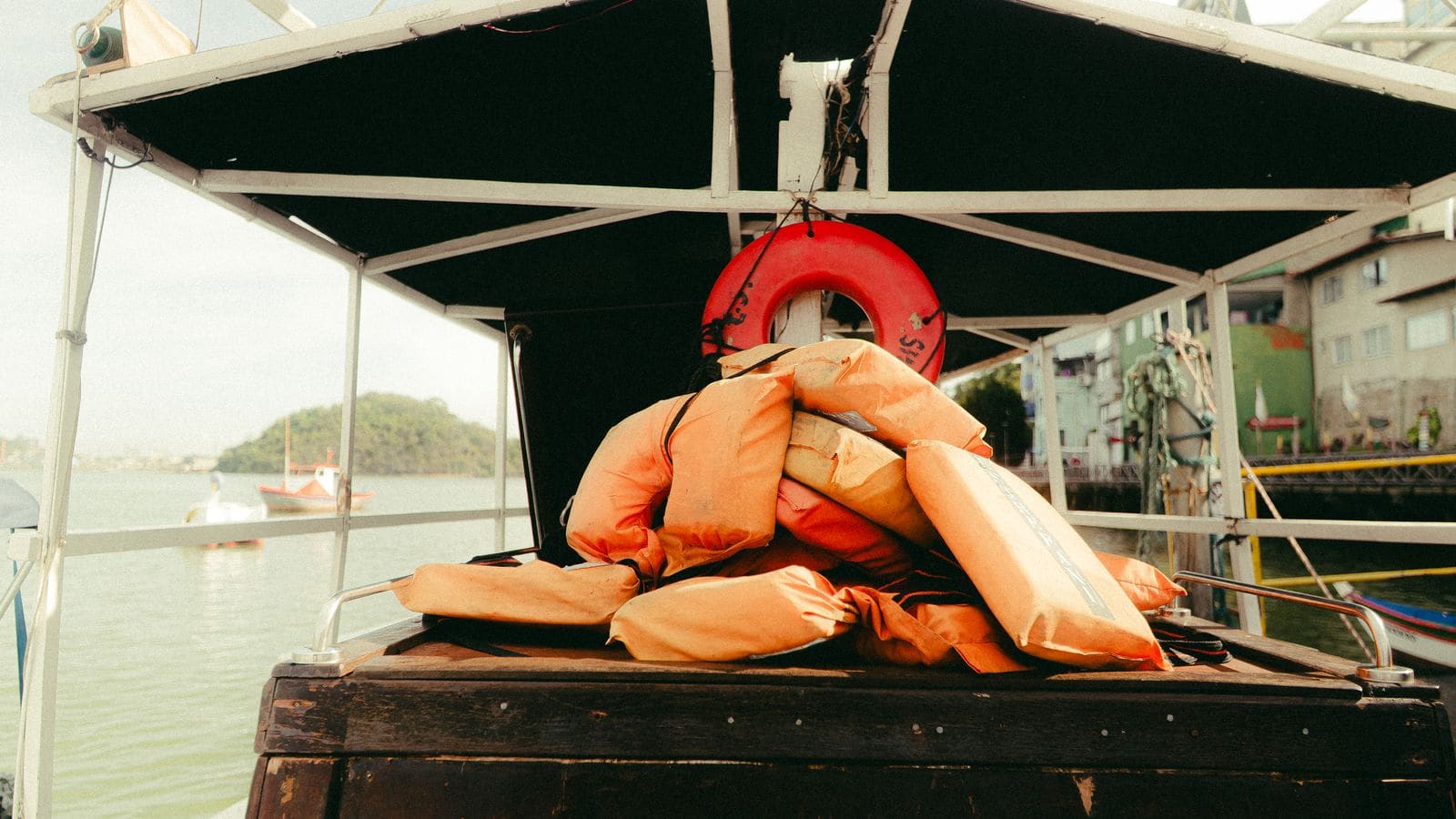
USCG Required Safety Equipment Check by Boat Length
Walk through your boat and confirm you carry every piece of safety gear the US Coast Guard requires for your boat's length and type, and that none of it is expired or worn out. Missing or expired gear is one of the most common tickets on the water, and it is the gear you need when things go wrong.
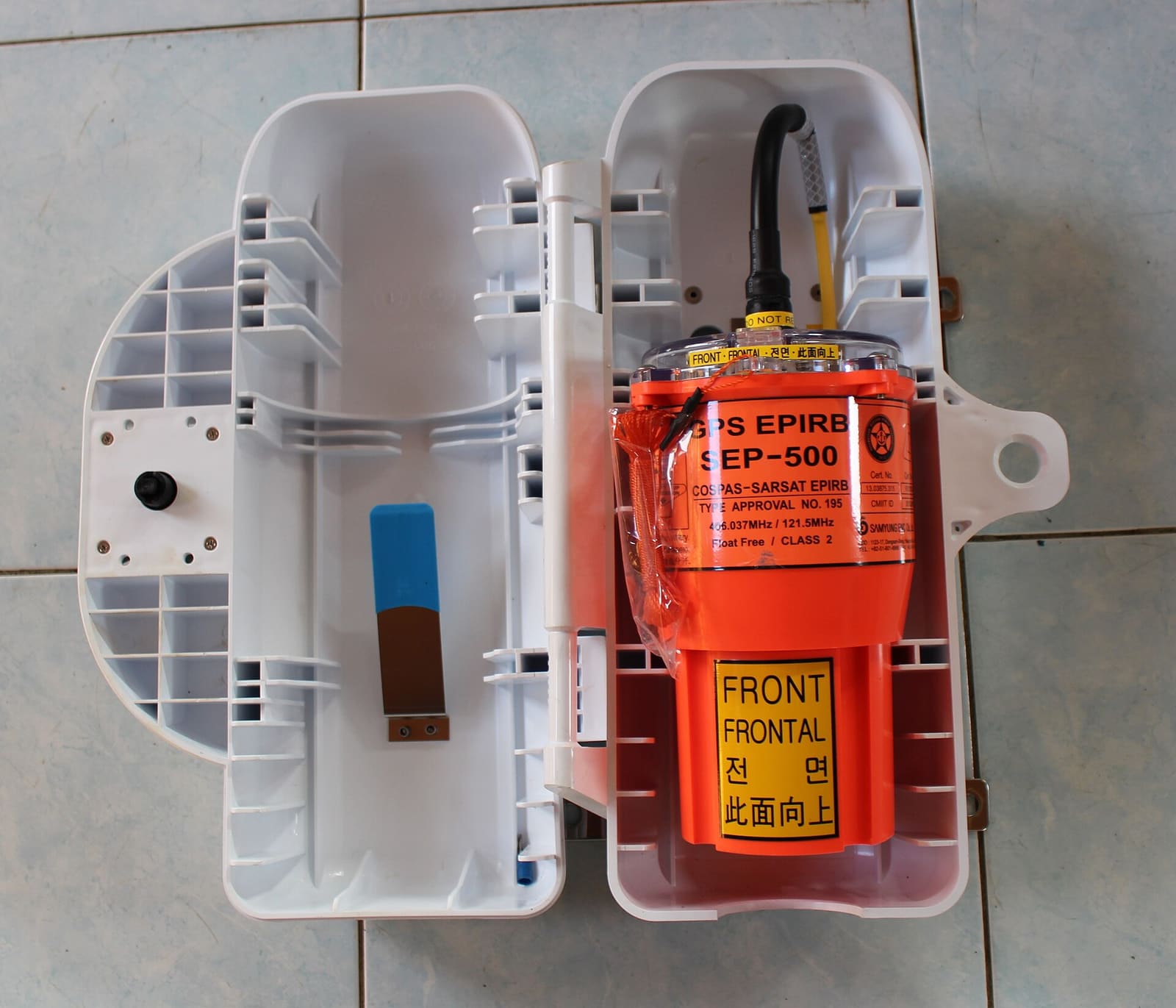
EPIRB and PLB Care: Registration, Batteries, Self-Test and Mounting
Keep your 406 MHz emergency beacon ready to work on the worst day of your life. Register it free with NOAA and renew every two years, track the battery and hydrostatic release dates, run the self-test without triggering a false alert, and know what happens after you press the button.
Set Up Your VHF Radio: MMSI, DSC, GPS Hookup and Radio Checks
Get a free or low-cost MMSI number, program it into your DSC radio, connect your GPS so a distress alert sends your exact position, check the antenna, and learn the Channel 16 rules and the right way to do a radio check.
How to Test and Fix Your Boat's Navigation Lights
Learn which navigation lights your boat must show and when, then test them and fix the usual culprits such as corroded sockets, loose pole-light plugs and blown bulbs. Working lights are legally required at night and in poor visibility and are how other boats see which way you are heading.