Releasing Deep-Water Fish with Barotrauma: Descending Devices, Venting and the Federal Gear Rules
Snapper, grouper and other bottom fish reeled up from deep water often float off with bulging eyes and a swollen belly. A descending device sends them back down to where the pressure fixes the problem. Here's what federal rules require in the South Atlantic and Gulf (and what changed in 2026), how to rig and use a descender, and where venting fits.
Time
15 min
Applies to
All engines · Fishing boat, Center console
Safety first: Keep your footing and a hand on the boat when you lean over the side to release a fish, and never leave the helm with the boat in gear. Watch hooks and spines; big grouper and snapper have sharp gill plates. Fishing rules change often: check the current federal and state regulations (NOAA Fisheries, the Gulf and South Atlantic councils, or the free Fish Rules app) before every trip.
Owners often ask
- Do I still need a descending device or venting tool for reef fish in the Gulf after the DESCEND Act expired?
- Is it better to vent a red snapper or use a descending device?
- Is a Gulf descending device rule back in force, or is it still just recommended?
This guide walks you through it. Still stuck? Ask the AI Mechanic about your engine.
Tools
- Descending device (lip clamp, inverted weighted hook or a fish "elevator" crate)
- Dedicated rod and reel or a hand line for the descender, with at least 60 ft of line
- Weight of at least 16 oz (more for big fish)
- Dehooking device
- Wet towel or gloves for handling fish
Parts & supplies
- Non-stainless steel circle hooks where required
Before you start
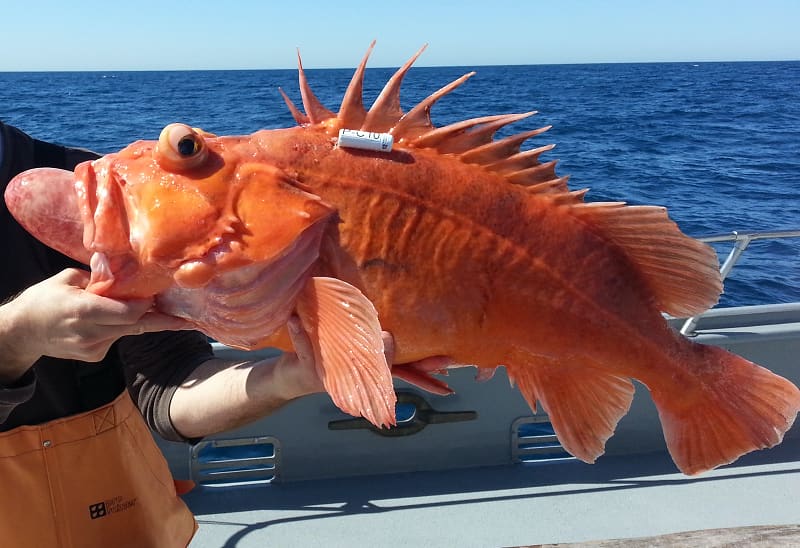
What barotrauma is. Many bottom fish have a gas-filled swim bladder that keeps them at the right buoyancy. As you reel one up, the water pressure drops and the gas expands like a balloon. USF researchers explain it as the same gas law that hurts divers who ascend too fast. The signs:
- Bulging eyes
- Stomach pushed out of the mouth
- Bloated belly, intestines pushed out the vent
- The fish floats at the surface and can't swim down
RecFIN notes that fish in this state can look dead but often aren't. Left floating, they're easy prey for birds, sharks, dolphins and barracuda.
How deep is "deep"? USF says barotrauma affects fish with swim bladders pulled up from about 60 feet or deeper. Mercury, citing the Gulf Council, says the risk generally starts around 90 feet but can show up in water as shallow as 33 feet. If you bottom fish deeper than about 50 or 60 feet, plan on needing a descender.
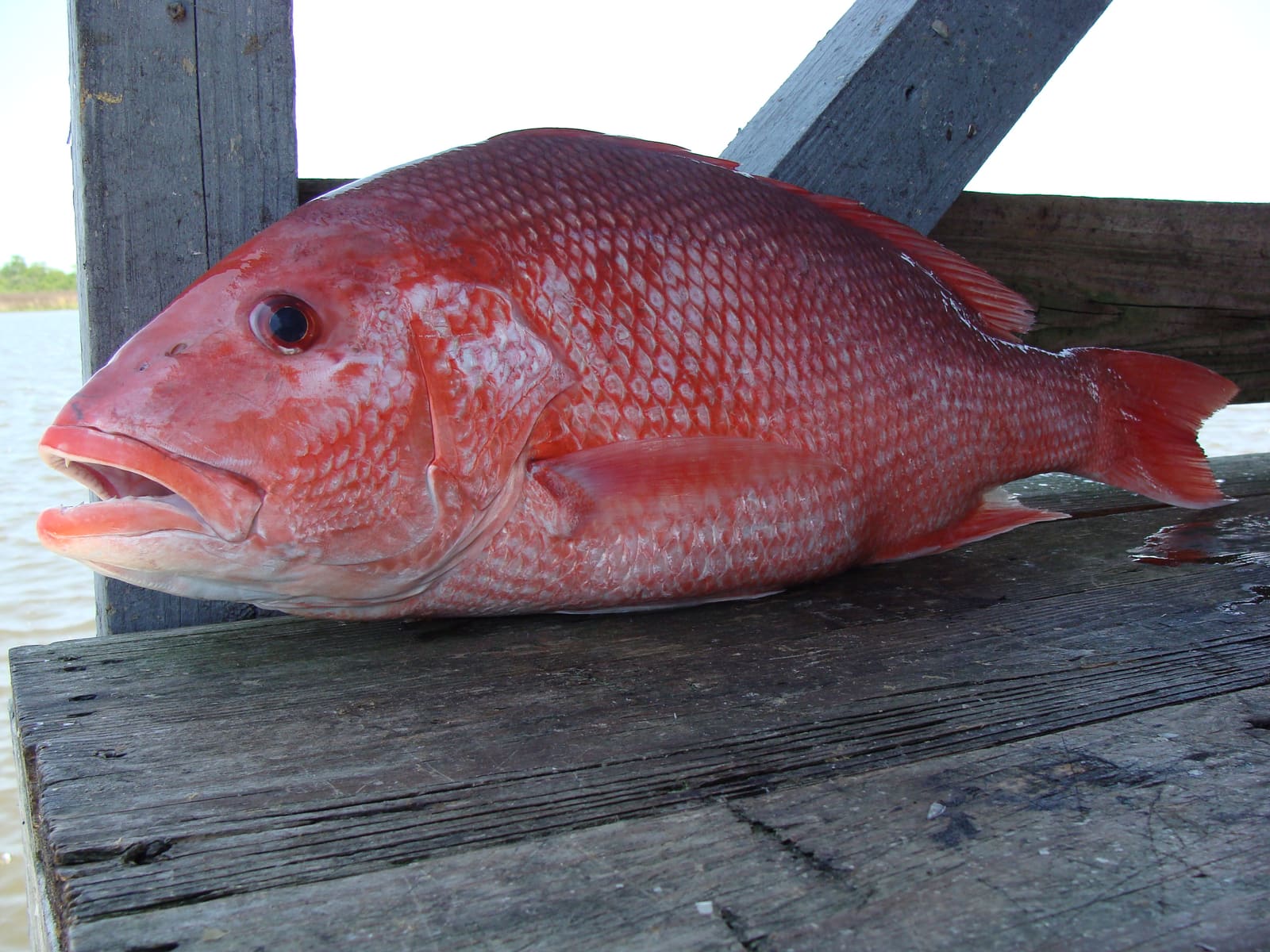
Why it matters. Short seasons and size limits mean many red snapper, grouper and sea bass get released. If they die after release, the fishery loses them anyway, and that loss feeds into future limits.
Steps
In federal waters of the South Atlantic (the EEZ off North Carolina to the east coast of Florida and the Keys), anyone fishing for or keeping snapper-grouper species must have at least one descending device on board and ready for use (50 CFR 622.188). The rule defines it as a device that can release the fish at the depth where it was caught, with:
- At least a 16-ounce weight, and
- At least 60 feet of line
It can clamp the fish's mouth or be a container that holds the fish on the way down, and it must release the fish automatically, when the operator triggers it, or by letting the fish swim out. The same rule requires a dehooking device, and with natural bait, non-offset, non-stainless steel circle hooks north of 28° N latitude and non-stainless steel hooks south of it.
The DESCEND Act of 2020 required every commercial, charter and private boat fishing for Gulf reef fish in federal waters to carry a descending device or a venting tool, rigged and ready. It took effect January 13, 2022. The federal regulation says that paragraph was effective only until January 14, 2026, and NOAA Fisheries confirms the requirement expired in January 2026.
The Gulf Council voted in November 2025 to make a permanent replacement rule requiring a venting tool or descending device. As of NOAA Fisheries' update of July 30, 2026, that action was still being developed. The Gulf Council's page for the action links a transmittal version of the document dated July 2026 (the step where the council sends it to NOAA Fisheries for rulemaking), but as of November 6, 2026 we found no proposed or final rule for it in the Federal Register, so the Gulf federal requirement is still not back in force on that date. A new rule can be published at any time: check its current status before you go (NOAA Fisheries' Southeast bulletins or the Fish Rules app), and carry a descender either way. Still in force in Gulf federal waters for reef fish: a dehooking device and non-stainless steel circle hooks with natural bait (50 CFR 622.30). Some Gulf states have their own rules for state waters; check with your state wildlife agency.
The main types (as described by Mercury and RecFIN):
- Lip clamp: a weighted clamp grips the fish's lower jaw and opens at a preset depth by itself or when you jerk the line. Some models let you pick the release depth.
- Inverted hook: a heavy barbless hook pointing up with a weight below. You hook the fish's lower lip and lower it; at depth, a sharp tug and the fish slides off.
- Fish elevator: an upside-down, weighted crate or cage you lower over or with the fish; it swims out the bottom at depth.
Whichever you choose, make sure the setup meets the 16-ounce and 60-foot minimums where they apply. Mercury quotes one maker's suggestion of 1 to 2 pounds of weight per 10 pounds of fish; big fish need more weight to drag them down.
Captain Tom Rowland, quoted by Mercury, recommends a dedicated rod for the descender so you don't waste time re-rigging while the fish suffers. Braided line on a stout rod or an electric reel works well. Put it where everyone can reach it, already tied on and ready, with the dehooker next to it. "Rigged and ready" is also what the rules ask for.
- Fight the fish efficiently; don't play it out for minutes
- Keep it in or near the water if you can, and support its body if you lift it
- Use wet hands, a wet towel or gloves, not a dry rag; avoid squeezing the belly
- Keep it out of the water as briefly as possible; have the camera ready before you lift it
Use the dehooking device to back the hook out. Circle hooks usually catch the corner of the mouth, which makes this quick. If the fish swallowed the hook deep, cut the leader as close as you safely can rather than tearing it out.
RecFIN's advice: if the fish shows no signs of barotrauma, just put it back in the water head-first and let it swim. If it shows signs (eyes, stomach, belly) or floats when you try, descend it. Rowland goes further and descends even fish that look fine when they come from about 200 feet, because they get back down faster.
On the West Coast (rockfish), the same tools are used. The Oregon Department of Fish and Wildlife says research by ODFW, Oregon State University and others found that even rockfish with severe barotrauma can recover when returned to at least 66 feet, and that fishery managers give "survival credits" for fish released at depth, so fewer released fish count against the limits as dead. ODFW also suggests simply moving away from rocky pinnacles when you keep catching species you have to release.
Don't try to push the stomach back into the mouth, and don't puncture it. It will go back on its own as the gas recompresses at depth.
- Attach the device: clamp the lower jaw, or pass the inverted hook through the lower lip from the outside, or put the fish in the crate.
- Lower the fish head-first into the water and let the weight take it down steadily. Don't stop halfway.
- Release it at or near the depth where you caught it, or at least deep enough for the gas to compress. The USF study found fish recompressed to at least 60 feet were about twice as likely to survive as vented fish, while fish released shallower than 60 feet did about the same as vented ones.
- Trigger the release (if your device needs it), feel the weight change, and reel the device back up.
A venting tool is a sharpened, hollow needle that lets gas out of the belly so the fish can swim down. The federal definition says it must be hollow, at least 16-gauge, and that a knife or ice pick is not a venting tool; they cause more damage.
- Research now favors descending over venting for deep-caught snapper and grouper (USF 2023). RecFIN tells Pacific rockfish anglers not to vent at all.
- Venting done wrong can hit organs or cause infection. If you plan to vent, learn the right spot and angle from your state wildlife agency or the free Return 'Em Right training first.
- Treat venting as a backup, for example when many fish come up at once.
Note which fish needed descending and at what depth. If almost every fish you release at a spot is struggling, move shallower for the species you can't keep, or switch targets during closed seasons.
Return 'Em Right, a program led by Florida Sea Grant and partners, offers free online training on releasing reef fish. Its site says eligible Gulf and South Atlantic reef fish anglers can get low-cost release gear after the training. Your state Sea Grant office or wildlife agency may run similar programs.
Common mistakes
- Keeping the descender buried in a tackle box, so the fish waits on deck while you rig it.
- Using a weight too light to pull a big fish down; the fish and device just float.
- Squeezing the belly or trying to push the stomach back in.
- Venting with a knife or ice pick.
- Releasing just under the surface; the fish needs depth for the gas to compress.
- Assuming last year's rules still apply. The Gulf rule changed in 2026.
When to call a pro
- You're unsure what's legal where you fish: call NOAA Fisheries' Southeast Regional Office, the Gulf or South Atlantic council, or your state wildlife agency, or check the Fish Rules app
- You want to learn by doing: book a trip with a charter captain who uses descenders and ask them to show you
- You see a stranded or injured marine mammal or sea turtle: report it to NOAA's stranding hotline or your state wildlife agency; don't try to handle it
Tips
- Tie the descender to its own rod and keep it next to the dehooker at the gunwale.
- Teach everyone aboard how to use it before the first drop.
- Write the weight and release depth on a piece of tape on the rod.
- Some lip clamps can be set to different release depths; pick the one closest to where you're fishing.
Official references
We read these to write this guide. Your engine's own manual always wins.
- eCFR – 50 CFR 622.188, Required gear (South Atlantic snapper-grouper, descending device)
- eCFR – 50 CFR 622.30, Required fishing gear (Gulf reef fish, DESCEND Act paragraph)
- NOAA Fisheries – Continuation of Management Measures to Reduce Reef Fish Release Mortality (updated July 30, 2026)
- Gulf Council – Gulf Council Recommends Continuing Requirement for Venting Tools or Descending Devices (Nov. 6, 2025)
- USF College of Marine Science – Which barotrauma mitigation method is best for red snapper and red grouper caught in deep water? (2023)
- Mercury Marine Dockline – How to Use Descending Devices to Release Deep-Water Fish
- RecFIN (Pacific States Marine Fisheries Commission) – Fish Descending Devices
- Return 'Em Right – Training and release gear
- Coastal Review – Descender devices, safely resend released fish to their depth (2024)
- Gulf Council – Continuation of Management Measures to Reduce Reef Fish Release Mortality (framework action page)
- Oregon Department of Fish and Wildlife – Rockfish recompression
Safety: BoatMend is for information only and does not replace a certified marine technician. You are responsible for your safety and your boat. Read the full disclaimer.
Last updated 2026-11-06
Related guides
Where to Clean Fish and Get Rid of the Waste: Marina Rules, State Laws and Fishing Line Recycling
Tossing fish guts over the side is legal in some places and a fine in others, and filleting at sea can break size-limit rules. Learn when to keep fish whole, how to use a cleaning station, what to do with carcasses, and how to recycle old monofilament line, with dated examples from state and federal rules.
Fish Box Drains and Macerator Pumps: Clogs, Check Valves and Odor Control
Keep insulated fish boxes draining and smelling clean by clearing scale and slime clogs, checking the macerator pump, check valve and fuse, rinsing after every trip and making sure the water goes overboard instead of into the bilge.
Livewell, Baitwell and Washdown Pumps - Clean, Troubleshoot and Winterize
Find out why a livewell or washdown pump runs but moves no water, from a closed valve or clogged pickup to an airlock, then clean the system and winterize both sides of every pump so nothing cracks over the winter.
Outrigger Care: Poles, Halyards, Release Clips and Bases
Keep your outriggers strong and working by rinsing them after every trip, checking poles, halyards, pulleys, release clips and through-bolted bases for wear and corrosion, storing them down and secured, and handling them safely under way and near power lines.
Fish Finder Settings: How to Tune Your Sonar for a Clearer Picture
Get more out of your fish finder by setting frequency, gain (sensitivity), range, contrast, color palette and noise filters on purpose instead of leaving everything on auto, plus how to set the depth offset and track down interference from other electronics.
Reading Marine Weather Forecasts: Advisories, Wind, Waves and Go/No-Go
Learn where to get the official NOAA marine forecast for your waters, what small craft advisories and warnings really mean, how to read wind and wave numbers, and how to make a simple go/no-go call before you leave the dock.
How to File a Float Plan: What to Include, Who Gets It and What They Do If You're Late
A float plan is a short written trip plan you leave with someone ashore, not with the Coast Guard. Fill in the free USCG Float Plan or the Coast Guard app, agree on a firm 'call for help by' time, check in when plans change, close the plan when you're home, and give your shore contact clear steps for reporting you overdue.